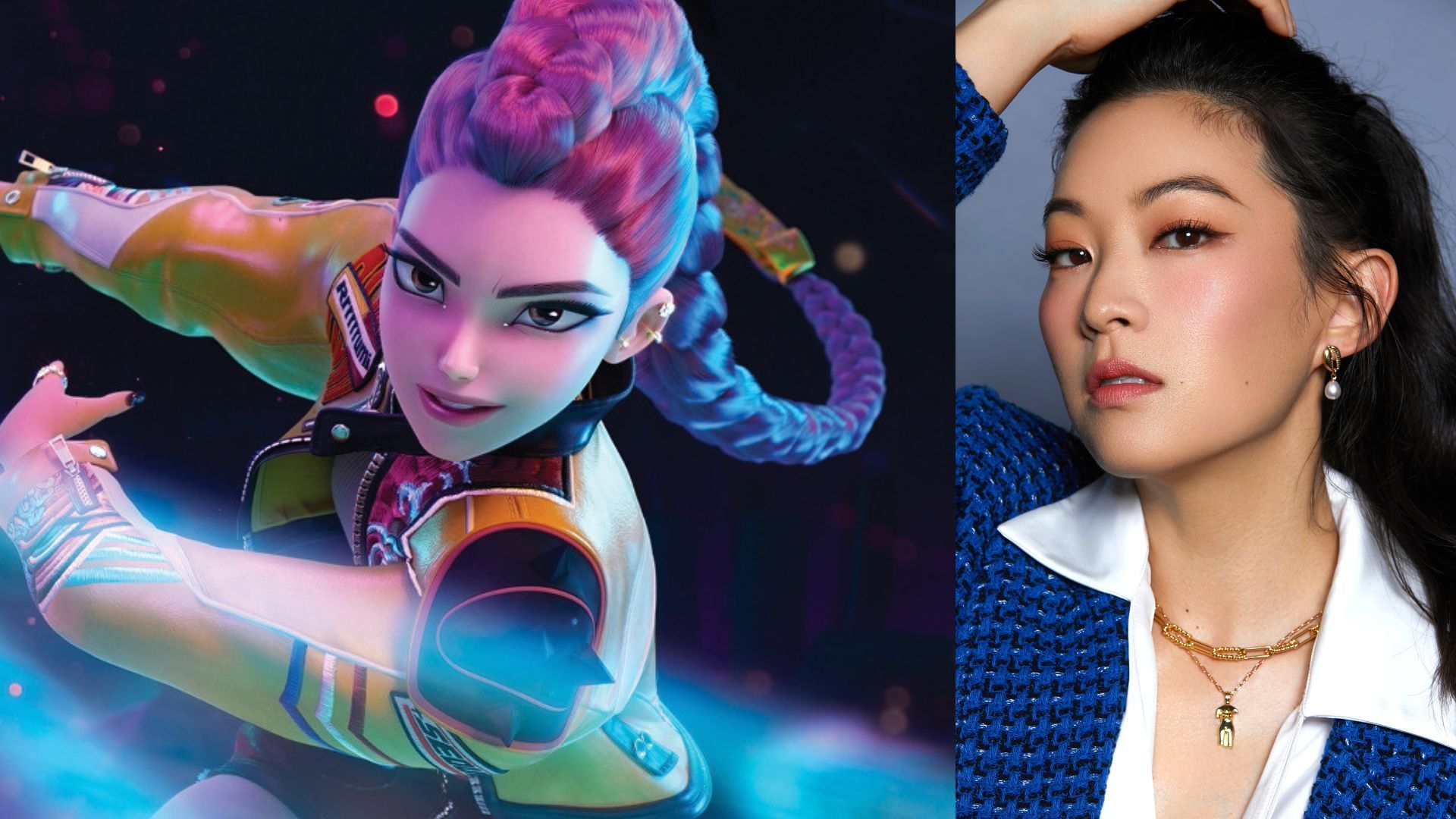
K-Pop: Demon Hunters represents a groundbreaking crossover between global animation and the South Korean music industry, following a world-renowned K-pop girl group who balance their public lives as stadium-selling pop stars with a secret identity as supernatural demon hunters. The project unites acclaimed playback singers, voice actors, and veteran K-pop producers to deliver authentic musical performances that mirror real-world idol group dynamics while advancing a high-stakes animated narrative.
The Fusion of Animation and Hallyu: Understanding the Concept
The emergence of K-Pop: Demon Hunters—developed by Sony Pictures Animation under the direction of Maggie Kang and Chris Appelhans—marks a major evolution in how the Korean Wave (Hallyu) intersects with Hollywood animation. Rather than utilizing K-pop merely as background music or thematic decoration, the film embeds the core mechanics of the South Korean music industry directly into its narrative engine. The premise hinges on a dual existence: by day, the protagonists undergo rigorous choreography rehearsals, vocal recording sessions, and global media tours; by night, they use combat skills masked as dance routines and sound-wave weaponry to protect their fanbase from extra-dimensional threats.
To achieve authentic music integration, the production relies on a hybrid approach to casting and vocal production. Animated characters require two distinct layers of vocal performance: speaking actors who handle dialogue and emotional dramatic arcs, and professional vocalists—often active K-pop idols, veteran session singers, or specialized playback artists—who record the high-range studio tracks. This division of labor mirrors long-standing theatrical traditions, but adapts them to the fast-paced, highly polished production standards of contemporary Korean pop music.
Beyond entertainment value, the concept highlights the immense discipline of the real-world K-pop training system. The narrative frame draws direct parallels between the intense physical conditioning required of real idol trainees and the martial training needed to combat supernatural forces. This structural realism grounds the fantastical elements, making the musical numbers feel like natural extensions of the characters' abilities and agency.
- K-Pop Demon Hunters Framework
- Public Persona: Chart-topping Idols, Stage Choreography, Vocal Harmonies
- Secret Identity: Supernatural Guardians, Martial Combat, Sonic Weapons
- Dual Performance Casting: Voice Actors (Dialogue) + Playback Singers (Tracks)
Character Roles and Vocal Archetypes: Balancing Music and Combat
In standard K-pop groups, members fill defined operational roles that maximize the group's overall performance. K-Pop: Demon Hunters translates these exact industry archetypes into both musical arrangements and tactical demon-hunting positions, creating a multi-layered synergy between sound design and action choreography.
- The Leader & Main Vocalist: Serving as the strategic and tonal center of the group, this character drives the primary narrative arc. Musically, the Main Vocalist handles complex belt registers, dramatic bridges, and high-sustained notes. In combat, her vocal resonance acts as the primary catalyst for cleansing magical barriers, requiring a voice actor capable of projecting authority and a singer with exceptional vocal control.
- The Lead Vocalist & Sub-Rapper: Providing harmonic stability, this role bridges the energetic gap between the main vocal riffs and rhythm lines. Her vocal delivery favors clarity, flexibility, and emotive storytelling. Within the hunter framework, this character frequently handles mid-range tactical support and precision weapons, coordinating team movements during battle sequences.
- The Main Rapper & Visual: Rapping in K-pop provides rhythmic momentum, percussive timing, and lyrical edge. The Main Rapper's vocal execution demands precise cadence, low-end vocal weight, and rapid-fire diction. Translated to supernatural combat, this member utilizes fast-paced, close-quarters combat techniques, where her rhythmic flow directly correlates to the timing of her strikes.
- The Main Dancer & Maknae (Youngest Member): The visual focal point during performance breaks, the Main Dancer emphasizes physical agility, athleticism, and sharp Execution. While contributing to chorus vocals and call-and-response hooks, her vocal style is energetic and punchy. On the battlefield, her agility allows for aerial maneuvers and high-speed evasive tactics, breaking enemy lines.
By linking musical roles to tactical abilities, the narrative ensures that every song sequence serves a dual narrative purpose. A high-note climax in a track doubles as a high-powered magical energy release, while a synchronized rap verse corresponds to coordinated team strikes against demonic targets.
Vocalists, Voice Cast, and Real-World K-Pop Collaborators
The vocal architecture behind K-Pop: Demon Hunters relies on strategic partnerships between Western animation talent, Korean-American voice actors, and prominent music figures from South Korea's top entertainment agencies. Producing a believable K-pop soundtrack requires authentic arrangements, language fluency, and stylistic accuracy that only industry veterans can deliver.
Musical directors on the project collaborated directly with South Korean songwriters, lyricists, and choreographers who have authored hits for top-tier groups across the second, third, and fourth generations of K-pop. The recording process involved split-session vocal tracking across studios in Los Angeles and Seoul. Voice actors recorded dialogue to match lip-syncing keys in English, while multilingual singers recorded vocal tracks in English, Korean, and Japanese to ensure broad international accessibility.
Playback vocalists were selected based on their ability to execute signature K-pop vocal techniques: sharp vocal attacks, seamless transitions between chest voice and falsetto, and dense vocal stacking in multi-part harmonies. Rather than hiring generic session singers, the music team brought in active idol vocal coaches and solo artists to perform the vocal tracks. This deliberate casting decision guarantees that the songs match the exact timbral density, compression, and production shine expected by global K-pop fans.
Furthermore, the speaking cast features prominent Asian and Asian-American actors who bring cultural nuances to character interactions, honorifics, and linguistic rhythms. This attention to detail ensures that the characters sound natural both during lighthearted backstage banter and high-stakes combat calls.
In-Universe Idol Groups vs. Real-World Musical Ensembles
To fully appreciate the design of K-Pop: Demon Hunters, it is useful to examine how its fictional musical groups compare with real-world K-pop industry standards across structural, vocal, and operational dimensions.
| Feature / Dimension | In-Universe Demon Hunter Group | Real-World K-Pop Group (Industry Standard) |
|---|---|---|
| Primary Mission | Global musical performance & supernatural defense against demons | Global music distribution, brand expansion, & audience engagement |
| Vocal Roles | Main Vocal, Lead Vocal, Main Rapper, Lead Dancer/Maknae | Main Vocal, Lead Vocal, Main Rapper, Lead Rapper, Main Dancer, Sub-Vocal |
| Training Pipeline | Years of idol academy training paired with secret martial arts instruction | Years of agency trainee programs (vocals, dance, languages, media relations) |
| Combat/Performance Link | Dance choreography doubles as defensive martial formations and spell casting | Choreography engineered for visual impact, stage presence, and camera angles |
| Vocal Staging | High-energy belting combined with sonic wave generation and energy channeling | Layered studio production with backing tracks during live dance-heavy routines |
| Production Team | In-universe agency management hiding a secret hunter network | Entertainment agency executive producers, A&R directors, song camps, choreographers |
| Fandom Function | Fan engagement generates collective positive energy that weakens demonic presence | Fan engagement (streaming, lightsticks, voting) drives chart success and sales |
This comparison highlights how the project adapts real-world mechanics into narrative devices. The concept of "fan energy" or lightstick illumination at concert arenas is reimagined as a literal light source that deters dark forces, transforming standard audience participation into an active story element.
Industry Impact: How the Project Redefines Transmedia Entertainment
The release and reception of K-Pop: Demon Hunters ripple far beyond the animated film sector, influencing music distribution, cross-media intellectual property development, and virtual idol branding.
1. The Normalization of Cross-Border Music Animation
Historically, western animated features relied on classical musical theater structures or broad pop soundtracks. K-Pop: Demon Hunters establishes a blueprint for integrating modern international music genres directly into narrative films. By treating K-pop with structural respect rather than as a fleeting trend, the film paves the way for similar cross-border animated collaborations featuring genres like Afrobeats, Latin urban music, and J-rock.
2. Digital Music Chart Penetration and Virtual Idols
The soundtrack for K-Pop: Demon Hunters was engineered to compete directly on global music charts alongside real-world artist releases. By utilizing top-tier K-pop producers, tracks from the film entered streaming platforms with independent promotional campaigns, music videos, and dance challenge clips on social media. This blurs the line between virtual animated groups and physical music acts, building on precedents set by virtual groups like Riot Games' K/DA.
- Transmedia IP Flywheel
- Animated Film
- Standalone Singles
- Social TikTok/Reels
- Global Fandom
3. Expansion of Global Asian Representation
By centering a high-budget studio project around Korean culture, urban folklore, and music, the project provides a platform for Asian animators, vocalists, writers, and directors. It demonstrates to major film studios that culturally specific narratives possess massive global commercial viability when backed by authentic creative leadership.
4. New Revenue Streams for K-Pop Entertainment Agencies
For South Korean entertainment agencies, participating in animated transmedia projects provides a sustainable revenue model that operates independently of real-life artist schedules, physical injuries, or military service commitments. Animated avatars backed by active vocalists allow agencies to extend the lifespan of musical franchises indefinitely.
Music Production, Choreography, and Visual Storytelling
The technical execution of the musical numbers in K-Pop: Demon Hunters required an unprecedented level of coordination between song producers, sound engineers, and 3D animators.
Song Construction and Structural Dynamics
K-pop tracks are famous for their dynamic genre shifts within a single song, often jumping from trap beats to bubblegum pop choruses, followed by sudden melodic rock breakdowns. Songwriters for the film used these abrupt genre shifts to signal narrative transitions. A lighthearted pop verse accompanies an initial monster investigation; a heavy, sub-bass-driven trap bridge marks the turn toward battle; and a triumphant, synth-driven chorus accompanies the group's final combined counterattack.
Choreography Mapping for Animation
Animators did not rely solely on keyframe imagination; the production hired leading K-pop choreographers to design full dance routines for every track. Professional dancers performed these routines wearing motion-capture suits. Animators then stylized the motion data, exaggerating weight transfers, sword swings, and jump heights to give the sequences a superhuman feel without losing the grounded rhythm of actual dance routines.
Audio Engineering and Spatial Sound Design
Sound mixers faced the unique challenge of balancing dense, multi-layered pop tracks with heavy action sound effects—sword clashes, demonic roars, and environmental destruction. The audio team utilized modern spatial audio formats to place the musical instruments around the listener, while keeping dialogue and combat impacts centered. This ensures that the music remains prominent without drowning out crucial narrative sound cues.
Recommended Actions for Fans and Industry Observers
Whether analyzing K-Pop: Demon Hunters as an entertainment consumer or an industry professional, several key avenues exist to explore its broader impact:
- For Music and Film Analysts: Track the streaming performance of the film's original soundtrack on major platforms (Spotify, Apple Music, Billboard charts) to evaluate how animated musical groups perform against physical recording artists.
- For Aspiring Creators and Musicians: Study the structural blend of storytelling and songwriting in the soundtrack. Pay attention to how lyricists incorporate narrative exposition into pop song structures without sacrificing catchiness or radio-friendly pacing.
- For Animation Enthusiasts: Compare the motion-capture reference material with the final animated sequences to understand how realistic human dance movements are stylized for action-fantasy animation.
- For K-Pop Fans: Explore the production credits of the soundtrack to discover the real-life songwriters, producers, and playback singers who built the musical foundation for the fictional groups.
Frequently Asked Questions
What is K-Pop: Demon Hunters?
K-Pop: Demon Hunters is an animated musical feature film produced by Sony Pictures Animation. It follows the story of a world-famous K-pop girl group who secretly operate as supernatural demon hunters, using their music, choreography, and specialized combat skills to protect their fans and the world from dark forces.
Who performs the singing voices for the characters?
The singing performances are delivered by a blend of professional K-pop playback vocalists, active Korean pop idols, and skilled studio session singers. These vocalists work alongside the main dialogue voice actors to ensure the musical numbers feature authentic K-pop vocal techniques, harmonies, and stylistic polish.
How do the fictional idol group roles reflect real K-pop group structures?
The group in the film directly mirrors standard K-pop industry positions, including the Main Vocalist, Lead Vocalist, Main Rapper, and Main Dancer/Maknae. The narrative cleverness lies in assigning combat functions to these musical roles—such as using high vocal notes for energy blasts or percussive rap cadences to time physical strikes.
What makes the music production in K-Pop: Demon Hunters distinct from standard film soundtracks?
Unlike traditional film scores that serve purely as background accompaniment, the songs in K-Pop: Demon Hunters are written and produced using authentic K-pop song-camp methodologies. Top-tier Korean and international producers engineered the tracks to operate simultaneously as narrative storytelling devices and commercial radio-ready pop singles.
How does K-Pop: Demon Hunters impact the global music and animation industries?
The film establishes a new model for transmedia transnational entertainment. It demonstrates how global animation can successfully partner with international music industries, creating virtual music groups that achieve real-world chart success while expanding global representation for Asian creative talent.
Is the animation based on real K-pop dance routines?
Yes. The production hired established K-pop choreographers to choreograph full routines for the film's featured songs. These dances were recorded using motion-capture technology and then stylized by animators to merge realistic idol choreography with exaggerated, supernatural action sequences.