A Quiet Place: Day One (frequently searched as "a silent place day one") expands the acclaimed alien-invasion franchise by transporting its signature survival horror mechanics into the chaotic heart of New York City. Through precise acoustic sound design, urban environmental collapse, and intimate character drama, the film delivers relentless cinematic terror centered on human vulnerability.
Anatomy of Cinematic Terror: How Day One Reinvents Franchise Atmosphere
The core horror mechanism of the A Quiet Place franchise rests on absolute sound discipline: extraterrestrial predators possessing hyper-sensitive hearing hunt human prey strictly through acoustics. While the original A Quiet Place (2018) and A Quiet Place Part II (2020) exploited isolated rural farmsteads and abandoned industrial outposts, Day One shifts the setting to Manhattan—one of the densest noise ecosystems on Earth.
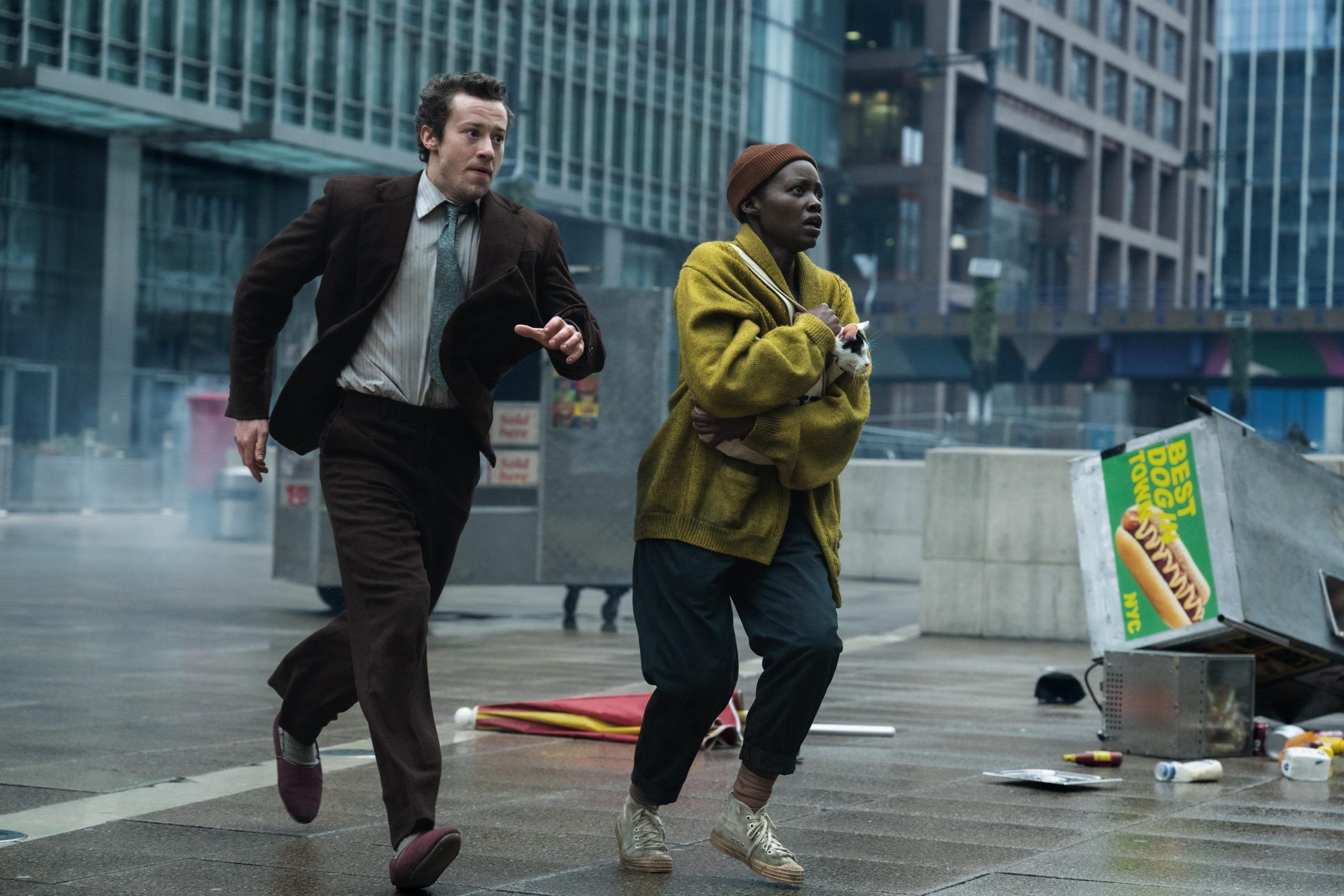
This environmental shift fundamentally redefines how cinematic terror operates. In a rural setting, a snapping twig or a creaking floorboard provides a clear, isolated signal of danger. In New York City, however, ambient acoustics are complex and unpredictable. Car alarms, collapsing skyscrapers, shattering glass, screaming crowds, and echo-chamber alleyways generate sound chaos. The alien creatures—known colloquially as Death Angels—burst into the metropolis in massive numbers, turning familiar urban infrastructure into an inescapable lethal maze.
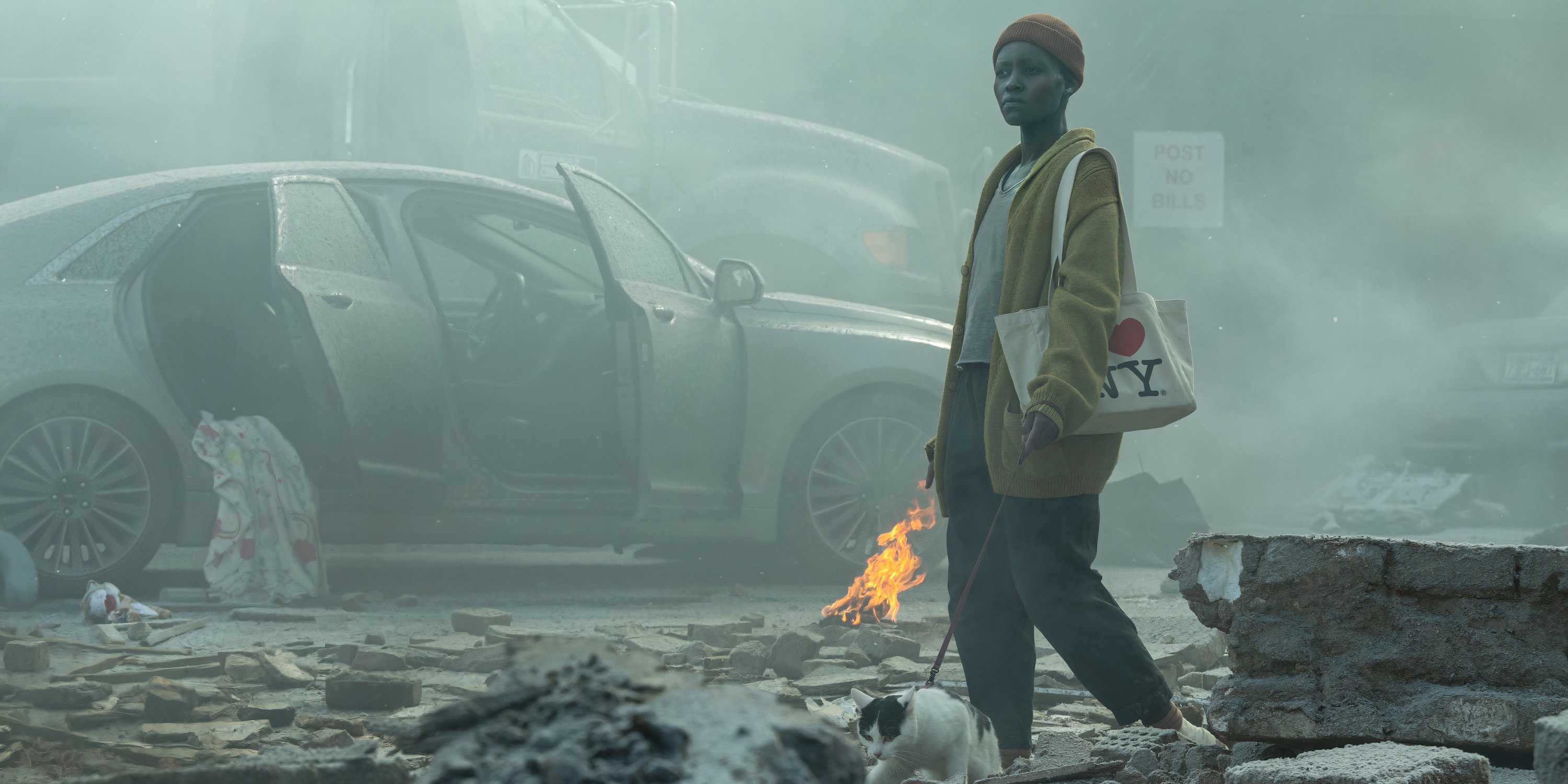
Cinematic terror in Day One relies heavily on visual contrast and acoustic tension rather than conventional jump scares or gore. Director Michael Sarnoski captures the eerie stillness of ash-covered streets immediately following the initial bombardment, creating imagery reminiscent of historical urban catastrophes. The terror emerges from the constant threat of instant retribution for the smallest acoustic mistake, forcing the audience into a state of shared sensory hyper-vigilance alongside the protagonists.
Survival Horror Mechanics and Environmental Design in Manhattan
Although A Quiet Place: Day One is a theatrical feature film rather than an interactive video game, its narrative architecture relies heavily on core survival horror mechanics. The narrative places characters in environments with restricted visibility, limited resource accessibility, and zero defensive weaponry capable of stopping the invulnerable alien armor.
SURVIVAL HORROR DESIGN
- Spatial Traps
- Subways
- High-Rises
- Crowded Streets
- Acoustic Triggers
- Debris/Glass
- Siren Echoes
- Panic Crowds
- Stealth Paths
- Thunderstorms
- Waterfalls
- Subterranean
Spatial Traps and Verticality
Manhattan presents a unique structural challenge for survival. High-rise buildings become vertical traps where elevators are disabled and stairwells echo sounds across dozens of floors. Characters must navigate down spiraling staircases while creatures scale exterior walls and move fluidly across glass facades. Ground-level streets are littered with debris, metallic trash, and unexploded munitions, converting every step into a potential acoustic landmine.
Natural Sound Masking
A key survival horror tactic introduced in the narrative involves environmental noise masking. Just as the Abbott family utilized waterfalls in the original film, the protagonists in Day One learn to move under the cover of heavy rainstorms, thunderclaps, and localized flooding. This mechanic introduces high-stakes timing sequences where characters must sprint or clear obstacles within narrow windows of loud ambient noise before silence returns.
Subterranean Danger
The city’s subway network offers temporary shelter from aerial sweeps, but presents extreme hazards of its own. Confined underground tunnels amplify sound, trap air, and lack light. The sequence inside flooded subway corridors highlights classic survival horror claustrophobia, where characters must submerge themselves in water to avoid acoustic detection from patrolling creatures hovering inches above the surface.
Character Dynamics as an Emotional Anchor Against Alien Dread
Survival horror relies on emotional investment; without compelling human stakes, terror quickly degrades into repetitive visual spectacle. Day One subverts standard apocalyptic tropes through its central character pairing and subverted survival motivations.
- SAMIRA (Lupita)
- Terminal Illness (Hospice)
- Motivation: Dignity & Memory
- Shared Survival
- ERIC (Joseph)
- Law Student (Panic State)
- Motivation: Safety & Connection
Samira's Unconventional Quest
The protagonist, Samira (played by Lupita Nyong'o), is a terminally ill hospice patient trapped in Manhattan during the initial attack. Unlike typical horror protagonists whose primary objective is long-term survival or escape to a military sanctuary, Samira's goal is intensely personal: returning to Harlem to obtain a slice of pizza from a restaurant tied to her late father’s memory. This terminal perspective transforms the horror. Death is already an inevitable reality for Samira; the terror stems from losing control over her remaining time and dignity.
Eric and Mutual Vulnerability
Samira is joined by Eric (Joseph Quinn), an English law student immobilized by panic and trauma in the immediate aftermath of the invasion. Their dynamic avoids stereotypical romantic or action-hero pairings. Instead, it functions as a fragile alliance built on empathy, shared fear, and non-verbal communication. Eric’s presence introduces immediate stakes for Samira, shifting her focus from passive acceptance of her fate to protecting another vulnerable human being.
The Role of Frodo the Cat
Frodo, Samira's service cat, acts as both a tension catalyst and an emotional grounding element throughout the narrative. Animals in survival horror often serve as unpredictable elements that threaten to break stealth. Day One utilizes Frodo to heighten audience anxiety during tight-squeeze sequences while simultaneously serving as a calm, observant witness to the collapse of human civilization.
Technical Craft: Sound Engineering and Visual Storytelling
The effectiveness of Day One as a piece of cinematic horror depends almost entirely on its technical execution, specifically its sonic dynamic range and visual composition.
Dynamic Range Spectrum:
- Micro-Foley Acoustics
- Whispers, Breathing
- Fabric Friction, Dust Steps
- Macro-Invasion Collapses
- Jet Strikes, Buildings
- Creature Roars, Glass Explosions
Dynamic Range and Foley Architecture
Sound designers Erik Aadahl and Ethan Van der Ryn return to push the franchise's acoustic boundaries. The film employs an extreme dynamic range, fluctuating between deafening urban destruction and near-absolute silence.
- Micro-Foley Precision: Microphones capture subtle physical interactions: fabric rubbing against concrete, heavy breathing filtered through face masks, wet footprints on dusty asphalt, and individual raindrops striking leather jackets.
- Macro-Acoustic Shock: These quiet stretches are violently disrupted by sudden localized noise—a jet fighter striking a Manhattan bridge, a collapsing fire escape, or an alien roar reaching peak decibel limits.
Visual Framing and Environment Design
Cinematographer Pat Scola frames Manhattan using a muted, desaturated color palette heavy on ash, slate gray, and muted neon. The camera relies extensively on medium close-ups to capture minute facial movements, capturing the terror of characters who must remain completely silent while witnessing horrific events unfold feet away. Wide overhead shots illustrate the scale of the destruction, showing deserted avenues choked with abandoned vehicles and silent crowds moving in synchronized, cautious migration.
Structural Comparison Across the Franchise
To understand how A Quiet Place: Day One establishes its identity within the broader cinematic universe, it is helpful to contrast its design, environment, and horror tone against previous franchise entries.
| Feature / Dimension | A Quiet Place (2018) | A Quiet Place Part II (2020) | A Quiet Place: Day One (2024) |
|---|---|---|---|
| Primary Setting | Rural upstate New York farmstead | Abandoned steel mill & island commune | Densely populated Manhattan metropolis |
| Threat Environment | Predictable open terrain, quiet nature | Mixed rural/industrial structures | Unpredictable urban echo-chambers, high-rises |
| Main Objective | Long-term family protection & birth | Seeking survivors & radio broadcast | Personal closure, dignity, & localized escape |
| Protagonist Focus | The Abbott Family (Parents/Children) | Evelyn, Regan, Marcus, & Emmett | Samira (Terminally ill poet) & Eric |
| Acoustic Profile | Natural ambient noise (wind, rivers) | Dynamic industrial acoustics | Complex urban noise, heavy rainfall, explosions |
| Horror Style | Domestic suspense & claustrophobia | Expansion survival & active defense | Mass-disaster survival & urban dread |
Technical Setup for Maximum Home Viewing Terror
Experiencing cinematic horror at home requires proper hardware optimization to match the dynamic audio and visual mastering of the film. A Quiet Place: Day One relies on fine acoustic details and shadow contrast that standard television speakers and default display modes cannot render effectively.
| Audio Calibration | Display Calibration |
|---|---|
| Dolby Atmos / 7.1 Surround | Filmmaker / Cinema Mode |
| Full Dynamic Range (No Compression) | HDR10 / Dolby Vision Enabled |
| Night Mode: OFF | Motion Smoothing: OFF |
Audio Configuration Guidelines
- Uncompressed Audio Bitstream: Configure your playback source (UHD Blu-ray player or premium streaming device) to output uncompressed bitstream audio directly to an AV receiver or dedicated soundbar.
- Dolby Atmos / Multi-Channel Setup: Enable height channels if available. Alien creatures frequently move across rooftops, fire escapes, and ceiling structures; spatial audio positioning is critical for off-screen threat tracking.
- Disable Dynamic Range Compression: Avoid "Night Mode" or "Volume Equalization" features on TV settings. These modes flatten low-volume sounds and reduce high-volume peaks, eliminating the silent tension built into the audio track.
Display Calibration Guidelines
- Picture Preset: Set your display to Filmmaker Mode or Cinema Mode to ensure accurate color reproduction and correct gamma performance during dark subway and night-time sequences.
- Disable Motion Smoothing: Turn off picture processing features such as Motion Interpolation, Auto Motion Plus, or TruMotion to preserve the native 24fps cinematic shutter rate.
- High Dynamic Range (HDR): Ensure Dolby Vision or HDR10 is active to prevent black crush in low-light indoor environments while maintaining bright detail in ash-laden outdoor scenes.
Frequently Asked Questions
Is A Quiet Place: Day One a direct sequel or a standalone prequel?
A Quiet Place: Day One is a standalone prequel spin-off within the franchise. It takes place during the very first day of the alien invasion in New York City, occurring concurrently with the opening flashback sequence seen in A Quiet Place Part II. It introduces new primary characters while expanding the lore of how society initially fell to the invasion.
Who directed Day One, and how does the style compare to John Krasinski's films?
The film was directed and written by Michael Sarnoski (director of Pig), based on a story co-developed with John Krasinski. While Krasinski’s entries focused heavily on family dynamics and traditional suspense-thriller set pieces, Sarnoski infuses Day One with a more atmospheric, character-focused tone that emphasizes existential grief, human connection, and urban disaster realism.
What makes the sound design unique compared to typical horror films?
Unlike traditional horror films that use sudden orchestra stingers or loud musical cues to force jump scares, Day One relies on spatial acoustics and extreme dynamic range. Sound design serves as the central narrative mechanic: silence builds tension, low-frequency rumbles signal approaching threats, and subtle environmental sounds tell the audience exactly where danger is coming from before it appears on screen.
How does the film incorporate survival horror elements without being a video game?
Day One incorporates survival horror principles by placing characters in resource-scarce environments where combat is impossible. Survival requires environmental navigation, stealth movement, hazard management (such as avoiding sound-amplifying debris), and using natural events like rainstorms to mask movement.
Where is A Quiet Place: Day One currently available to watch?
A Quiet Place: Day One released in theaters in summer 2024. It is available on major digital video-on-demand (VOD) platforms for purchase or rental, on physical media formats including 4K UHD Blu-ray and Blu-ray, and streaming on Paramount+ under regional licensing agreements.
How to Experience A Quiet Place: Day One for Peak Cinematic Horror
To fully appreciate the atmospheric survival horror of A Quiet Place: Day One, curate your viewing environment to emphasize spatial isolation and uninterrupted sound design:
- Eliminate Ambient Household Noise: Complete your viewing in an entirely darkened room with secondary noise sources (fans, air conditioners, mobile notifications) switched off. Because the film relies on near-silent passages, external household noise destroys the suspense.
- Opt for Over-Ear Headphones or Spatial Audio: If a high-end multi-channel surround sound system is unavailable, use high-fidelity, closed-back over-ear headphones featuring spatial audio support. This delivers direct micro-Foley detail directly to your ears, amplifying the claustrophobic dread.
- Pair with Complementary Survival Media: Build a thematic marathon by pairing Day One with its franchise predecessors (A Quiet Place Parts I & II) or interactive survival horror media like A Quiet Place: The Road Ahead, experiencing the evolution of sound-based survival storytelling across multiple perspectives.