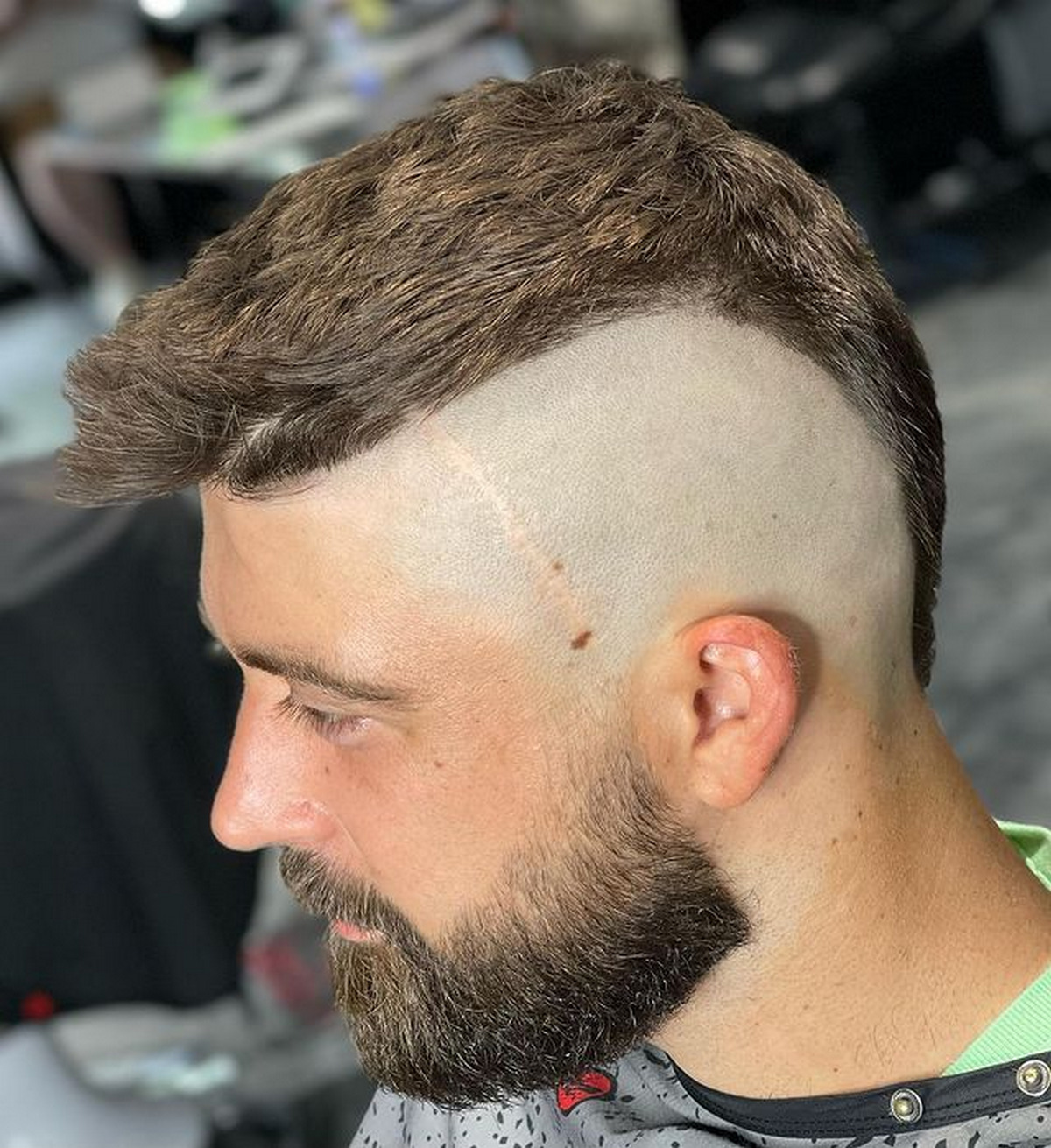
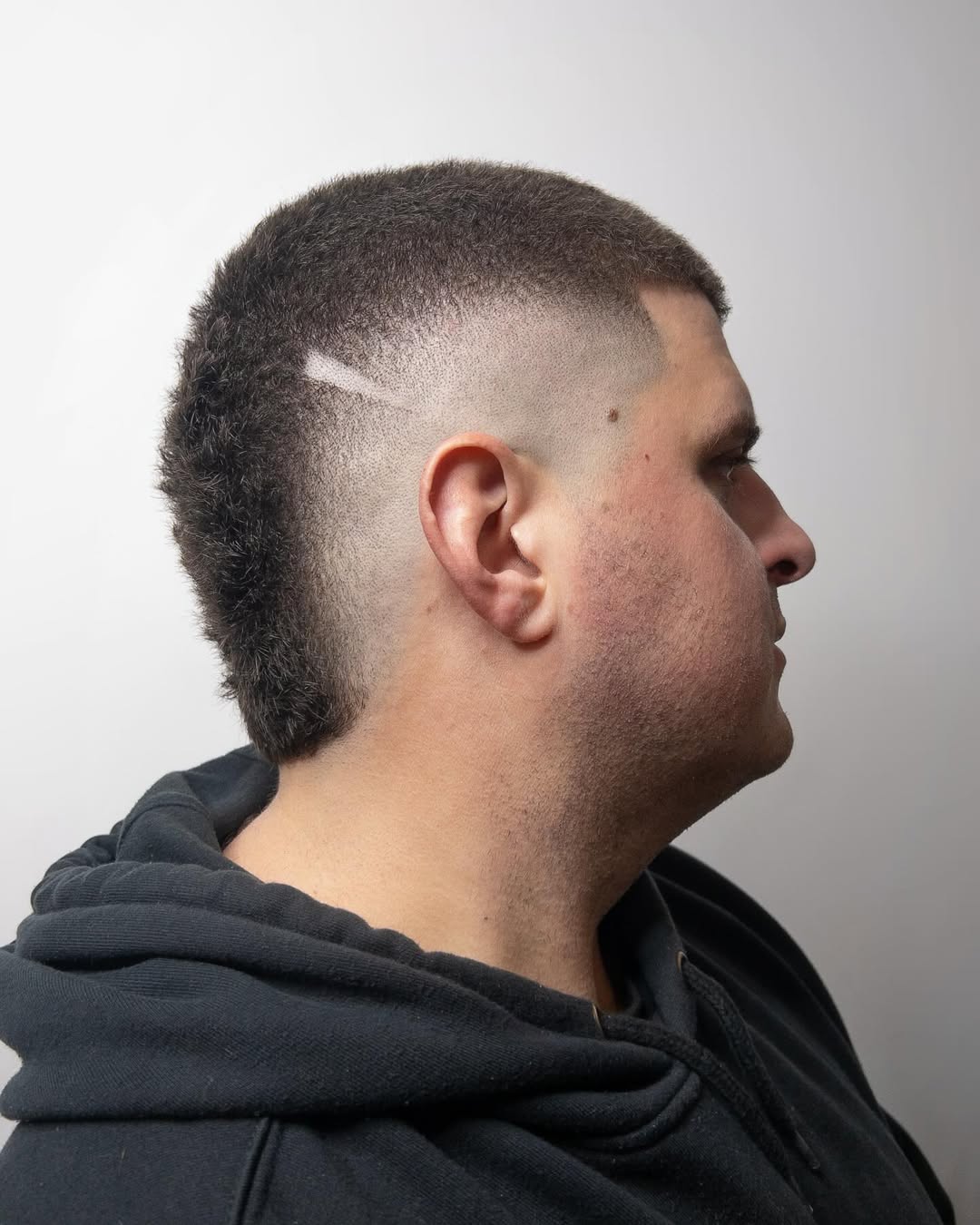
The short mohawk fade has evolved significantly by 2026, transitioning from its rebellious subculture roots into a versatile, high-fashion staple seen in both corporate boardrooms and creative studios. This hairstyle, characterized by a narrow strip of longer hair running from the forehead to the nape with graduated, faded sides, offers a structured silhouette that complements the modern emphasis on "precision grooming." Unlike the exaggerated spikes of decades past, the 2026 iteration focuses on texture, scalp health, and seamless transitions between lengths.
The term "short mohawk fade" refers specifically to the contemporary haircutting technique where the central hair length typically does not exceed two inches, and the sides are tapered using advanced clipper-over-comb or guard-graduation methods. It is distinct from the "faux hawk" in its aggressive side-tapering and from the "traditional mohawk" in its manageable, short-cropped top.
Anatomical Components of the 2026 Short Mohawk Fade
Understanding the technical composition of this style is essential for achieving the desired aesthetic. In 2026, barbers utilize a combination of architectural principles and hair density analysis to customize the cut to the wearer's cranial structure.
The Central Crest (The Mohawk Strip)
The top section is the focal point. For a "short" designation in 2026, the length generally ranges from 0.5 inches to 1.5 inches. Modern styling favors a textured, "choppy" finish over a blunt cut. This is achieved through point-cutting or razor-thinning, which allows the hair to stand vertically with minimal product. The width of the strip is typically determined by the outer corners of the eyes; a wider strip provides a more conservative look, while a narrow strip creates a sharper, more aggressive profile.
The Fade Transition
The "fade" element is where the technical skill of the stylist is most apparent. In 2026, we categorize these into three primary heights:
- High Fade: The transition begins near the crown, creating a bold contrast.
- Mid Fade: The taper starts at the temple level, offering a balanced, athletic appearance.
- Low Fade/Taper: The fade is restricted to the sideburns and the immediate neckline, resulting in a more subtle, "executive" version of the mohawk.
The Nape Termination
The 2026 trend heavily favors the "V-taper" or "pointed nape" finish for mohawks. Instead of a squared-off neckline, the hair at the back is graduated into a sharp or soft point, mirroring the vertical energy of the mohawk strip on top.
Top Short Mohawk Fade Variations for 2026
The versatility of this cut allows it to be adapted for various hair textures and lifestyle requirements. Below are the most requested variations currently dominating the grooming industry.
The Burst Fade Mohawk
This remains the most popular variant in 2026. The "burst" effect involves fading the hair in a circular pattern around the ear, leaving the hair long at the back of the neck. This creates a silhouette that looks like a traditional mohawk from the profile but maintains a fuller appearance from the back. It is particularly effective for those with curly or coily (Type 4) hair textures.
The Skin-Fade "Micro-Hawk"
For individuals seeking a low-maintenance, high-impact look, the skin-fade micro-hawk utilizes a #0 or foil-shaver finish on the sides. The top is kept extremely short (around 0.5 inches). This style is often paired with "scalp micropigmentation" (SMP) or "hair tattooing" to enhance the sharpness of the hairline, a common 2026 enhancement.
The Textured Crop Mohawk
This hybrid style blends the "French Crop" with a mohawk. The fringe is cut straight across or with heavy texture, while the rest of the strip follows the mohawk's longitudinal path. It is an excellent choice for men with straight or wavy hair who want to hide a receding hairline or add volume to a flat crown.
Comparison of Short Mohawk Fade Styles
Selecting the right version of this cut depends on face shape, maintenance commitment, and professional environment. The following table provides a comparative analysis of the leading 2026 variations.
| Style Name | Fade Depth | Best Face Shape | Maintenance Level | 2026 Professional Suitability |
|---|---|---|---|---|
| Burst Fade Mohawk | Tapered around ears | Oval / Heart | Moderate | Creative / Tech Sectors |
| High Skin Fade | Shaved to temple | Square / Round | High (Bi-weekly) | Athletic / Modern Casual |
| Low Taper Mohawk | Nape and Sideburns | Diamond / Oblong | Low | Executive / Corporate |
| Drop Fade Mohawk | Curved behind ear | All Shapes | Moderate | Versatile / Universal |
| Textured Crop Hawk | Mid-fade | Long / Oval | High (Styling req.) | High-Fashion / Editorial |
Technical Execution: The Barber’s Workflow
If you are a professional or an enthusiast looking to understand the 2026 standard for executing this cut, the following workflow outlines the precision steps required.
- Sectioning and Mapping: Use a comb to isolate the central strip from the recession line to the occipital bone. Secure this section with clips.
- Bulk Removal: Using a #3 or #4 guard, remove the bulk from the sides to create a canvas for the fade.
- Setting the Baseline: Establish the "bald line" using a trimmer if performing a skin fade. In 2026, we utilize ergonomic trimmers with zero-gap settings for surgical precision.
- Graduation: Transition from the bald line through guards #0.5, #1, and #1.5. Use the "flick-out" motion to prevent hard lines. The goal is a "smoke" effect where the skin blends into hair seamlessly.
- Shear Work on Top: Release the central strip. Use vertical sections and point-cutting to create texture. Ensure the length is slightly shorter at the crown than at the front to provide a forward-leaning "velocity" to the style.
- Refinement: Use a foil shaver to clean the lowest points of the fade and a straight razor for the line-up (the C-shape at the temple and the neckline).
Scalp Health and Product Integration
In 2026, a haircut is only as good as the scalp beneath it. The industry has shifted toward "Trichology-First" styling. Short mohawk fades expose a significant amount of scalp, making skin health paramount.
Pro-Tip: Post-Fade Scalp Recovery
Following a high-skin fade, the scalp is often sensitive due to the proximity of the blades. Barbers now recommend using a pH-balanced, probiotic-infused scalp serum immediately after the service. This prevents folliculitis and "barber's rash." For daily maintenance, a lightweight, SPF-30 matte moisturizer is essential to protect the exposed skin from UV damage, which can lead to premature aging and uneven skin tone on the sides of the head.
Styling Products for 2026
Traditional heavy pomades and high-shine gels have been replaced by bio-synthetic clays and mineral-infused sprays. To style a short mohawk:
- Volume: Use a "sea salt and peptide spray" on damp hair before blow-drying.
- Texture: Apply a "matte cloud clay" (a lightweight, airy product popular in 2026) to the tips of the hair.
- Hold: Finish with a "flexible-memory" resin spray that allows the hair to move but return to its upright shape.
Pros and Cons of the Short Mohawk Fade
Before committing to this style, it is important to weigh the practicalities of the look.
Pros
- Visual Height: The vertical orientation of the hair adds perceived height, which is beneficial for shorter individuals or those with round faces.
- Modernity: It is a contemporary "power cut" that signals confidence and attention to detail.
- Cooling: The faded sides provide excellent ventilation, making it a preferred choice for athletes or those living in warmer climates.
Cons
- High Maintenance: To keep the fade looking "crisp," a visit to the barber every 10 to 14 days is necessary.
- Growth awkwardness: As the sides grow out, the mohawk can lose its shape and begin to look like an unkempt "mullet-lite" if not maintained.
- Sun Exposure: As mentioned, the exposed scalp requires consistent sun protection.
Frequently Asked Questions (FAQ)
How often do I need to get a trim to keep a short mohawk fade looking sharp?
To maintain the 2026 standard of precision, you should visit your barber every 10 to 14 days. Because the sides are often taken down to the skin or a very low guard, even two weeks of growth (approximately 1/4 inch) can significantly blur the transition lines and diminish the "pop" of the mohawk.
Is the short mohawk fade appropriate for a professional corporate environment?
Yes, when executed as a "low taper" or "mid-taper" with a conservative length on top. In 2026, corporate grooming standards have relaxed, but the key to professionalism is the cleanliness of the fade and the use of matte styling products rather than "wet-look" gels. Avoiding "lightning bolt" or "hard part" designs on the sides also keeps the look sophisticated.
Can I achieve a short mohawk fade if I have thinning hair or a receding hairline?
The short mohawk fade is actually one of the best styles for thinning hair. By keeping the sides extremely tight, you minimize the contrast between the thinning areas and the rest of the head. Additionally, the vertical styling on top can be directed to cover thinning spots at the crown or to blend a receding hairline into a textured fringe.
What is the difference between a mohawk fade and a faux hawk?
The primary difference lies in the treatment of the sides and the nape. A faux hawk generally has tapered sides but does not necessarily extend the central strip all the way down to the nape. A mohawk fade specifically incorporates a fade (often to the skin) and maintains the signature "strip" of hair from the forehead to the bottom of the neckline, even if that strip is kept very short.
Does this style work with curly hair?
Absolutely. In 2026, the "Curly Mohawk" or "Fro-Hawk" with a burst fade is a major trend. The natural volume of curls makes it easier to achieve height without excessive product. Barbers often use a "sponge" or "twist" tool to define the curls on the central strip while keeping the sides skin-tight for maximum contrast.
Mastering the Look: Final Considerations
The short mohawk fade is more than just a haircut; it is a statement of architectural precision and personal style. As we move through 2026, the focus remains on the "clean-tech" aesthetic—sharp lines, healthy skin, and effortless texture. Whether you are opting for a bold high-skin fade or a subtle executive taper, the success of the style depends on the synergy between a skilled barber and a consistent home-maintenance routine. Embrace the versatility of the cut by experimenting with different textures, and always prioritize the health of your scalp to ensure your fade looks as premium as the day it was cut.