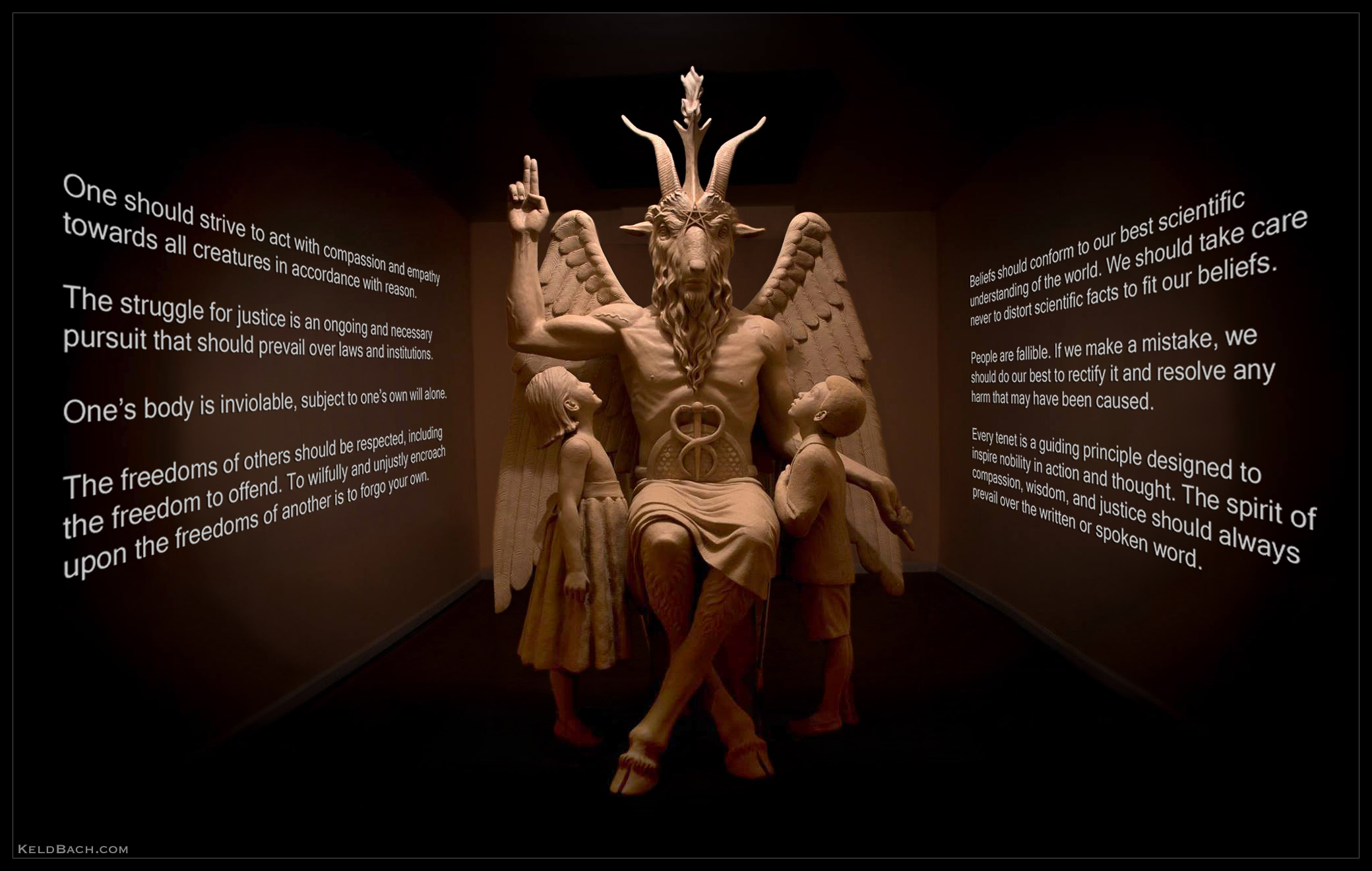
While the phrase "seven tenets" often appears in philosophical and sociological contexts—most notably the foundational principles of The Satanic Temple—in the critical sphere of global enterprise security and digital infrastructure for 2026, it refers exclusively to the NIST SP 800-207 Zero Trust Architecture (ZTA) framework. This article focuses on the technical application and strategic deployment of these seven core security principles.
The landscape of 2026 has rendered traditional "castle-and-moat" security strategies obsolete. With the ubiquity of decentralized workforces, edge computing, and hyper-integrated cloud environments, the perimeter is no longer a physical or logical boundary. To maintain operational integrity, organizations have shifted toward a Zero Trust model, which assumes that no user or asset is inherently trustworthy, regardless of their location on the network.
Understanding the NIST SP 800-207 Framework in 2026
The NIST SP 800-207 guidelines remain the gold standard for Zero Trust. In 2026, these tenets have evolved from conceptual suggestions to mandatory compliance requirements for federal agencies, healthcare systems, and financial institutions worldwide. The primary goal is to minimize the "blast radius" of a potential breach by strictly controlling access at the most granular level possible.
Tenet 1: All Data Sources and Computing Services are Considered Resources
The first tenet dictates that every single endpoint, service, and data repository must be treated as a discrete resource. In 2026, this includes not only traditional servers and databases but also microservices, serverless functions, and the vast array of IoT and OT (Operational Technology) devices connected to the enterprise fabric.
Resource Identification Strategy Comprehensive Inventory Management Organizations must maintain a real-time, automated inventory of all assets. In 2026, this involves AI-driven discovery tools that identify shadow IT and ephemeral cloud resources the moment they are provisioned. Classification of Data Resources are not equal. High-value assets (HVA) such as PII (Personally Identifiable Information) and proprietary intellectual property require more stringent enforcement than public-facing web assets.
Tenet 2: All Communication is Secured Regardless of Network Location
In the 2026 security paradigm, the internal network is treated with the same level of suspicion as the public internet. The "inside" is no longer a safe zone. This tenet mandates that every communication session must be encrypted and authenticated.
- Mandatory Encryption: All traffic must utilize TLS 1.3 or higher. For high-security environments, post-quantum cryptographic (PQC) algorithms are now being integrated to defend against future decryption threats.
- Mutual Authentication (mTLS): Both the client and the server must verify each other's identity before a single packet of data is exchanged.
- Network Agnosticism: Security policies must be applied consistently whether a user is connecting from a corporate office in New York, a satellite office in London, or a public Wi-Fi network.
Tenet 3: Access to Individual Resources is Granted on a Per-Session Basis
Trust is never permanent. In 2026, the concept of "persistent access" has been eliminated in favor of ephemeral, session-based permissions. Once a task is completed, the access is revoked, and the user must re-authenticate for the next session.
This approach utilizes Just-In-Time (JIT) and Just-Enough-Administration (JEA) principles. By granting the minimum necessary privileges for the shortest duration possible, organizations significantly reduce the risk of lateral movement by malicious actors who might have compromised a set of credentials.
Tenet 4: Access to Resources is Determined by Dynamic Policy
The decision to grant access is no longer based on a static username and password. Instead, 2026 architectures utilize a "Policy Decision Point" (PDP) that analyzes a wide array of dynamic signals in real-time.
- User Identity: Multi-factor authentication (MFA) status and behavioral biometrics.
- Asset Posture: Is the device patched? Is the EDR (Endpoint Detection and Response) active?
- Environmental Context: Time of day, geographic location, and network reputation.
- Application Sensitivity: The specific risk profile of the resource being requested.
Tenet 5: The Enterprise Monitors and Measures the Integrity and Security Posture of All Assets
No asset is allowed to access the network unless it meets strict health and integrity benchmarks. This tenet focuses on Continuous Posture Assessment (CPA). In 2026, this involves real-time scanning of devices for vulnerabilities, unauthorized software, or signs of compromise.
If a device’s security posture falls below a certain threshold—for example, if a critical OS update is missing or a suspicious process is detected—access is automatically throttled or denied by the Policy Enforcement Point (PEP) until the issue is remediated.
Tenet 6: All Resource Authentication and Authorization are Dynamic and Strictly Enforced
This is the "Never Trust, Always Verify" tenet in its most literal form. In 2026, authentication and authorization are not a one-time event at login. They are continuous processes that happen in the background throughout the duration of a session.
Advanced Security Service Edge (SSE) platforms now use AI to monitor for "anomalous session behavior." If a user who typically accesses marketing files suddenly begins querying sensitive financial databases, the system triggers a re-authentication challenge or terminates the session immediately, regardless of the initial credentials provided.
Tenet 7: The Enterprise Collects as Much Information as Possible About the Current State of Assets
The final tenet focuses on the feedback loop of security data. To improve the Zero Trust Architecture, the system must ingest and analyze massive amounts of telemetry from across the entire ecosystem.
- SIEM/SOAR Integration: Security Information and Event Management systems and Security Orchestration, Automation, and Response tools are used to correlate logs from diverse sources.
- Predictive Analytics: By 2026, many organizations use this data to predict potential breach attempts before they occur, moving from a reactive to a proactive security stance.
- Forensic Readiness: Comprehensive logging ensures that if an incident does occur, investigators have a granular audit trail of every access request and data movement.
Comparing Security Models: Legacy vs. 2026 Zero Trust
The following table outlines the fundamental shifts in security architecture between traditional perimeter-based models and the modernized 2026 Zero Trust framework.
| Security Feature | Traditional Perimeter Model (Legacy) | Zero Trust Architecture (2026 Standard) |
|---|---|---|
| Trust Philosophy | Binary (Inside = Trusted, Outside = Untrusted) | Zero inherent trust; trust is earned and verified |
| Network Access | VPN or Direct Local Connection | ZTNA (Zero Trust Network Access) via PEP/PDP |
| Authentication | Static Password / Simple MFA | Passwordless / Risk-Based Behavioral MFA |
| Device Integrity | Point-in-time check at login | Continuous automated posture assessment |
| Lateral Movement | High (Once inside, the network is open) | Extremely low (Micro-segmentation limits access) |
| Data Visibility | Siloed and fragmented logs | Unified telemetry and real-time AI analysis |
| Primary Goal | Keeping threats out of the network | Protecting individual resources and data |
Implementation Roadmap for 2026
Transitioning to a Zero Trust environment is a journey, not a single software installation. For organizations aiming for 2026 compliance, the following steps are critical.
Step 1: Define the Protect Surface
Instead of trying to protect the entire attack surface, identify the "Protect Surface"—the specific Data, Applications, Assets, and Services (DAAS) that are vital to your operation.
Step 2: Map the Transaction Flows
Understand how users interact with these resources. Where does the data flow? Who needs access to what? Mapping these flows allows for the creation of precise micro-segmentation rules.
Step 3: Architect the Zero Trust Network
Deploy Policy Enforcement Points (PEP) such as Cloud Access Security Brokers (CASB) or Secure Web Gateways (SWG). Ensure that the Policy Decision Point (PDP) has access to high-fidelity identity and threat intelligence feeds.
Step 4: Create the Zero Trust Policy
Draft policies based on the "Who, What, When, Where, and Why." For example: "Only employees in the Finance department (Who) using corporate-managed devices with active EDR (What) can access the Payroll Database (Where) during business hours (When) via an encrypted mTLS tunnel (Why)."
Step 5: Monitor and Maintain
The 2026 landscape is dynamic. Regularly audit access logs, refine policies based on AI insights, and ensure that new assets are automatically brought under the Zero Trust umbrella.
Expert Insight: The Human Element in 2026 Security
While the technical "seven tenets" provide the framework, the human element remains the most significant variable. In 2026, the most successful Zero Trust implementations are those that balance high security with user experience. Frictionless authentication methods, such as FIDO2-compliant biometrics and transparent ZTNA clients, are essential. If security measures are too cumbersome, users will inevitably find workarounds, creating new "Shadow IT" risks that the Zero Trust model is designed to prevent.
Frequently Asked Questions
What are the seven tenets of Zero Trust? The seven tenets are the core principles defined by NIST SP 800-207, which include treating all data as resources, securing all communications, granting session-based access, using dynamic policies, monitoring asset integrity, enforcing strict authentication, and collecting telemetry for continuous improvement. These principles ensure that trust is never assumed and always verified.
How does Zero Trust differ from a standard VPN? A VPN provides broad access to a network segment, often allowing a user to see and interact with many resources they don't actually need. Zero Trust, specifically through ZTNA, provides access only to specific applications and services, hiding the rest of the network from the user. In 2026, ZTNA is considered significantly more secure and scalable than traditional VPNs.
Is Zero Trust mandatory for businesses in 2026? While not a universal law for every private business, Zero Trust is a mandatory requirement for all US Federal agencies under Executive Order 14028. Additionally, many insurance providers and regulatory bodies in finance and healthcare now require Zero Trust alignment as a condition for coverage or compliance.
Do I need to replace all my hardware to implement the seven tenets? Not necessarily. Most modern Zero Trust strategies utilize a "software-defined" approach. Existing infrastructure can often be integrated into a Zero Trust framework using agents, gateways, and cloud-based security platforms. However, older legacy hardware that does not support modern encryption or identity protocols may eventually need to be phased out.
What is the "Policy Decision Point" (PDP)? The PDP is the "brain" of the Zero Trust Architecture. It is the centralized system that evaluates the access request against established security policies and dynamic signals (like user risk and device health) to decide whether to permit or deny access.
As we move through 2026, the seven tenets of Zero Trust are no longer optional "best practices" but the fundamental requirements for digital survival. Organizations that fail to adopt this rigorous, identity-centric approach will find themselves increasingly vulnerable to sophisticated cyber threats and regulatory penalties.