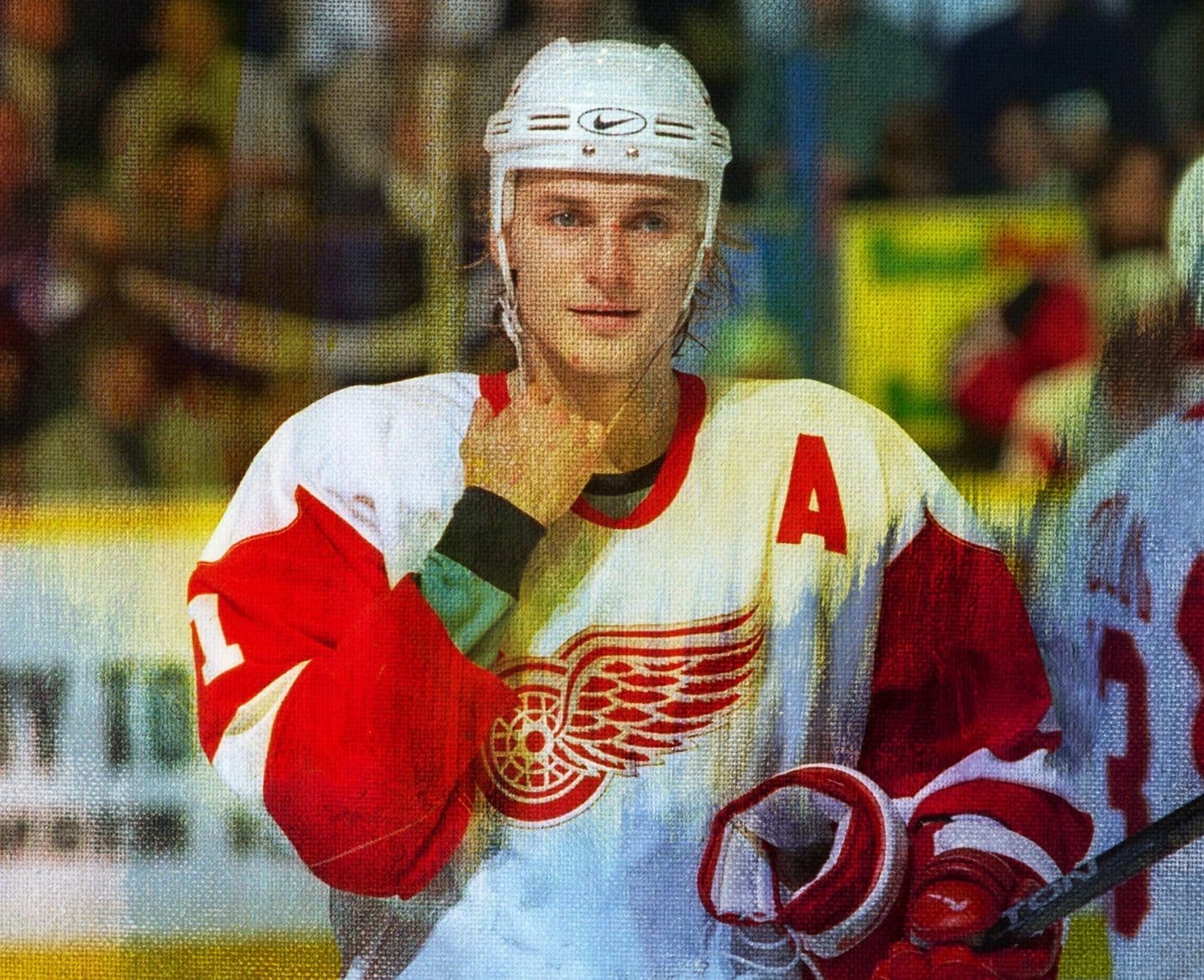
Sergei Fedorov is a legendary figure in professional hockey, celebrated for his unparalleled versatility as a forward and defenseman. By 2026, his legacy encompasses a storied NHL career with the Detroit Red Wings, a successful coaching tenure in the KHL, and a resilient financial recovery following high-profile legal challenges.
Professional Career: The Red Wings Dynasty and Beyond
Sergei Fedorov’s journey to the NHL is the stuff of cinematic drama. In 1990, during the Goodwill Games in Seattle, Fedorov defected from the Soviet Union to join the Detroit Red Wings. This "midnight run" was a pivotal moment in sports history, signaling the beginning of an era where Russian superstars would redefine North American hockey. Joining the Red Wings, Fedorov became a cornerstone of the "Russian Five," a unit consisting of himself, Viacheslav Fetisov, Igor Larionov, Vladimir Konstantinov, and Vyacheslav Kozlov. Under the guidance of coach Scotty Bowman, this group integrated Soviet-style puck possession and fluid positioning into the NHL, leading Detroit to back-to-back Stanley Cups in 1997 and 1998.
The 1993-1994 season remains Fedorov’s statistical masterpiece. He became the first European-trained player to win the Hart Memorial Trophy as the league's MVP. In the same year, he earned the Frank J. Selke Trophy as the best defensive forward, a rare feat that underscored his ability to dominate both ends of the ice. His speed was legendary; he was often cited as the fastest skater in the league, capable of back-checking as effectively as he spearheaded an attack.
After 13 seasons in Detroit, Fedorov’s career took him to the Mighty Ducks of Anaheim, the Columbus Blue Jackets, and finally the Washington Capitals. In Washington, he served as a veteran mentor to a young Alexander Ovechkin, helping the franchise transition into a perennial contender. His departure from the NHL in 2009 did not mark the end of his involvement in hockey; he returned to Russia to play for Magnitogorsk Metallurg before transitioning into management and coaching.
Sergei Fedorov’s Net Worth: From Record Contracts to Financial Resilience
As of 2026, Sergei Fedorov’s net worth is estimated to be approximately $50 million. This figure is the result of a complex financial history characterized by massive earnings, significant losses due to fraud, and a steady recovery through executive roles and coaching.
During his NHL prime, Fedorov was one of the highest-paid athletes in the world. In 1998, he signed a landmark contract with the Detroit Red Wings following a 59-game holdout. The deal was structured with a $14 million signing bonus and reached a total of $28 million for just 21 games of work—a record at the time. Over his 18-season NHL career, his total salary earnings exceeded $81 million.
However, Fedorov’s wealth was severely impacted by a massive embezzlement scheme. He was a primary victim of Joseph Zada, a business associate who defrauded Fedorov of approximately $43 million over several years. The legal battle that followed was grueling, and while Fedorov won a judgment against Zada, the actual recovery of the funds was a slow and difficult process. This financial blow was one of the primary reasons Fedorov continued to play professionally in Russia into his early 40s. By 2026, however, through prudent management of his remaining assets and his high-level salary as the head coach of CSKA Moscow, he has rebuilt a substantial portion of his wealth.
Family Life and Personal Background
Sergei Fedorov was born in Pskov, Russia, to Viktor and Natalia Fedorov. His father, Viktor, was a significant influence on his development, serving as a coach and mentor throughout his youth. The Fedorov family was deeply rooted in the Soviet athletic system, which instilled the discipline and technical precision that defined Sergei’s playstyle.
Sergei is not the only athlete in the family; his younger brother, Fedor Fedorov, also pursued a career in professional hockey. Fedor was drafted by the Vancouver Canucks in 2001 and played in the NHL and KHL. While Fedor did not reach the same Hall of Fame heights as his older brother, the two remain close, often collaborating on hockey clinics and youth development programs in Russia.
In his personal life, Sergei has maintained a degree of privacy following high-profile relationships in the late 1990s, most notably with tennis star Anna Kournikova. In 2014, he married his wife, Corrina, and the couple has a daughter. In recent years, Fedorov has spoken about the importance of family stability, contrasting the quiet life he leads now with the intense media scrutiny of his early career in Detroit.
Life After the NHL: Coaching and Executive Leadership
By 2026, Fedorov has established himself as one of the most successful coaches in the Kontinental Hockey League (KHL). After retiring from active play, he moved into the front office of CSKA Moscow, one of the most prestigious clubs in Russia. His transition from general manager to head coach was met with immediate success.
Under Fedorov’s leadership, CSKA Moscow became a dominant force, winning multiple Gagarin Cups. His coaching philosophy mirrors his playing style: a heavy emphasis on two-way responsibility, disciplined puck movement, and tactical flexibility. His success behind the bench has led to frequent speculation about a potential return to the NHL in a coaching or managerial capacity, though as of 2026, he remains committed to the development of the Russian game.
Key Career Achievements and Statistics
The following table highlights the major milestones of Sergei Fedorov’s professional career, reflecting his dominance in both the NHL and international competition.
| Achievement/Metric | Detail | Year(s) |
|---|---|---|
| Stanley Cup Championships | 3 Titles (Detroit Red Wings) | 1997, 1998, 2002 |
| Hart Memorial Trophy | NHL Most Valuable Player | 1994 |
| Frank J. Selke Trophy | Best Defensive Forward | 1994, 1996 |
| Ted Lindsay Award | Most Outstanding Player (Voted by Peers) | 1994 |
| NHL All-Star Appearances | 6 Selections | 1992, 1994, 1996, 2001–2003 |
| Hockey Hall of Fame | Inducted as Player | 2015 |
| KHL Gagarin Cup | Won as Head Coach (CSKA Moscow) | 2022, 2023 |
| Total NHL Career Points | 1,179 (483 Goals, 696 Assists) | 1990–2009 |
The "Russian Five" and Tactical Innovation
Fedorov’s impact on hockey extends beyond his individual stats. As part of the "Russian Five," he helped introduce a brand of hockey that relied on five-man units acting in unison. Unlike the traditional North American "dump and chase" style, Fedorov and his teammates emphasized "interchangeability." If Fedorov, a center, carried the puck deep into the zone, a defenseman like Fetisov would cycle to the high slot to cover him.
This tactical innovation paved the way for the modern NHL, where defensemen are expected to be mobile and forwards are required to be defensively responsible. Fedorov was the ultimate Swiss Army knife in this system; Scotty Bowman famously played him on defense for several games to fill gaps in the lineup, and Fedorov excelled to the point that many analysts believed he could have won a Norris Trophy (best defenseman) had he played the position permanently.
Frequently Asked Questions
Was Sergei Fedorov actually married to Anna Kournikova?
The nature of the relationship between Fedorov and tennis star Anna Kournikova was a major media topic in the late 1990s. Fedorov stated in a 2003 interview with Sports Illustrated that they were briefly married and then divorced. Kournikova’s representatives have historically been more vague, but the relationship remains a notable part of sports pop culture history.
How did Sergei Fedorov lose his money?
Fedorov lost approximately $43 million through a Ponzi-like investment scheme orchestrated by Joseph Zada. Zada promised high returns on investments that did not exist, using funds from new investors to pay off old ones while embezzling the rest. Fedorov successfully sued Zada, but the loss forced him to prolong his playing career in the KHL to regain financial stability.
What is Sergei Fedorov doing in 2026?
As of 2026, Sergei Fedorov is primarily focused on his coaching and executive career in Russia. He continues to lead CSKA Moscow as a high-level strategist and is frequently involved in international hockey diplomacy. He also remains active in charity work, supporting youth hockey initiatives in his home country.
Why is Sergei Fedorov considered one of the greatest of all time?
Fedorov is one of the few players in history who could play every position on the ice at an elite level. He is the first player to win the Hart and Selke trophies in the same season, demonstrating total dominance in both offense and defense. His skating ability and hockey IQ are often cited by contemporaries like Wayne Gretzky and Mario Lemieux as being among the best they ever faced.
When was Sergei Fedorov inducted into the Hockey Hall of Fame?
Sergei Fedorov was inducted into the Hockey Hall of Fame in 2015, his first year of eligibility. This induction recognized his three Stanley Cups, his multiple individual awards, and his role in pioneering the transition of Soviet players into the NHL.
Practical Guidance for Fans and Historians
For those looking to explore Fedorov’s legacy further, his 2015 Hall of Fame induction speech provides a deep look into his gratitude for the city of Detroit and his teammates. Additionally, the documentary The Russian Five offers an excellent visual history of how Fedorov and his countrymen changed the culture of the Red Wings and the NHL at large. Collectors of sports memorabilia should note that authentic Fedorov Detroit jerseys from the 1990s remain among the most sought-after items for hockey enthusiasts, particularly those featuring the 1997 or 1998 Stanley Cup patches.