September 26 is a date of profound historical and cultural weight, marked by events that reshaped global politics, saved the world from nuclear catastrophe, and revolutionized modern media. From the first televised presidential debate in 1960 to international observances promoting linguistic diversity and reproductive health, this day serves as a pivotal anchor in the Gregorian calendar.
Global Observances and International Awareness Days
September 26 is recognized globally for several significant observances that aim to foster cooperation, health, and cultural preservation. These initiatives are spearheaded by international bodies and reflect modern society's commitment to education and human rights.
European Day of Languages
Established by the Council of Europe in 2001, the European Day of Languages is celebrated annually on September 26. The primary objective is to alert the public to the importance of language learning and diversifying the range of languages learned to increase plurilingualism and intercultural understanding.
In 2026, as Europe continues to navigate complex migration patterns and digital integration, this day remains a cornerstone for promoting the rich linguistic heritage of the continent, which features over 200 indigenous languages. Schools, universities, and cultural centers across 46 member states host events ranging from "speak-dating" (short conversations in different languages) to film festivals and radio broadcasts. The observance emphasizes that language skills are a necessity and a right for everyone, not just an academic pursuit.
World Contraception Day
First observed in 2007, World Contraception Day (WCD) takes place every September 26. This global campaign centers on a vision where every pregnancy is wanted. It aims to improve awareness of all contraceptive methods available and to enable young people to make informed decisions regarding their sexual and reproductive health.
The day is supported by a coalition of international non-governmental organizations (NGOs), governmental organizations, and scientific and medical societies. For 2026, the focus continues to be on reducing the high rates of unintended pregnancies worldwide, which have significant socio-economic impacts on developing and developed nations alike. Educational initiatives on this day often target the debunking of myths surrounding hormonal and non-hormonal birth control.
World Environmental Health Day
Inaugurated by the International Federation of Environmental Health (IFEH) in 2011, World Environmental Health Day is dedicated to highlighting the integral link between environmental health and human well-being. Each year, the IFEH selects a theme that addresses current global threats, such as air quality, climate change, or chemical safety. Given the environmental challenges faced in 2026, the day serves as a critical call to action for policy-makers to implement sustainable urban planning and pollution control measures.
Pivotal Moments in World History
September 26 has witnessed some of the most consequential turning points in human history. These events range from the completion of epic voyages to the avoidance of global annihilation.
1580: Francis Drake’s Circumnavigation
On September 26, 1580, the English explorer and privateer Francis Drake returned to Plymouth, England, aboard the Golden Hind. This marked the completion of the second circumnavigation of the globe in a single expedition (after the Magellan-Elcano expedition) and the first to be led by a single captain from start to finish.
Drake’s return was not just a feat of navigation; it was a massive political and economic win for Queen Elizabeth I. He brought back a fortune in Spanish gold and silver, much of it raided from Spanish ports along the Pacific coast of the Americas. This event solidified England’s status as a rising maritime power and significantly worsened the tensions that would eventually lead to the Spanish Armada in 1588.
1960: The First Televised Presidential Debate
Perhaps no event on September 26 has had a more lasting impact on modern political communication than the first televised debate between John F. Kennedy and Richard Nixon in 1960. Held at the WBBM-TV studios in Chicago, this was the first of four "Great Debates."
The debate highlighted the growing power of visual media. Nixon, recovering from a recent hospitalization, appeared pale, underweight, and had a visible "five o'clock shadow," famously refusing makeup. In contrast, Kennedy appeared tanned, rested, and confident. Research conducted after the event suggested a startling dichotomy: those who listened to the debate on the radio largely believed Nixon had won or that it was a draw, while the millions who watched on television overwhelmingly favored Kennedy. This moment fundamentally changed how political campaigns were run, forcing candidates to prioritize their "on-camera" persona as much as their policy platforms.
1983: The Man Who Saved the World
On September 26, 1983, a Lieutenant Colonel in the Soviet Air Defence Forces named Stanislav Petrov likely prevented a full-scale nuclear war between the Soviet Union and the United States. Petrov was the officer on duty at the Serpukhov-15 bunker near Moscow, which monitored the Soviet Union's early-warning satellite system, Oko.
Shortly after midnight, the system’s computers reported that the United States had launched five Intercontinental Ballistic Missiles (ICBMs). According to Soviet protocol, this should have triggered an immediate retaliatory strike. However, Petrov followed his intuition and dismissed the warning as a false alarm, reasoning that a "first strike" by the U.S. would involve hundreds of missiles, not just five.
His judgment was correct. It was later determined that the satellites had been deceived by the sun's reflection off the tops of high-altitude clouds. Petrov’s decision to remain calm and wait for verification is credited with preventing a global catastrophe during one of the most tense periods of the Cold War.
Political Milestones and Sovereignty
September 26 has also been a day of significant administrative and sovereign transitions, shaping the modern map of the world and the structure of major governments.
1789: Thomas Jefferson Appointed Secretary of State
In the early days of the United States, President George Washington made a critical appointment on September 26, 1789, by naming Thomas Jefferson as the nation's first Secretary of State. Jefferson was at the time serving as the U.S. Minister to France.
This appointment was instrumental in defining the role of the State Department and the execution of American foreign policy. Jefferson’s tenure was marked by the ongoing struggle to balance relations between Revolutionary France and Great Britain, as well as his internal ideological battles with Alexander Hamilton over the powers of the federal government.
1907: Dominion Status for New Zealand and Newfoundland
On September 26, 1907, the British colonies of New Zealand and Newfoundland were officially granted Dominion status within the British Empire. This was a major step toward full independence, granting these territories greater control over their internal affairs while remaining technically under the British Crown.
For New Zealand, "Dominion Day" was celebrated for many years as a mark of its growing maturity as a nation. While Newfoundland eventually joined the Canadian Confederation in 1949, New Zealand evolved into a fully sovereign state. In 2026, while the holiday is no longer a public day of rest for most of New Zealand, it remains a vital touchstone for historians studying the decolonization of the British Empire.
Astrology and Astronomical Context
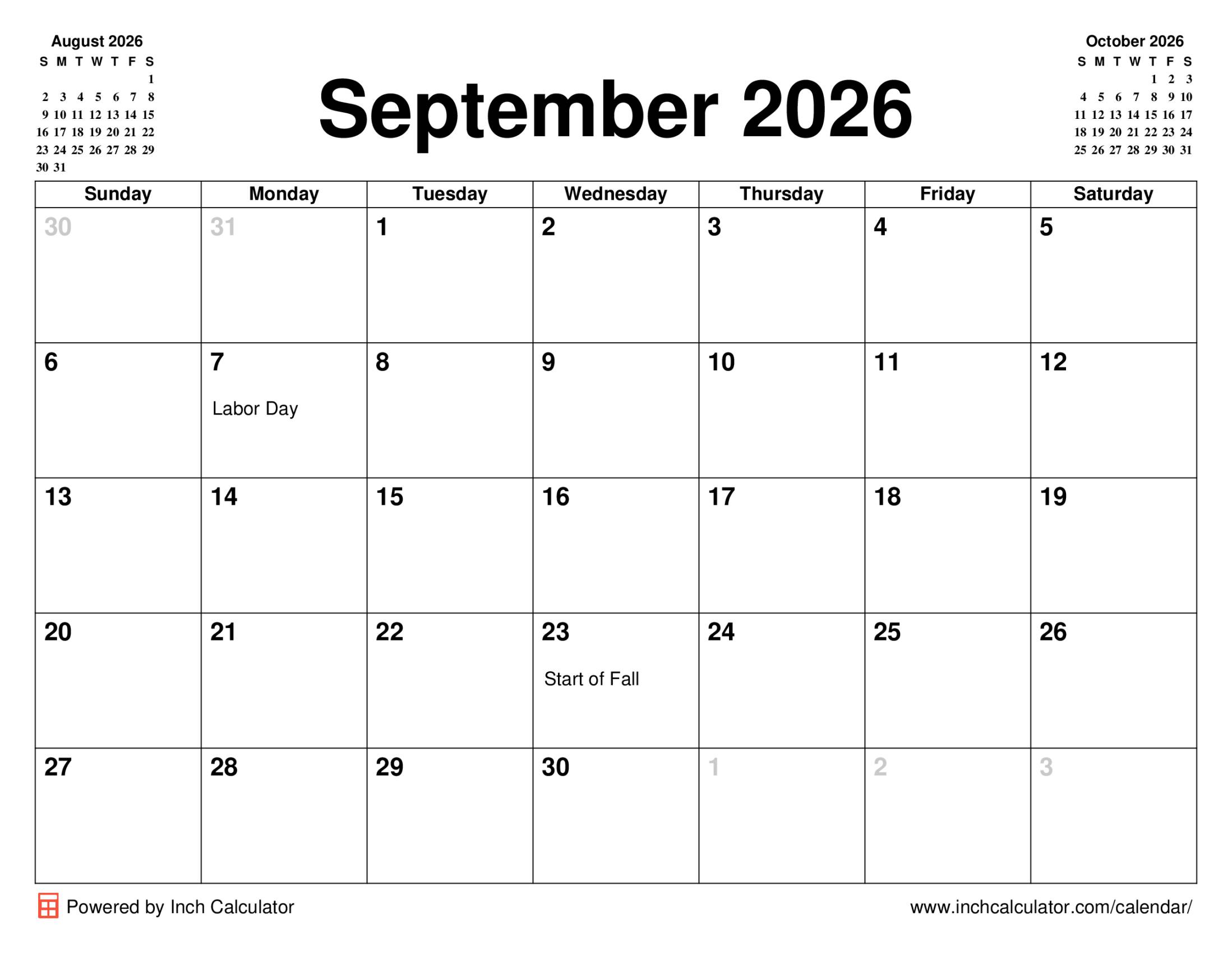
In 2026, September 26 falls on a Saturday. This date sits squarely within the zodiac sign of Libra, which spans from September 23 to October 22.
The Libra Influence
Libras are a "Cardinal Air" sign, symbolized by the scales. This placement is significant because it coincides with the autumnal equinox in the Northern Hemisphere (and the vernal equinox in the Southern Hemisphere). Traditionally, those born on September 26 are said to embody the Libra traits of:
- Diplomacy: A natural inclination toward resolving conflicts and seeking balance, mirrored by the historical events of the day (such as Petrov’s restraint).
- Aesthetics: A strong appreciation for art, beauty, and social harmony.
- Intellectualism: As an air sign, Libra is associated with communication, logic, and the exchange of ideas.
Astronomical Events for September 2026
While there are no major solar eclipses scheduled exactly for September 26, 2026, the date is close to the partial solar eclipse of September 21, 2026. Astronomically, the night sky on September 26 often provides clear viewing opportunities for the constellation Pegasus and the Andromeda Galaxy for observers in the Northern Hemisphere, as the autumn sky begins to transition into the more prominent winter constellations.
Historical Comparison of September 26 Events
The following table compares the magnitude and impact of the primary historical events discussed:
| Year | Event | Category | Primary Impact |
|---|---|---|---|
| 1580 | Drake's Return | Exploration | Established England as a global naval power. |
| 1789 | Jefferson's Appointment | Politics | Formed the foundation of U.S. foreign diplomacy. |
| 1907 | NZ/Newfoundland Dominion | Sovereignty | Marked a shift from colonial rule to self-governance. |
| 1960 | First Televised Debate | Media/Politics | Forever linked political success to media performance. |
| 1983 | Petrov's Nuclear Alert | Security | Prevented World War III through human judgment. |
| 2001 | European Day of Languages | Culture | Promoted plurilingualism across 46 countries. |
Frequently Asked Questions
What is the most significant event that happened on September 26?
While "significance" is subjective, the 1983 Stanislav Petrov incident is widely considered the most consequential for humanity. A failure in his judgment could have resulted in a global nuclear exchange, ending modern civilization. Historically, Francis Drake’s return in 1580 is also a top contender as it signaled the start of English global dominance.
Is September 26 a public holiday?
September 26 is not a global public holiday. However, it is an official observance day in several capacities. In New Zealand, Dominion Day (September 26) is technically still a "provincial anniversary day" in some regions (like South Canterbury), though it is not a nationwide day off. For most people, it is a standard working day, though recognized by the UN and Council of Europe for specific themes.
Which famous people were born on September 26?
Several notable figures share this birthday, including T.S. Eliot (poet), Serena Williams (tennis champion), Olivia Newton-John (singer/actress), and George Gershwin (composer). The diversity of these figures—from literature and music to elite sports—reflects the versatile "Libra" energy often associated with this date.
How does World Contraception Day help people?
World Contraception Day provides a platform for NGOs and health providers to offer free resources, education, and clinical access to birth control methods. It helps reduce the stigma surrounding reproductive health and empowers individuals to plan their families according to their economic and personal circumstances, which is a major factor in poverty reduction.
Why was the 1960 debate so important for television?
The 1960 Nixon-Kennedy debate was important because it proved that television could influence an election more than policy or logic. It introduced the concept of the "telegenic" politician. Before this, candidates were judged by their words; after September 26, 1960, they were also judged by their appearance, body language, and ability to handle the "hot" medium of television.
Practical Engagement for September 26
If you are looking to mark the significance of September 26 in 2026, consider focusing on the themes of communication and historical reflection. Because it falls on a Saturday, it is an excellent opportunity for the following:
- Language Exploration: In honor of the European Day of Languages, download a language-learning app or attend a local cultural festival to learn basic phrases in a language you’ve never spoken.
- Historical Education: Watch a documentary on the Cold War or the 1960 debates to understand how fragile peace and political perception can be.
- Environmental Stewardship: Participate in a local "Environmental Health" cleanup or audit your home's energy efficiency, aligning with World Environmental Health Day.
- Astrological Observation: If the weather permits, take a telescope or binoculars out to observe the Libra constellation, which is best viewed in the early evening during late September.
Understanding the events of September 26 provides a window into the evolution of our modern world—from the high seas of the 16th century to the digital broadcasts of the 20th and the linguistic preservation of the 21st.