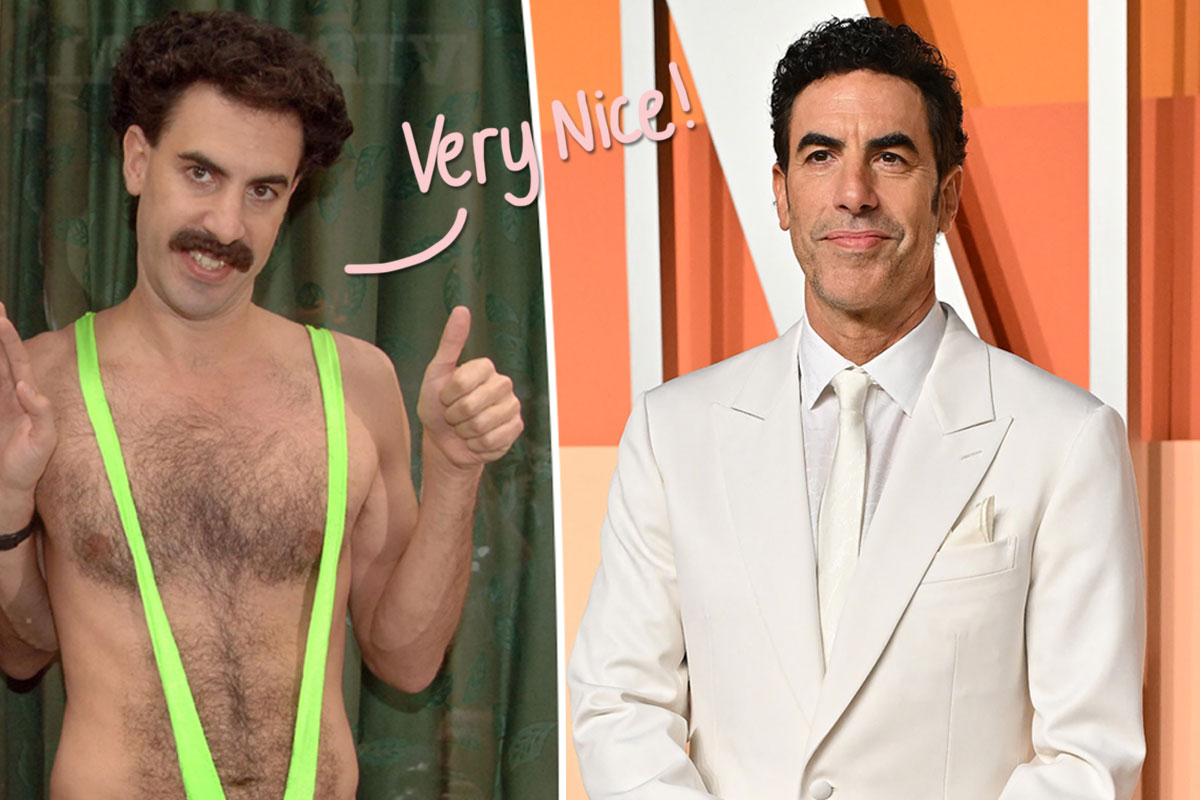
Sacha Baron Cohen’s career is defined by a high-stakes tension between transformative satire and the legal limits of consent. While his characters like Borat and Bruno have earned critical acclaim, they have simultaneously triggered massive lawsuits, accusations of exploitation, and a fundamental shift in how the entertainment industry manages legal risk and participant waivers.
The Satirical Architect: Understanding Cohen’s Guerilla Methodology
To understand the scale of controversy surrounding Sacha Baron Cohen, one must first analyze the "guerilla" methodology he pioneered. Unlike traditional sketch comedy, Cohen’s work relies on immersive deception, where the subject is unaware they are part of a comedy production. As of 2026, this remains one of the most polarizing techniques in media history, sitting at the intersection of performance art and investigative journalism.
Cohen typically employs a multi-layered approach to secure his "marks." This involves creating shell production companies with generic names, hiring intermediaries to book interviews under false pretenses, and presenting participants with complex legal documents that strip away their right to sue for "defamation, emotional distress, or loss of reputation." The satirical goal is usually to expose prejudice, hypocrisy, or the absurdity of polite society. However, the byproduct is often a trail of individuals who feel humiliated and legally trapped.
The industry impact of this methodology is twofold. On one hand, it has proven that the "mockumentary" format can achieve deep cultural penetrations that standard documentaries cannot. On the other, it has necessitated a specialized sub-genre of entertainment law focused entirely on the enforceability of "Standard Participant Agreements." Cohen’s success is built on the strength of his legal defense as much as his comedic timing.
Landmark Legal Battles: Why Most Lawsuits Against Cohen Fail
Despite dozens of attempts by participants to sue Cohen and his production companies (such as Four by Two Films), the vast majority of these cases have been dismissed. The primary reason is the ironclad nature of the consent waivers participants sign before the cameras roll. These documents are designed to withstand claims of fraud and misrepresentation, even when the person signing them was lied to about the nature of the project.
For example, in the case of the 2006 film Borat, several participants—including two fraternity brothers and an etiquette coach—filed lawsuits claiming they were tricked. Judges consistently ruled that because the participants signed a release that explicitly warned the film might be "satirical" or "offensive," their claims of being misled were legally moot. This has established a powerful precedent: in the eyes of the law, a signed contract often outweighs a verbal lie in a pre-production setting.
| Case Name / Participant | Project | Primary Claim | Legal Outcome |
|---|---|---|---|
| Roy Moore vs. Cohen | Who Is America? | Defamation & Emotional Distress ($95M) | Dismissed (2022); Appeal Rejected. |
| Villagers of Glod | Borat | Exploitation & Misrepresentation | Dismissed; UK/US courts cited signed waivers. |
| Anne Plese (Etiquette) | Borat | Fraud and Emotional Distress | Case Dismissed; judge cited clear waiver terms. |
| Richelle Olson | Brüno | Physical Injury / Assault | Settled out of court/Dismissed. |
| Rebel Wilson Allegations | The Brothers Grimsby | Hostile Environment / Harassment | Public dispute; no formal lawsuit as of 2025. |
The dismissal of Roy Moore’s $95 million lawsuit in 2022 (and the subsequent failure of his appeals) served as a definitive moment for the industry. Moore argued he was lured to an interview under the guise of receiving a pro-Israel award, only to be "tested" for pedophilia with a "wand." The court ruled that Moore had signed a disclosure agreement that waived his right to sue for such depictions, reinforcing the legal "shield" around Cohen’s work.
The Ethics of Representation: Public Backlash from Glod to Modern Day
While Cohen has largely won his legal battles, the public backlash regarding his treatment of vulnerable populations has left a more complicated legacy. One of the most significant controversies involves the village of Glod, Romania, which stood in for Borat’s Kazakhstan. The villagers, many of whom were impoverished, claimed they were told the film was a documentary about poverty and were paid a pittance (around $3 to $5) to participate in scenes that depicted them in degrading ways.
The backlash from Glod highlighted a critical ethical divide: is it fair to target the powerful (like politicians) using the same deceptive tactics used on the powerless? Critics argue that while "punching up" at figures like Rudy Giuliani or Roy Moore is a valid form of political satire, "punching down" at marginalized communities crosses into exploitation. This sentiment has grown stronger in recent years, leading to a more nuanced public perception of Cohen’s earlier work.
Furthermore, the backlash hasn't been limited to the subjects of his films. As of 2024 and 2025, the industry has seen a rise in "internal" backlash. This shift suggests that the public is no longer just concerned with who Cohen tricks, but how he conducts himself on professional sets. The era of the "unaccountable genius" is fading, replaced by a 2026 standard of workplace transparency that challenges Cohen’s historic "at any cost" approach to comedy.
Industry Shift: The "Rebel Wilson" Effect and Internal Production Standards
In early 2024, actress Rebel Wilson published her memoir, Rebel Rising, which included a chapter detailing her negative experiences working with Cohen on the 2016 film The Brothers Grimsby. Wilson alleged that Cohen pressured her into filming sexually suggestive scenes that were not in the script and created a hostile work environment. Cohen’s legal team vehemently denied the claims, providing video evidence and testimony to the contrary, which eventually led to some versions of the book being redacted in certain jurisdictions (specifically the UK).
Regardless of the legal outcome, the "Rebel Wilson" incident marked a turning point in the industry's view of Cohen. It moved the controversy from the realm of "tricking strangers" to the realm of workplace safety and professional conduct. For the industry, this has resulted in:
- Stricter Intimacy Coordination: Cohen’s style of improvisational, often boundary-pushing comedy now faces 2026-era mandates for intimacy coordinators on all sets, regardless of the satirical intent.
- Liability Insurance Premiums: Productions involving "ambush" tactics or controversial figures have seen a sharp rise in insurance costs. Insurers now require deeper legal vetting of every participant waiver.
- The "Sacha Clause": Many talent contracts now include specific language regarding "unscripted changes to sexual or offensive content," colloquially inspired by the fallout of the Grimsby production.
These changes indicate that while Cohen’s "external" legal strategy remains effective, the "internal" industry culture has shifted to prioritize the protection of co-stars and crew over the spontaneity of the performer.
Legal Precedents and the Future of Immersive Comedy
The long-term impact of Sacha Baron Cohen’s legal history is the codification of the "Deception Defense" in entertainment. Courts have effectively ruled that in the context of creating art and satire, a certain level of deception is protected by the First Amendment (in the US) and similar free-expression laws elsewhere, provided a waiver is signed.
However, this has created a "race to the bottom" in some corners of digital media. Influencers and pranksters often cite "the Borat precedent" to justify harassment or dangerous stunts. This has forced legal scholars to draw clearer lines between journalistic satire (which Cohen claims to practice) and reckless endangerment. In 2026, we are seeing the first wave of legislation aimed at "digital consent," which may eventually narrow the loophole Cohen has navigated so successfully for three decades.
The industry now balances a respect for Cohen’s ability to "expose the truth" with a growing demand for ethical accountability. The legacy of his controversies is not just a collection of lawsuits, but a complete rewrite of the contract between the performer, the subject, and the audience.
Summary of Legal and Industry Impacts
- Contract Enforceability: Established that broad liability waivers are largely enforceable even if obtained through misrepresentation.
- Production Costs: Increased the necessity for "Specialized Production Insurance" for mockumentary-style content.
- Workplace Evolution: Accelerated the adoption of intimacy and safety protocols to protect professional actors from improvisational "pressure."
- Satirical Limits: Drew a cultural line between "punching up" at political figures and "punching down" at vulnerable populations.
Frequently Asked Questions
Did Roy Moore win his lawsuit against Sacha Baron Cohen?
No. Roy Moore’s $95 million defamation lawsuit was dismissed by a federal judge in 2022. The court ruled that Moore had signed a waiver that explicitly allowed for "satirical" and "humorous" portrayals, and that the segment in Who Is America? was protected by the First Amendment.
Why didn't the villagers of Glod win their case for the Borat film?
The villagers of Glod sued for $30 million, claiming they were misrepresented as "rapists and incestuous." However, US and UK courts dismissed the claims because the production had obtained signed releases. Additionally, judges noted that the film was clearly a work of fiction/satire, and the villagers' actual identities were not used in a defamatory way under legal definitions.
How does Sacha Baron Cohen avoid being arrested for his stunts?
Cohen employs an extensive legal team that vets every "stunt" for compliance with local laws. He often operates in a legal "gray area" of consent. While he has been detained by police several times (including during the filming of Borat and Bruno), his production company typically resolves these issues through pre-arranged legal support and by ensuring no actual laws—such as trespassing or assault—are definitively broken.
What was the result of Rebel Wilson’s allegations against Cohen?
Rebel Wilson's allegations led to significant media coverage and a brief legal standoff. Cohen's team released footage to disprove some of her claims regarding specific scenes. While no criminal or civil charges were filed by Wilson, the controversy led to the redaction of certain passages in her memoir in the UK and sparked a wider industry conversation about Cohen's onset behavior.
Does the "Borat" legal strategy still work in 2026?
It is increasingly difficult. With the rise of social media and instant facial recognition, "tricking" people is harder than it was in 2006. Furthermore, the 2026 legal landscape is more focused on "informed consent," meaning that the extremely vague waivers used in the early 2000s are being challenged more rigorously in modern courts.
Assessing Satirical Impact and Moving Forward
For those studying the impact of Sacha Baron Cohen, the next step is to analyze the balance between artistic freedom and human rights. While his work has undeniably exposed systemic issues—such as antisemitism and political corruption—the methods used to achieve those revelations remain a subject of intense ethical debate.
In 2026, producers and creators should focus on implementing informed consent models that do not rely on exploitation. The industry’s shift toward greater transparency suggests that while the "ambush" style of comedy may never fully disappear, the era of tricking the vulnerable for the sake of a laugh is under greater scrutiny than ever before. Observers should watch for new legal rulings regarding "digital deception" as the next frontier in the legacy Cohen helped build.