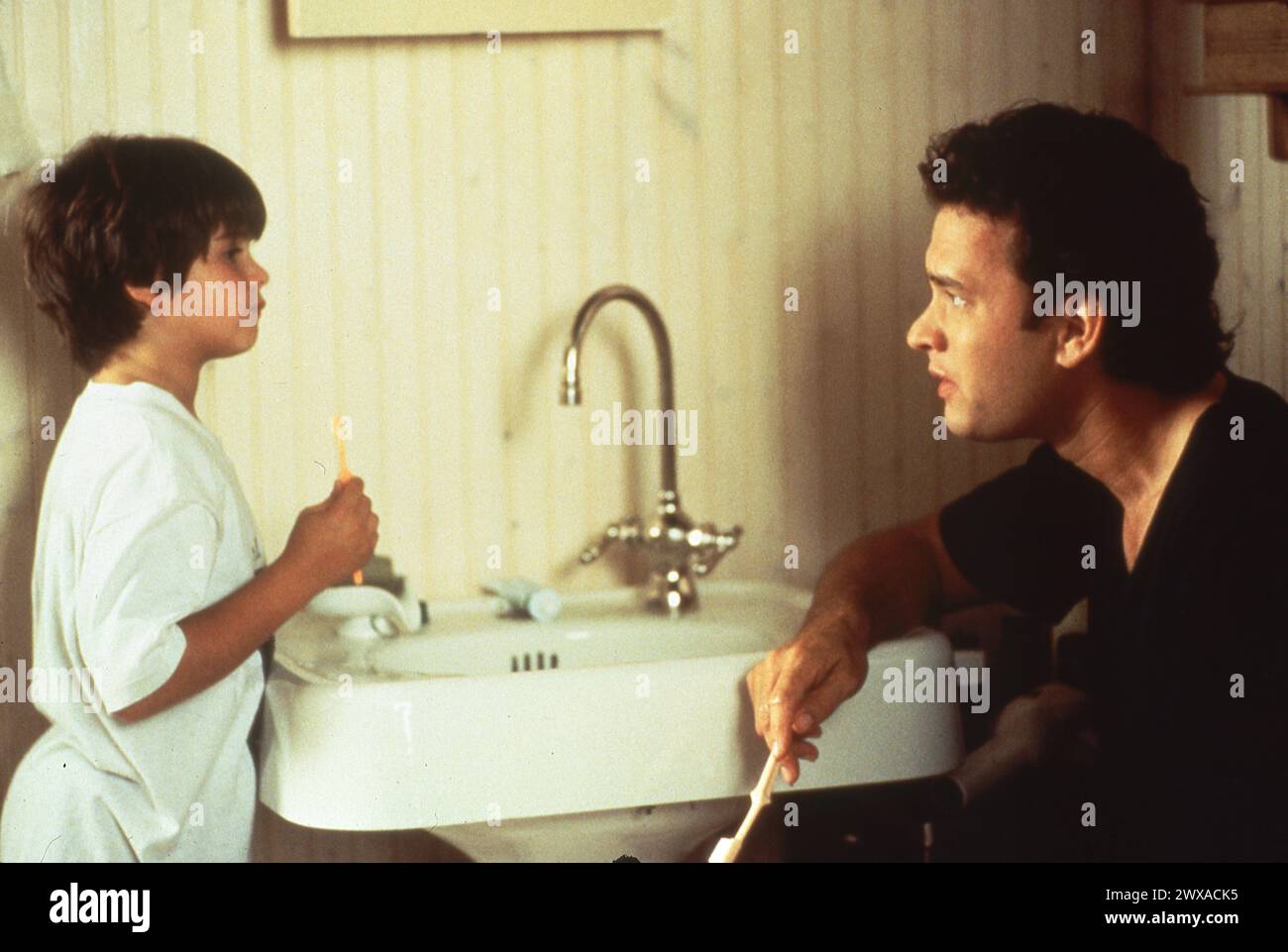
Ross Malinger is a former American actor best known for his portrayal of Jonah Baldwin in the 1993 romantic comedy Sleepless in Seattle. After a prolific decade in Hollywood that included iconic voice work as T.J. Detweiler in Disney’s Recess and numerous television guest spots, Malinger transitioned into the automotive management sector in the mid-2000s, where he remains as of 2026.
The Breakthrough: Jonah Baldwin and the Magic of 1990s Cinema
The trajectory of Ross Malinger’s career was fundamentally shaped by one of the most successful romantic comedies of all time. Cast at the age of eight, Malinger played the son of Tom Hanks' character, Sam Baldwin, in Sleepless in Seattle (1993). While child roles in the early 90s often leaned toward the "precocious" or "troublemaking" tropes popularized by films like Home Alone, Malinger’s performance was rooted in a grounded, emotional sincerity that resonated with adult audiences.
Jonah Baldwin served as the narrative's primary catalyst. It was the character’s decision to call a national radio talk show that set the plot in motion, bridging the geographical gap between Seattle and Baltimore. Malinger’s ability to hold the screen alongside heavyweights like Tom Hanks and Meg Ryan earned him critical acclaim and several nominations, including a Young Artist Award. This role established him as a premier child talent, leading to a decade of consistent work across film and television.
The success of Sleepless in Seattle was not merely a financial milestone; it positioned Malinger within a specific niche of child performers who were seen as capable of handling nuanced, character-driven drama. This reputation allowed him to bypass many of the "cutesy" roles of the era in favor of projects with more substantive scripts.
Television Success and the Voice of a Generation
Following his breakthrough, Malinger became a ubiquitous presence on television. From 1993 to 1994, he starred as Ben Cappell in the sitcom Good Advice, working alongside Shelley Long and Teri Garr. The show provided him with a steady platform to hone his comedic timing, a skill he would later apply to one of his most recognizable—though invisible—roles.
In 1997, Malinger provided the original voice for T.J. Detweiler in the Disney animated series Recess. As the leader of the playground group, T.J. was the quintessential "cool kid" of the late 90s—loyal, clever, and mildly rebellious. While Malinger only voiced the character for the first season before being replaced by Andrew Lawrence (primarily due to his voice deepening during puberty), his portrayal defined the character's initial persona. For fans of 90s animation, Malinger’s raspier, youthful tone remains the definitive version of the character.
During this same period, Malinger made a memorable appearance in the Seinfeld episode "The Serenity Now" (1997). He played Adam Felson, the son of a friend of George Costanza, who ends up competing with Lloyd Braun in a computer sales scheme. This guest spot is often cited by fans as a highlight of his television career, showcasing his ability to pivot from the earnestness of Sleepless in Seattle to the cynical, fast-paced comedy of the "show about nothing."
Transitioning Out of the Spotlight: The Choice of Privacy
By the early 2000s, like many child actors reaching adulthood, Malinger faced the traditional "crossroads" of Hollywood. The transition from child star to adult actor is notoriously difficult, often marked by a lack of suitable roles or a desire for a life away from public scrutiny. Malinger’s last credited acting roles occurred around 2006, including appearances in series like Without a Trace.
Unlike some of his peers who struggled with the transition, Malinger’s exit from Hollywood appeared to be a deliberate career shift rather than a forced retirement. He chose to pursue a professional path in a completely different industry: the automotive sector. This move underscores a growing trend among former child performers who seek "normalcy" and tangible business success outside the erratic nature of the entertainment industry.
The decision to step away allowed Malinger to build a secondary career that was not dependent on his childhood fame. By removing himself from the audition circuit and the red carpet, he regained control over his public identity, a luxury few former child stars manage to achieve.
Career Milestones and Selected Filmography
The following table outlines the significant projects that defined Ross Malinger’s time in the entertainment industry, highlighting the diversity of his roles across different media formats.
| Year | Title | Role | Format | Notable Co-stars |
|---|---|---|---|---|
| 1991 | Eve of Destruction | Timmy | Film | Gregory Hines |
| 1993 | Sleepless in Seattle | Jonah Baldwin | Film | Tom Hanks, Meg Ryan |
| 1993–1994 | Good Advice | Ben Cappell | TV Series | Shelley Long |
| 1995 | Bye Bye Love | Ben | Film | Matthew Modine |
| 1995 | Sudden Death | Tyler | Film | Jean-Claude Van Damme |
| 1997 | Recess | T.J. Detweiler (Voice) | Animation | Pamela Adlon |
| 1997 | Seinfeld | Adam Felson | TV Series | Jerry Seinfeld |
| 1998 | The Animated Adventures of Tom Sawyer | Tom Sawyer (Voice) | Film | Kirsten Dunst |
| 2006 | Without a Trace | Jason McMurphy | TV Series | Anthony LaPaglia |
Life Beyond Acting: The Automotive Industry
As of 2026, Ross Malinger has established a long-standing and successful career in automotive management. For nearly two decades, he has held various leadership positions within high-end dealerships in the California area. His roles have ranged from sales management to General Manager positions at prominent locations, including Lexus and Toyota dealerships under the Envision Motors umbrella.
The shift from the soundstage to the dealership floor requires a significant change in skill sets. While acting involves the interpretation of scripts and emotional expression, automotive management demands expertise in operations, inventory control, personnel management, and customer relations. Malinger’s success in this field suggests a high degree of business acumen and an ability to thrive in a high-pressure corporate environment.
His career path serves as a practical blueprint for how former celebrities can leverage their communication skills in the private sector. In the automotive world, the "General Manager" is the highest-ranking onsite employee, responsible for the entire profit and loss (P&L) of the business. Reaching this level indicates that Malinger did not simply "find a job" after acting but built a genuine professional legacy in a second, unrelated field.
The Legacy of a Child Star in the Digital Age
In 2026, the fascination with 90s nostalgia remains at an all-time high. Because of the enduring popularity of films like Sleepless in Seattle, Malinger remains a figure of public interest despite his absence from the screen. However, his refusal to participate in the "celebrity cycle"—avoiding reality TV, public scandals, or social media oversharing—has earned him a specific type of respect from the industry and the public alike.
The cultural impact of his early roles is sustained by streaming services and digital archives. New generations discover Recess on Disney+ or watch Sleepless in Seattle during holiday marathons, keeping his work alive even as he manages a dealership in Southern California. This "dual existence" is common for successful former child actors: they exist as frozen-in-time icons for the public, while living fully realized, private adult lives.
Malinger’s story is often contrasted with the more tragic narratives of child stardom. His ability to transition into a stable, high-level corporate career is frequently cited by industry analysts as a "success story," proving that the skills learned on set—discipline, early exposure to professional environments, and communication—are transferable to the broader labor market.
Frequently Asked Questions
What is Ross Malinger doing in 2026?
As of 2026, Ross Malinger continues his career in the automotive industry. He has spent years working in executive and managerial roles at various dealerships in California, specifically focusing on luxury brands and general dealership management. He has largely retired from public life and does not maintain a presence in the entertainment industry.
Why did Ross Malinger stop acting?
Malinger never issued a formal "retirement" statement, which is common for child actors who phase out of the industry. As he entered his late teens and early twenties, the roles available to him changed. He chose to pursue higher education and a career in business, finding significant success in the automotive sector, which offered more stability and privacy than the acting profession.
Was Ross Malinger the original voice of T.J. in Recess?
Yes, Ross Malinger provided the voice for T.J. Detweiler during the first season of the Disney animated series Recess (1997). He was later replaced by Andrew Lawrence for the remainder of the series and the subsequent movies. This change is generally attributed to Malinger’s voice changing as he grew older, a common occurrence in voice acting for young characters.
Did Ross Malinger win any awards for Sleepless in Seattle?
Malinger received significant recognition for his role as Jonah Baldwin. He was nominated for a Young Artist Award for Best Actor Under Ten in a Motion Picture and won a Young Artist Award for his work in television. His performance is still considered one of the standout child performances of the 1990s.
Is Ross Malinger on social media?
Ross Malinger maintains an extremely private profile. Unlike many former actors, he does not have public, verified social media accounts on platforms like Instagram or X (formerly Twitter). His focus remains on his professional career in the automotive industry and his private life.
Navigating the Legacy of 90s Performers
For those looking to explore the works of Ross Malinger, the best starting point remains the "Golden Age" of his career between 1993 and 1998. Viewing his performances chronologically reveals a young actor with a remarkable range, moving from heavy emotional drama to lighthearted animation with ease. While he may no longer appear on screen, his contribution to the cinematic landscape of the 1990s remains a permanent fixture of film history.
Readers interested in the history of child actors and their career transitions can look to Malinger as a primary example of how to successfully navigate a post-Hollywood life. His journey emphasizes that the end of an acting career is not the end of professional growth, but rather an opportunity for a new chapter in the private sector.