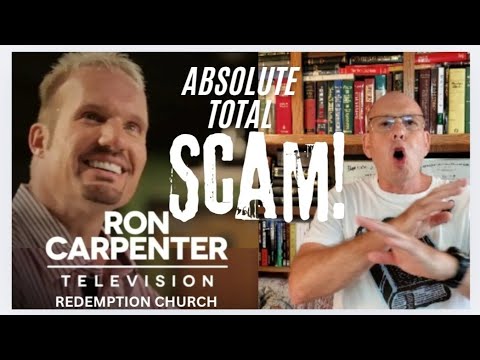
As of 2026, Ron Carpenter Jr.’s personal net worth is estimated to be between $5 million and $10 million. This valuation is comprised of his pastoral salary, extensive book royalties, international speaking engagements, and the reach of Ron Carpenter Ministries (RCM). Redemption Church, the organization he leads, manages multi-million dollar annual budgets and significant real estate assets across its various campuses.
The Evolution of Ron Carpenter’s Ministry and Financial Growth
To understand the financial profile of Ron Carpenter, one must first look at the trajectory of Redemption Church. Founded in 1991 by Ron and Hope Carpenter in Greenville, South Carolina, the ministry began as Redemption World Outreach Center (RWOC). What started with a small congregation of fewer than 100 people evolved into a megachurch powerhouse with a diverse, multi-cultural following. By the mid-2000s, the church was a staple of the Upstate South Carolina economy, employing hundreds of staff members and operating high-budget community outreach programs.
The financial scaling of the ministry was driven by Carpenter’s "Apostolic" leadership style, which emphasizes expansion, media presence, and global connectivity. Unlike traditional local churches, Redemption functioned as a hub for other ministries. This "hub-and-spoke" model allowed Carpenter to build a brand that transcended a single physical location, creating multiple revenue streams through conferences, leadership coaching, and digital broadcasts. By the time the church transitioned its primary focus to Northern California in 2018, it had already established a blueprint for high-revenue religious operations.
Breaking Down Ron Carpenter’s Estimated Net Worth
Determining the exact net worth of a high-profile minister involves distinguishing between personal assets and church-owned assets. While the church provides a platform and often covers travel or housing through a parsonage allowance, Carpenter’s personal wealth is built on several distinct pillars:
1. Pastoral Compensation and Housing
As the Senior Pastor of a megachurch, Carpenter receives a salary determined by a Board of Directors or an ecclesiastical board. In large ministries like Redemption, these salaries are typically benchmarked against executive roles in the non-profit sector. In addition to a base salary, the "parsonage allowance" is a significant tax-advantaged component allowed under U.S. tax law, which covers the costs associated with a primary residence.
2. Literary Contributions and Royalties
Ron Carpenter is a prolific author. Works such as The Necessity of an Enemy and Hidden Lessons have reached broad audiences beyond his immediate congregation. Book deals with major Christian publishers provide upfront advances and ongoing royalties. Given his global platform, these literary assets contribute significantly to his long-term financial stability.
3. Ron Carpenter Ministries (RCM) and Media
RCM functions as the media and outreach arm of his ministry. Through television broadcasts on major networks like TBN and Daystar, as well as digital streaming platforms, RCM reaches millions. While much of this revenue goes back into airtime costs, the "brand equity" generated allows for premium ticket pricing at conferences and leadership seminars, which are direct personal revenue drivers for a speaker of his caliber.
4. Public Speaking and Consulting
Carpenter is a sought-after speaker for international conferences. High-profile ministers often command five-figure honorariums for guest appearances. Over several decades, the cumulative effect of these engagements represents a substantial portion of his liquid net worth.
Redemption Church: Institutional Financial Footprint
Redemption Church operates as a 501(c)(3) non-profit organization. In 2026, its financial footprint is defined by its ability to maintain high-cost facilities in some of the most expensive real estate markets in the world, specifically the San Francisco Bay Area.
The church's revenue is primarily derived from tithes and offerings. For a congregation of its size—often numbering in the thousands—annual contributions can exceed $15 million to $20 million. These funds are allocated toward:
- Operations and Staffing: Maintaining a multi-campus staff, including associate pastors, musicians, and administrative professionals.
- Media Production: High-definition streaming and television production suites required for global broadcasting.
- Missions and Outreach: Funding domestic and international charitable works, which serves the church’s core mission and provides tax-exempt justification for its revenue.
Real Estate Holdings and the California Transition
One of the most complex aspects of the Redemption financial profile is its real estate history. In 2018, Ron Carpenter made the historic move from Greenville, SC, to San Jose, CA, to succeed the retiring pastor of Jubilee Christian Center. This move involved a massive transfer of influence and assets.
The Greenville property, a sprawling multi-million dollar campus, was initially "handed over" to Pastor John Gray under the banner of Relentless Church. However, this led to a well-publicized legal and financial dispute regarding the lease and ownership of the building. The eventual resolution of these disputes reaffirmed Redemption’s control over the asset, showcasing the significant value—estimated at over $10 million—held in South Carolina real estate alone.
In San Jose, the church occupies premium real estate in the heart of Silicon Valley. Managing the debt service and operational costs of California property requires a sophisticated financial strategy, often involving institutional lending and high-net-worth donor management.
Asset and Revenue Comparison Table
The following table outlines the estimated distribution of financial interests associated with Ron Carpenter and Redemption Church as of 2026.
| Category | Entity Responsible | Estimated Valuation/Impact | Primary Source |
|---|---|---|---|
| Real Estate (SC & CA) | Redemption Church | $25M - $40M | Property Appraisals |
| Media/Broadcast Rights | Ron Carpenter Ministries | $2M - $5M (Annual) | Ad Revenue/Donations |
| Personal Net Worth | Ron Carpenter (Individual) | $5M - $10M | Salary, Books, Speaking |
| Annual Church Budget | Redemption Church | $15M - $22M | Tithes & General Giving |
| Book Royalties | Ron Carpenter (Individual) | $500K - $1.5M (Lifetime) | Publishing Contracts |
Financial Accountability and Governance
A frequent question regarding megachurch finances is how accountability is maintained. For Ron Carpenter and Redemption, this is handled through an external Board of Directors. This board is responsible for reviewing the Senior Pastor's compensation and ensuring that the church’s spending aligns with its non-profit status.
In the 2020s, religious organizations have faced increased pressure for transparency. Redemption Church has historically utilized "Bishop’s Councils" or "Apostolic Boards" consisting of other seasoned ministers to provide oversight. This structure is intended to prevent the "founder’s syndrome" where a single leader has unchecked control over the treasury. From a financial profile perspective, this governance adds a layer of institutional stability that appeals to large-scale donors.
Philanthropy and Global Impact
It is impossible to analyze the financial profile of Ron Carpenter without mentioning the "outflow" of capital. Redemption Church operates numerous programs aimed at poverty alleviation, disaster relief, and youth mentorship. In 2026, a significant portion of the church’s annual budget—estimated at 10-15%—is earmarked for missions.
These expenditures, while reducing the net "profit" or "surplus" of the organization, are essential for maintaining the church’s standing within the community and its tax-exempt status. They also serve as a key metric for the "success" of the ministry, as many donors measure the value of their contributions by the tangible impact of these outreach programs.
FAQ
How does Ron Carpenter earn his money?
Ron Carpenter earns income through his salary as the Senior Pastor of Redemption Church, royalties from several published books, speaking fees from international conferences, and his personal media ministry, Ron Carpenter Ministries. He also benefits from a parsonage allowance, which is a standard financial arrangement for clergy in the United States.
Does Ron Carpenter own the church buildings?
No, the church buildings are owned by the non-profit corporation, Redemption Church (or its legal holding entities). While Ron Carpenter serves as the visionary leader and Senior Pastor, the assets belong to the 501(c)(3) organization. In the event of a dissolution of the church, these assets would typically be required by law to be transferred to another non-profit.
What happened to the Greenville campus after the move to San Jose?
After a period of litigation and lease disputes with Relentless Church (led by John Gray), the Greenville campus remains a significant asset in the Redemption portfolio. It has been used for various ministry purposes and remains a key component of the church's multi-site strategy and real estate value.
Is Ron Carpenter’s net worth public record?
Not entirely. Because churches are not required to file the same detailed Form 990 as other non-profits in the U.S., much of the specific salary and net worth data remains private. Estimates are based on public real estate records, book sales data, and industry standards for megachurch compensation.
How much does it cost to run Redemption Church?
Based on the scale of its facilities and staff, the annual operating budget for Redemption Church is estimated to be between $15 million and $22 million as of 2026. This covers everything from mortgage payments on high-value properties to the production of global media broadcasts.
Reviewing Financial Stewardship
For individuals looking to understand the financial health or "wealth" of a ministry like Ron Carpenter’s, the best next step is to review the church's annual report or state-level non-profit filings where available. While the personal net worth of a pastor is often a point of public curiosity, the institutional health of the church—measured by its debt-to-income ratio and the percentage of funds spent on community outreach—is the more accurate indicator of long-term stability. Prospective donors or members should prioritize ministries that demonstrate clear board oversight and a commitment to transparent financial reporting.