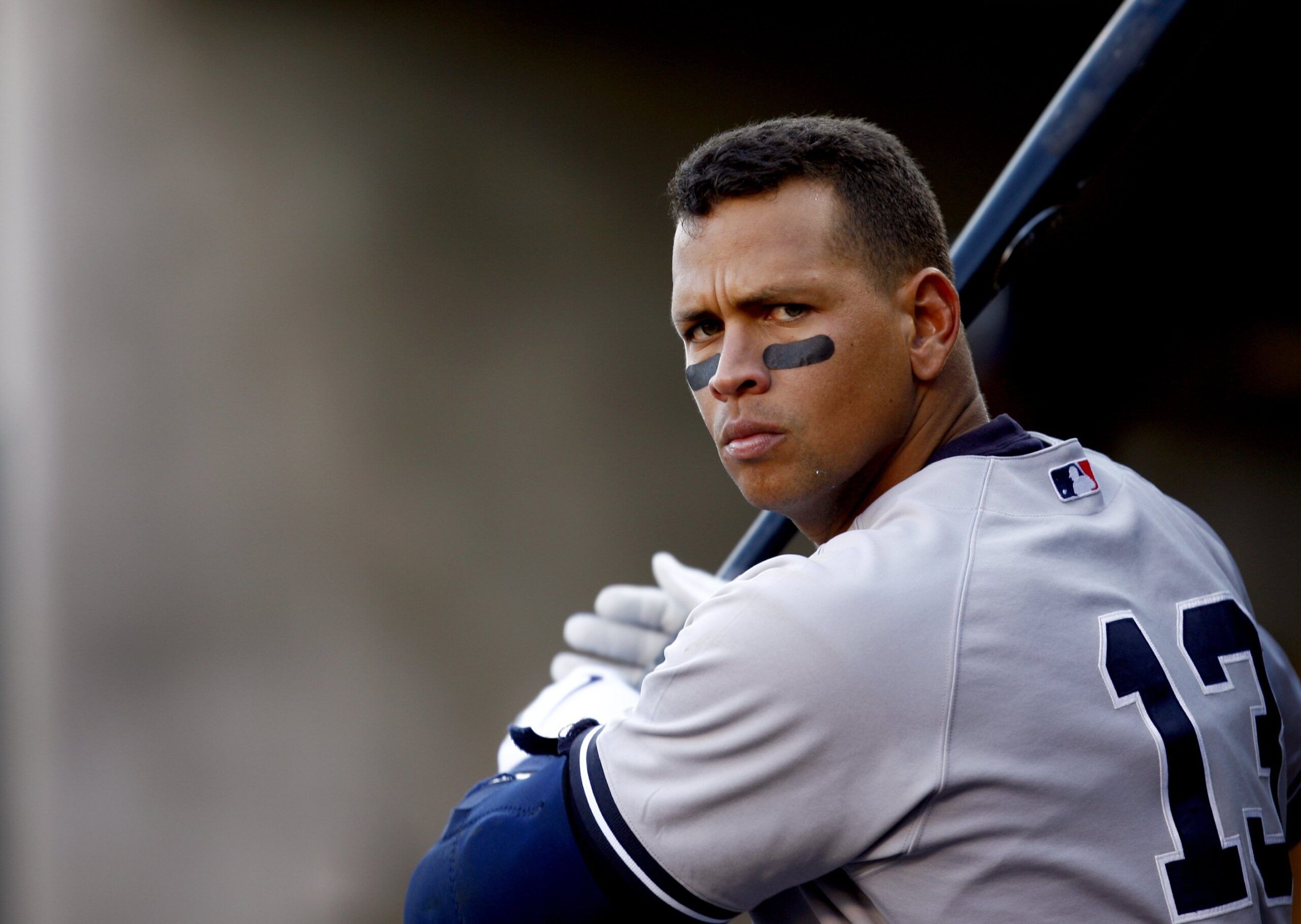
Alex Rodriguez’s net worth is estimated between $350 million and $400 million, reflecting a transition from high-earning professional athlete to commercial investor. While he accumulated over $450 million in career MLB salaries, his long-term wealth expansion relies on A-Rod Corp, multi-family real estate holdings, venture capital, and major sports franchise ownership.
The Financial Foundation: Breakdown of Alex Rodriguez’s MLB Earnings
Alex Rodriguez, widely known as "A-Rod," established the capital base for his current net worth during a 22-year Major League Baseball (MLB) career. As one of the most prolific hitters in baseball history, Rodriguez secured two landmark contracts that redefined professional sports compensation.
In December 2000, Rodriguez signed a 10-year, $252 million contract with the Texas Rangers. At the time, it was the largest contract in sports history, doubling the previous record held by Kevin Garnett in the NBA. That contract paid him an average annual value of $25.2 million, providing an unprecedented influx of cash liquidity during his early twenties.
In 2007, after opting out of the remaining years of his Rangers deal while playing for the New York Yankees, Rodriguez negotiated a new 10-year, $275 million contract extension with the Yankees. Beyond base salary, this deal included performance incentives linked to historic home-run milestones.
By the time he retired in 2016, Rodriguez had earned approximately $455 million in gross MLB salary. Adding off-field endorsements with major corporate brands such as Nike, Pepsi, Gatorade, and Bose, his total athletic earnings exceeded $550 million before taxes, agent fees, and legal expenses.
| Revenue Source | Amount |
|---|---|
| Gross Career MLB Salary | ~$455 Million |
| Estimated Endorsement Income | ~$100+ Million |
| Total Career Athletic Revenue | ~$555+ Million |
High gross earnings do not automatically guarantee permanent wealth. High tax brackets, agency fees (typically 4% to 5% for baseball contracts), and personal overhead deplete liquid earnings. Rodriguez avoided common financial pitfalls by committing a significant portion of his net income to cash-flowing assets while still an active player.
Strategic Transition: The Founding and Evolution of A-Rod Corp
Unlike athletes who begin financial planning after retirement, Rodriguez laid the operational framework for his corporate holdings early in his career. In 2003, he founded A-Rod Corp, a private holding company designed to manage his personal capital, brand deals, and business investments.
Initially created as a basic management firm, A-Rod Corp evolved into a diversified investment vehicle operating across five core sectors:
- Real estate development and acquisition
- Venture capital and private equity
- Sports and entertainment properties
- Wellness and fitness franchises
- Media production and broadcasting
A key driver of A-Rod Corp’s operational expansion was Rodriguez's deliberate effort to build relationships with seasoned financial mentors. During his playing years, he sought counsel from prominent business figures, including Warren Buffett, Magic Johnson, and Barry Sternlicht. Buffett, in particular, influenced Rodriguez’s investment philosophy: focus on durable, cash-flowing assets, maintain strong margin of safety, and invest in businesses with understandable unit economics.
Today, A-Rod Corp operates as a modern family office and private investment fund. It employs a dedicated team of investment professionals, financial analysts, and asset managers who vet venture deals, manage real estate syndications, and oversee brand partnerships.
Real Estate Empire: How Monument Capital Management Scales Value
Real estate represents the primary engine behind Rodriguez's wealth preservation and long-term equity growth. Rather than speculating on luxury residential properties, Rodriguez focused on workforce multi-family housing—a sector recognized for consistent cash flow and recession resistance.
In 2003, Rodriguez purchased his first real estate asset: a duplex in Miami, Florida. Recognizing the leverage and tax advantages offered by commercial real estate, he reinvested his MLB paychecks into larger multi-family complexes. This strategy led to the founding of Monument Capital Management (MCM), an asset management firm specializing in multi-family real estate investments.
- Individual Capital
- Duplex Investments
- Monument Capital Management
- Multi-Family Syndication ($1B+ Portfolio)
Monument Capital Management operates through value-add real estate funds. The firm’s strategy involves:
- Target Markets: Acquiring Class B and Class C multi-family properties located in secondary and tertiary markets across the Southeastern, Southwestern, and Midwestern United States.
- Value Creation: Implementing capital improvements to units and amenities, upgrading property management, and increasing net operating income (NOI).
- Capital Preservation: Utilizing prudent loan-to-value (LTV) ratios to protect underlying equity from market downturns.
Through MCM and associated real estate entities, Rodriguez has participated in the acquisition and management of over 15,000 multi-family units, representing more than $1 billion in real estate transactions. Real estate holdings provide him with predictable rental yields, capital appreciation, and substantial tax shelter through depreciation and cost-segregation strategies.
Venture Capital and Private Equity Portfolio
Beyond hard real estate assets, Rodriguez built a early-stage and growth-equity investment portfolio through A-Rod Corp’s venture arm. By leveraging his personal brand and access to deal flow, he secured early allocations in consumer brands and technology startups.
Notable Investments and Franchise Expansion
- Vita Coco: Early investment in the coconut water brand, which went public on the Nasdaq (NASDAQ: COCO) in 2021, generating liquidity.
- Snapchat (Snap Inc.): Pre-IPO equity participation that yielded strong returns following the company's public market debut.
- TruFusion: Acquisition of development rights and equity stakes in the multi-discipline fitness studio brand, scaling physical locations across major US regions.
- UFC Gyms: Master franchise rights to open and operate UFC Gym locations throughout Southern California.
- Wave FC: Equity participation in the National Women's Soccer League (NWSL) franchise, reflecting growing valuations across women's professional sports.
Rodriguez’s venture strategy emphasizes strategic co-investments alongside established institutional private equity funds. By investing as a syndicate participant rather than a lead institutional sponsor, A-Rod Corp mitigates operational risk while retaining upside equity in high-growth companies.
Sports Franchise Ownership: The Minnesota Timberwolves and Lynx Deal
The centerpiece of Alex Rodriguez’s current enterprise value is his joint acquisition of the Minnesota Timberwolves (NBA) and Minnesota Lynx (WNBA).
In 2021, Rodriguez partnered with former E-commerce executive Marc Lore (founder of Jet.com) to negotiate the acquisition of the franchises from long-time owner Glen Taylor. The transaction was structured as a phased purchase agreement valued at an enterprise valuation of approximately $1.5 billion.
- Phase 1 (2021): Initial 20% equity stake acquisition
- Phase 2 (2023): Exercise of option for additional 20% equity stake
- Phase 3 (2024-2026): Capital calls and equity increments to secure controlling interest
Despite contract disputes and arbitration processes during the closing phases of the deal, NBA franchise valuations surged across the league. Driven by expanding national television contracts, international streaming rights, and venue monetization, NBA franchise valuations escalated substantially past the initial $1.5 billion purchase baseline.
Holding equity in an NBA franchise gives Rodriguez access to an asset class with high entry barriers and strong historical capital appreciation, elevating his overall net worth beyond cash flow from private equity investments.
Revenue Streams and Asset Allocation Breakdown
Alex Rodriguez’s financial architecture is structured across earned income, real asset yields, private market equity, and professional service retainers.
| Asset / Income Category | Key Operations & Holdings | Primary Financial Driver | Risk & Liquidity Profile |
|---|---|---|---|
| Sports Franchises | Minnesota Timberwolves (NBA), Minnesota Lynx (WNBA) | Capital appreciation, franchise distribution | Low liquidity, high equity growth |
| Real Estate Portfolio | Monument Capital Management (15,000+ multi-family units) | Rental income, tax depreciation, equity upside | Medium liquidity, stable cash flow |
| Venture Capital & PE | Vita Coco, TruFusion, Snapchat, tech & consumer startups | Exit multiples, IPO proceeds, venture gains | High risk, variable liquidity |
| Broadcasting & Media | FOX Sports lead MLB analyst, ESPN Sunday Night Baseball (former) | Fixed salary contracts, talent fees | High liquidity, low equity building |
| Corporate Endorsements | Corporate partnerships, brand advisory, equity roles | Retainers, licensing, success equity | High liquidity, low operational exposure |
By separating his assets into income-generating real estate, growth venture equity, appreciating sports franchises, and high-margin broadcast income, Rodriguez maintains a balance between current cash flow and long-term capital expansion.
Key Wealth Preservation and Investment Strategies
Rodriguez’s financial trajectory illustrates fundamental principles useful for high-earning professionals and private investors seeking long-term wealth preservation.
1. Reinvest Earned Income into Income-Producing Assets
Rodriguez directed MLB paychecks directly into commercial real estate while still actively playing. This continuous conversion of earned salary into income-producing assets created an independent stream of revenues, protecting him against potential income disruption from injuries or retirement.
2. Form Strategic Joint Ventures
Recognizing early limitations in corporate finance and real estate management, Rodriguez partnered with domain experts. In real estate, he collaborated with seasoned fund operators; in technology and venture deals, he co-invested with established venture funds; and in sports ownership, he partnered with billionaire tech founder Marc Lore.
3. Focus on Defensive Real Estate
Rather than speculative land development or luxury retail, Rodriguez concentrated on workforce multi-family housing. Middle-income rental properties maintain steady occupancy through varying economic cycles, providing predictable income that offsets volatile market environments.
4. Leverage Personal Brand Equity for Venture Allocations
Top-tier venture deals are frequently oversubscribed. Rodriguez uses his public profile, network, and marketing capabilities to gain access to private funding rounds reserved for institutional investors, often negotiating equity stakes in exchange for operational and promotional value.
Frequently Asked Questions
What is Alex Rodriguez’s estimated net worth in 2026?
Alex Rodriguez’s net worth is estimated between $350 million and $400 million. This total includes his real estate portfolio, venture capital holdings, ownership stakes in the Minnesota Timberwolves and Lynx, and cash reserves from his MLB career and media contracts.
How much money did Alex Rodriguez make during his MLB career?
Rodriguez earned approximately $455 million in gross MLB salary across 22 seasons with the Seattle Mariners, Texas Rangers, and New York Yankees. Including corporate endorsements, his total athletic earnings exceeded $550 million before taxes and professional fees.
What is A-Rod Corp?
A-Rod Corp is Alex Rodriguez's private holding company and family office, founded in 2003. The firm manages his personal investments across multi-family real estate (via Monument Capital Management), venture capital, fitness franchises, sports operations, and brand advisory contracts.
How did Alex Rodriguez invest his money in real estate?
Rodriguez began by purchasing a single duplex in 2003 and scaled his investments into multi-family workforce housing complexes. Through Monument Capital Management, he has participated in transactions involving more than 15,000 units across the United States.
Does Alex Rodriguez own the Minnesota Timberwolves?
Yes, Alex Rodriguez, along with business partner Marc Lore, negotiated the purchase of a controlling ownership stake in the Minnesota Timberwolves (NBA) and Minnesota Lynx (WNBA) starting in 2021, evaluating the franchise at an initial valuation of $1.5 billion.
Strategic Action Items for Building Long-Term Asset Wealth
Rodriguez's path from a high-earning athlete to a commercial investor highlights actionable principles for portfolio construction:
- Establish a Capital Conversion Ratio: Allocate a fixed percentage of current active income into cash-flowing investments before spending discretionary capital.
- Prioritize Real Estate Tax Efficiency: Utilize multi-family commercial real estate investments to access non-cash tax deductions via depreciation, lowering aggregate income tax liabilities.
- Seek Asymmetric Co-Investment Deals: Partner with institutional funds or domain-expert operators when entering unfamiliar sectors, minimizing single-entity execution risk.
- Diversify Across Asset Classes: Build a resilient financial foundation by balancing illiquid equity growth assets (sports, venture capital) with liquid income streams (broadcasting, debt distributions) and stable tangible assets (workforce housing).