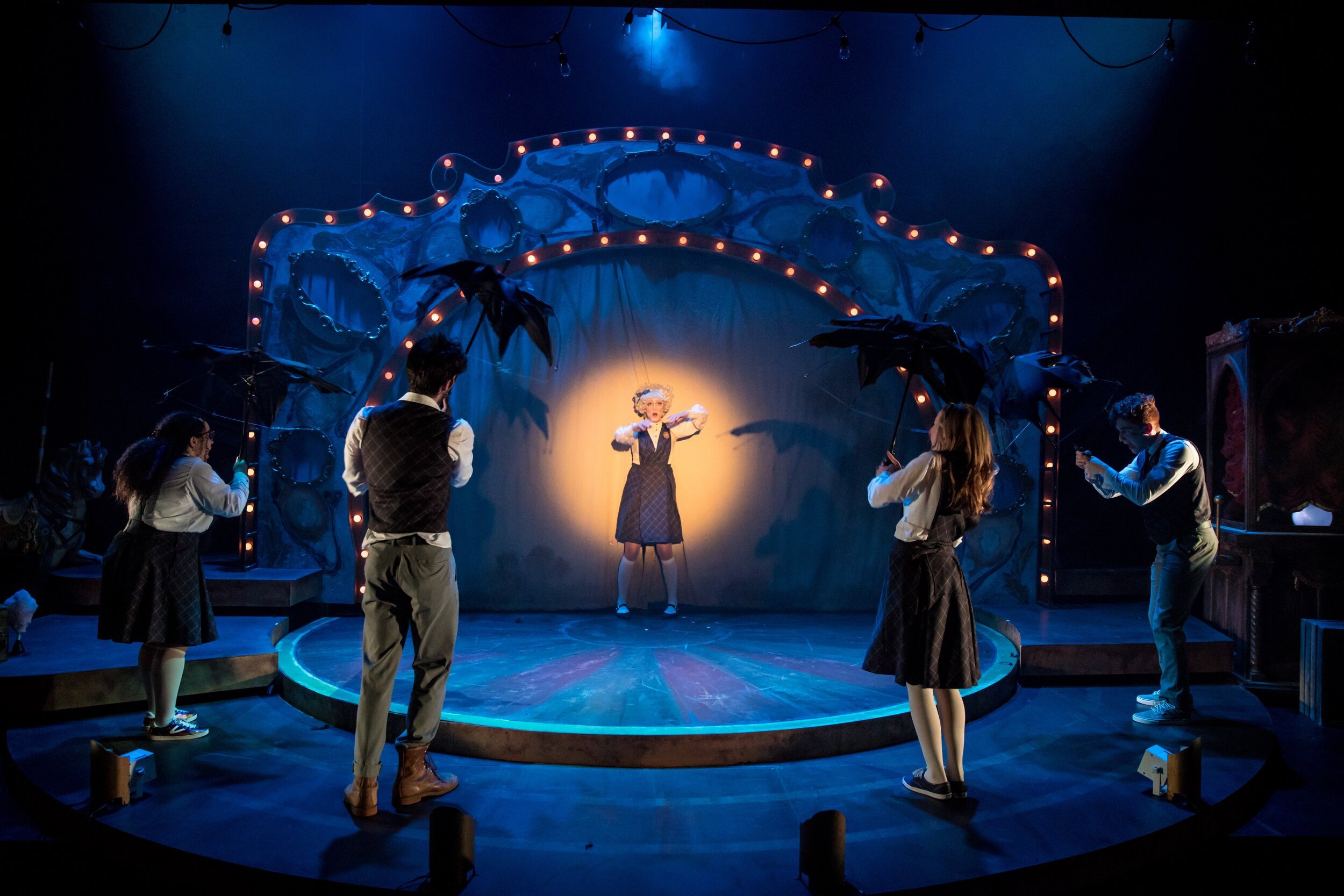
The dark musical comedy Ride the Cyclone has captivated audiences since its Canadian premiere, maintaining a cult following that remains stronger than ever in 2026. Because of its haunting premise involving a horrific roller coaster accident that claims the lives of six teenagers, many viewers frequently ask if the show is based on a real-life tragedy.
To address the core intent: Ride the Cyclone is entirely a work of fiction. While it explores universal themes of grief, regret, and the transition into the afterlife, it is not based on any specific historical roller coaster accident or a singular true story. The characters and the tragedy of the "Cyclone" roller coaster are purely the creation of writers Jacob Richmond and Brooke Maxwell.
Creative Origins and the Narrative Framework
The narrative of Ride the Cyclone centers on the St. Cassian Chamber Choir, who die in a tragic malfunction on a roller coaster called the Cyclone. The story is set in a purgatorial space presided over by The Amazing Karnak, a mechanical fortune-telling machine. As of 2026, the play is frequently analyzed in academic circles for its juxtaposition of dark humor and existential dread.
The inspiration for the show did not stem from a news report or a specific memorial, but rather from a desire to examine how youth and unfulfilled potential look when viewed through a lens of sudden, permanent cessation. The authors constructed the setting of Uranium City, Saskatchewan, to emphasize the isolation and small-town atmosphere that often fuels the collective dreams—and frustrations—of the characters.
Why Audiences Often Mistake the Musical for Reality
The emotional resonance of the characters, specifically those who feel "stuck" in their small-town upbringing, feels profoundly authentic to many viewers. This perception of realism is a testament to the character design. By crafting distinct, relatable archetypes, the writers successfully bridge the gap between supernatural theater and grounded human psychology.
Several factors contribute to the persistent question regarding its factual basis:
- The specificity of the setting in Saskatchewan gives the story a geographical anchor that makes it feel like local history.
- The mechanical nature of the roller coaster accident mirrors real-world fears regarding amusement park safety and maintenance negligence.
- The show's aesthetic, which blends Victorian gothic elements with modern satire, creates a dreamlike quality that causes audiences to search for a hidden, tragic origin.
Amusement Park Safety Standards in 2026
While the roller coaster accident in the musical is fictional, the anxiety surrounding such events is grounded in real-world regulatory focus. As of 2026, the amusement industry operates under strict oversight. Understanding the difference between stage fiction and real-world safety helps clarify why the "true story" narrative gains traction.
In the real world, the industry follows rigorous standards to ensure the safety of patrons. The following table highlights the contrast between the fictional scenario and the regulatory reality of 2026.
| Feature | Ride the Cyclone (The Play) | Real-World Industry Standards (2026) |
|---|---|---|
| Mechanical Oversight | Controlled by a cursed fortune-teller machine | Strict adherence to ASTM International standards |
| Inspection Protocols | Non-existent; the coaster is a plot device | Daily, weekly, and annual third-party audits |
| Emergency Response | Supernatural limbo | Integrated automated stop systems and local EMS |
| Maintenance Logs | Absent | Digitized, blockchain-verified maintenance records |
The Mechanics of Grief in Musical Theater
Beyond the question of its factual basis, the true value of Ride the Cyclone lies in its exploration of the "what if" scenarios that haunt every human life. By presenting the characters as they are at the moment of their death, the writers force the audience to confront the arbitrary nature of mortality.
In 2026, the show is frequently cited in theater workshops as a prime example of how to handle high-concept existentialism without losing character agency. The characters are not mere victims of the roller coaster; they are active participants in their final reckoning. This distinguishes the musical from true-crime dramas or docu-theater, as the focus is never on the investigation of the accident but on the internal experience of the individuals involved.
Analytical Breakdown of the Characters
Each character represents a facet of adolescent struggle, further grounding the story in human truth even as it remains detached from historical record.
- Jane Doe: The centerpiece of the mystery, she represents the forgotten or discarded parts of the self.
- Ocean O'Connell Rosenberg: The high-achieving perfectionist, highlighting the pressures of academic and social success in the mid-2020s.
- Noel Gruber: The dreamer who craves escape, reflecting the common desire to reinvent oneself away from a stifling environment.
- Mischa Bachinski: The misunderstood youth who expresses pain through art and performance.
- Ricky Potts: The character who finds freedom in his limitations, offering a subversion of traditional narratives regarding disability and ability.
- Constance Blackwood: The "nice" girl who harbors deep-seated regret regarding her own small-town complacency.
Frequently Asked Questions Regarding the Narrative
Is the town of Uranium City real? Yes, Uranium City is a real place in Saskatchewan, Canada, though its portrayal in the musical is stylized and intended to serve the narrative arc rather than reflect the town's actual current events or demographics in 2026.
Does the play imply that the roller coaster was intentionally sabotaged? No, the play treats the accident as an arbitrary, tragic, and mechanical event. The narrative focus remains entirely on the characters' reaction to their sudden death rather than the cause of the mechanical failure.
Are there any other musicals based on this specific story? Ride the Cyclone is a unique work. While there are other musicals that deal with death and the afterlife, the specific plot, characters, and musical score of this show are original to Jacob Richmond and Brooke Maxwell.
Why is the play so popular in 2026? The show has gained massive traction through social media platforms, where its songs and character moments have resonated with younger audiences, making it a staple of modern high school and university theater productions.
Is The Amazing Karnak a reference to a historical figure? Karnak is an archetypal figure representing the "all-knowing" mechanical oracle, a trope found in various carnival and circus traditions throughout the 20th century, but he is not based on one specific individual.
Final Perspective on the Legacy of the Story
Ride the Cyclone serves as a powerful reminder that theater does not need to be rooted in factual history to be profoundly true. By framing a story about the fragility of life within a dark, imaginative structure, the creators have crafted a work that feels as urgent in 2026 as it did during its inception. While searchers looking for a "true story" will find no historical disaster to document, they will find an authentic exploration of the human experience that remains one of the most compelling pieces of musical theater produced in the last two decades.
If you are producing the show or studying it, focus your energy on the emotional depth of the characters rather than searching for historical context that does not exist. The power of the piece is in its ability to force us to examine our own lives, ensuring that we do not reach our own "Cyclone" with unfulfilled potential.