The term retail space for lease refers specifically to the procurement of physical commercial real estate intended for the sale of goods or services to the public. This analysis focuses on the 2026 commercial real estate (CRE) market, excluding residential leasing or temporary digital pop-up platforms.
The retail landscape of 2026 has undergone a fundamental transformation, shifting from traditional transactional storefronts to high-utility "Experience Centers" and "Micro-Fulfillment Hubs." For business owners and corporate expansion managers, securing a retail lease is no longer just about foot traffic; it is about data connectivity, logistical efficiency, and brand immersion. In 2026, the convergence of physical and digital commerce (phygital) requires a sophisticated understanding of lease structures, technological infrastructure, and ESG (Environmental, Social, and Governance) compliance.
The 2026 Retail Lease Classification Framework
Before entering negotiations, it is imperative to understand the prevailing lease structures in 2026. Landlords have moved away from rigid long-term agreements in favor of more dynamic models that reflect the volatility and opportunity of modern commerce.
| Lease Type | Responsibility for Expenses (Taxes, Insurance, CAM) | Best For in 2026 | Risk Level |
|---|---|---|---|
| Triple Net (NNN) | Tenant pays all operating expenses, taxes, and insurance. | Long-term established brands, credit tenants. | High (Tenant bears cost spikes) |
| Absolute NNN | Tenant pays all expenses plus structural repairs/roof. | Single-tenant buildings, investment-grade retail. | Highest |
| Modified Gross | Landlord and Tenant share operating expenses. | Mid-sized retailers, tech-retail hybrids. | Medium |
| Percentage Lease | Base rent plus a percentage of monthly gross sales. | High-traffic malls, experiential luxury boutiques. | Variable |
| Green Lease | Standard NNN/Gross with mandatory ESG efficiency targets. | Corporate entities, sustainable brands. | Low (Operational savings) |
The 2026 market has seen a 40% increase in "Green Lease" adoption. These contracts include specific clauses regarding energy consumption limits and carbon footprint reporting, often tied to municipal mandates in major metropolitan areas.
Critical Site Selection Metrics for the 2026 Market
Selecting a retail space now requires analyzing data points that did not exist five years ago. Beyond traditional "location, location, location," modern site selection focuses on "utility, connectivity, and accessibility."
Advanced Catchment Analysis
In 2026, high-quality retail landlords provide potential tenants with "Digital Twin" simulations of foot traffic. This data includes not just the number of people walking by, but their dwell time, heat maps of interaction with storefronts, and anonymized spending power metrics derived from local 6G network pings.
1. Last-Mile Logistics Integration
With the rise of 15-minute delivery guarantees, a retail space in 2026 must serve as a micro-fulfillment center. Does the space have a dedicated "curbside pickup" zone? Is there a rear loading dock capable of handling autonomous delivery drones or small electric van fleets? Spaces lacking these features are currently trading at a 15-20% discount compared to logistics-ready units.
2. Technological Infrastructure (The 6G Standard)
The 2026 retail experience relies heavily on Augmented Reality (AR) mirrors and frictionless checkout systems. A competitive retail space must have fiber-optic redundancy and be 6G-enabled. During the "due diligence" phase, tenants should demand a signal strength audit to ensure the building’s shell does not interfere with high-frequency waves required for real-time inventory tracking.
3. Power Density and HVAC Specifications
Modern retail interiors, packed with digital signage and high-performance computing for AI-driven customer personalization, require significantly higher power density than previous decades. Standard 200-amp service is often insufficient for flagship stores in 2026; look for spaces offering 400-amp service or the ability to easily upgrade through the building’s central switchgear.
Financial Realities: TI Allowances and CAM Charges in 2026
The financial burden of opening a retail store has shifted. Tenant Improvement (TI) allowances—the funds a landlord provides to build out the space—have increased in 2026, but they come with strings attached.
- Tenant Improvement (TI) Allowances: In 2026, the average TI allowance in Class A retail centers ranges from $80 to $150 per square foot. However, many landlords now require that a portion of this be spent on smart-building integration and energy-efficient HVAC systems.
- Common Area Maintenance (CAM): CAM charges now frequently include "Technology Fees" for the maintenance of center-wide Wi-Fi, security robotics, and EV charging stations. It is vital to audit the "Base Year" for these expenses to prevent astronomical increases in year two or three of the lease.
- The Radius Clause: Be wary of modern radius clauses. In 2026, some landlords attempt to include "digital sales within a 5-mile radius" as part of the percentage rent calculation. Expert negotiation is required to exclude e-commerce revenue that originates from your website rather than physical showrooming.
Step-by-Step Process for Securing a Lease in 2026
- Define the Space Profile: Determine if you need a "Flagship" (high visibility), "Boutique" (high intimacy), or "Hub" (high fulfillment capacity).
- Submit a Detailed LOI (Letter of Intent): In 2026, an LOI must include more than just rent. It should specify your requirements for data bandwidth, EV parking stalls, and your specific needs for outdoor "experiential" space.
- Environmental and ESG Audit: Before signing, ensure the building meets the 2026 Energy Star 10.0 standards. Buildings that fail these standards may face heavy municipal fines, which could be passed to the tenant through "Operating Expense" clauses.
- The "Co-Tenancy" Review: Ensure your lease includes a co-tenancy clause. If the "Anchor Tenant" (e.g., a major grocery chain or high-end department store) leaves, you should have the right to reduced rent or early termination. In 2026, "Anchors" may include large-scale health clinics or e-sports arenas.
- Build-Out and Permitting: Utilize BIM (Building Information Modeling) to streamline the permitting process with local city councils. Many cities now offer "Fast-Track Retail Permits" for businesses that meet 2026 sustainability codes.
Comparing Retail Venues: 2026 Pros and Cons
| Venue Type | Pros | Cons |
|---|---|---|
| High-Street Retail | Maximum brand prestige; organic discovery; 24/7 visibility. | Highest rent PSF; difficult logistics/loading; strict historical preservation codes. |
| Lifestyle Centers | Built-in community events; high dwell times; modern tech infrastructure. | Controlled environment; high CAM charges; restricted signage rules. |
| Mixed-Use Developments | Built-in customer base (residents/office workers); high security. | Noise ordinances; complex parking shared with residents; ventilation challenges. |
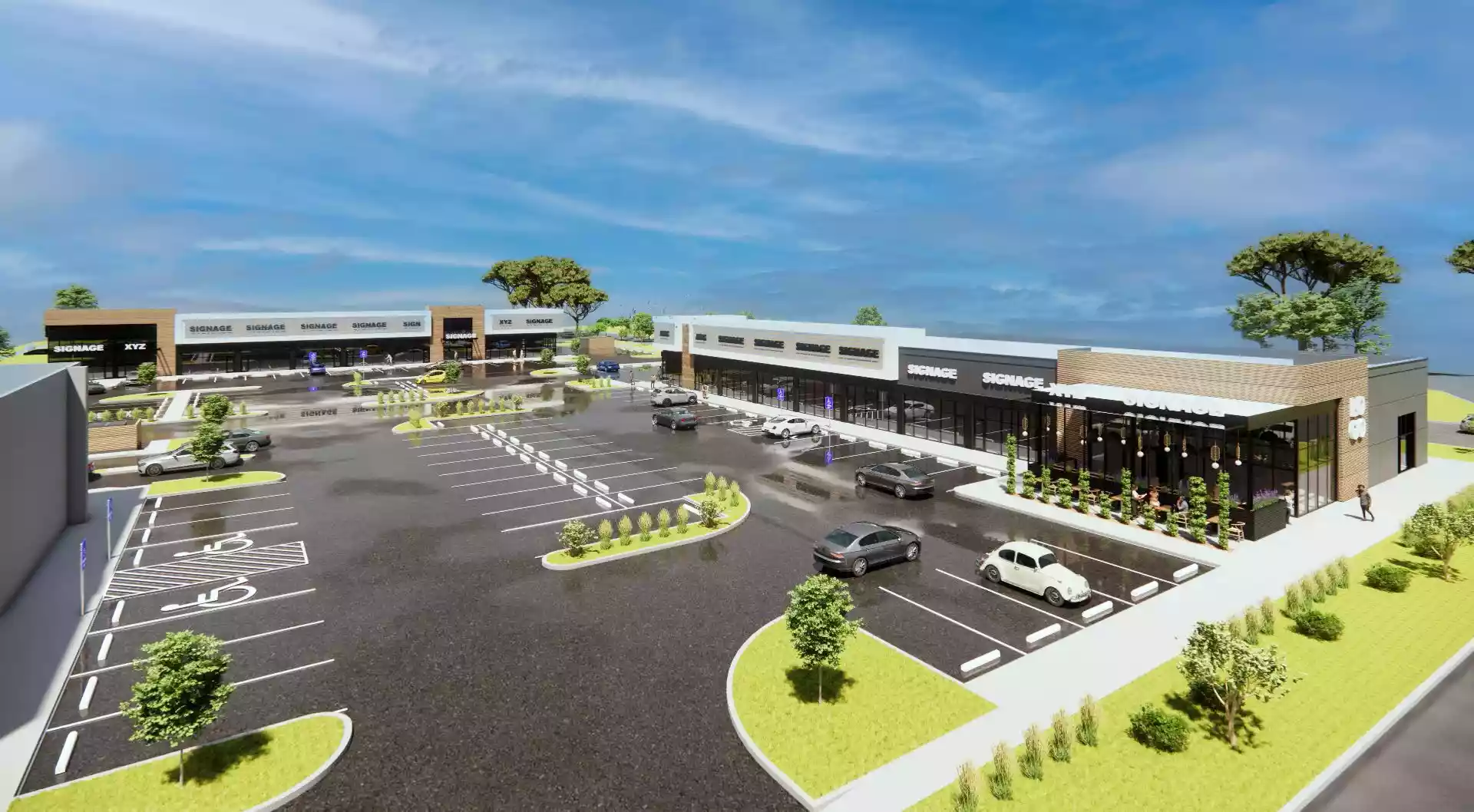
| Suburban Strip Centers | Low cost; easy parking for "Click-and-Collect"; high utility. | Lower prestige; dependent on local car traffic; aging infrastructure. |
2026 Operational Requirements: The Modern Storefront
Leasing retail space in 2026 necessitates a "Future-Proof" mindset. Landlords are increasingly looking for "Credit Tenants" who can prove their business model withstands the continued growth of AI-driven shopping.
Expert Insight on 2026 Lease Clauses
Exclusive Use Clauses: Ensure your lease prevents the landlord from leasing adjacent space to a direct competitor. In 2026, this must extend to "Hybrid Businesses"—for example, if you lease a coffee shop, your exclusive should prevent a bookstore from opening a "Cafe Corner."
Force Majeure: Post-2024, Force Majeure clauses have been rewritten. Ensure your 2026 lease specifically covers "Cyber-Grid Failures" and "Regional Health Mandates," allowing for rent abatement if the physical space becomes unusable due to factors outside your control.
Frequently Asked Questions (FAQs)
What is the average cost of retail space for lease in 2026? The average cost varies by Tier; Tier 1 cities (NYC, LA, Austin) average $95–$250 per square foot, while Tier 2 cities average $35–$70. These rates in 2026 are heavily influenced by the building’s "Smart Rating" and energy efficiency certifications.
Do I need a commercial broker to lease retail space in 2026? Yes, utilizing a tenant-rep broker is highly recommended as they have access to proprietary 2026 "Off-Market" data and can negotiate complex TI allowances. In most cases, the landlord pays the broker's commission, making it a no-cost high-value service for the tenant.
How long are retail lease terms in 2026? While 5 and 10-year leases remain the standard for established brands, there is a significant trend toward "3-2-2" structures—a 3-year initial term with two 2-year options to renew, allowing businesses to pivot as technology evolves.
What is a "Phygital" retail requirement? This refers to the physical space's ability to support digital sales, including integrated inventory sensors, VR-ready fitting rooms, and dedicated zones for online order processing. Most 2026 leases now include a "Tech Baseline" that the landlord must maintain.
Are "Pop-Up" retail leases still viable in 2026? Absolutely. Short-term "Activation Leases" (1 to 6 months) are highly popular in 2026 for brand launches. These often use "All-In" gross rent structures to simplify the process for new entrants.
What should I look for in a 2026 CAM audit? Ensure you are not being overcharged for "Legacy Costs." Older buildings may attempt to pass on the high costs of upgrading to 2026 carbon-neutral standards through CAM; these should ideally be categorized as Capital Expenditures (CapEx) and paid by the landlord.
The process of finding retail space for lease in 2026 requires a balance of traditional real estate acumen and forward-thinking technological integration. By prioritizing spaces that offer logistical flexibility, high power density, and sustainable operations, retailers can ensure their physical presence serves as a powerful engine for both brand growth and operational efficiency. If you are ready to expand your footprint, begin by conducting a comprehensive "Gap Analysis" of your current physical-to-digital workflow to determine exactly which type of 2026 retail space will maximize your ROI.