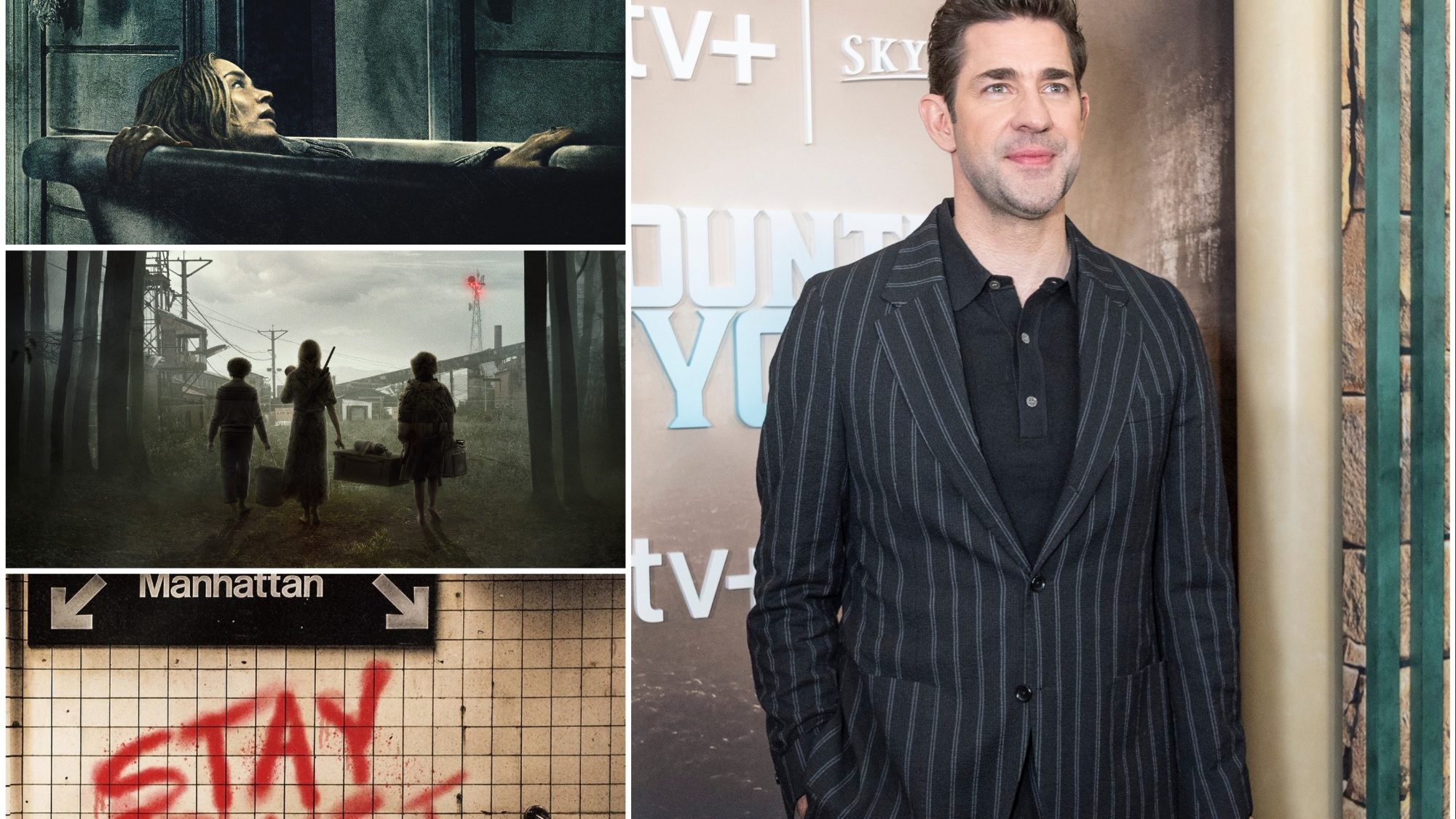
Released in 2018, A Quiet Place redefined modern horror through its inventive reliance on sound design and emotional storytelling. Co-written, directed by, and starring John Krasinski alongside Emily Blunt, the low-budget thriller grossed over $340 million worldwide, transforming Krasinski from a television comedy star into a major Hollywood director and establishing a multi-installment film franchise.
Origin and Creative Genesis: From High-Concept Script to Krasinski's Vision
The journey of A Quiet Place began with screenwriters Bryan Woods and Scott Beck, who conceived the original story while in college. Inspired by silent cinema and low-dialogue thrillers like Alien and Jaws, Woods and Beck penned a spec script containing only a few lines of spoken dialogue, relying heavily on visual cues and sound descriptions to build suspense.
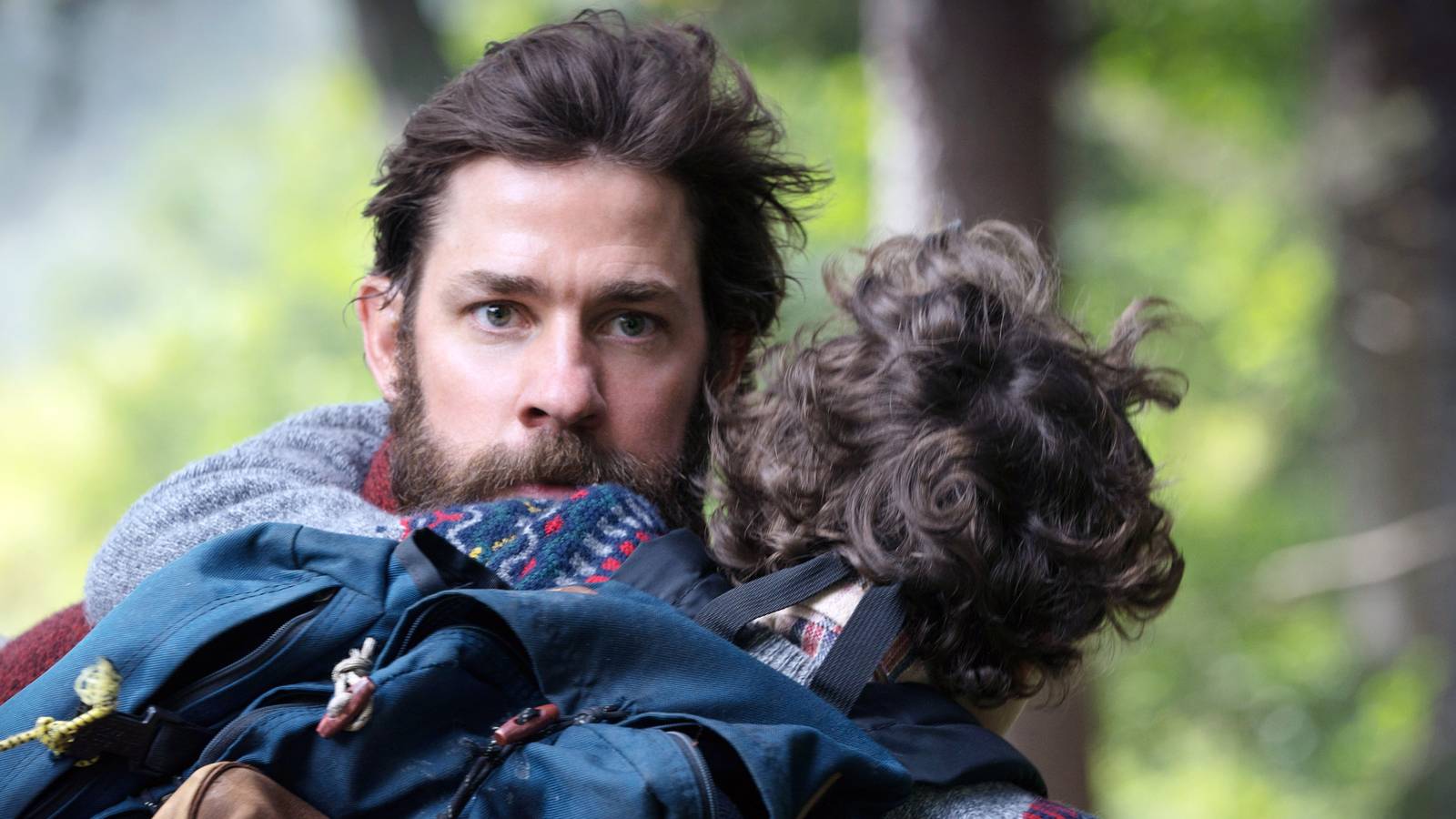
When the script reached John Krasinski through Sunday Night Productions and Platinum Dunes, Krasinski was initially hesitant to take on a horror project. However, the core thematic premise—parents desperately trying to protect their children in a world where the slightest noise attracts blind, hyper-auditory alien predators—resonated deeply with him as a new father. Krasinski stepped into the project not only as an actor alongside his real-life wife, Emily Blunt, but also as co-writer and director.
Krasinski overhauled the original script, deepening the character arcs and centering the narrative on the emotional fragility of the Abbott family. He emphasized the universal anxieties of parenthood, recasting the terrifying monsters as an existential threat to family cohesion. By framing the horror within a deeply personal domestic context, Krasinski elevated the film from a standard creature feature into an emotionally resonant survival story.
Narrative Architecture and Sound Design Innovation
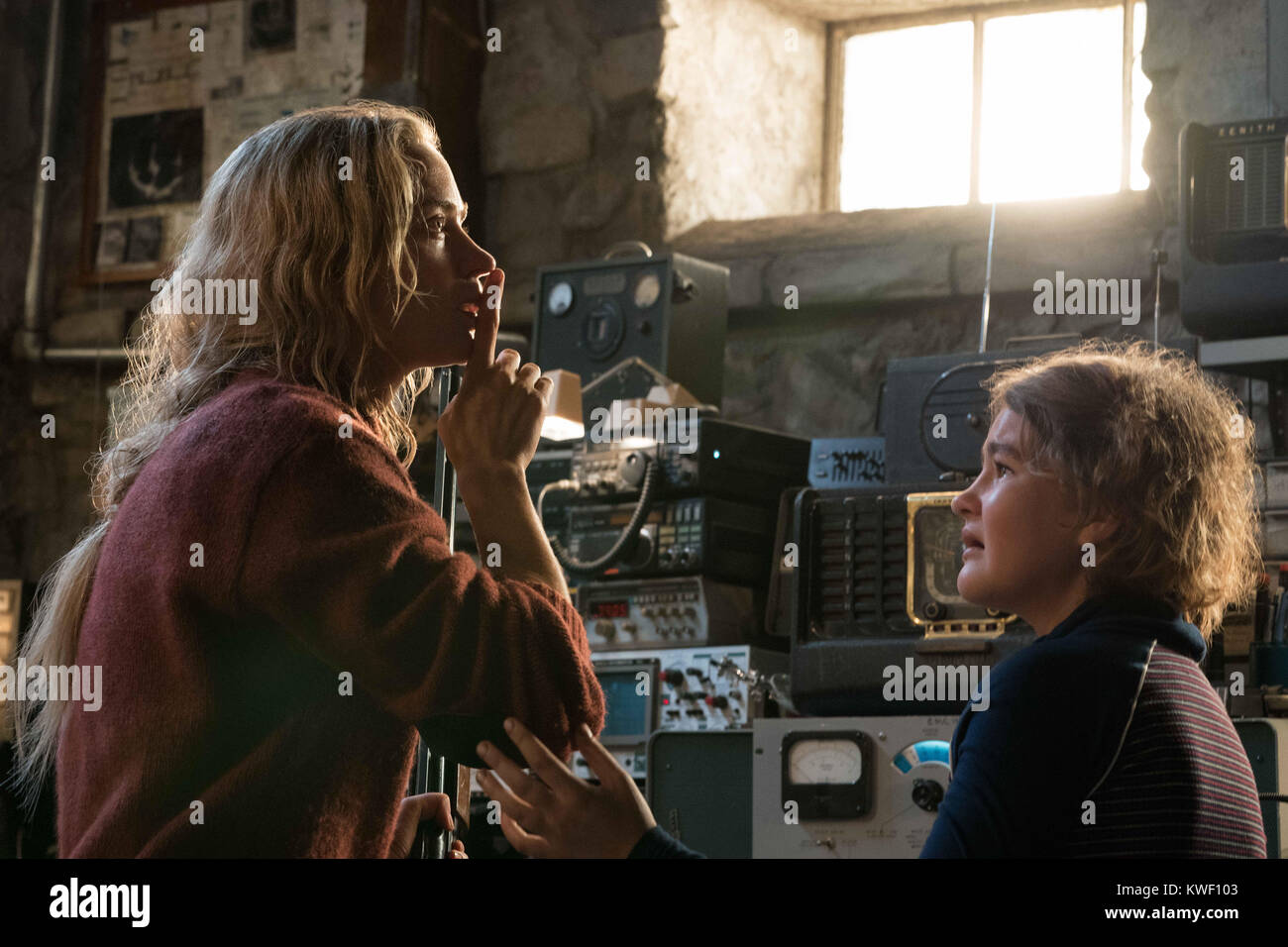
A Quiet Place operates under a deceptively simple narrative rule: if they hear you, they hunt you. Set in a post-apocalyptic 2020 where sightless alien creatures with acute hearing have wiped out most of human civilization, the Abbott family survives in isolated silence on a upstate New York farm. They communicate through American Sign Language (ASL), walk barefoot on sanded paths, and implement meticulous auditory counter-measures.
- Auditory Environment
- Diegetic Silence / ASL Communication
- Sudden Noise Event
- Immediate Creature Response
The film contains fewer than 100 spoken words, shifting the burden of storytelling to visual world-building and sound architecture. Supervising sound editors Erik Aadahl and Ethan Van der Ryn designed an immersive sonic environment that forces the audience to adjust their baseline sensory expectations. The audio mix alternates between three distinct auditory perspectives:
- Objective Environmental Audio: The muted natural sounds of rustling leaves, gentle wind, and soft footsteps that define the family's daily existence.
- Subjective Deaf Perspective: Total or near-total silence representing the internal point-of-view of Regan Abbott, the family's deaf daughter.
- Visceral Creature Audio: Sharp, sudden, high-frequency sound effects—such as the clicking and armor-plating shifts of the monsters—that signal immediate life-or-death danger.
By intentionally stripping away conventional dialogue and heavy orchestral scoring for long stretches, the sound team turned ambient silence into a tension-building device. Audiences in theaters found themselves afraid to eat popcorn or rustle candy wrappers, effectively making the moviegoer an active participant in the film's auditory tension.
Box Office Performance and Industry Execution Profile
Produced by Platinum Dunes on a modest budget of roughly $17 million, A Quiet Place represented an extraordinarily efficient commercial enterprise for distributor Paramount Pictures. The film premiered at the South by Southwest (SXSW) Film Festival in March 2018 to unanimous critical praise before opening in North American theaters on April 6, 2018.
| Metric / Dimension | Specification / Value | Industry Context |
|---|---|---|
| Production Budget | $17 Million | Low-to-mid budget studio genre film |
| Domestic Box Office | $188.0 Million | Top 15 highest-grossing films in North America in 2018 |
| International Box Office | $152.9 Million | Demonstrated strong cross-cultural appeal without language barriers |
| Global Total Box Office | $340.9 Million | Yielded over 20x return on production budget |
| Opening Weekend (US) | $50.2 Million | Substantially exceeded pre-release tracking of $20M–$30M |
| Rotten Tomatoes Rating | 96% Approval Rate | Rare critical consensus for a horror/thriller release |
| Key Accolades | Academy Award Nomination (Best Sound Editing) | Won SAG Award (Emily Blunt); Golden Globe nomination for Best Score |
The film's commercial performance demonstrated that high-concept, original horror properties could compete directly with established intellectual properties and superhero blockbusters when executed with high craft and clear marketing points.
The Cultural and Cinematic Impact: Shaping Modern Horror
The success of A Quiet Place accelerated a notable shift in 2010s cinema toward sensory-deprivation horror and atmospheric thrillers. Alongside contemporaries like Get Out (2017), Hereditary (2018), and The Witch (2015), Krasinski’s film validated studio investment in auteur-driven, high-concept horror.
Authentic Representation in Casting
A critical turning point in the production of A Quiet Place was Krasinski's insistence on casting a deaf actress for the role of Regan Abbott. The hiring of Millicent Simmonds added deep authenticity to the family dynamic and brought genuine ASL nuance to the screen. Simmonds offered key insights during filming, helping Krasinski refine how the family would naturally interact using sign language. This decision set a positive precedent in Hollywood for authentic disability representation in major genre releases.
Re-Engineering the Cinema Experience
In an era dominated by home streaming, A Quiet Place reaffirmed the irreplaceable value of the theatrical experience. The collective quiet imposed on theater audiences generated a communal tension rarely achieved in modern multiplexes. Film critics and commentators highlighted how the movie transformed the physical space of the cinema into an interactive arena where any sound made by a spectator felt like a breach of the film's internal rules.
Career Transformation: John Krasinski’s Shift to Auteur Director
Before 2018, John Krasinski was known primarily to global audiences as the charming, affable Jim Halpert from NBC's long-running sitcom The Office. While he had directed smaller indie projects such as Brief Interviews with Hideous Men (2009) and The Hollars (2016), A Quiet Place established his credibility as a blockbuster filmmaker capable of managing complex visual effects, tight suspense pacing, and physical action.
Krasinski also contributed physically to the production in unexpected ways: he performed motion-capture reference movements for the alien creatures during pre-visualization and pickup shoots, giving the visual effects team at Industrial Light & Magic (ILM) baseline behavioral cues for the monsters.
- Television Comedy Star
- Indie Film Director
- A Quiet Place Breakthrough
- Franchise Architect & Studio Auteur
The success of the film opened doors for Krasinski to build an expanded cinematic universe. He returned to write and direct A Quiet Place Part II (2020/2021), which overcame pandemic-related delays to achieve major commercial success, grossing nearly $300 million worldwide. He subsequently guided the expansion of the universe as a producer on the prequel A Quiet Place: Day One (2024), directed by Michael Sarnoski, solidifying the brand as one of Paramount's premiere original franchises.
Frequently Asked Questions
How much spoken dialogue is in A Quiet Place?
There are fewer than 100 spoken words of dialogue throughout the entire 90-minute runtime of A Quiet Place. The characters rely almost entirely on American Sign Language (ASL), facial expressions, physical actions, and environmental cues to communicate.
Did John Krasinski play the monster in A Quiet Place?
Yes, in addition to writing, directing, and starring as the father, Lee Abbott, John Krasinski performed motion-capture work for the alien creatures. He put on a motion-capture suit during key sequences to provide the visual effects team at Industrial Light & Magic with realistic physical movement and scaling references.
Why was Millicent Simmonds' casting significant for the film?
Millicent Simmonds, who is deaf in real life, was cast as Regan Abbott. John Krasinski actively sought a deaf actress for the role to ensure authentic representation. Simmonds provided invaluable guidance on ASL usage, deaf culture, and the personal experience of navigating an auditory world, which deepened the film's realism and emotional weight.
What major awards did A Quiet Place win or receive nominations for?
A Quiet Place received an Academy Award nomination for Best Sound Editing (Erik Aadahl and Ethan Van der Ryn). Emily Blunt won the Screen Actors Guild (SAG) Award for Outstanding Performance by a Female Actor in a Supporting Role, and Marco Beltrami received a Golden Globe nomination for Best Original Score. The film was also named one of the Top Ten Films of 2018 by both the American Film Institute and the National Board of Review.
Where was A Quiet Place filmed?
The film was shot primarily in Upstate New York, with locations across Dutchess, Ulster, and Herkimer counties. Notable sites include a farm built in Little Falls, a historic bridge in New Paltz, and downtown streets in Little Falls and Pawling.
Key Lessons for High-Concept Filmmaking
The enduring legacy of A Quiet Place offers several practical insights for filmmakers, studio executives, and media analysts studying genre cinema:
- Embrace Creative Constraints: By limiting spoken dialogue and reliance on loud action, the film turned sensory restraint into its greatest narrative asset and marketing hook.
- Prioritize Character Over Spectacle: The alien invasion serves primarily as a background framework to explore grief, guilt, and parental devotion, giving the horror genuine emotional stakes.
- Invest in Sound Design Early: Audio architecture should not be treated as a post-production afterthought; in A Quiet Place, sound editing was integral to script structure and pacing from day one.
- Authenticity Enhances Narrative Depth: Casting deaf performers and integrating real ASL elevated the film's dramatic credibility beyond typical creature-feature tropes.