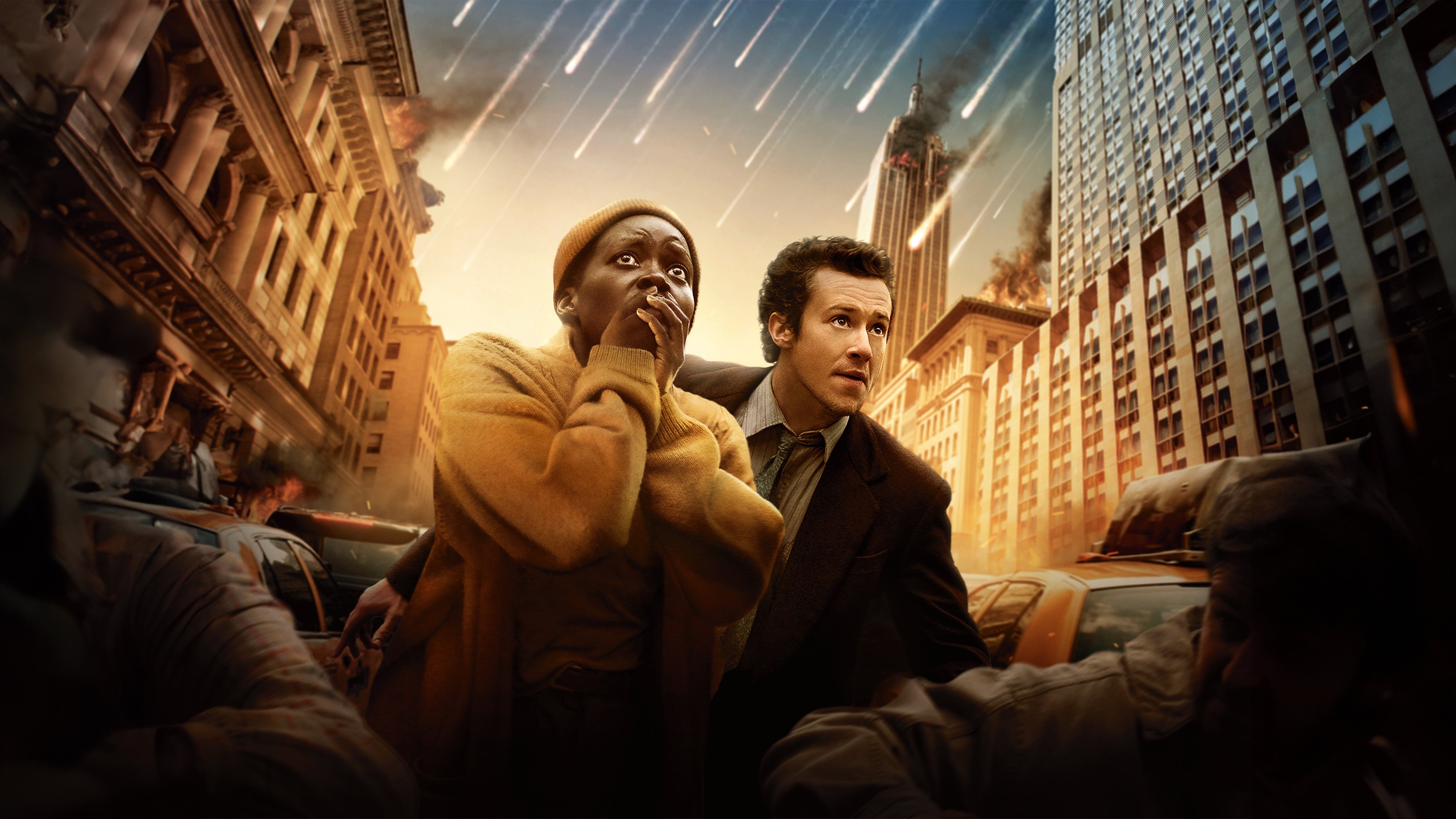
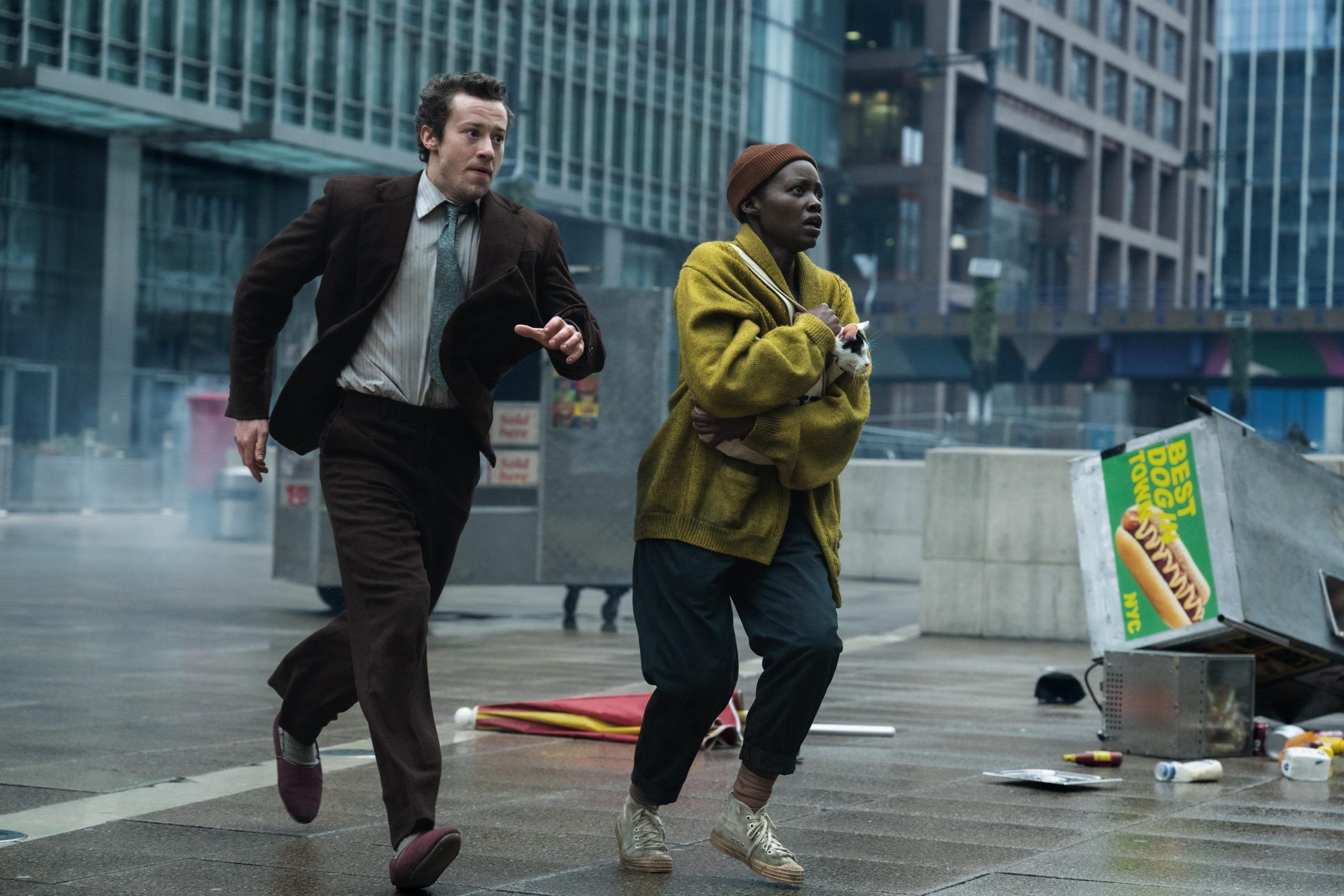
A Quiet Place: Day One shifts the franchise’s focus from suburban survival to urban catastrophe, detailing the initial hours of the alien invasion in New York City. Directed by Michael Sarnoski, the film centers on Samira, a terminally ill woman seeking personal closure rather than physical preservation, and Eric, an anxious law student struggling to navigate a silent, hostile metropolis.
Setting the Stage: The Manhattan Invasion and Sam's Quest
A Quiet Place: Day One serves as a standalone prequel to John Krasinski’s post-apocalyptic horror franchise. While A Quiet Place (2018) and A Quiet Place Part II (2020) focused on the Abbott family navigating rural landscapes years into the apocalypse, Day One drops viewers directly into Manhattan during the initial meteorite strikes and subsequent alien arrival.
The film introduces Samira (Lupita Nyong'o), a terminally ill hospice patient living outside New York City. Accompanied by her service cat, Frodo, Samira reluctantly agrees to a group outing into Manhattan organized by her nurse, Reuben (Alex Wolff). Her sole motivation for joining the trip is the promise of a slice of pizza from Patsy’s, a Harlem pizzeria associated with cherished memories of her late father, a jazz musician.
Day One Narrative Arc:
- Hospice Outing
- Meteor Strike
- Citywide Silence Mandate
- Bridge Demolition
- Bonding with Eric
- Harlem Pilgrimage
- Patsy's Closure
- Harbor Distraction
- Sam's Choice
When the celestial objects impact the city, blindly aggressive extraterrestrial predators—later known for their hyper-sensitive hearing—emerge and butcher the panic-stricken populace. As sirens, screaming citizens, and low-flying aircraft inadvertently draw hundreds of creatures into the streets, the national authorities establish three immediate facts:
- The invaders hunt exclusively by sound.
- The creatures are incapable of swimming or traversing deep water.
- Manhattan must be quarantined by destroying all bridges and tunnels leading to the mainland.
Rather than fleeing south toward the military evacuation ferries docked at the harbor, Samira resolves to head north on foot toward Harlem. Her journey is not an attempt to prolong her life, which is already nearing its natural conclusion, but a deliberate effort to reclaim agency over her remaining time.
Key Character Dynamics: Sam, Eric, and Frodo the Cat
The emotional backbone of Day One relies on the intimate relationship formed between two strangers caught in an unprecedented disaster.
- Samira (Terminally Ill)
- Emotional Anchor shared with Eric (Law Student)
- Accompanied by Frodo the Service Cat
- Eric (Law Student)
- Emotional Anchor shared with Samira (Terminally Ill)
- Accompanied by Frodo the Service Cat
- Frodo the Service Cat
Samira (Sam)
Samira represents a unique protagonist for a survival horror film. Having already accepted her terminal cancer diagnosis, she experiences none of the existential panic that consumes the healthy population. Her struggle is emotional and physical—managing severe pain with limited medication while attempting to complete a personal pilgrimage. Her service cat, Frodo, acts as both a calming influence and a crucial narrative anchor.
Eric
Eric (Joseph Quinn) is an English law student stranded in New York who experiences severe panic attacks following the initial attack. Desperate, disoriented, and separated from his family, Eric encounters Frodo in the flooded subways and follows the cat back to Samira. Unlike traditional action-oriented survivalists, Eric is fragile, dependent on Samira for emotional grounding while offering her physical support as her health declines.
Frodo the Cat
Frodo functions as more than a pet; he serves as a quiet companion whose instincts often signal danger or pathfinding opportunities to the human leads. His presence requires Samira and Eric to exercise restraint, heightened spatial awareness, and non-verbal communication, reinforcing the film's core aesthetic of mandatory silence.
Major Plot Beats and Turning Points
| Key Narrative Milestones | Details |
|---|---|
| 1. The Manhattan Impact | Meteor strike; immediate citywide slaughter |
| 2. Bridge Destruction | Military isolates Manhattan island |
| 3. Subways & Separation | Flooding forces survivors to street level |
| 4. The Thunderstorm | Environmental noise enables open speech |
| 5. Patsy's Reconstructed | Emotional apex in a destroyed Harlem club |
| 6. Harbor Evacuation | Final tactical split at the ferry docks |
The Initial Attack and Theater Refuge
After the meteors land, Samira takes shelter inside a puppet theater alongside other survivors, including Henri (Djimon Hounsou), a character previously seen leading the island colony in A Quiet Place Part II. When a survivor's panic leads to involuntary noise, Henri forcefully silences him to protect the group, demonstrating the ruthless pragmatic rules required for survival in this new environment.
The Bridge Demolition and Water Isolation
Air Force jets bomb the bridges connecting Manhattan to Brooklyn, Queens, and New Jersey. Military loudspeakers advise citizens to move quietly toward the southern piers for sea evacuation. While the mass crowd surges south, Samira moves counter-cyclically toward Harlem, eventually joined by Eric after he escapes a collapse in the subway system.
Thunderstorms and Auditory Masking
During a heavy rainstorm, Samira and Eric discover that ambient environmental noises—such as thunder, rushing water, and torrential rain—mask human vocalizations. This temporal safety valve allows the pair to speak freely, exchange personal histories, and form a deep bond. Eric learns of Samira’s past, her late father, and the significance of Patsy’s Pizzeria.
The Harlem Pilgrimage and Patsy's
Upon reaching Harlem, Samira finds Patsy’s Pizzeria destroyed by fire and structural collapse. Noticing her distress, Eric leads her to an adjacent jazz club where her father used to perform. He retrieves a box of magic tricks, finds a cardboard pizza box, and paints a slice of pizza on it, while offering her an actual slice obtained from an intact bakery nearby. This act of empathy allows Samira to achieve the emotional closure she sought.
Narrative Comparison: How Day One Differs from Parts I & II
While sharing the same universe, creature rules, and sound design principles, A Quiet Place: Day One departs significantly from its predecessors in tone, setting, and thematic focus.
| Feature / Element | A Quiet Place (2018) | A Quiet Place Part II (2020) | A Quiet Place: Day One (2024) |
|---|---|---|---|
| Primary Setting | Rural upstate New York farm | Industrial complex & island community | High-density urban Manhattan |
| Core Conflict | Family protection & childbirth | Expansion, community, & rescue | Terminal illness, grief, & human connection |
| Main Character Goal | Long-term survival & defense | Finding safe havens & survivors | Personal closure & self-determination |
| Scale of Invasion | Post-apocalyptic aftermath (Day 471+) | Immediate transition (Day 1 to 474) | Day 1 to Day 4 (Initial outbreak) |
| Creature Awareness | High (established vulnerabilities) | Medium (learning acoustic weak points) | Low (real-time discovery of rules) |
| Protagonist Motivation | Biological survival of offspring | Rebuilding societal structures | Reclaiming dignity before death |
The Ending Explained: Agency, Dignity, and the Harlem Finale
The climax of A Quiet Place: Day One centers on self-sacrifice, mutual support, and personal choice.
- Harbor Evacuation Zone
- Eric & Frodo (Runs to safety)
- Samira (On Harlem Street)
- Car Windows Smashed (Distraction created, attracts Death Angels)
- iPod / Earphones
- Unplugs Headphone Jack
- Music Plays Aloud
- Final Choice
- Music Plays Aloud
- Unplugs Headphone Jack
The Harbor Distraction
As Eric, Samira, and Frodo reach the coastal zone near the evacuation ferries, they find the streets swarming with creatures. The remaining ferry is preparing to push off from the pier, but Eric and Frodo are trapped behind structural wreckage.
Knowing she cannot survive long-term due to her advancing illness and lack of medication, Samira hands Eric her father’s leather jacket—containing a letter thanking him for his friendship—and takes her cat's leash off, handing Frodo to Eric. She then runs in the opposite direction, smashing car windows with a metal bar to create loud, continuous noise. The sound draws the creatures away from the pier, giving Eric enough time to leap into the harbor water with Frodo and be pulled aboard the rescue ferry by Henri.
Eric’s Departure
On the ferry, Eric finds Samira’s note inside the jacket pocket. The letter expresses gratitude for his companionship during her final days and asks him to take good care of Frodo. Safely aboard with Henri and other survivors, Eric looks back at the burning Manhattan skyline, carrying forward the humanity and connection they preserved amidst chaos.
Samira's Final Scene
Samira walks alone through the empty, silent streets of Harlem. She wears her iPod, listening to Nina Simone’s recording of "Feeling Good". Standing in the middle of an intersection, she looks up at the sky, smiles, and unplugs her headphones from the jack. As the music blasts aloud from the built-in speaker, a creature drops down behind her.
Samira’s ending is not a tragedy of defeat, but an act of absolute autonomy. By choosing the time, place, and manner of her final moments, she refuses to let either her terminal illness or the alien monsters dictate her narrative, concluding her story on her own terms.
How Day One Connects to the Broader A Quiet Place Franchise
Although designed as a standalone narrative, Day One expands the world-building established by John Krasinski in several critical ways:
- Henri's Backstory: The inclusion of Djimon Hounsou’s character provides an explicit origin for the island refuge featured in Part II. Viewers learn how Henri made it onto the evacuation boats from Manhattan, establishing the lineage of the survivor community that Regan and Emmett eventually locate.
- Creature Biology and Behavior: The film clarifies early military observations regarding the aliens. It confirms that the creatures cannot float or swim, leading directly to the strategic isolation of coastal islands. It also reveals that the alien meteors brought an extraterrestrial fungus-like organism that the creatures consume, explaining how they sustain themselves on Earth without eating human prey.
- The Vulnerability of Urban Centers: Day One illustrates why metropolitan areas collapsed almost instantly. The high density of population, glass structures, and mechanical infrastructure created a continuous feedback loop of noise, rendering urban defense impossible within hours of impact.
Frequently Asked Questions
Why did Samira want pizza so badly during an alien invasion?
Samira’s insistence on getting pizza from Patsy's was not about food; it was about emotional closure. As a terminally ill hospice patient, she knew her lifespan was limited regardless of the invasion. Patsy's represented her happiest memory with her late father, and completing that journey gave her control over her final days.
Does Frodo the cat survive the movie?
Yes, Frodo survives. Samira safely transfers Frodo to Eric before creating the noise distraction near the harbor. Eric carries Frodo onto the evacuation ferry, ensuring the cat's safety alongside the surviving refugees.
How does Day One connect to A Quiet Place Part II?
Day One features the character Henri (played by Djimon Hounsou), who was introduced in Part II as the leader of the island colony. The prequel demonstrates how Henri escaped Manhattan on the evacuation boats, bridging the events of the initial strike with the safe community seen in the second film.
Can the monsters in A Quiet Place swim?
No. Day One explicitly confirms that the creatures cannot swim and sink in deep water. This biological limitation is why the military destroyed the bridges out of Manhattan and why boat evacuations were effective at saving survivors.
What song is playing at the very end of A Quiet Place: Day One?
The song playing in the final scene is Nina Simone’s version of "Feeling Good". Samira unplugs her headphones to let the track play aloud, symbolizing her peace, independence, and ownership of her final moment.
Final Takeaways for Franchise Fans and Film Analysts
A Quiet Place: Day One shifts the thematic focus of the franchise from suburban family preservation to urban human connection under terminal circumstances.
- Thematic Priority: Rather than prioritizing physical survival at all costs, the narrative explores how empathy, dignity, and personal agency endure when societal infrastructure collapses.
- World-Building Contributions: It provides concrete answers regarding the military's initial response, the physical limitations of the alien threat, and the origin of the island colony established in Part II.
- Character Archetypes: By pairing a terminally ill woman with an anxious law student, the film subverts standard survival-horror tropes, offering a character study centered on emotional closure rather than combat readiness.