Building a functional maternity wardrobe requires prioritizing adaptable designs, stretchable natural fabrics, and strategic layering rather than buying an entirely new closet. By focusing on core versatile garments—such as supportive leggings, ruched tops, adjustable waistbands, and multi-stage nursing pieces—you can maintain your personal style and stay comfortable throughout every trimester and into postpartum recovery.
Understanding Maternity Sizing and Trimester Timeline Dynamics
Navigating body changes during pregnancy requires a strategic approach to clothing acquisition. Many expectant mothers assume they need to purchase a full line of maternity wear during the first trimester, but body shifts occur gradually and non-linearly. Understanding how your silhouette changes month by month prevents unnecessary spending while ensuring physical ease.
Trimester 1: The Transition Phase (Weeks 1 to 12)
During the first twelve weeks, weight redistribution and abdominal bloating are more common than a distinct baby bump. Most standard garments still fit, though rigid waistbands on traditional denim or tailored trousers can become uncomfortably restrictive by mid-day.
Instead of jumping straight into dedicated maternity wear, leverage temporary adjustments:
- Waistband extenders: Elastic or fabric button-extenders clip into your standard trousers to yield an extra inch or two of breathing room.
- Flowy silhouettes: Shift dresses, A-line skirts, and oversized button-down shirts accommodate early waistline shifts naturally.
- Flexible waistlines: Transition toward soft pull-on pants, jogger styles, or rib-knit skirts featuring encased elastic bands.
Trimester 2: Peak Bump Growth and Support Needs (Weeks 13 to 27)
The second trimester typically brings a defined bump as the uterus rises above the pelvic cavity. Around weeks 14 to 20, standard pants generally stop fitting comfortably, even with extenders. This is the ideal window to introduce true maternity basics.
Focus on items designed with targeted expandable construction. Side-ruched t-shirts elongate vertically without excess boxiness, while high-waisted soft panel pants provide gentle abdominal support. Because skin sensitivity often increases during this stage due to hormonal changes and stretching, prioritizing smooth seams and non-abrasive fabrics becomes essential.
Trimester 3 and the Fourth Trimester: Maximum Stretch and Recovery (Weeks 28 to Postpartum)
In the final trimester, abdominal expansion accelerates, and pelvic pressure increases. Garments must offer non-constrictive support, maximum stretch, and exceptional thermal breathability. Over-the-bump waistbands provide gentle counter-pressure for lower back and pelvic discomfort, while seamless, wire-free bras become mandatory as ribcage expansion reaches its peak.
The postpartum period—often termed the "fourth trimester"—requires clothes that accommodate a healing body, fluctuating breast size, and frequent nursing or pumping access. Choosing maternity tops with front buttons, cross-over wrap fronts, or hidden lift-up panels during late pregnancy ensures those same garments remain highly practical for months after delivery.
Core Fabric Selections and Garment Engineering
The physical comfort of maternity clothing depends directly on fabric composition and garment design. Hormonal fluctuations during pregnancy frequently elevate core body temperature and increase skin reactivity, making material choice just as critical as fit.
Fabric Performance Characteristics for Pregnancy:
- Bamboo Rayon / Modal: Exceptional softness, moisture-wicking, highly breathable
- Organic Cotton: Hypoallergenic, durable, high airflow, low synthetic irritation
- Spandex / Elastane (5–12%): Vital for dimensional recovery and shape retention
- Synthetic Blends (High Polyester): Prone to heat retention; best avoided for baselayers
Prioritizing Natural Fibers and Elastane Blends
Synthetics with poor breathability can trap moisture against the skin, causing chafing and thermal discomfort. The optimal foundation for maternity baselayers combines natural, breathable fibers with a controlled percentage of elastane (Spandex or Lycra):
- Bamboo Rayon and Modal: These ultra-soft, plant-derived fibers excel at moisture-wicking and temperature regulation while feeling weightless against stretched, sensitive skin.
- Organic Long-Staple Cotton: Provides structural integrity, high breathability, and durability through repeated washing.
- 4-Way Stretch Elastane (5% to 12%): Ensures the garment expands linearly and laterally across changing contours while retaining its original recovery shape without sagging.
Garment Construction Details That Drive Comfort
When evaluating maternity pieces, small construction features dictate whether a item remains comfortable over an eight-hour day:
- Side Ruching: Horizontal gathers along the side seams of tops and dresses allow the front panel to expand vertically over the bump while keeping the back panel tailored to your frame.
- Flatlock and Seamless Stitching: Smooth interior seams eliminate friction points against the abdomen, hips, and inner thighs, significantly reducing skin chafing.
- Adjustable Elastic Buttons: Frequently found in tailorable trousers and maternity denim, internal button-hole elastic bands allow you to tighten or loosen the waistband by micro-increments as your body shifts.
Building a Functional Maternity Capsule Wardrobe
A capsule wardrobe minimizes daily decision fatigue while maximizing outfit combinations. By investing in high-quality, interchangeable core pieces, you can construct dozens of distinct looks for work, leisure, and formal occasions without overfilling your closet.
Recommended Capsule Wardrobe Blueprint:
- 2x Premium Maternity Leggings (1 Black, 1 Charcoal/Navy)
- 1x Over-the-Bump or Side-Panel Maternity Jeans
- 1x Tailored Stretch Trouser or Wide-Leg Pant
- 4x Side-Ruched Tops (2 Crew Neck, 2 V-Neck / Neutral)
- 2x Layering Cardigans / Oversized Blazers (Non-Maternity)
- 2x Midi Dresses (1 Bodycon Ruched, 1 A-Line/Wrap Front)
- 3x Wire-Free Seamless Nursing & Maternity Bras
Essential Bottoms: Leggings and Adaptable Denim
- High-Performance Maternity Leggings: A top-tier pair of black maternity leggings is the single most versatile item in any pregnancy wardrobe. Look for thick, opaque, squat-proof knits with a seamless belly panel that can be worn pulled up over the bump for back support or folded down under the bump for low-pressure comfort.
- Tailored Maternity Denim: One or two well-fitted pairs of maternity jeans (such as a classic straight-leg or modern wide-leg cut) maintain your pre-pregnancy style baseline. Ensure the denim fabric features a high cotton-to-elastane ratio so it soft-molds to your thighs without pulling down at the waist.
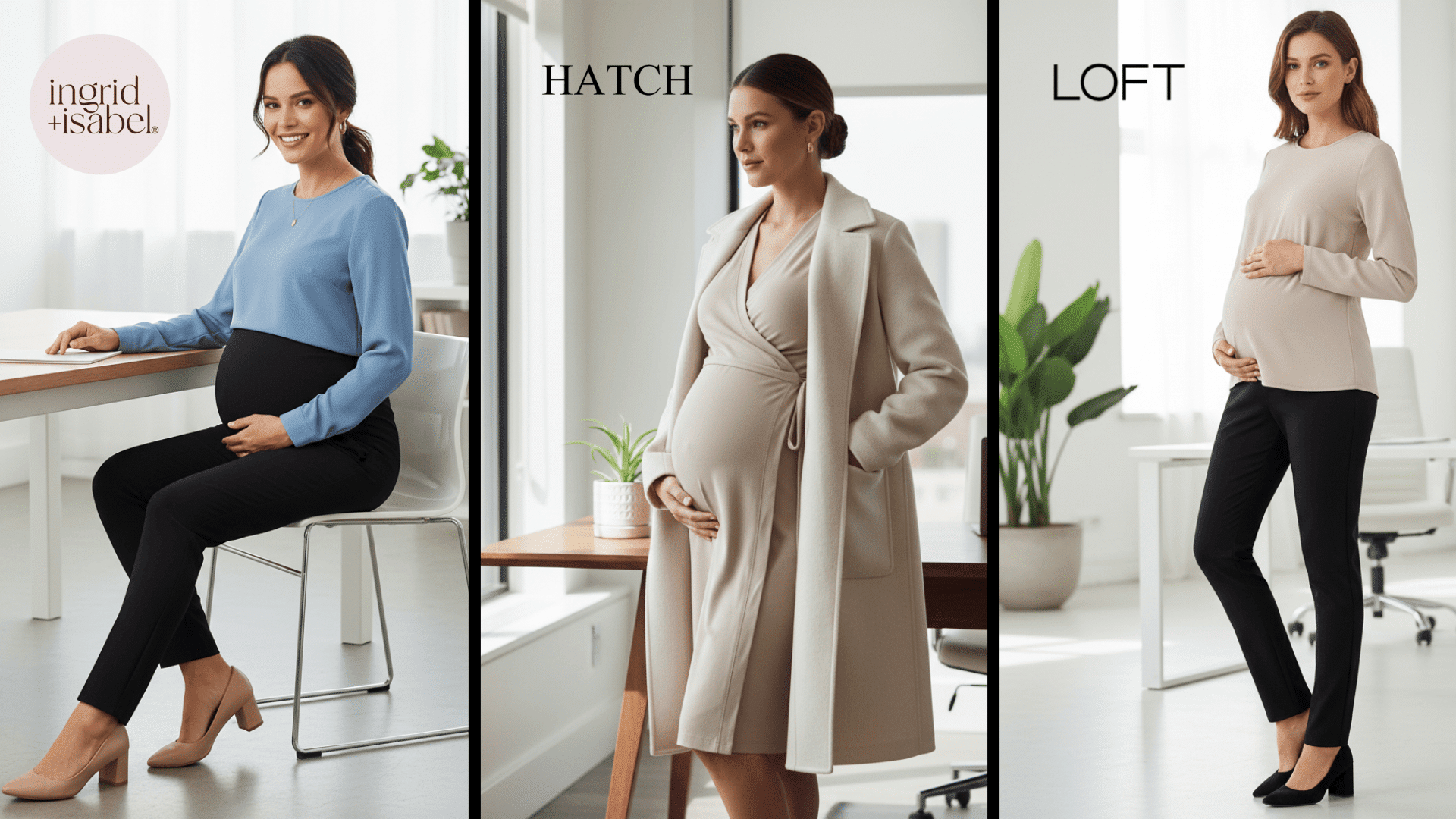
- Elevated Joggers or Wide-Leg Trousers: For professional or polished casual environments, soft draped trousers with a flexible flat-front waist offer refined comfort for extended sitting.
Tops and Layering Pieces
- Ruched Crewneck and V-Neck T-Shirts: Stocking up on solid, neutral-toned side-ruched tees provides the foundation for layering under jackets, sweaters, and cardigans.
- Button-Down Oversized Shirts: A crisp, high-quality button-down worn open over a fitted tank top creates a lengthened vertical line that elongates your silhouette while offering easy temperature control.
- Open-Front Duster Cardigans and Blazers: Non-maternity outerwear, such as unbuttoned longline cardigans, unstructured blazers, and open denim jackets, works seamlessly across all trimesters without requiring maternity-specific sizing.
Versatile Dresses
Midi-length stretch-knit bodycon dresses and woven wrap dresses represent the most effort-free one-piece outfits for pregnancy. A side-ruched jersey midi dress flatters the bump while adapting easily to formal settings with a blazer or casual outings when paired with low-profile sneakers.
Comparing Maternity Waistband Styles and Bottoms
Choosing the correct waistband style depends on your trimester, torso length, personal comfort preferences, and existing back support needs. The chart below details how the primary waistband designs function in daily use.
| Waistband Style | Support Level | Primary Construction | Best Trimester Range | Pros | Cons |
|---|---|---|---|---|---|
| Over-the-Bump (Full Panel) | High | Lightweight, stretchy microfiber or jersey panel that extends fully over the belly. | Trimester 2, Trimester 3, Early Postpartum | Provides maximum coverage, smooth belly profile, light lumbar support, and zero waistband incision pressure. | Can feel warm in hot summer months; panel may slip on shorter torsos during early pregnancy. |
| Under-the-Bump (Low Rise) | Low to Moderate | Scoop front waistband that sits low on the hips beneath the abdomen, often with a elastic V-shape. | Trimester 1, Early Trimester 2, Postpartum | Feels similar to standard low-rise pants; highly breathable; non-constrictive on the upper stomach. | May roll down under a growing bump late in pregnancy; offers minimal lower back support. |
| Side-Panel (Inset Elastic) | Moderate | Standard denim/fabric waistband with elastic stretchy side gussets replacing traditional pockets. | Trimester 1, Trimester 2, Postpartum | Looks identical to traditional non-maternity pants from the front and back; easy to tuck shirts in partially. | Elastic loses stretch limits in late 3rd trimester; can exert pressure on the lower abdomen if tight. |
| Belly Band (Standalone) | Low | Seamless elasticized fabric sleeve worn over non-maternity unbuttoned pants. | Trimester 1, Early Trimester 2, Postpartum | Extends the wearability of your regular wardrobe; low cost; versatile color layering. | Requires frequent readjustment; can bunch up during prolonged sitting or walking. |
Strategic Styling Techniques for Everyday Polish
Maintaining a personal sense of style during pregnancy comes down to balancing proportions, manipulating vertical lines, and selecting functional accessories.
Silhouette Balancing Rule:
- Fitted Maternity Base Layer (Ruched Tee + Leggings / Midi Dress)
- Add: Structured Open Outer Layer (Unbuttoned Blazer / Long Cardigan)
Mastering Proportions: The Fitted-Base, Relaxed-Outer Formula
One of the most reliable styling formulas during pregnancy is pairing a fitted inner layer with a structured, fluid outer layer:
- The Look: Combine a body-con side-ruched tank top and dark-wash maternity leggings with an open tailored blazer, trench coat, or long knit cardigan.
- The Visual Effect: The fitted inner layer clearly outlines the shape of the bump (which prevents a bulky, boxy appearance), while the long, unbuttoned outer garment creates clean vertical frame lines that lengthen the torso.
Harnessing Monochrome and Tonal Palette Schemes
Dressing in continuous color tones instantly elevates an everyday outfit while streamlining your styling routine:
- Monochromatic Bases: Wearing a matching black, cream, charcoal, or navy top-and-bottom base creates a sleek, cohesive canvas.
- Textural Contrast: Add visual interest within a single-color outfit by mixing textures—such as combining a soft ribbed-knit top with smooth stretch trousers and a suede or leather bag.
Strategic Footwear and Accessory Selection
Footwear choice directly affects joint comfort and spinal alignment during pregnancy. Relaxin—a hormone that loosens ligaments in preparation for childbirth—can increase foot flexibility, flatten arches, and alter balance.
- Supportive Low-Profile Shoes: Prioritize flat or low-heeled shoes featuring cushioned footbeds, arch support, and slip-resistant soles. Slip-on leather sneakers, refined loafers, and low block-heel boots offer stability without requiring you to bend down to tie laces late in pregnancy.
- Proportional Accessories: Long pendant necklaces, structured top-handle bags, and silk neck scarves draw the eye upward toward your face, creating balanced visual focal points.
Smart Shopping Strategies and Sustainable Wardrobe Management
Because maternity clothes are worn for a relatively short window, spending smart ensures high utility without unnecessary waste.
Buy Your Pre-Pregnancy Size as the Baseline
Most reputable maternity brands size their lines to match standard pre-pregnancy sizing. If you wore a size Medium or a size 8 prior to pregnancy, your starting baseline in maternity lines will generally remain a size Medium or size 8.
Exception: If you have gained significant weight in your bust, shoulders, or hips during early pregnancy, or if you are expecting twins/multiples, consider sizing up one full size in structured, non-stretch woven items.
Spend vs. Save Prioritization
To optimize your maternity budget, divide your purchases into high-impact foundation pieces and economical supporting garments:
- Invest In (Higher Budget): High-wear staples used daily—such as premium ergonomic leggings, high-support seamless bras, a perfectly fitted pair of work trousers, and durable walking shoes.
- Save On (Lower Budget): Seasonal trendy tops, basic cotton layering tees, lounge pants, and sleepwear.
- Borrow or Rent: Rental subscriptions and secondhand market apps are excellent sources for high-end formal dresses for weddings, baby showers, or photo shoots that you will only wear once or twice.
Frequently Asked Questions
When should I start buying maternity clothes?
Most women transition into dedicated maternity clothes between weeks 12 and 18, when bloating subsides and a firm bump begins to push past standard waistbands. However, there is no fixed calendar rule. If your everyday clothes feel tight, restrict breathing, or leave deep waist marks when sitting, it is time to start introducing stretchy maternity staples regardless of your current week.
Should I buy maternity clothes in my normal size?
Yes, you should typically purchase maternity garments in your pre-pregnancy size. Quality maternity wear is engineered with extra fabric, elastic side panels, and extended length around the bust and belly to accommodate natural pregnancy expansion while keeping the shoulders, arms, and hips proportioned to your normal frame.
How many pairs of maternity pants do I actually need?
For a streamlined, functional wardrobe, three to four reliable bottoms are usually sufficient: two pairs of high-quality dark or black maternity leggings, one versatile pair of maternity denim, and one pair of relaxed wide-leg trousers or joggers for work and lounging.
Can I wear my regular clothes during pregnancy?
Yes, many non-maternity items work exceptionally well throughout pregnancy. Oversized button-down shirts, longline open cardigans, stretch-knit sweater dresses, A-line skirts pulled over the waist, and low-rise elastic waist drawstring pants can easily span multiple trimesters without alteration.
What maternity items can I transition into postpartum wear?
Items designed with dual functionality—such as front-button shirt dresses, wrap tops, side-ruched tees, high-waisted seamless recovery leggings, and wire-free nursing camisoles—transition smoothly into postpartum life. Over-the-bump panel leggings also offer gentle abdominal compression and support during early postpartum recovery.
How to Build Your Personal Maternity Wardrobe Plan
To create a functional, stylish maternity wardrobe without feeling overwhelmed, execute your wardrobe assembly in three systematic steps:
- Audit Your Current Closet First: Pull out all non-maternity items with high stretch, open fronts, oversized cuts, or soft elastic bands. Set these aside in an easily accessible front section of your closet.
- Acquire the Three Core Foundations: Purchase two pairs of dark, high-support maternity leggings, one pair of versatile maternity jeans, and three soft, side-ruched basic tops in neutral shades (black, white, grey, or navy).
- Integrate Layering and Accessories: Complete your outfits by pairing your new maternity base layers with your pre-existing open jackets, cardigans, scarves, and supportive flat shoes.
By focusing on high-quality fabrics, adaptable waistbands, and smart silhouette balancing, you can stay exceptionally comfortable while maintaining an effortless personal style through every stage of pregnancy and early motherhood.