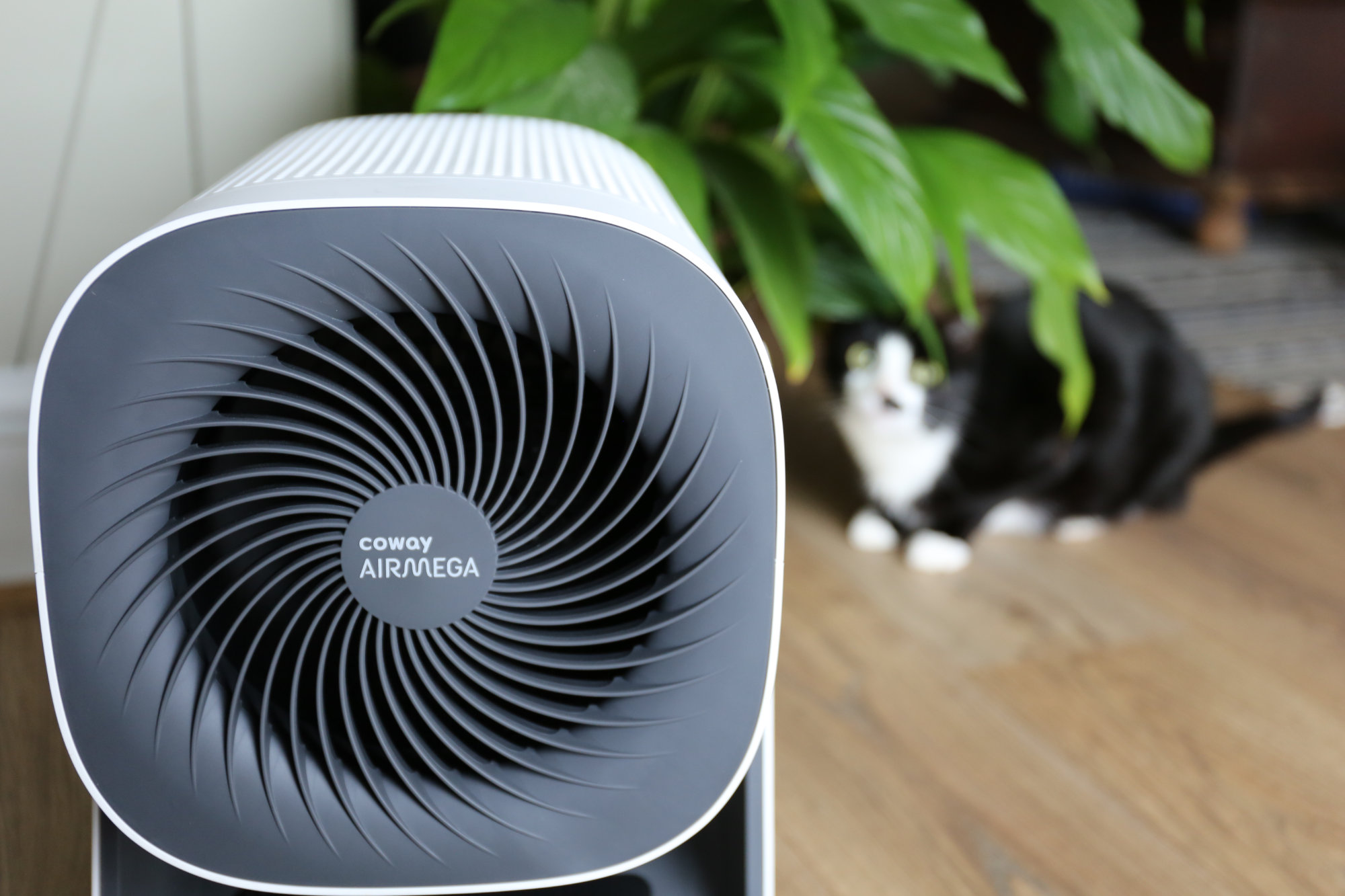
To choose and use a home air purifier effectively, select a unit with a True HEPA filter and an adequate Clean Air Delivery Rate (CADR) for your room size, then operate it continuously in an unobstructed location. A purifier should achieve at least four air changes per hour (ACH) in your designated space, while keeping operational noise and ongoing filter replacement costs within acceptable limits.
Understanding Air Purification Technologies and Filter Types
Selecting an effective home air purifier requires understanding the mechanics of particle filtration and gaseous contaminant removal. Not all purifiers utilize the same technologies, and marketing terms can obscure actual performance. The primary filtering media in residential units determine which airborne hazards the device can capture.
Mechanical Particle Filters: True HEPA vs. HEPA-Type
High-Efficiency Particulate Air (HEPA) filters represent the benchmark for residential air filtration. Under the European Standard EN 1822 and equivalent United States guidelines, a standardized True HEPA filter (graded H13 or H14) must capture at least 99.97% of airborne particles down to 0.3 microns in diameter. This standard covers common indoor pollutants, including PM2.5, mold spores, pet dander, dust mite debris, and pollen.
Consumers must distinguish between standard-compliant True HEPA filters and non-certified terms like "HEPA-type," "HEPA-like," or "99% HEPA." These non-standardized alternatives lack independent verification and frequently allow ultrafine particles to pass back into the living space. For individuals with respiratory conditions, asthma, or severe allergies, insisting on a certified H13 or H14 True HEPA filter is a foundational requirement.
- Pre-Filter: Large Debris (Hair, Dust)
- True HEPA (H13/H14): Fine Particles (0.3µm) (Pollen, Mold, PM2.5)
- Activated Carbon: Gases, VOCs, Odors (Smoke, Cooking, Chemicals)
- Clean Air
Gas-Phase Filtration: Activated Carbon
While HEPA filters capture microscopic solid particles, they cannot capture gases, volatile organic compounds (VOCs), or odors. Removing chemical vapors emitted by paints, cleaning agents, furniture off-gassing, and wildfire smoke requires gas-phase filtration, primarily achieved through activated carbon.
Activated carbon relies on adsorption, a process where gas molecules adhere to the microscopic pores of treated carbon granules. When evaluating purifiers for smoke or VOC removal, the weight of the activated carbon matters significantly. Lightweight carbon-coated sheets (weighing just a few ounces) saturate within weeks, whereas heavy carbon canisters containing several pounds of granular carbon offer sustained performance against persistent odors and toxic vapors.
Secondary Technologies: Ionizers, UV-C, and PECO
Some purifiers integrate secondary technologies alongside mechanical filters. However, these features require careful evaluation:
- Ionizers and Electrostatic Precipitators: These devices charge airborne particles so they adhere to nearby surfaces or internal collector plates. A significant drawback is the potential generation of ozone, a ground-level lung irritant. The United States Environmental Protection Agency (EPA) warns that deliberate or byproduct ozone generation poses health risks, particularly to asthmatics.
- Ultraviolet (UV-C) Light: Intended to neutralize bacteria and viruses, UV-C lamps inside residential purifiers often lack the exposure duration (dwell time) required to sterilize fast-moving air effectively.
- Photoelectrochemical Oxidation (PECO): Designed to break down pollutants at a molecular level, PECO systems can be effective for VOCs but generally yield lower CADR numbers for fine particle capture compared to standard high-surface-area HEPA filters.
Key Performance Metrics: CADR, ACH, and Room Sizing
Properly sizing an air purifier is essential; an undersized unit cannot process air fast enough to lower pollutant concentrations effectively. Two primary metrics define a purifier’s real-world capacity: Clean Air Delivery Rate (CADR) and Air Changes per Hour (ACH).
Clean Air Delivery Rate (CADR)
Developed by the Association of Home Appliance Manufacturers (AHAM), CADR measures the volume of clean air a purifier delivers per minute, expressed in cubic feet per minute (CFM) or cubic meters per hour ($\text{m}^3/\text{h}$). Independent laboratory tests yield three distinct CADR scores targeting different particle sizes:
- Smoke CADR: Measures smallest particles (0.09–1.0 microns).
- Dust CADR: Measures medium particles (0.5–3.0 microns).
- Pollen CADR: Measures larger particles (5.0–11.0 microns).
The Smoke CADR serves as the baseline for performance calculations because smoke particles are the hardest to capture and represent fine particulate pollution (PM2.5).
Calculating Required CADR and Air Changes per Hour (ACH)
Air Changes per Hour (ACH) indicates how many times per hour the purifier exchanges the entire volume of air in a closed room. For general indoor comfort, 2 to 3 ACH may suffice. However, for allergy sufferers, asthmatics, or wildfire smoke mitigation, medical guidelines recommend a target of 4 to 5 ACH.
To determine if a purifier meets your room size needs, apply the AHAM 2/3 Rule for standard 8-foot ceilings:
$$\text{Minimum Required Smoke CADR (CFM)} = \text{Room Area (sq ft)} \times \frac{2}{3}$$
For example, a 300-square-foot living room requires an air purifier with a Smoke CADR of at least 200 CFM to deliver roughly 5 ACH.
$$\text{Required CADR} = 300 \text{ sq ft} \times 0.67 = 201 \text{ CFM}$$
If your ceilings are taller than 8 feet, calculate the total room volume ($\text{Length} \times \text{Width} \times \text{Height}$) and use the full volume formula:
$$\text{Required CADR (CFM)} = \frac{\text{Room Volume (cu ft)} \times \text{Desired ACH}}{60}$$
How to Choose the Right Air Purifier for Your Needs
Selecting the optimal unit involves balancing target pollutants, noise output, operational energy consumption, and ongoing maintenance expenses.
- Identify Primary Air Quality Need
- Dust / Allergens / Pets
- True HEPA (H13/H14)
- High CADR (Airflow priority)
- Washable Mesh Pre-Filter
- Smoke / Odors / VOCs
- True HEPA (H13/H14)
- Deep Granular Carbon Bed (>2 lbs)
- Sealed Chassis Design
- Dust / Allergens / Pets
- Calculate Room Size & Smoke CADR
- Target: 4-5 ACH for sensitive
- Verify Safety & Noise Profile
- CARB Ozone Certified (<0.05ppm)
- Noise level <50 dB at medium
Matching Purifier Specs to Specific Contaminants
- Allergens and Dust: Focus on high airflow and certified True HEPA filtration. A robust pre-filter is essential to catch pet hair and large dust fibers before they clog the main HEPA filter.
- Wildfire Smoke and Tobacco: Prioritize units with high Smoke CADR numbers combined with deep beds of granular activated carbon. Thin carbon filters saturate quickly during heavy smoke events.
- Chemical Sensitivities and New Home Off-Gassing: Look for specialized gas-phase units containing potassium permanganate or activated alumina blends alongside heavy carbon beds to neutralize formaldehyde and volatile organic compounds.
Noise Levels and Decibel Ratings
Because air purifiers must run continuously to maintain air quality, operational noise directly impacts usability—especially in bedrooms and home offices. Sound levels are measured in decibels (dB):
- 20 to 35 dB: Whisper-quiet; ideal for night-time bedroom use (usually Low or Sleep mode).
- 40 to 50 dB: Comparable to moderate background rainfall or a quiet refrigerator; suitable for living rooms during the day.
- 55 dB and above: Loud fan noise; generally unsuited for continuous nearby use, though useful for temporary high-speed air scrubbing.
Always check the CADR output relative to noise levels. Some purifiers claim high CADR ratings, but only achieve them at noise levels exceeding 60 dB, which most users find intolerable for continuous operation. Select a model whose medium fan speed meets your room's baseline CADR needs comfortably.
Energy Consumption and Ongoing Maintenance Costs
Air purifiers typically consume between 15 and 90 watts, depending on fan speed and motor efficiency. DC motor-equipped units (often designated as Energy Star certified) deliver higher air displacement per watt consumed, reducing electricity expenses.
Additionally, factor in the recurring replacement cost of filter media over the life of the unit:
- Pre-filters: Permanent and washable, or cheap foam layers replaced every 2–3 months.
- True HEPA filters: Replace every 6 to 12 months, costing between $30 and $120.
- Activated Carbon filters: Replace every 3 to 12 months depending on ambient pollutant levels and carbon volume.
Essential Placement and Operational Strategies for Maximum Efficiency
Purchasing a high-performing unit is only half the equation; improper placement and usage severely degrade real-world air filtration efficiency.
- Room Environment
- Closed Window
- Closed Window
- Open Door
- 360° Airflow Zone
- 1.5-3 ft Clearance
- Air Purifier
Strategic Room Placement
Air movement relies on unobstructed circulation patterns. To optimize clean air distribution:
- Maintain Clearance: Place the unit at least 1.5 to 3 feet away from walls, heavy drapes, and large furniture. Blocking the intake vents starves the fan and slows total room air exchange.
- Position Near Pollution Sources or Inlets: Place the purifier near known entry points for drafty air, or close to problem zones like pet beds or home desks. For bedrooms, position the unit 6 to 10 feet from the bed headboard so clean air circulates toward your breathing zone without directing a chilly draft straight onto you.
- Elevate Small Units: Compact desktop models operate more effectively when elevated 2 to 3 feet off the floor, placing them closer to mid-room breathing levels where fine particles remain suspended.
Operational Best Practices
- Run 24/7 on Continuous Low or Auto Mode: Fine particles remain suspended in ambient air for hours. Turning a purifier off allows particulate levels to rebuild quickly. Operating the unit continuously at a steady lower speed maintains low baseline particle levels more effectively than running it on high for short bursts.
- Keep Windows and Exterior Doors Closed: Operating an air purifier with windows open introduces outdoor pollution continuously, quickly exhausting the filter's capacity.
- Utilize Auto Mode with Caution: Models featuring built-in optical particle sensors automatically adjust fan speeds based on detected PM2.5 levels. While convenient, these budget sensors can miss non-particulate odors or VOC spikes and may miscalculate fine particle concentrations. Set fan speeds manually during known high-pollutant events like cooking or indoor crafting.
Air Purifier Specification and Use-Case Comparison
The following matrix compares common purifier types, target room sizes, key technologies, and performance parameters to aid in your decision-making.
| Purifier Category | Ideal Room Size | Primary Filter Technology | Smoke CADR Target | Typical Noise Range | Key Advantage | Primary Limitation |
|---|---|---|---|---|---|---|
| Personal / Desktop | Up to 150 sq ft | True HEPA (H13) + Light Carbon Layer | 50 – 100 CFM | 20 – 45 dB | Compact, low power draw, ideal for nightstands | Cannot handle larger spaces or heavy odor issues |
| Medium Room | 150 – 350 sq ft | True HEPA (H13) + Carbon Sheet | 100 – 230 CFM | 25 – 52 dB | Balanced power, quiet low-speed operation | Carbon filters saturate faster in heavy smoke conditions |
| Large Open-Plan | 350 – 600+ sq ft | True HEPA (H13/H14) + Heavy Carbon Canister | 230 – 400+ CFM | 30 – 60 dB | High air turnover rates; superior pollutant capture | Larger physical footprint; higher initial and replacement costs |
| Gas & VOC Specialist | 200 – 500 sq ft | Standard HEPA + Deep Granular Carbon Bed (5–15+ lbs) | 150 – 250 CFM | 35 – 58 dB | Exceptional odor, chemical, and gas adsorption | Heavy units; higher power consumption and cost |
| Ozone-Free Hybrid | 200 – 400 sq ft | True HEPA + CARB-certified Ion/Filter Hybrid | 130 – 260 CFM | 22 – 50 dB | Accelerated particle settling | Requires strict verification of zero-ozone safety standards |
Routine Maintenance and Filter Care Protocols
Regular maintenance prevents airflow restriction, preserves fan motor longevity, and prevents captured odors from re-entering your space.
Routine Maintenance Schedule
- Every 2 to 4 Weeks: Vacuum / Wash Mesh Pre-Filter
- Every 1 to 3 Months: Inspect PM2.5 Optical Sensor Lens & Clean
- Every 6 to 12 Months: Replace True HEPA Main Filter Core
- Every 3 to 12 Months: Replace Activated Carbon Media Bed
Pre-Filter Servicing
The pre-filter acts as the primary defense mechanism by trapping large fibers, lint, and hair before they reach the main HEPA media.
- Frequency: Inspect and clean every 2 to 4 weeks.
- Procedure: Vacuum the mesh screen using a soft brush attachment. If washable, rinse thoroughly under cool water and allow it to dry completely for at least 24 hours before reinstalling. Reinstalling a damp pre-filter can introduce mold into the internal HEPA chamber.
Main Filter Replacement Guidelines
- Never Wash True HEPA or Carbon Filters: Water distorts the dense micro-glass or synthetic fibers in a HEPA filter, permanently destroying its microscopic capture structure. Similarly, washing activated carbon clogs its pore structure with mineral deposits and water molecules.
- Monitor Filter Indicators Correctly: Built-in filter indicators typically run on timed countdowns rather than actual particle loading. If you live in an area with high pollution or smoke exposure, inspect filters visually every 3 months. If the intake face of the HEPA media turns dark gray or black, replace it regardless of timer status.
- Sensor Lens Cleaning: Dust accumulation on internal optical particle sensors causes inaccurate automatic fan adjustments. Wipe the sensor lens aperture with a dry cotton swab every 2 to 3 months.
Frequently Asked Questions
Can an air purifier remove odors and volatile organic compounds (VOCs)?
Yes, but only if the unit contains a dedicated gas-phase filter loaded with activated carbon or specialized chemical adsorbents. Standard True HEPA filters capture solid particles like dust and smoke solids, but cannot capture gaseous odors or VOC vapors. For effective VOC control, choose purifiers with heavy, granular activated carbon beds rather than thin, carbon-impregnated fabric sheets.
Should I leave my air purifier running 24 hours a day?
Yes. Indoor air quality deteriorates rapidly when mechanical filtration stops, as outdoor air infiltration, human activity, and material off-gassing continuously introduce new contaminants. Running your purifier continuously on a low or automatic speed maintains a clean baseline, uses minimal electricity, and keeps noise at manageable levels.
What is the difference between True HEPA and HEPA-type filters?
"True HEPA" refers to filters independently certified to capture at least 99.97% of airborne particles down to 0.3 microns, conforming to established standards such as European Norm EN 1822 (H13/H14 grade). Terms like "HEPA-type," "HEPA-like," or "99% HEPA" are uncertified marketing labels used by manufacturers for lower-grade filters that may allow smaller ultrafine particles to escape back into the room.
How far away from walls and furniture should an air purifier be placed?
Place your air purifier at least 1.5 to 3 feet (18 to 36 inches) away from walls, curtains, and large furniture pieces. This clearance ensures 360-degree intake vents receive unrestricted airflow and allows the exhaust fan to project purified air throughout the entire room without obstruction.
Do air purifiers help with dust buildup on household furniture?
Air purifiers reduce airborne dust by trapping light, floating particles before they settle onto surfaces. However, they cannot eliminate heavy dust that has already settled onto furniture, carpets, or upholstery. Purifiers complement—but do not replace—regular vacuuming and surface wiping.
Are air purifiers safe to use in nursery rooms?
Air purifiers are safe and recommended for nurseries when using mechanical filtration, such as True HEPA and activated carbon. Avoid purifiers that use ozone-generating ionizers or electrostatic precipitators. Verify that the unit carries a zero-ozone certification from the California Air Resources Board (CARB) to ensure safe indoor ozone levels below 0.05 parts per million.
Steps to Optimize Your Indoor Air Quality Today
To set up an effective indoor air purification system, execute the following actions:
- Measure Your Target Spaces: Calculate the square footage and ceiling height of the rooms where clean air is most critical (typically bedrooms and primary living areas).
- Verify CADR Specifications: Match your room size against candidate air purifiers using the 2/3 rule ($\text{CADR} \ge \text{Square Footage} \times 0.67$) to ensure at least 4 to 5 air changes per hour.
- Confirm Core Technologies: Ensure the unit features an H13 or H14 True HEPA filter, a granular carbon stage for gases, and a CARB ozone-free safety certification.
- Establish Correct Placement: Position the unit at least 1.5 to 3 feet from walls in a central circulation path, elevated off the ground if using a desktop model.
- Maintain a Service Schedule: Set recurring calendar reminders to vacuum the pre-filter monthly and replace the main HEPA filter according to local air pollution levels.