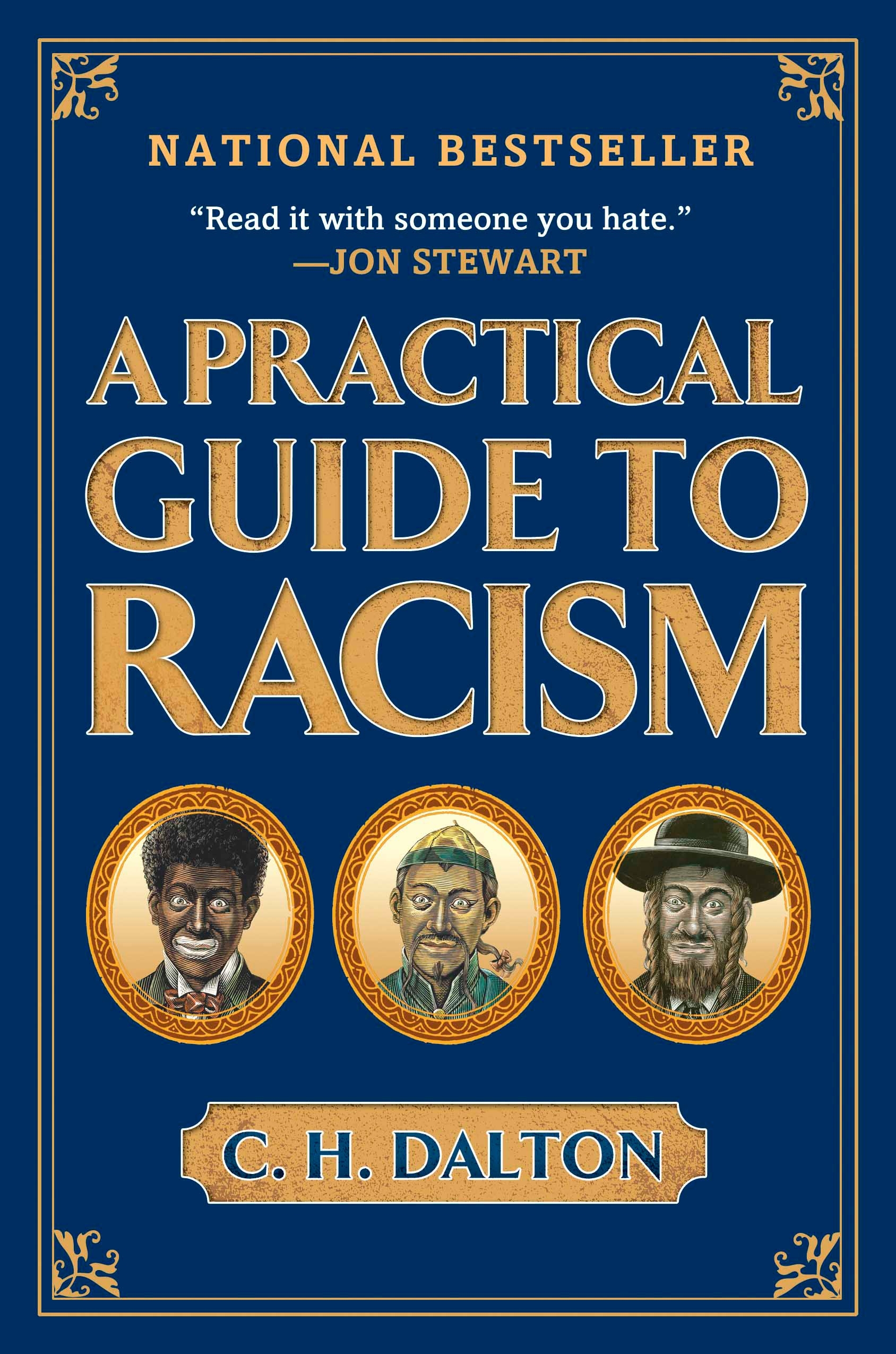
Finding the best books to read requires matching your immediate personal goals, intellectual curiosity, and available time with proven, high-value literature. Rather than attempting to consume every bestseller, an effective reading strategy relies on curating a balanced mix of foundational non-fiction, transformative fiction, and practical self-improvement classics while applying systematic reading habits.
Establishing a Personal Reading Framework: How to Choose Your Next Book
With over two million new books published globally each year, selecting what to read next can quickly lead to decision fatigue. Readers often fall into the trap of picking up books based solely on social media trends or prominent bestseller lists, which frequently prioritize marketing budget over lasting substance. Building a sustainable, high-impact reading practice requires a deliberative framework that aligns your selection with your primary objective.
Defining Your Reading Intent
Before opening a book, identify what you want from the experience. Reading generally falls into three functional categories:
- Acquisition of Hard Knowledge: Non-fiction texts focused on specific technical skills, domain expertise, history, or science.
- Mental Model & Perspective Expansion: Philosophy, psychology, economics, and biography that alter how you process information and make decisions.
- Empathy, Escapism, and Narrative Art: Literary fiction, speculative narrative, and drama that deepen emotional intelligence, relieve cognitive stress, and improve language mastery.
The 70/30 Balance Strategy
A proven approach for continuous growth without burnout is the 70/30 split. Dedicate 70% of your reading bandwidth to foundational texts within your main area of interest (career advancement, deep curiosity, or skill acquisition) and reserve 30% for serendipitous reading—genres, historical periods, or authors completely outside your comfort zone. This cross-disciplinary exposure prevents intellectual echo chambers and fosters creative problem-solving.
Filtering High-Signal Literature
To filter out superficial books, evaluate candidates against three criteria:
- The Lindy Effect: The future life expectancy of a technology or idea is proportional to its current age. A book that has remained in print and actively discussed for 50 years is far more likely to contain enduring wisdom than a book released last month.
- Author Lineage and Evidence: Check whether the author is a primary practitioner or researcher in the subject area, rather than a journalist simply summarizing secondary sources without deep contextual mastery.
- Table of Contents and Index Inspection: Examine the structure. High-value non-fiction clearly outlines its logical arguments in the chapter titles and supports them with comprehensive references and indexes.
Essential Non-Fiction Masterworks for Mindset, Science, and Strategy
Non-fiction literature provides direct access to the distilled research, mental frameworks, and life experiences of leading thinkers. The following benchmark titles represent foundational reads across key human domains.
Psychology and Human Behavior
- ** Thinking, Fast and Slow by Daniel Kahneman:** Nobel laureate Daniel Kahneman synthesizes decades of research into cognitive biases, detailing the interplay between "System 1" (fast, intuitive, emotional) and "System 2" (slow, deliberative, logical) thinking. Understanding these systematic errors in judgment is critical for better financial, personal, and professional decision-making.
- ** Man’s Search for Meaning by Viktor E. Frankl:** Written by psychiatrist Viktor Frankl following his survival of Nazi concentration camps, this seminal work introduces logotherapy. Frankl argues that human beings are driven primarily by a "strive to find meaning in life," demonstrating how psychological resilience stems from purpose even under extreme suffering.
Personal Effectiveness and Systems Thinking
- ** Atomic Habits by James Clear:** Clear provides a practical framework for personal change grounded in behavioral psychology. By focusing on tiny, 1% incremental improvements and identity-based habit loops (cue, craving, response, reward), the book details how system design outperforms willpower when attempting long-term behavior modification.
- ** Deep Work by Cal Newport:** Computer science professor Cal Newport establishes why the ability to focus without distraction on cognitively demanding tasks is becoming increasingly rare and valuable. Newport provides operational rules for structuring work habits to achieve state-of-the-art output while mitigating digital fragmentation.
Macro-History and Complex Systems
- ** Sapiens: A Brief History of Humankind by Yuval Noah Harari:** Harari offers a sweeping narrative of human evolution, examining how Homo sapiens conquered Earth through the unique ability to create and believe in shared fiction—such as money, nations, religions, and corporate entities.
- ** The Black Swan by Nassim Nicholas Taleb:** Taleb explores the profound impact of highly improbable, unpredictable, high-consequence events ("Black Swans") and humanity's cognitive tendency to create post-hoc rationalizations for them. The book provides essential risk-management frameworks for operating under deep uncertainty.
Transformative Fiction and Literary Classics
While non-fiction delivers direct information, fiction develops emotional nuance, moral reasoning, and structural comprehension of human character. Engaging with masterworks of fiction trains the brain to navigate ambiguity and complex narratives.
Social Commentary and Dystopian Vision
- ** 1984 by George Orwell:** Orwell’s masterpiece remains the definitive exploration of totalitarianism, psychological control, newspeak, and surveillance. Beyond its political warnings, it serves as a masterclass in atmospheric worldbuilding and structural narrative tension.
- ** Brave New World by Aldous Huxley:** Where Orwell warned of state coercion through pain, Huxley envisioned control through pleasure, triviality, and genetic engineering. Comparing Brave New World with 1984 yields essential insights into modern technological control mechanisms.
Philosophical Realism and Existential Fiction
- ** The Brothers Karamazov by Fyodor Dostoevsky:** Set in 19th-century Russia, this profound novel uses a patricide narrative to examine debate over faith, free will, morality, and rationalism. The chapter "The Grand Inquisitor" stands alone as one of the most powerful philosophical texts in world literature.
- ** The Count of Monte Cristo by Alexandre Dumas:** The ultimate study of revenge, justice, patience, and redemption. Dumas's narrative structure demonstrates masterly plotting across expansive timelines, showing how meticulous strategy intersects with psychological trauma and moral responsibility.
Epic Narrative and Worldbuilding
- ** Dune by Frank Herbert:** Blending ecology, religion, politics, and economics, Dune created the benchmark for modern speculative fiction. Herbert presents a nuanced warning against reliance on charismatic leadership while exploring environmental adaptation and geopolitical resource competition.
Comparing Core Reading Categories and Benchmark Titles
The table below outlines key functional reading categories, offering a reference point for choosing books based on your target outcome.
| Category / Genre | Benchmark Title | Core Theme / Insight | Ideal Target Reader |
|---|---|---|---|
| Cognitive Psychology | Thinking, Fast and Slow | Heuristics, cognitive bias, dual-system thinking | Decision-makers, analysts, managers |
| Behavioral Systems | Atomic Habits | Environmental design, small feedback loops | Anyone optimizing routine and performance |
| Macro-History | Sapiens | Shared fictions, cognitive & cognitive revolutions | Readers seeking broad macro-perspectives |
| Risk & Epistemology | The Black Swan | Asymmetric events, fragile systems, uncertainty | Investors, strategists, software architects |
| Dystopian Literature | 1984 | State control, language distortion, surveillance | Readers exploring political & media theory |
| Philosophical Fiction | The Brothers Karamazov | Morality, free will, existential conflict | Fans of deep character studies & philosophy |
| Speculative Worldbuilding | Dune | Ecology, messianic politics, power dynamics | Science fiction fans & political strategists |
| Applied Philosophy | Meditations (Marcus Aurelius) | Stoicism, emotional control, duty | Leaders navigating high-stress environments |
Reading Systems: How to Read More Books and Retain What You Learn
Selecting the right titles is only half the challenge; maintaining a consistent reading habit and capturing usable knowledge requires intentional systems.
Reading System Loop: [ Selective Filtering ] ➔ [ Active Consumption ] ➔ [ Note Capture ] ➔ [ Synthesis & Review ]
The 50-Page Abandonment Rule
Time spent finishing a low-value book is time stolen from a life-changing one. Implement the 50-Page Rule: Give every book 50 pages to engage your intellect or demonstrate clear value. If the author has failed to establish compelling ideas or narrative momentum by page 50, put the book down without guilt. Subtract your current age from 100 to determine your personal page threshold if you want a flexible metric as your time becomes more valuable.
Active Reading and Annotation Techniques
Passive reading leads to rapid retention decay. To retain key concepts:
- Marginalia: Keep a pencil in hand. Underline key arguments, write opposing arguments in the margins, and mark core terms.
- The Index System: Use the blank flyleaves at the back of physical books to construct your own custom index of page numbers and corresponding key ideas.
- Progressive Summarization: When reading digitally, highlight primary points, bold key phrases during a second pass, and write a three-paragraph summary of the entire book in your own words upon completion.
Micro-Habit Scheduling
Relying on large blocks of free time leads to inconsistent reading volume. Instead, anchor reading to established daily transition points:
- Read 15 pages immediately upon waking up before opening digital devices.
- Listen to audiobooks during low-cognition tasks such as commuting or domestic chores.
- Read 15 pages before sleep.
Reading just 30 pages a day results in approximately 10,950 pages annually—the equivalent of 30 to 35 substantial 300-page books per year.
Frequently Asked Questions About Building a Reading List
How do I choose between reading physical books, e-readers, and audiobooks?
Choose the medium based on the material's complexity and your retention goals. Physical books and e-readers are best for dense, technical, or philosophical texts that require highlighting, flipping back to diagrams, and slow comprehension. Audiobooks are highly effective for narrative non-fiction, biographies, fiction, and lighter conversational prose where linear audio delivery does not hinder retention.
Should I finish every book I start before beginning another?
No, holding yourself to a strict "one book at a time" rule creates reading bottlenecks when you encounter a slow or unengaging section. Operating with 2 to 3 concurrent books across distinct genres—such as one serious non-fiction work, one fiction novel, and one light collection of essays—allows you to keep reading regardless of your current energy level.
How can I remember details from books I read years ago?
Retention is driven by synthesis and application. Keeping a centralized digital vault (such as Notion, Obsidian, or physical common-place books) allows you to store book summaries, key quotes, and personal reflections. Reviewing these notes or explaining the book's core thesis to someone else dramatically increases long-term retention through active retrieval practice.
How do I balance reading new releases versus historical classics?
Prioritize classic literature that has withstood the test of time. A common benchmark used by researchers and serious readers is the 80/20 rule: allocate 80% of your reading time to books published more than ten years ago, and reserve 20% for modern releases that address immediate contemporary issues or domain-specific updates.
What is the best way to discover niche, high-quality book recommendations?
Avoid relying exclusively on algorithmically generated retail bestseller lists. Instead, examine the bibliography and reference sections of books you already admire to see what inspired those authors. Additionally, look for curated reading lists from respected academic institutions, industry pioneers, and long-form literary journals.
Action Plan: Constructing Your 12-Month Reading Blueprint
To transition from passive interest to an actionable reading schedule, execute these steps:
- Select Your Core Stack: Identify six non-fiction titles and six fiction titles that directly address your developmental goals or long-standing curiosities for the coming year.
- Audit Your Daily Schedule: Block out two 20-minute daily reading windows—one in the morning and one before sleep.
- Prepare Your Capture Tools: Obtain physical bookmarks and a dedicated notebook or digital application for taking notes.
- Audit Progress Quarterly: Every 90 days, review your finished books, transfer your annotations into your central note system, and unhesitatingly drop any selected titles that failed to yield value within their first 50 pages.