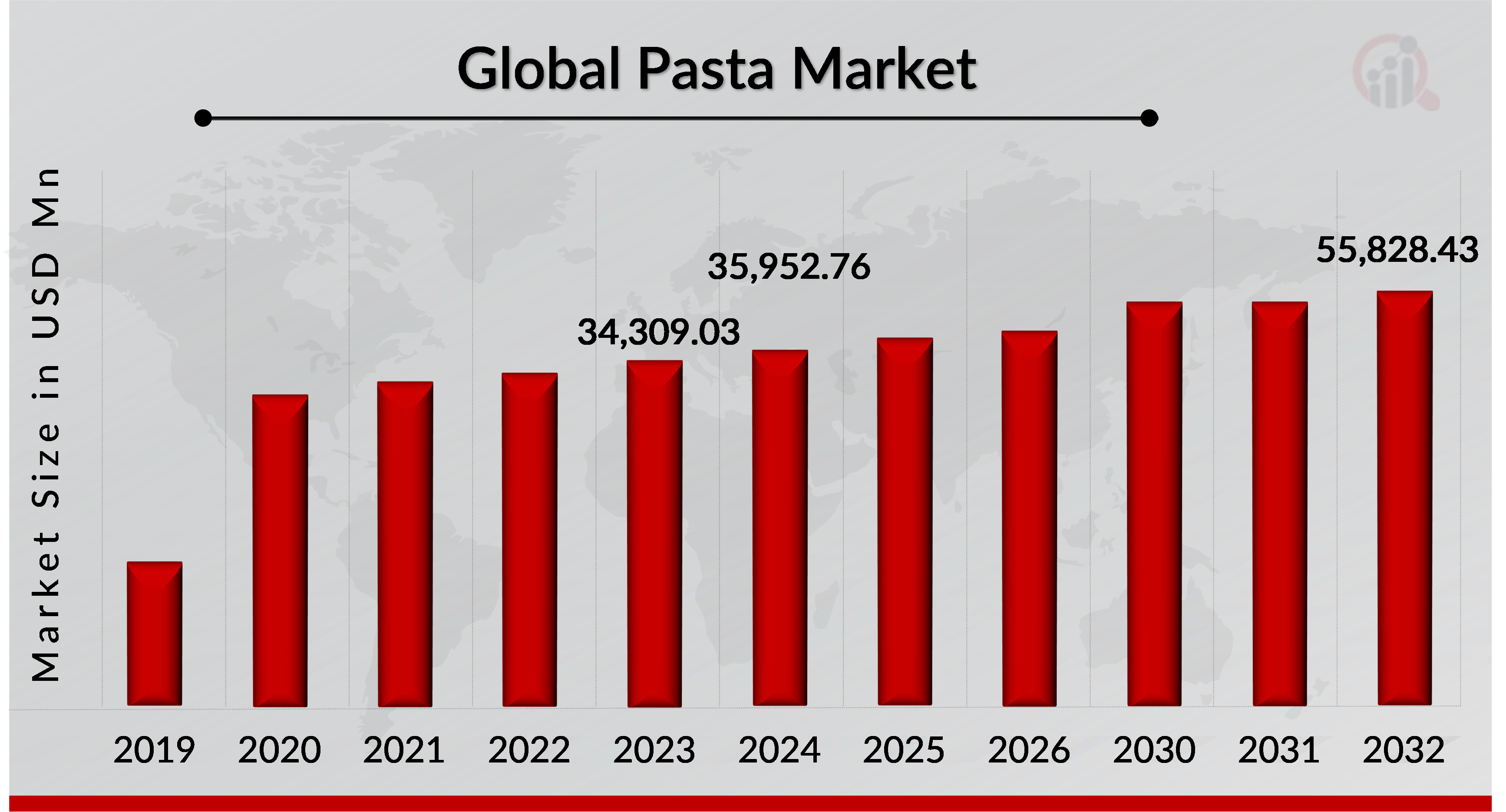
The pasta industry encompasses the global manufacturing, distribution, and retail of dried, fresh, and frozen pasta products. Driven by long-standing culinary traditions, industrial scaling, and shifting consumer preferences, this sector bridges agricultural raw material supply chains with mass-market consumer packaged goods.
The modern pasta industry operates at the intersection of agriculture, advanced food engineering, and global trade. As a staple food across continents, pasta manufacturing has evolved from a regional, craft-based trade into a highly automated, capital-intensive global sector. Understanding this market requires examining the foundational raw materials, the technological processes involved in production, the economic forces shaping supply chains, and the evolving regulatory standards that govern food safety and labeling.
Agricultural Foundations: Durum Wheat and Milling
The quality and structural integrity of commercial pasta begin long before manufacturing, rooting deeply in agricultural sourcing and milling science. The premier raw material for traditional dried pasta is durum wheat (Triticum durum), a hard tetraploid wheat species distinct from the hexaploid common bread wheat (Triticum aestivum). Durum wheat features a high protein content, a dense endosperm, and a robust gluten matrix that prevents the pasta from disintegrating or turning overly soft during boiling.
Milling durum wheat into semolina requires specialized roller mills designed to crush the hard kernel into coarse, uniform granules rather than fine flour. The granularity of semolina is critical; too fine a grind accelerates starch gelatinization during hydration, while too coarse a grind inhibits proper gluten development. Millers monitor ash content, moisture levels, and damaged starch ratios to ensure the semolina meets industrial specifications.
Beyond traditional durum semolina, the broader pasta industry incorporates alternative raw materials to meet specialized dietary demands. Manufacturers utilize ancient grains like spelt, kamut, and einkorn, alongside pseudo-cereals such as buckwheat and quinoa, to produce specialty items. Furthermore, legume-based flours derived from red lentils, chickpeas, and green peas have carved out a substantial market share, driven by consumer demand for higher protein content and gluten-free formulations.
Manufacturing Technology and Production Processes
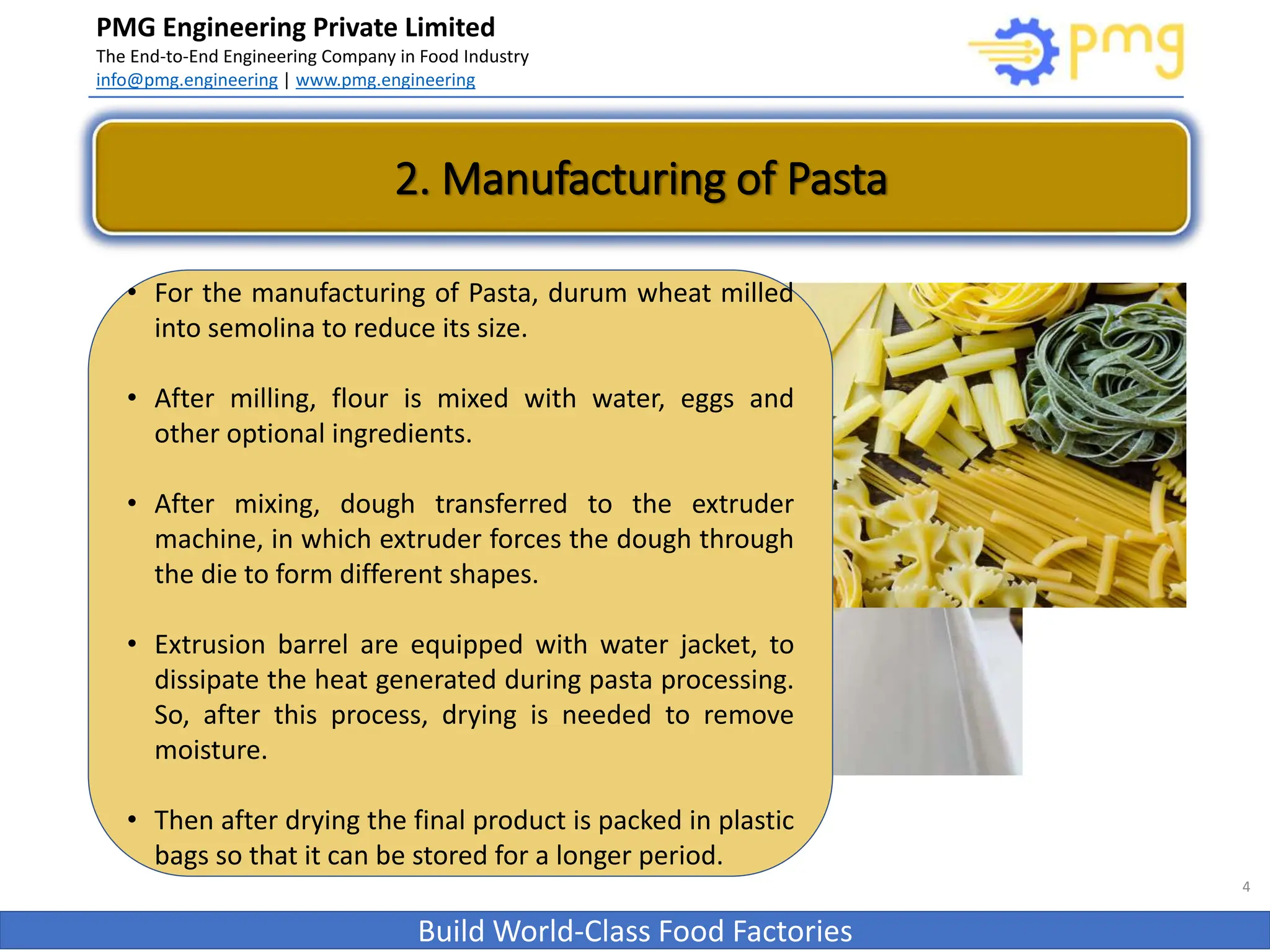
Industrial pasta manufacturing relies on continuous-line processing systems that automate hydration, mixing, extrusion, shaping, and drying. The production workflow differs significantly depending on whether the final product is intended to be shelf-stable dried pasta or refrigerated/frozen fresh pasta.
For dried pasta, the manufacturing sequence proceeds through several distinct engineering phases:
- Hydration and Mixing: Semolina is blended with precise amounts of water—typically achieving a hydration level of 30% to 32%—in a vacuum mixer. The vacuum environment removes trapped air bubbles, which prevents white spots, structural weakness, and oxidation during extrusion.
- Extrusion: The hydrated dough is forced through a metal die under high pressure. The choice of die material—traditional bronze versus modern Teflon—fundamentally alters the surface texture of the pasta. Bronze dies impart a rough, porous surface that successfully captures and holds sauce, whereas Teflon dies yield a smooth, glossy finish.
- Drying: This represents the most energy-intensive and critical phase of production. High-temperature drying (HTST, or high-temperature short-time) and very high-temperature (VHT) drying processes utilize controlled heat and relative humidity chambers to lock in the gluten network, improve cooking firmness, and enhance amber color development.
- Cooling and Packaging: Dried pasta is cooled to ambient temperatures before being directed to automated weighing and packaging lines to prevent moisture condensation within the packaging material.
Fresh and filled pasta production utilizes a different thermodynamic profile. Because fresh pasta retains a moisture content of around 30% compared to 12% for dried varieties, it requires pasteurization and modified atmosphere packaging (MAP) to inhibit microbial growth and extend shelf life without chemical preservatives.
| Pasta Category | Primary Raw Materials | Average Moisture Content | Preservation Method | Typical Shelf Life |
|---|---|---|---|---|
| Dry Semolina Pasta | Durum Wheat Semolina, Water | 10% – 12% | Low Moisture / Ambient Storage | 18 – 36 Months |
| Fresh Refrigerated Pasta | Soft Wheat Flour, Semolina, Whole Eggs, Water | 25% – 30% | Pasteurization & Modified Atmosphere | 30 – 60 Days |
| Gluten-Free Pasta | Rice Flour, Corn Flour, Lentil Flour, Emulsifiers | 10% – 13% | Low Moisture / Ambient Storage | 12 – 24 Months |
| Frozen Prepared Pasta | Semolina, Fillings (Meat/Cheese), Water | Varies (Par-cooked) | Industrial IQF (Individually Quick Frozen) | 6 – 12 Months |
Global Market Economics and Trade Dynamics
The economics of the pasta industry are defined by localized agricultural constraints meeting globalized consumption patterns. Italy remains the undisputed center of gravity for both production and per capita consumption, producing over 3.5 million metric tons annually. However, the United States, Turkey, Brazil, and Egypt also maintain massive industrial milling and manufacturing sectors.
Export markets rely heavily on maritime logistics and bilateral trade agreements. Because raw durum wheat is susceptible to regional climate shocks, such as droughts in North America or Southern Europe, manufacturers face volatile input costs. Milling companies frequently hedge grain prices on commodities futures exchanges to stabilize operating margins.
Consolidation characterizes the commercial landscape, with multinational food conglomerates operating alongside historic, family-owned regional mills. Economies of scale dictate profitability, pushing industrial producers to optimize energy consumption in drying towers and invest in high-speed, automated packaging systems that minimize labor costs.
Quality Standards, Food Safety, and Regulatory Compliance
Regulatory frameworks govern the pasta industry to protect consumer health and enforce product authenticity. In many jurisdictions, national food laws dictate strict compositional standards. For instance, Italy’s historic Pure Purity Law (Law No. 580 of 1967) legally mandates that dry pasta sold to consumers within the country must be produced exclusively from 100% durum wheat semolina and water, prohibiting the inclusion of soft wheat flour.
Globally, industrial facilities must adhere to international quality and safety management standards such as ISO 22000, Hazard Analysis Critical Control Point (HACCP) protocols, and Global Food Safety Initiative (GFSI) benchmarks. Quality control laboratories routinely test incoming grain for mycotoxins (such as deoxynivalenol or ochratoxin A resulting from fungal contamination in damp harvest seasons), pest residues, and heavy metals.
Labeling regulations also impose strict requirements regarding allergen declarations—particularly wheat, gluten, and eggs used in fresh pasta—along with clear country-of-origin labeling (COOL) for raw agricultural ingredients. Producers marketing organic pasta must undergo rigorous third-party auditing to verify that supply chains remain uncontaminated by synthetic fertilizers or genetically modified organisms.
Sustainability Initiatives and Environmental Challenges
Environmental stewardship has emerged as a central operational concern across the pasta industry. The lifecycle carbon footprint of pasta originates primarily in the agricultural phase, through nitrogen-based fertilizer application on durum wheat farms, followed by energy-intensive drying processes in industrial mills.
To mitigate environmental impacts, leading pasta manufacturers are partnering directly with agronomic networks to promote regenerative farming practices. These initiatives encourage crop rotation, reduced tillage, and precision agriculture techniques to lower greenhouse gas emissions and preserve soil health. Furthermore, industrial processors are investing in cogeneration plants, biomass energy recovery systems, and solar installations to reduce reliance on fossil fuels during the high-temperature drying cycle.
Packaging innovation runs parallel to agricultural sustainability. Companies are transitioning away from multi-material laminates that complicate recycling streams, moving toward mono-material paperboard and recyclable film solutions that maintain moisture barriers while reducing municipal landfill burdens.
Frequently Asked Questions
What makes durum wheat superior for pasta manufacturing?
Durum wheat features an exceptionally hard endosperm and a high concentration of gluten-forming proteins. When milled into semolina and hydrated, it forms a dense, tenacious gluten network. This structural matrix traps starch granules during cooking, preventing them from leaching into the boiling water and ensuring the pasta maintains an al dente texture.
Why do some pasta brands have a rough surface while others are smooth?
The surface texture depends entirely on the extrusion die material. Traditional bronze dies leave microscopic ridges on the pasta surface, creating a rough texture that grips sauces effectively. Modern industrial Teflon-coated dies produce a smooth, shiny surface that resists breakage during high-speed packaging but offers lower sauce adhesion.
How does high-temperature drying affect commercial pasta?
High-temperature and very-high-temperature drying processes use thermal energy to rapidly set the protein matrix of the pasta. This technique locks in the natural yellow amber color, reduces cooking time, and improves structural resilience, ensuring the product does not become mushy even if slightly overcooked.
What is the primary difference between fresh and dry pasta production?
Dry pasta is extruded using bronze or Teflon dies and dehydrated down to approximately 10% to 12% moisture content to achieve shelf stability at ambient temperatures. Fresh pasta contains higher moisture levels (around 30%), includes eggs or soft wheat flour, and requires pasteurization and modified atmosphere packaging to prevent spoilage in refrigerated retail environments.
How do manufacturers ensure gluten-free pasta maintains its structural integrity?
Gluten-free pasta utilizes alternative flours derived from rice, corn, lentils, or buckwheat. Because these flours lack natural gluten, manufacturers add binding agents—such as mono- and diglycerides, potato starch, or xanthan gum—and utilize specialized thermal extrusion techniques to mimic the elasticity and firmness of traditional wheat pasta.