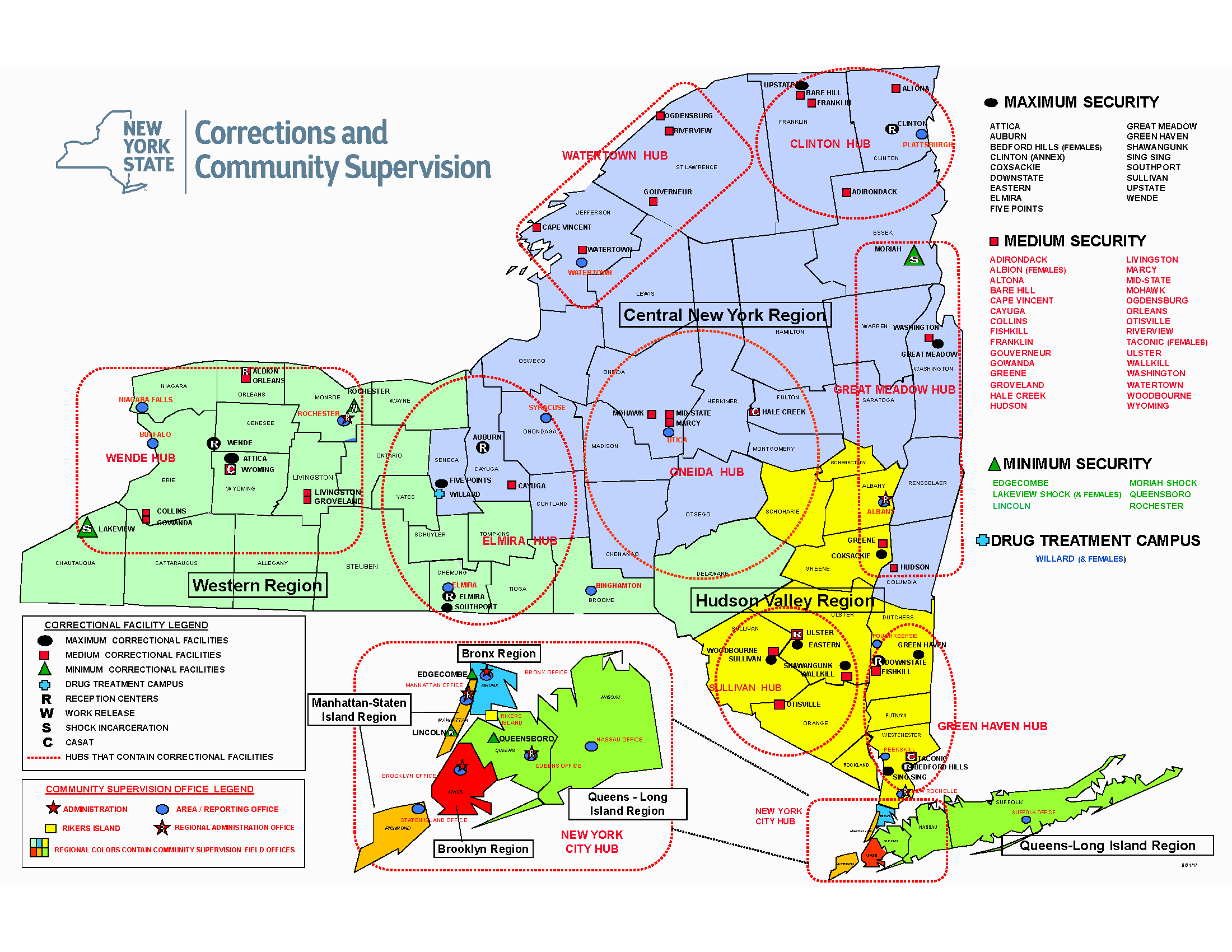
The New York State correctional system, managed by the Department of Corrections and Community Supervision (DOCCS), has undergone significant structural and policy transformations leading into 2026. This guide provides an authoritative overview of the current facility landscape, security classifications, and the regulatory frameworks governing inmate care, visitation, and rehabilitation. While this guide focuses on state-operated prisons, users should distinguish these from NYC Department of Correction (NYCDOC) municipal jails like Rikers Island or federal facilities (BOP) located within the state.
Navigating the 2026 NYS Prison Landscape: Security Levels and Classification
As of 2026, the NYS DOCCS operates a streamlined network of facilities following several years of strategic closures aimed at optimizing taxpayer resources and reflecting lower incarceration rates. The system is categorized by security levels, which dictate the movement of incarcerated individuals, the intensity of supervision, and the types of programming available.
Maximum Security Facilities
These facilities house individuals requiring the highest level of supervision. They are characterized by high walls, electronic detection systems, and armed perimeter patrols. Notable maximum-security sites like Attica, Clinton, and Sing Sing continue to serve as the backbone of the state’s long-term housing strategy. In 2026, these facilities have seen increased integration of therapeutic units to comply with the HALT Solitary Confinement Act, ensuring that even in high-security settings, social interaction and rehabilitation remain prioritized.
Medium Security Facilities
Medium-security prisons represent the largest portion of the NYS system. These sites utilize double-fenced perimeters and electronic detection but offer more internal freedom of movement than maximum-security sites. Facilities like Otisville and Wallkill focus heavily on vocational training and academic education, preparing individuals for eventual reentry into society.
Minimum and Specialized Facilities
Minimum-security facilities, often including "work release" centers, are designed for those nearing the end of their sentences. These individuals pose the lowest risk and are frequently engaged in community service projects or outside employment. Additionally, DOCCS operates specialized units for adolescent offenders (AO) and specialized medical units for aging populations, reflecting the demographic shifts within the 2026 census data of the incarcerated.
2026 Directory of Key NYS Correctional Facilities
The following table highlights primary facilities across New York State, reflecting their current security status and specialized operational focus for the 2026 calendar year.
| Facility Name | Security Level | County Location | Specialized Programs & Focus |
|---|---|---|---|
| Attica | Maximum | Wyoming | Mental Health Units (SMI) & General Confinement |
| Bedford Hills | Maximum (Female) | Westchester | Nursery Program & Trauma-Informed Care |
| Sing Sing | Maximum | Westchester | Hudson Valley Community College Partner Site |
| Auburn | Maximum | Cayuga | Industrial Shops & Oldest Working Prison in NY |
| Adirondack | Medium | Essex | Adolescent Offender (AO) Specialized Care |
| Fishkill | Medium | Dutchess | Regional Medical Unit (RMU) & S-Block Units |
| Bare Hill | Medium | Franklin | Substance Use Disorder (SUD) Intensive Treatment |
| Edgecombe | Minimum | New York (Manhattan) | Residential Treatment & Work Release Focus |
Visiting Protocols and Security Procedures in 2026
Visitation is a critical component of the rehabilitation process, but it is governed by strict security protocols that were further refined in early 2026 to include advanced biometric verification for visitors.
The Digital Reservation System
In 2026, DOCCS requires all visitors to utilize the "NYS Inmate Visit Scheduler" portal. Gone are the days of first-come, first-served arrivals for all facilities. Visitors must book their slot at least 72 hours in advance. This system ensures that visiting rooms do not exceed capacity and allows for more efficient security screening.
Identification and Entry Requirements
All visitors aged 18 and older must present valid, government-issued photo identification. Acceptable forms include a NYS Driver’s License, Passport, or DMV Non-Driver ID. In 2026, the "REAL ID" requirement is strictly enforced for all state facility entries.
Prohibited Items and Dress Code All visitors must adhere to a conservative dress code. Clothing that resembles inmate attire (green or tan), sheer fabrics, or excessive jewelry will result in denied entry. Electronic Device Policy Cell phones, smartwatches, and tablets are strictly prohibited inside the facility. Most sites provide secure lockers for a nominal fee, but it is recommended to leave these items in your vehicle.
Communication and Financial Support: Tablets and Trust Accounts
Technology in 2026 has fundamentally changed how incarcerated individuals maintain ties with their families. The implementation of the "Universal Tablet Initiative" ensures that nearly every individual in a state facility has access to a secure personal tablet for messaging, educational content, and phone calls.
Electronic Messaging and Phone Calls
Under 2026 legislation, the "Connecting Families Act" has capped the costs of electronic messaging and ensured that a specific number of phone call minutes per week are provided at no cost to the incarcerated individual. Families can add funds to "AdvancePay" accounts through authorized vendors like GTL or Securus to cover additional minutes or premium media content.
Managing Inmate Trust Accounts
To send money for commissary or specialized packages, families must use the centralized "JPay" or "Western Union" systems.
- Electronic Transfer: The fastest method, typically reflecting in the inmate’s account within 24 to 48 hours.
- Lockbox Money Orders: A fee-free alternative that requires mailing a money order with a specific deposit slip to the centralized processing center in Florida (for NYS accounts).
- Annual Deposit Limits: In 2026, there are strict quarterly limits on the amount of funds an individual can receive to prevent predatory lending and "store" activities within the facility.
Healthcare Standards and Rehabilitative Programming
NYS correctional facilities are legally mandated to provide healthcare services that meet the community standard of care. This is overseen by the DOCCS Chief Medical Officer and is subject to rigorous 2026 oversight committee audits.
Mental Health and the HALT Act Compliance
The 2026 operational year marks a milestone in the full implementation of the HALT Solitary Confinement Act. Individuals with mental health designations or developmental disabilities are no longer placed in traditional segregated housing. Instead, Residential Rehabilitation Units (RRUs) provide 20 hours of out-of-cell time and intensive therapeutic programming.
Educational and Vocational Training
NYS has expanded the "College-in-Prison" initiative. By 2026, partnership programs with SUNY and CUNY allow incarcerated individuals to earn Associate and Bachelor’s degrees in fields such as Liberal Arts, Business Management, and Computer Science. Vocational programs have also been updated to include Green Energy Technology and Advanced Manufacturing, aligning with New York's 2026 labor market demands.
Operational Realities: Comparing Security Classifications
| Feature | Maximum Security | Medium Security | Minimum/Work Release |
|---|---|---|---|
| Perimeter Security | Concrete Walls / Armed Towers | Double Fencing / Sensors | Unarmed / Electronic Monitoring |
| Internal Movement | Escorted or High Control | Regulated Movement Periods | High Autonomy / Community Access |
| Housing Style | Individual Cells | Dormitories or Shared Rooms | Dormitory / Residential |
| Visit Frequency | Weekends & Holidays | Daily or Weekends (Varies) | Daily / Community Passes |
| Reentry Focus | Long-term Stabilization | Skill Acquisition | Active Community Integration |
Strategic Guidance for Families and Legal Representatives
Navigating the NYS DOCCS system requires patience and strict adherence to administrative rules. For those representing or supporting an incarcerated individual in 2026, the following tips are essential:
- Monitor the DOCCS "Inmate Lookup": This database provides the "DIN" (Department Identification Number) and current location. Check this weekly, as facility transfers for program needs are common.
- Verify the Package Policy: NYS moved to a "Vendor Only" package policy in previous years. In 2026, all packages must come directly from an approved third-party vendor. Homemade food or items purchased at a retail store and mailed privately will be rejected.
- FOIL Requests: For legal professionals, Freedom of Information Law (FOIL) requests regarding disciplinary records or medical charts are now processed through a streamlined digital portal, significantly reducing wait times from previous years.
Frequently Asked Questions
How do I find where an individual is currently incarcerated in NYS?
You must use the official DOCCS Inmate Population Information Search website. By entering the individual's name or Department Identification Number (DIN), the system will display their current facility, birth year, and underlying conviction details. In 2026, this system is updated every 24 hours to reflect recent transfers or releases.
What are the 2026 rules for sending packages to NYS prisons?
Packages must be ordered through a DOCCS-approved vendor and cannot exceed the weight or item limits set for that specific facility's security level. Individuals are generally allowed two food packages and one "tobacco/sundries" package per month, though tobacco policies vary by facility health guidelines. Always check the specific facility's "2026 Directive 4911" for the most current allowed-item list.
Can I visit a NYS correctional facility without a prior appointment?
No, as of 2026, most medium and maximum-security facilities require a reservation through the online scheduling system. While some minimum-security sites allow walk-ins during designated hours, it is highly recommended to confirm via the portal to avoid being turned away due to capacity limits or unexpected facility lockdowns.
Are phone calls free in New York State prisons in 2026?
Yes, under current New York State law, incarcerated individuals are provided with a baseline of free phone call minutes every week. However, once these minutes are exhausted, additional calls must be funded through a prepaid account. The 2026 rate for these additional minutes is strictly regulated by the Public Service Commission to ensure affordability.
What is the HALT Act and how does it affect prison safety in 2026?
The HALT Solitary Confinement Act limits the use of segregated housing to 15 consecutive days and prohibits its use entirely for "vulnerable populations," including those with mental illness, disabilities, or the elderly. In 2026, this has shifted the focus toward Residential Rehabilitation Units (RRUs) which emphasize treatment and social interaction over isolation, aiming to reduce recidivism and improve long-term facility safety.
For those seeking to maintain contact or provide support to individuals within the NYS correctional system, staying informed on the latest DOCCS directives is paramount. The 2026 landscape emphasizes digital integration and rehabilitative access, providing more avenues for connection than ever before, provided that all departmental regulations are strictly followed.