November 17 is a date of profound historical, humanitarian, and astronomical importance, marked primarily by International Students’ Day and World Prematurity Day. It commemorates the 1939 Nazi storming of the University of Prague and the 1989 Velvet Revolution, while also serving as the peak period for the annual Leonids meteor shower.
The Origins of International Students’ Day: A Legacy of Resistance
The primary observance on November 17 is International Students’ Day, an international commemoration of student activism. Unlike many holidays that celebrate academic achievement, this day is rooted in a somber history of resistance against totalitarianism. Its origins trace back to 1939 in German-occupied Czechoslovakia.
Following the death of Jan Opletal, a medical student killed during a protest against the Nazi occupation, thousands of students turned his funeral on November 15 into a massive anti-Nazi demonstration. In retaliation, on November 17, 1939, Nazi authorities stormed the University of Prague. They executed nine student leaders without trial and deported over 1,200 students to the Sachsenhausen concentration camp. All Czech universities and colleges were subsequently closed.
The first International Students' Day was held in London in 1941 by the International Students' Council, which included many refugee students. Since then, the tradition has been maintained by the International Union of Students and various National Unions of Students. In 2026, the day continues to serve as a platform for discussing student rights, the accessibility of higher education, and the role of youth in democratic processes. Modern observances often focus on:
- Academic Freedom: Protecting the rights of students and faculty to engage in intellectual inquiry without fear of censorship or reprisal.
- Educational Equity: Addressing the rising costs of tuition and the global disparity in access to quality higher education.
- Mental Health Support: In 2026, significant emphasis is placed on the psychological well-being of students navigating post-pandemic academic environments and the pressures of a digital economy.
The Velvet Revolution: November 17 as a Catalyst for Democracy
For the citizens of the Czech Republic and Slovakia, November 17 is also Struggle for Freedom and Democracy Day. In 1989, exactly fifty years after the Nazi crackdown, a student demonstration in Prague to honor Jan Opletal was violently suppressed by the riot police of the Communist regime.
This act of brutality triggered the Velvet Revolution, a non-violent transition of power that ended 41 years of one-party rule in Czechoslovakia. Led by figures such as Václav Havel, the movement resulted in the dismantling of the command economy and the establishment of a parliamentary republic.
By 2026, this anniversary remains a vital touchstone for Central Europe. It is a day of reflection on the fragility of democracy and the power of non-violent protest. Ceremonies typically take place at the Narodni Avenue memorial in Prague, where citizens light candles to honor the bravery of those who faced down armed forces with nothing but their voices and slogans.
World Prematurity Day: Global Health Priorities in 2026
Beyond its political and historical weight, November 17 is World Prematurity Day. Established in 2008 by the European Foundation for the Care of Newborn Infants (EFCNI) and partnered by organizations like the March of Dimes, this day raises awareness for the 15 million babies born preterm each year.
Preterm birth (defined as births before 37 weeks of gestation) is the leading cause of death in children under the age of five worldwide. The 2026 campaign focuses on "Small Actions, Big Impact," highlighting the importance of immediate skin-to-skin contact (Kangaroo Mother Care) and the need for high-quality healthcare for every woman and baby, regardless of geography or economic status.
Key Focus Areas for 2026:
- Zero Separation: Ensuring that parents are not separated from their preterm babies in the Neonatal Intensive Care Unit (NICU).
- Global Policy Integration: Encouraging governments to integrate preterm care into national health budgets to reduce neonatal mortality rates.
- Support Systems: Providing long-term psychological and financial support for families who experience the trauma of a preterm birth.
The color purple serves as the official symbol of World Prematurity Day. On November 17, 2026, iconic landmarks such as the Empire State Building and the Colosseum are expected to be illuminated in purple light to show solidarity with the families of "preemies."
The Leonids Meteor Shower: A Celestial Display
For amateur astronomers and stargazers, November 17 marks the peak of the Leonids meteor shower. The Leonids are famous for producing some of the greatest meteor storms in history, including the legendary 1966 event where thousands of meteors fell per minute.
The Leonids are caused by the Earth passing through the debris trail of Comet 55P/Tempel-Tuttle. As the dust and pebbles shed by the comet strike the Earth's atmosphere at speeds of approximately 71 kilometers per second, they vaporize, creating the brilliant streaks of light we see from the ground.
2026 Viewing Conditions
In November 2026, the Leonids are expected to be active from November 6 to November 30, with the absolute peak occurring on the night of November 17 and the early morning of November 18.
| Factor | 2026 Status/Details |
|---|---|
| Peak Date | November 17–18, 2026 |
| Expected Rate | 10–15 meteors per hour (under ideal conditions) |
| Moon Phase | First Quarter (sets around midnight) |
| Radiant Point | Constellation Leo |
| Best Viewing Time | Between 2:00 AM and dawn (local time) |
| Visibility | Best in the Northern Hemisphere; visible globally |
The moon will reach its first quarter on November 17, 2026. This is favorable for observers, as the moon will set around midnight, leaving the pre-dawn hours—when the shower is most active—with dark, clear skies. To get the best view, find a location away from city light pollution and allow at least 30 minutes for your eyes to adjust to the darkness.
Notable Birthdays and Historical Milestones on November 17
November 17 has been the backdrop for several major milestones in art, politics, and science.
- 1558: The Elizabethan Era began. Queen Elizabeth I ascended to the English throne following the death of her half-sister, Mary I. This marked the start of a golden age in English drama and maritime exploration.
- 1869: The Suez Canal was officially opened in Egypt, linking the Mediterranean Sea to the Red Sea and drastically shortening trade routes between Europe and Asia.
- 1970: Douglas Engelbart received the patent for the first computer mouse, a device that would fundamentally change human-computer interaction.
- 1973: The Athens Polytechnic uprising occurred, a massive student protest against the Greek military junta, echoing the spirit of International Students' Day.
Prominent figures born on this day include:
- August Mobius (1790): The German mathematician and astronomer known for the Möbius strip.
- Rock Hudson (1925): The legendary American actor and one of the first major celebrities to die from AIDS-related complications, sparking a global conversation about the disease.
- Martin Scorsese (1942): The Academy Award-winning filmmaker responsible for classics like Taxi Driver and The Departed.
- Cyril Ramaphosa (1952): The President of South Africa and a key figure in the anti-apartheid movement.
Frequently Asked Questions
Why is November 17 significant for students?
November 17 is International Students’ Day, which commemorates the 1939 Nazi storming of the University of Prague. It serves as a global day of remembrance for student activists who fought for freedom and democracy, as well as a day to advocate for modern student rights and accessible education.
What is the symbol for World Prematurity Day?
The color purple is the primary symbol of World Prematurity Day. This color represents sensitivity and exceptionality. Additionally, a "socks line" featuring nine white baby socks and one small purple sock is often used to illustrate the statistic that one in ten babies is born prematurely worldwide.
Is the Leonids meteor shower visible every year?
Yes, the Leonids occur annually every November when Earth passes through the orbital path of Comet Tempel-Tuttle. While most years produce a modest rate of 10–15 meteors per hour, "meteor storms" with thousands of meteors occur roughly every 33 years when the comet is near its perihelion.
Is November 17 a public holiday?
In the Czech Republic and Slovakia, November 17 is a public holiday known as "Struggle for Freedom and Democracy Day." In most other countries, it is an observance or awareness day (like World Prematurity Day) rather than a statutory holiday where businesses close.
What is the zodiac sign for November 17?
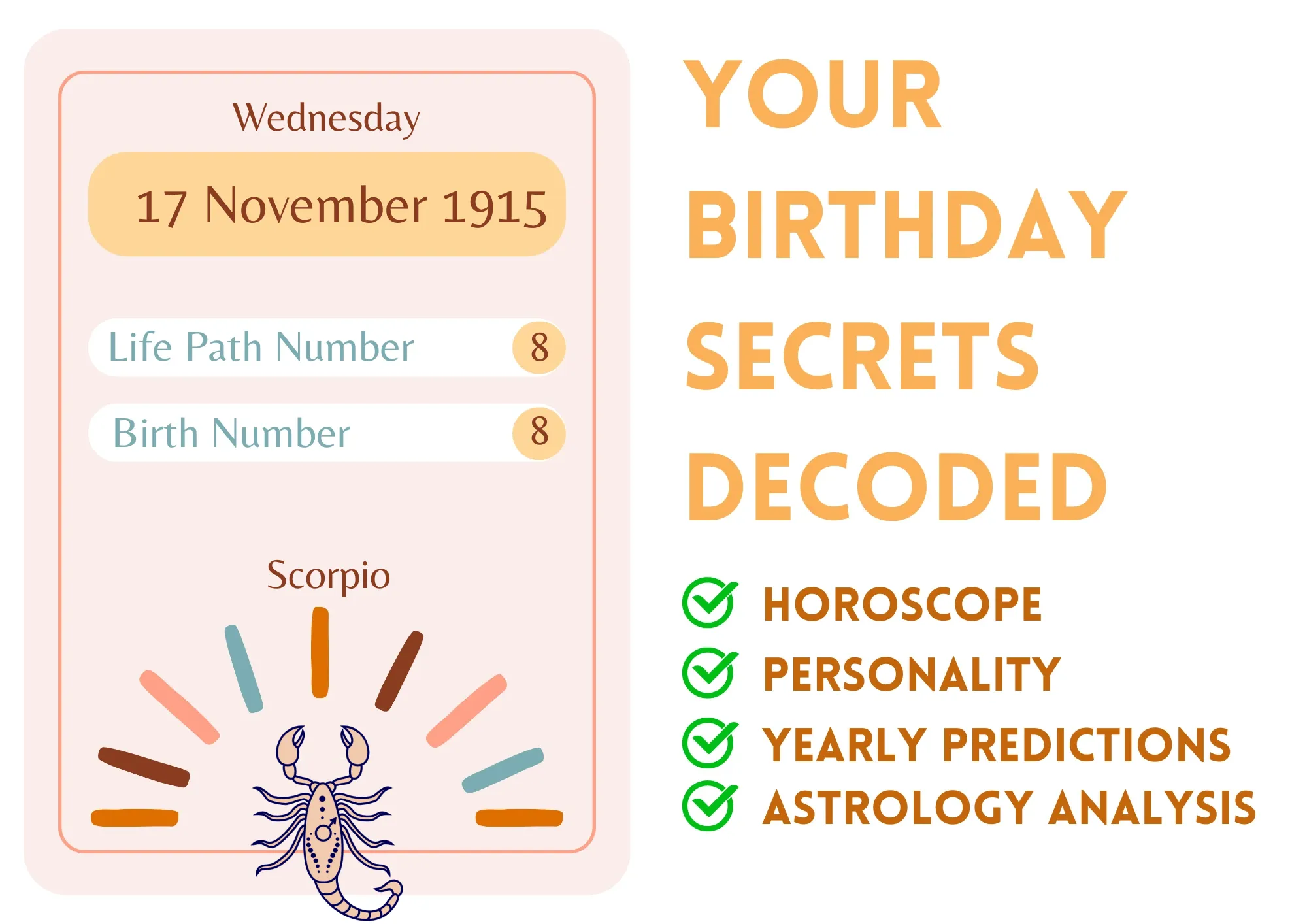
Those born on November 17 fall under the sign of Scorpio. In traditional astrology, individuals born on this day are often characterized as determined, intense, and highly observant, reflecting the transformative nature of mid-to-late November.
Engaging with November 17 in 2026
Whether you are a student leader, a healthcare advocate, or an amateur astronomer, November 17, 2026, offers multiple ways to participate in global discourse.
For those interested in education, consider attending university seminars or webinars focused on the evolution of student rights in the age of artificial intelligence. For healthcare supporters, donating to organizations like the EFCNI or March of Dimes can help fund critical research into neonatal care. Finally, if you are looking toward the skies, prepare for the Leonids by checking local weather forecasts and finding a "Dark Sky" designated park for the best viewing experience.
By understanding the diverse layers of meaning behind November 17, we can better appreciate the interconnectedness of human history, social progress, and the natural world.