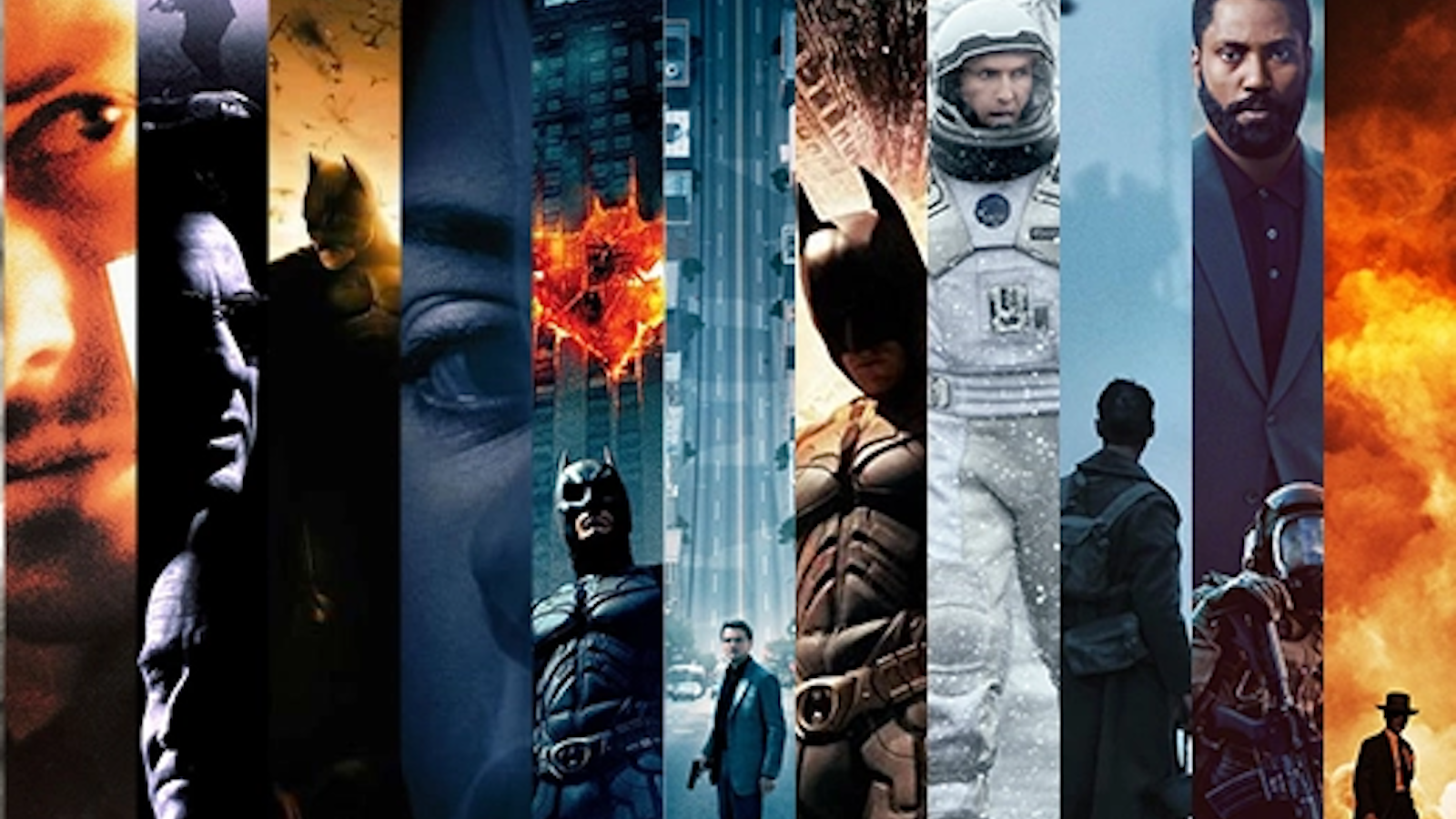
Christopher and Jonathan Nolan represent one of the most creatively fertile sibling partnerships in modern cinema, shaping contemporary blockbuster and prestige filmmaking through intricate storytelling, non-linear narratives, and philosophical inquiry. While Christopher directs and co-writes the cinematic visions that dominate the box office, Jonathan—often working under the moniker Jonah—serves as a vital co-writer, conceptual architect, and showrunner whose literary roots ground their shared projects in scientific precision and moral ambiguity.
The Creative Genesis of the Nolan Collaborative Dynamic
The partnership between Christopher and Jonathan Nolan stems from an upbringing split between London and Chicago, which exposed both brothers to diverse storytelling traditions and American noir sensibilities. Their creative process usually begins with a shared premise, frequently inspired by Jonathan’s short stories or heavy research into theoretical physics, memory psychology, or sociology. Christopher then transforms these conceptual frameworks into rigid, visceral cinematic structures, while Jonathan retains a focus on dialogue, procedural logic, and existential tension.
This division of labor has yielded some of the most influential screenplays of the 21st century. Jonathan’s short story "Memento Mori" served as the foundational text for Christopher’s breakout feature film Memento (2000), establishing the brothers' signature motif of fractured temporal mechanics. Throughout subsequent decades, their collaboration expanded from modest indie thrillers into macro-budget studio tentpoles, including The Dark Knight Trilogy, The Prestige, Interstellar, and The Dark Knight Rises. Even when working on separate endeavors—such as Christopher’s historical epics Oppenheimer and Dunkirk, or Jonathan’s television masterwork Westworld—the conceptual lineage of their shared cinematic vocabulary remains unmistakable.
Examining their filmography requires an understanding of how thematic motifs recur across their shared and individual outputs. Time dilation, obsession, unreliable narrators, corporate espionage, and the ethics of technological advancement anchor nearly every project they touch. By blending hard science and philosophical existentialism with old-school practical filmmaking, the Nolans have redefined what audiences expect from high-concept screenplays.
Shared Cinematic Ventures: From Psychological Thrillers to Cosmic Epics
The most celebrated works in the Nolan catalog are those bearing both brothers' names in the writing credits. Their early collaboration on Memento introduced audiences to reverse-chronology storytelling, where a protagonist suffering from anterograde amnesia attempts to solve his wife's murder. Christopher's direction translated Jonathan's structural conceit into a visceral exploration of trauma and manipulated memory, earning an Academy Award nomination for Best Original Screenplay.
Following Memento, the brothers adapted Christopher Priest’s novel The Prestige (2006). This Victorian-era drama about rival magicians pushed their thematic exploration of obsession and sacrifice to new psychological depths. The film operates as a magic trick itself, utilizing structural misdirection to mirror the obsessive deceit of its central characters, Robert Angier and Alfred Borden.
| Film Title | Release Year | Primary Screenwriters | Core Theme |
|---|---|---|---|
| Memento | 2000 | Christopher & Jonathan Nolan | Memory & Identity |
| The Prestige | 2006 | Christopher & Jonathan Nolan | Obsession & Deceit |
| The Dark Knight | 2008 | Jonathan & Christopher Nolan | Anarchy & Morality |
| Interstellar | 2014 | Jonathan & Christopher Nolan | Survival & Relativity |
Their contributions to the superhero genre via The Dark Knight Trilogy—specifically The Dark Knight (2008) and The Dark Knight Rises (2012), both co-written by Jonathan—fundamentally altered the cultural footprint of comic book adaptations. By infusing urban crime drama, post-9/11 geopolitical anxiety, and classical tragedy into the Batman mythos, the brothers elevated genre filmmaking into systemic social commentary. This trajectory culminated in Interstellar (2014), a project originally developed by Jonathan for Steven Spielberg before Christopher took the directorial reins. Grounded in Kip Thorne’s astrophysical theories, the film merges hard gravitational science with an intimate narrative about paternal love across interstellar distances.
Christopher Nolan Solo Direction: Scale, Spectacle, and History
While Christopher Nolan maintains full directorial control over his solo outings—frequently collaborating with producer and wife Emma Thomas—the structural DNA of Jonathan’s narrative rigor often echoes in these projects. Films like Inception (2010), Tenet (2020), and Oppenheimer (2023) reflect Christopher’s distinct obsession with practical special effects, film preservation, and IMAX photography, yet they deal with the same cerebral puzzles that define the brothers' shared writing style.
Inception brought heist mechanics into the architecture of the human subconscious, challenging viewers with multi-layered dream realities governed by distinct temporal rules. Tenet pushed temporal mechanics to an extreme with entropy inversion, forcing audiences to parse backward and forward motion simultaneously. Meanwhile, Oppenheimer marked a shift toward historical docudrama, tracing the life of J. Robert Oppenheimer through a subjective lens that treated quantum physics and political betrayal with the pulse-pounding tension of a thriller. This dedication to practical immersion—utilizing minimal digital computer-generated imagery in favor of in-camera effects and genuine atomic bomb reenactments—solidified Christopher's reputation as a purist of traditional celluloid filmmaking.
Jonathan Nolan's Independent Expansion: Television and Sci-Fi Autonomy
As Christopher focused on monumental cinematic features, Jonathan Nolan expanded his creative footprint into prestige television, demonstrating a parallel mastery of complex narrative structures. Serving as the primary creator of television adaptations like Westworld (HBO) and The Peripheral (Prime Video), Jonathan explored artificial intelligence, simulated consciousness, and dystopian surveillance states.
His earlier television creation, Person of Interest (CBS), used a procedural format to smuggle deeply philosophical questions about artificial general intelligence, mass surveillance, and predictive justice into network television. These television projects prove that Jonathan's narrative style thrives on long-form exposition, allowing him to unpack moral dilemmas across multi-season arcs. Furthermore, his involvement as a producer and writer on projects like the Fallout television adaptation highlights his ability to translate sprawling multi-media lore into cohesive, high-production-value screenplays that honor source material while maintaining intellectual independence from his brother's cinematic empire.
Analyzing the Signature Motifs of the Nolan Brothers
Understanding the cinematic output of Christopher and Jonathan Nolan requires identifying the distinct stylistic and thematic pillars that unite their filmography. Their projects consistently reject linear exposition in favor of jigsaw-puzzle narratives, rewarding active audience engagement.
- Temporal Distortion: Whether it is the reverse-memory of Memento, the dream-time dilation of Inception, or the inverted entropy of Tenet, time is rarely linear in a Nolan narrative. It is treated as a malleable dimension subject to psychological manipulation and physical laws.
- The Burden of Obsession: Protagonists in their films are routinely driven by singular, consuming goals—whether it is vengeance, scientific discovery, or ideological control. This obsession often alienates them from their families and compromises their moral integrity.
- Practicality and Realism: Even in fantastical settings like Gotham City or distant star systems, the brothers emphasize tactile, physical environments. Practical stunt work, real-world physics principles, and tangible sets take precedence over whimsical CGI.
- Unreliable Perspectives: Viewers are frequently forced to question the objective reality of what they are watching, as protagonists filter events through trauma, cognitive decline, or deliberate deception.
How to Chronologically Stream and Analyze the Nolan Filmography
For cinephiles looking to trace the evolution of the Nolan brothers' creative partnership, watching their films in chronological order offers a fascinating look at how their technical ambition and philosophical scope have expanded over time.
- Early Indie Roots: Begin with Following (1998), Christopher’s micro-budget debut, followed immediately by Memento (2000) to witness Jonathan’s foundational storytelling mechanics.
- Psychological and Genre Mastery: Progress through Insomnia (2002), Batman Begins (2005), and The Prestige (2006) to see how they handle studio expectations without sacrificing narrative complexity.
- The Blockbuster Apex: Experience the cultural peak with The Dark Knight (2008), Inception (2010), and The Dark Knight Rises (2012), focusing on how Jonathan’s scriptwork balances spectacle with ethical dilemmas.
- Cosmic and Historical Ambition: Conclude the cinematic journey with Interstellar (2014), Dunkirk (2017), Tenet (2020), and Oppenheimer (2023) to observe the full realization of their mature directorial and writing styles.
Frequently Asked Questions
Did Jonathan Nolan direct any feature films?
Jonathan Nolan has not directed a feature film, focusing his career primarily on screenwriting for features and creating, writing, and directing episodes for high-profile television series such as Westworld and Fallout. Christopher Nolan handles the directorial duties for their shared cinematic projects, while Jonathan anchors the conceptual and textual development.
Which movies did Christopher and Jonathan Nolan write together?
The brothers have co-written four feature films: Memento (2000), The Prestige (2006), The Dark Knight (2008), and Interstellar (2014). Jonathan also received story or screenplay credits on The Dark Knight Rises (2012), while Christopher directed and solo-wrote several other projects like Inception, Dunkirk, and Oppenheimer.
Are the Nolan brothers involved in any ongoing franchises?
Neither brother is currently tied to traditional recurring blockbuster franchises, having concluded their work on The Dark Knight Trilogy. However, Jonathan remains active in high-end science fiction television and streaming adaptations, maintaining creative oversight over projects derived from major gaming and literary properties.
What is the best starting point for understanding their cinematic style?
Memento and The Prestige serve as the ideal starting points for viewers wanting to understand the brothers' fixation on non-linear timelines, unreliable narrators, and moral ambiguity, before transitioning to their larger-scale science fiction and superhero epics.