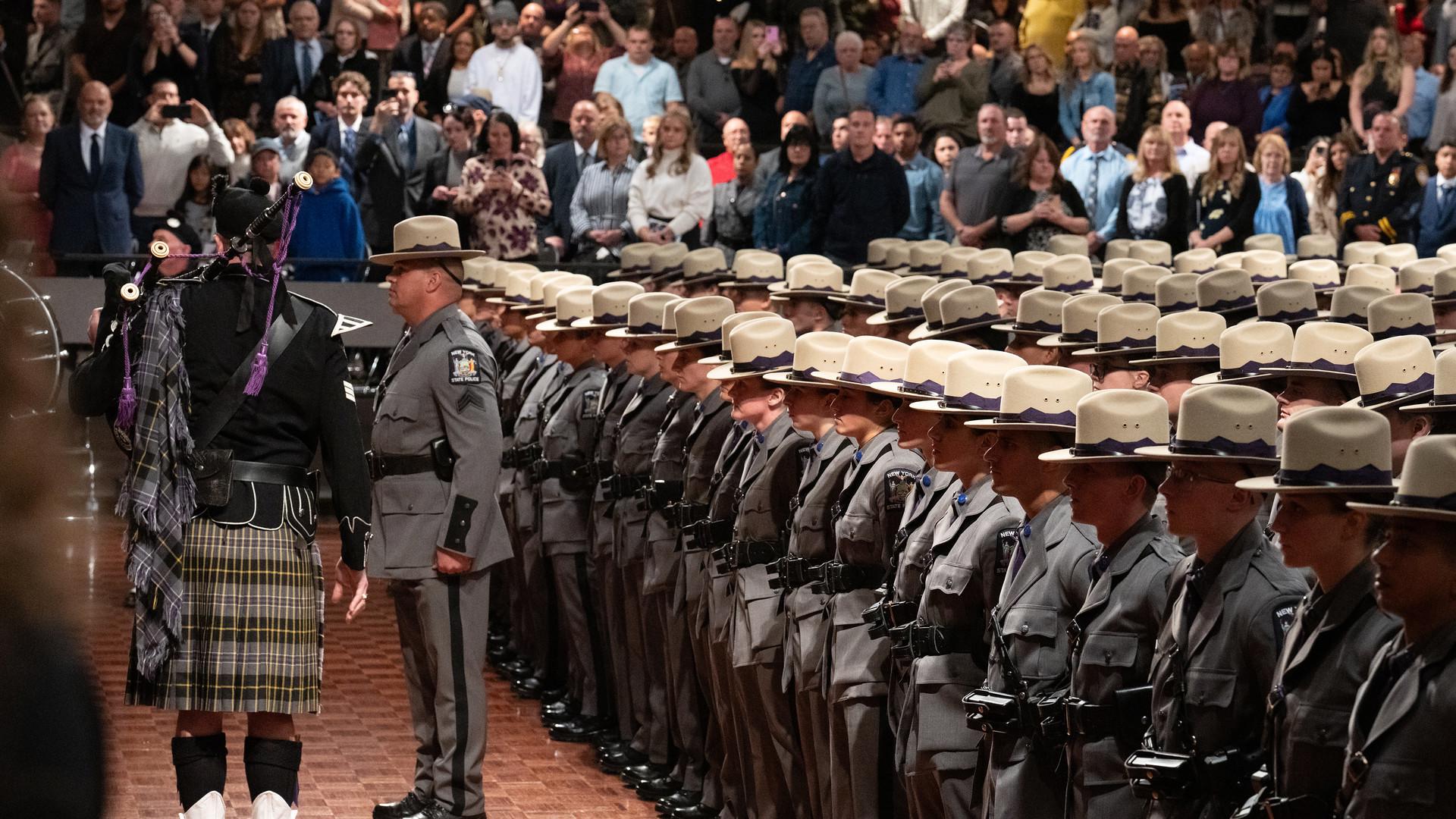
Navigating a career with the Division of State Police requires a clear understanding of the financial framework, compensation milestones, and benefits associated with the badge. For individuals evaluating law enforcement careers in New York, the compensation package has undergone significant structural updates for 2026, reflecting negotiated collective bargaining agreements, hazard duty adjustments, and location-based pay differentials. This guide details the complete salary trajectory, additional compensation streams, promotional pay scales, and total rewards package for New York State Troopers.
The 2026 New York State Trooper Salary Schedule and Pay Progression
The compensation model for a New York State Trooper relies on a structured step plan. Upon successful completion of the intense basic training curriculum at the New York State Police Academy in Albany, recruits transition to active field duty as Troopers, entering the official salary progression scale.
The baseline compensation scales dynamically with tenure and rank. Below is the updated salary trajectory framework for 2026, outlining base pay across key service milestones.
| Career Milestone / Tenure | Annual Base Salary (2026) | Additional Standard Allowances | Total Estimated First-Year Cash Compensation |
|---|---|---|---|
| Academy Trainee (In-Training) | $62,500 | Uniform & Equipment Provided | $62,500 |
| Upon Graduation (Step 1) | $84,142 | Location Pay / Expanded Duty | $92,000 - $98,000 |
| After 1 Year of Service | $89,500 | Location Pay / Expanded Duty | $97,500 - $104,000 |
| After 3 Years of Service | $98,200 | Location Pay / Expanded Duty | $106,000 - $113,000 |
| Maximum Base (Step 4 / 5+ Years) | $112,450 | Location Pay / Expanded Duty / Overtime | $130,000+ |
Recruits earn a salary while attending the residential academy, ensuring financial stability during the initial training phase. Once graduated, base pay scales rapidly within the first several years of service, reaching the top non-supervisory step within five years.
Specialized Pay and Supplemental Allowances
Base salary represents only one component of a New York State Trooper's total earnings. Operational assignments, geographic locations, and specialized duties introduce several supplemental streams of income that significantly boost annual gross pay.
- Location Pay Differential: Troopers stationed in high-cost-of-living regions—specifically New York City, Westchester, Rockland, Putnam, Nassau, and Suffolk counties—receive substantial annual location adjustments added directly to their base pay to offset regional economic realities.
- Expanded Duty Salary: To account for the unpredictable nature of police work, irregular hours, and extended details, Troopers receive an expanded duty allocation.
- Shift Differential and Holiday Pay: Personnel working evening, night, or weekend shifts, as well as those scheduled on official state holidays, receive premium compensation rates.
- Overtime Opportunities: Due to highway safety mandates, special detail coverage, and major public event security across the state, overtime availability is robust, allowing motivated Troopers to substantially increase their baseline earnings.
Promotional Pay Scales and Career Advancement
Career mobility within the New York State Police directly impacts earning potential. Promotional examinations and rigorous evaluation processes allow Troopers to advance through supervisory and investigative ranks, each tier carrying a distinct, elevated salary schedule.
- Sergeant: Supervises daily patrol operations, evaluates field performance, and acts as the immediate operational leader on shift. Sergeants see a notable jump in base pay, typically starting well above top-step Trooper base rates.
- Zonal and Station Commanders (Lieutenant / Captain): Commissioned officers manage entire stations, zones, or specialized troops, carrying higher administrative and operational responsibilities accompanied by senior executive compensation structures.
- Bureau of Criminal Investigation (BCI): Troopers who transition into investigative roles as Investigators or Senior Investigators move into a specialized salary tier that accounts for plainclothes assignments, investigative caseloads, and irregular work hours.
Total Rewards: Benefits, Healthcare, and Pension Structure
Financial security extends far beyond take-home pay. The total rewards package offered by New York State represents one of the most comprehensive public sector benefit frameworks in the nation.
Retirement and Pension Security: New York State Troopers participate in a specialized retirement plan that typically allows for retirement after 20 or 25 years of credited service, regardless of age. Pension calculations are based on final average earnings, providing a reliable, guaranteed lifetime income stream upon separation from service.
Healthcare provisions include comprehensive medical, dental, and vision coverage through the New York State Health Insurance Program (NYSHIP). Troopers also gain access to deferred compensation plans (such as 457 accounts) to build supplemental retirement savings, alongside robust life insurance and disability protections.
Evaluating the Path: Pros and Cons of a Career as a State Trooper
A balanced perspective requires analyzing both the distinct advantages and the operational challenges inherent to the profession.
- Pros:
- Job Security and Stability: State civil service protections ensure stable employment and predictable pay increases.
- Exceptional Retirement Benefits: Access to a defined-benefit pension plan after a relatively short career span (20-25 years).
- Diverse Career Opportunities: Ability to lateral into specialized units such as the Aviation Unit, Scuba Diving Team, K-9 Units, Counter-Terrorism, or BCI.
- Comprehensive Healthcare: Premium-backed medical and family insurance coverages.
- Cons:
- High Risk and Physical Demand: Inherent dangers associated with motor vehicle stops, emergency response, and public safety enforcement.
- Rigid Schedules and Relocation: Shift work, holiday disruptions, and potential mandatory transfers based on troop needs across vast geographic regions.
- Strenuous Initial Process: Highly competitive recruitment, extensive background checks, and a grueling physical/mental academy environment.
Actionable Steps to Apply and Qualify
Securing a position as a New York State Trooper requires strict adherence to administrative timelines and physical readiness standards.
- Monitor Examination Announcements: Keep track of the New York State Department of Civil Service exam schedules. Applications open periodically for the Trooper entrance examination.
- Verify Core Eligibility: Ensure you meet baseline criteria, including age requirements (typically between 20 and 29 years old, with military service extensions), U.S. citizenship, a valid driver's license, and required educational credits (minimum of 60 college credits, with provisions for military experience).
- Prepare for the Physical Agility Test (PAT): Train intensively for the multi-event physical screening, which evaluates core strength, agility, endurance, and cardiovascular capacity.
- Complete the Background Investigation: Prepare for an extensive review, including polygraph tests, psychological evaluations, medical examinations, and thorough personal history vetting.
- Enter the Academy: Upon selection, report to the New York State Police Academy for rigorous paramilitary training covering legal statutes, defensive tactics, firearms proficiency, and emergency vehicle operations.
Frequently Asked Questions
What is the starting salary for a New York State Trooper in 2026?
Recruits earn $62,500 while attending the academy, which immediately increases to an initial base of $84,142 upon graduation, before accounting for location pay and expanded duty stipends.
Do New York State Troopers receive pensions?
Yes, Troopers participate in a specialized public retirement system that provides a guaranteed defined-benefit pension after meeting specific service milestones, typically 20 or 25 years of service.
How does location pay affect a Trooper's salary?
Troopers assigned to the New York City metropolitan area and surrounding downstate counties receive additional location pay differentials added to their base salary to offset the higher cost of living.
Are there opportunities for overtime pay?
Yes, Troopers have extensive opportunities for overtime compensation through specialized details, highway safety enforcement grants, and public event security coverages.
What are the educational requirements to apply?
Applicants must possess a minimum of 60 college credits from an accredited institution, though active military service can be substituted for a portion of these educational requirements.
How long does the hiring process take?
The comprehensive hiring pipeline—from initial written examination and physical testing to background checks and academy selection—frequently spans several months to over a year.