The evaluation of perimeter shooting has undergone a radical transformation as of the 2025-26 NBA season. What was once a secondary skill has become the primary metric for offensive value. When we discuss the "greatest shooters," we are no longer just looking at 3-point percentage; we are analyzing shot versatility, gravity, volume under duress, and the ability to maintain efficiency while operating as a primary offensive engine. In 2026, the consensus has shifted from merely honoring legends to quantifying the mathematical impossibility of modern shot-making.
Defining the "Shooter" Paradigm in 2026
Modern sports analytics now categorizes shooting into three distinct tiers: catch-and-shoot efficiency, off-the-dribble (OTD) lethality, and deep-range gravity (shots beyond 28 feet). To be considered among the greatest of all time, a player must demonstrate mastery across at least two of these categories while maintaining a True Shooting Percentage (TS%) significantly above the league average of their respective era. This analysis prioritizes players who changed the geometry of the basketball court.
1. Stephen Curry: The Uncontested Apex
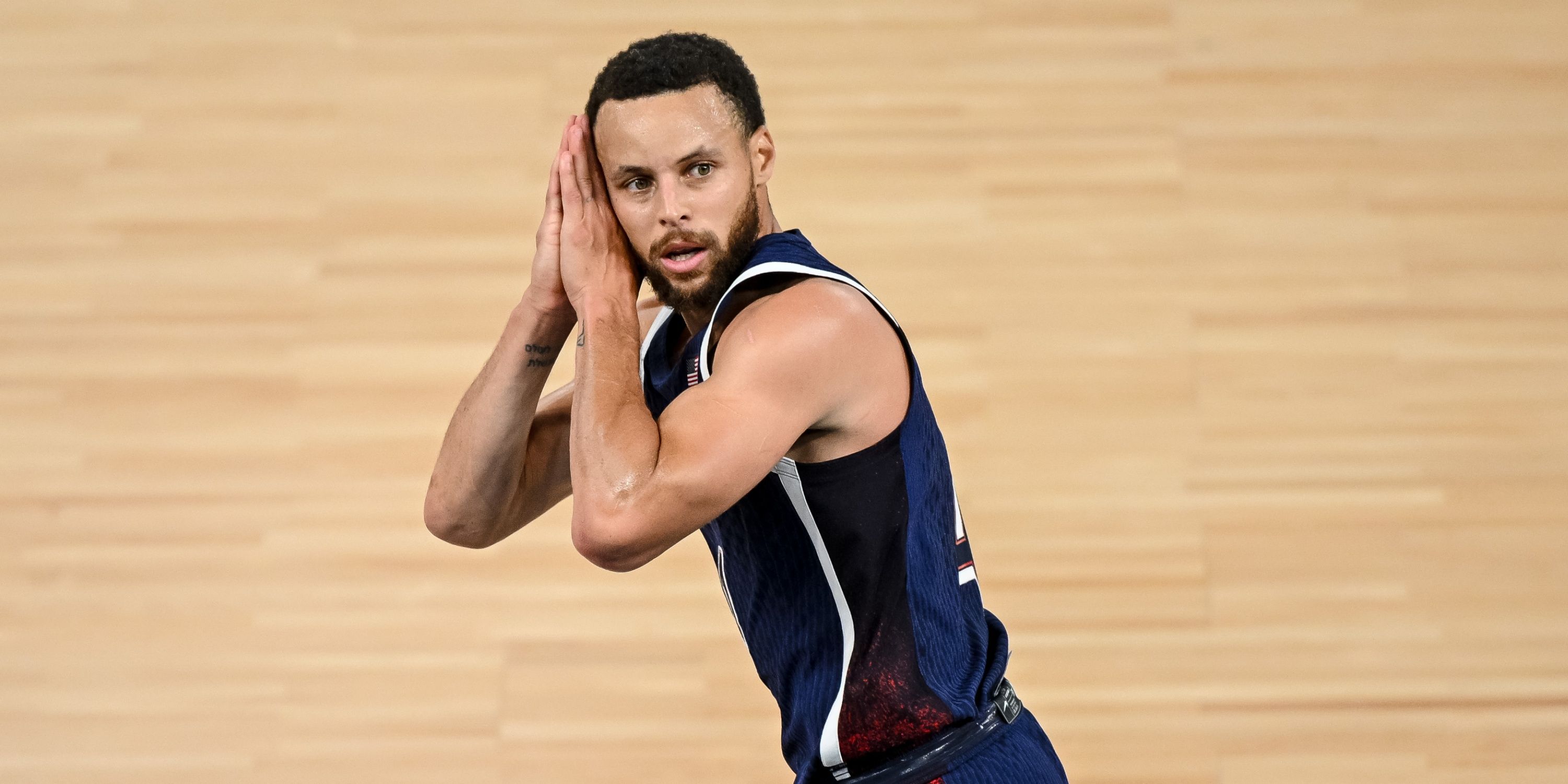
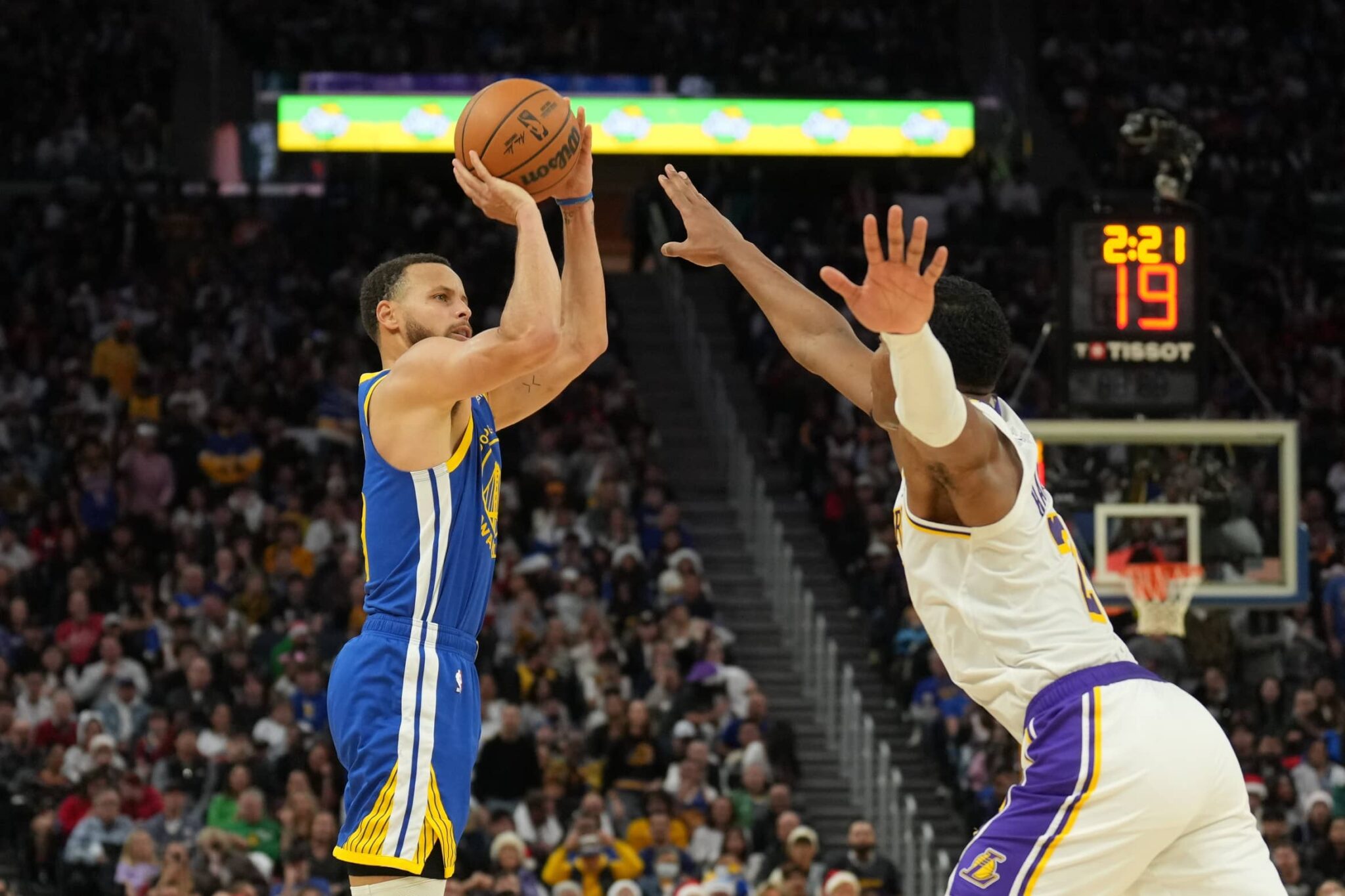
By the conclusion of the 2025-26 season, Stephen Curry’s legacy as the greatest shooter in human history is mathematically indisputable. Curry did not just break records; he forced the league to redesign its defensive architectures. His career trajectory has redefined the "prime" of a shooter, maintaining elite efficiency well into his late 30s.
Curry’s greatness is rooted in his "Anywhere-on-the-Floor" threat level. Unlike the specialists of the 1990s, Curry’s efficiency does not drop when he moves five feet behind the arc. In 2026, tracking data shows that Curry’s presence alone increases his teammates' effective Field Goal Percentage (eFG%) by nearly 4% due to the "gravity" he exerts on opposing guards. He remains the only player to have multiple seasons with over 300 made three-pointers while maintaining a TS% above .650.
2. Ray Allen: The Benchmark of Technical Perfection
Before the Curry era, Ray Allen was the standard-bearer for shooting excellence. Allen’s career is a masterclass in preparation and mechanical consistency. His jump shot was identical every time his feet left the hardwood, a result of a legendary conditioning and practice regimen.
Allen’s rank remains high in 2026 because of his adaptability. He transitioned from a high-volume "slasher-shooter" in Milwaukee and Seattle to a championship-caliper secondary option in Boston, and finally to a specialized "spacer" in Miami. His game-tying shot in Game 6 of the 2013 Finals remains the highest-stakes jump shot in the history of the sport, cementing his place in the top three.
3. Klay Thompson: The Ultimate Floor Spacer
While injuries late in his career altered his defensive ceiling, Klay Thompson’s status as a top-tier shooter remains solidified in 2026. Thompson represents the pinnacle of the "Catch-and-Shoot" archetype. His 60-point game on only 11 dribbles is a stat line that remains a mythological benchmark for efficiency in 2026.
Thompson’s ability to get his shot off with a lightning-fast release—measured at approximately 0.45 seconds—made him virtually unguardable in "heat check" scenarios. His chemistry with Curry created the "Splash Brothers" era, which effectively ended the traditional "big man" dominance of the early 2000s.
4. Larry Bird: The Pioneer of the Long-Range Mental Game
It is often difficult for younger fans in 2026 to appreciate Larry Bird because he played in an era where the three-pointer was viewed as a gimmick. However, Bird’s shooting touch was legendary. He won the first three Three-Point Contests, often without even taking off his warm-up jacket.
Bird’s greatness wasn't just about his 50-40-90 seasons (50% FG, 40% 3PT, 90% FT); it was about his "clutch" shooting. In an era with significantly less space, Bird’s high release point and turnaround jumpers were precursors to the modern "unstoppable" shots used by players like Kevin Durant.
2026 Statistical Comparison: All-Time Shooting Leaders
The following table compares the career metrics of the top five shooters based on data available at the conclusion of the 2025-26 NBA season.
| Player Name | Career 3PT% | Career FT% | Career True Shooting (TS%) | 3PM Per 100 Possessions |
|---|---|---|---|---|
| Stephen Curry | 42.5% | 91.0% | 62.8% | 11.2 |
| Ray Allen | 40.0% | 89.4% | 58.0% | 5.7 |
| Klay Thompson | 41.2% | 85.0% | 57.5% | 7.4 |
| Damian Lillard | 37.1% | 89.6% | 58.8% | 8.9 |
| Reggie Miller | 39.5% | 88.8% | 61.4% | 4.8 |
5. Kevin Durant: The Seven-Foot Sniper
Kevin Durant occupies a unique space in the 2026 rankings. He is not a "volume" three-point shooter in the same vein as Curry or Lillard, but his efficiency from all levels of the court is peerless. Durant’s height allows him to shoot over any defender, effectively making every look an "open" shot.
His mid-range shooting is arguably the best in the history of the league. In 2026, analysts prioritize "shot-making under contest," and Durant leads all historical players in Field Goal Percentage on contested jumpers. He is a multiple-time member of the 50-40-90 club, a feat that is significantly harder to achieve as a primary scoring option.
6. Reggie Miller: The Master of Movement
Reggie Miller was the first player to weaponize off-ball movement as a primary offensive threat. Before Miller, shooters typically waited for the ball. Miller transformed the game by sprinting through a maze of screens, exhausting defenders before even catching the ball.
His efficiency was decades ahead of its time. Miller’s career TS% of .614 is staggering when considering the physical defenses and lack of spacing in the 1990s. In 2026, his influence is seen in players like Buddy Hield and various movement-based offensive systems.
Analysis: Evolution of Shooting Archetypes (1980–2026)
The history of NBA shooting can be broken down into three distinct eras of evolution.
The Specialist Era (1980–2005)
During this period, shooting was a specialized skill. Players like Steve Kerr, Craig Hodges, and Kyle Korver were utilized as "limiters" to punish teams for doubling the post. They rarely created their own shots. Their value was high, but their versatility was low.
The Expansion Era (2006–2015)
Players like Ray Allen and Dirk Nowitzki began to prove that shooting could be a primary weapon for superstars. This era saw the rise of the "Stretch Four," changing how frontcourts were built and creating the blueprint for the modern NBA.
The Logo Era (2016–2026)
Led by Stephen Curry and Damian Lillard, the "Logo Era" pushed the boundaries of what is considered a "good shot." In 2026, players routinely take shots from 30+ feet. Shooting is no longer a specialty; it is a prerequisite for every position on the court, including centers like Victor Wembanyama and Chet Holmgren.
The 2026 Perspective: New Challengers for the Crown
As we look at the league in 2026, several young players are on a trajectory to challenge the all-time top 10.
- Tyrese Haliburton: His unorthodox form belies elite efficiency and a deep range that mirrors the greats.
- Luka Dončić: While his percentages fluctuate due to high difficulty, his "step-back" three is one of the most efficient high-volume shots in 2026.
- Trae Young: Often compared to Curry, Young’s ability to shoot from the logo has maintained his status as a premier long-range threat.
The Physics of Greatness: Mechanics and Release Points
What separates a "good" shooter from the "greatest"? In 2026, biomechanical analysis identifies three core factors:
- Base Consistency: The greatest shooters, specifically Ray Allen and Klay Thompson, had almost zero variance in their foot placement. This "repeatable base" ensures that power transfer is consistent regardless of fatigue.
- Release Angle: The ideal arc is generally considered to be 45 degrees. However, Stephen Curry often employs a higher arc (50-55 degrees) on deep shots, which increases the "effective rim size" by allowing the ball to enter at a more vertical angle.
- The Dip: Most great shooters "dip" the ball to their waist before rising. This creates a fluid, one-motion shot that generates more power from the legs, essential for the "Logo" shots prevalent in 2026.
Frequently Asked Questions (FAQ)
Who has the most 3-pointers in NBA history as of 2026?
Stephen Curry holds the record with over 4,000 career three-pointers, a milestone he crossed during the 2025-26 season. He surpassed Ray Allen’s previous record years ago and has since built a lead that many analysts believe will never be broken.
Is Stephen Curry still the best shooter in the NBA in 2026?
While younger players have increased their volume, Curry remains the gold standard for efficiency and "gravity." Even at 38 years old, his ability to draw double-teams 30 feet from the basket remains unique in the league.
What is the 50-40-90 club, and why does it matter?
The 50-40-90 club refers to a player shooting 50% from the field, 40% from three-point range, and 90% from the free-throw line over a full season. It is the ultimate metric for shooting versatility and efficiency, achieved only by elite names like Bird, Durant, Nash, and Curry.
How does modern tracking data evaluate shooters in 2026?
Modern "Second Spectrum" data measures "Shot Quality" based on defender distance, movement speed, and shot location. A player like Damian Lillard might have a lower raw percentage than a specialist, but his "Shot Making" metric (actual percentage vs. expected percentage) is much higher because of the difficulty of his attempts.
Who is the greatest mid-range shooter of all time?
Kevin Durant is widely considered the greatest mid-range shooter. His height and high release point allow him to shoot over any contest, and his career percentages from 10–22 feet are the highest ever recorded for a high-volume scorer.
Can a center ever be considered one of the greatest shooters?
Yes, in 2026, players like Karl-Anthony Towns and the new generation of mobile bigs have challenged this. Towns has already won a Three-Point Contest and holds the record for the most threes made by a center in a single season.
The evolution of NBA shooting has turned the basketball court into a space of infinite possibilities. As we evaluate the greats in 2026, it is clear that the art of the jump shot has transitioned from a supporting skill to the very heartbeat of the sport. Whether it is Curry’s range, Allen’s form, or Durant’s unguardable release, these athletes have redefined the boundaries of human precision.