Music licensing is the legal process by which businesses, filmmakers, content creators, and broadcasters obtain permission to use copyrighted musical compositions and sound recordings. Securing a license ensures that copyright owners—including songwriters, composers, publishers, and recording labels—receive accurate royalty compensation while protecting users from costly copyright infringement liability across commercial platforms.
Understanding the Dual Architecture of Music Copyrights
To navigate music licensing effectively, creators and commercial entities must first recognize that every recorded track contains two distinct legal copyrights. Failing to clear both copyrights when necessary is one of the most common causes of copyright infringement claims in film, television, advertising, and digital media production.
- Recorded Music Track
- Composition Right (Publishing / PA)
- Musical Work
- Lyrics & Notes
- Owned by Writers / Publishers
- Master Right (Sound Recording / SR)
- Specific Audio Recording
- Owned by Label / Performing Artist
- Composition Right (Publishing / PA)
1. The Composition Copyright (Underlying Work)
The composition copyright—often designated with the © symbol or registered under Form PA (Performing Arts) with the U.S. Copyright Office—covers the underlying musical work. This includes the musical notes, melody, chord progressions, arrangement, and lyrics written by the songwriter or composer. Composition rights are typically controlled by the songwriters themselves or by music publishing companies representing them. Even if a song is performed live or covered by a completely different artist, the composition copyright remains intact and legally distinct.
2. The Sound Recording Copyright (Master Work)
The sound recording copyright—designated by the ℗ symbol (phonogram) or registered under Form SR (Sound Recording)—covers the specific recorded performance of a musical composition. It captures the sound waves preserved in a physical or digital audio format. The master copyright is usually owned by the record label that financed the recording session, an independent distributor, or the performing artist.
For example, the classic song "Respect" features a single composition copyright owned by the estate of Otis Redding (who wrote it), but multiple master copyrights exist—most notably Otis Redding’s original 1965 recording and Aretha Franklin’s famous 1967 version. Using Aretha Franklin’s recording in a commercial film requires clearing the composition copyright from the publisher and the master recording copyright from the record label holding her specific master.
The Six Primary Types of Music Licenses
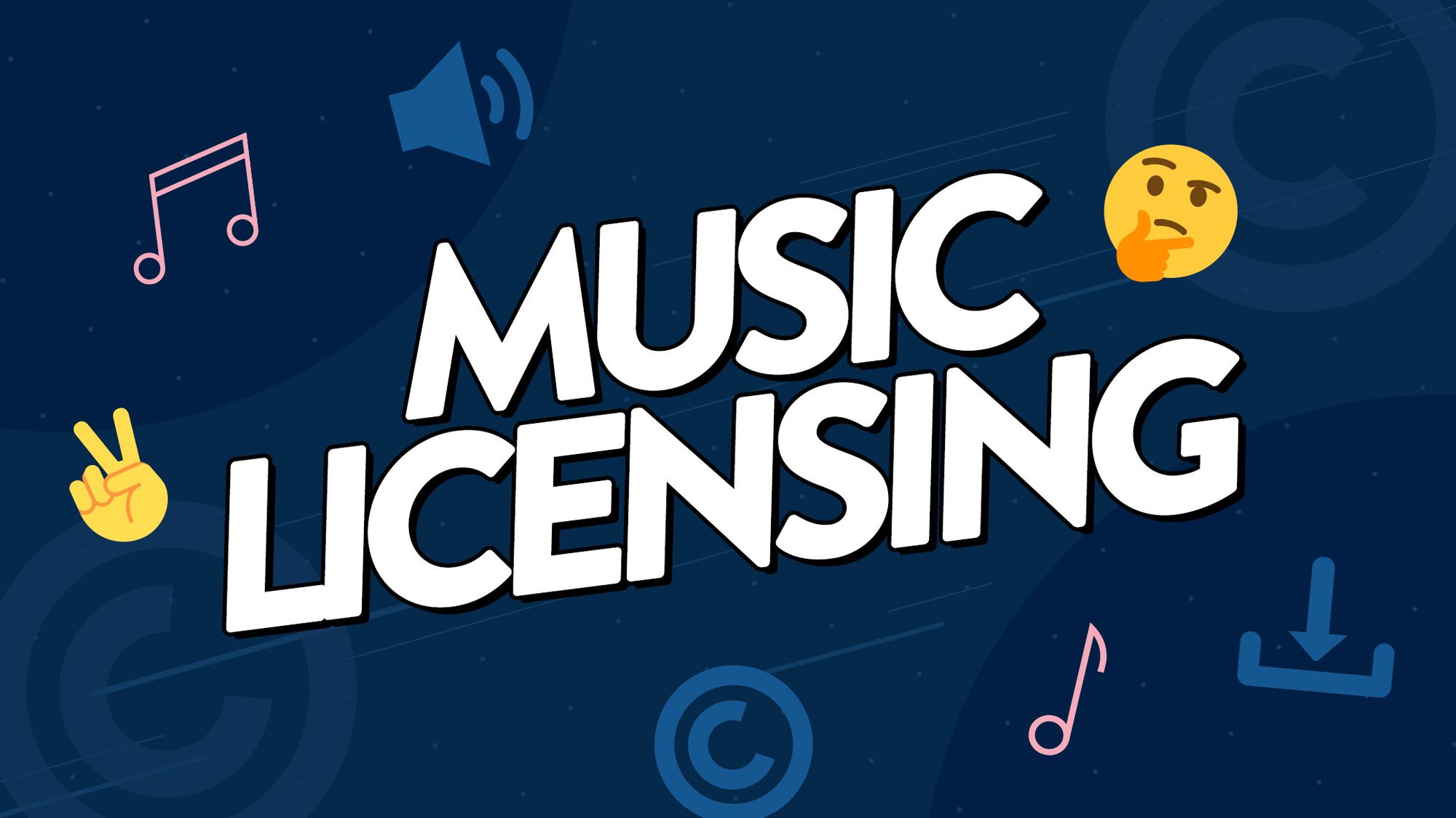
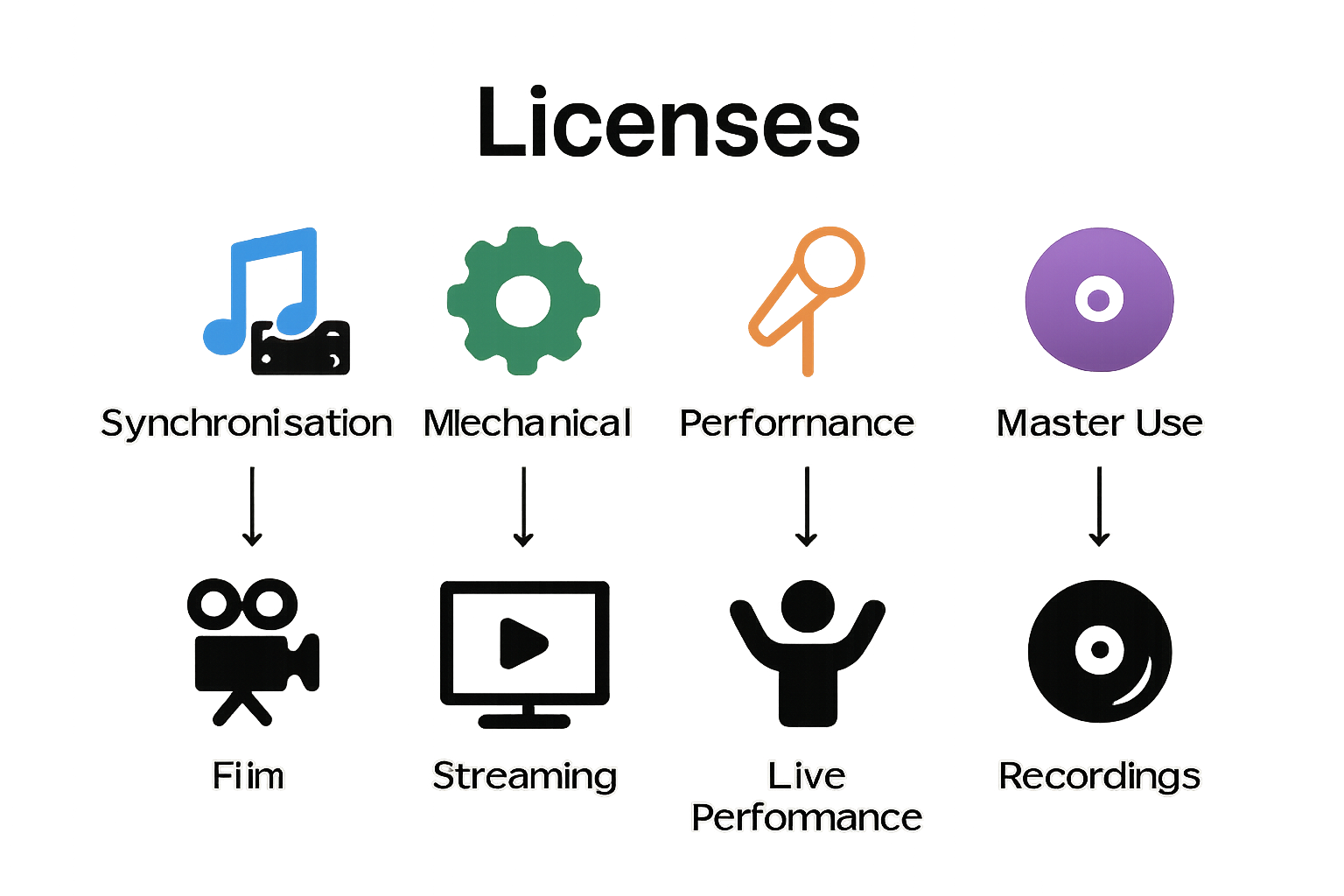
Music licensing encompasses several specialized agreements based on how the music is delivered, reproduced, synchronized, or performed. Acquiring the wrong license type leaves an organization exposed to copyright disputes.
| Sync (PA) | Master (SR) | Performance (PA) | Mechanical (PA) |
|---|---|---|---|
| Visual Media | Original Audio | Public Broadcast | Audio Reproduction |
Synchronization (Sync) License
A synchronization license grants the legal right to synchronize an underlying musical composition with visual media. Sync licenses are required for motion pictures, television broadcasts, video games, commercials, streaming video platforms, corporate videos, and mobile applications. Sync rights must be negotiated directly with the song’s music publisher or the composer.
Master Use License
While a sync license permits using the underlying written song in visual media, a Master Use License allows the user to embed the specific recorded audio track into that visual media project. Master use licenses are issued by the record label or independent artist controlling the sound recording. In visual production, a sync license and a master license are almost always secured in tandem.
Public Performance License
A public performance license permits the broadcasting or public rendition of a musical composition. This covers radio broadcasts, terrestrial television, live concert venues, nightclubs, retail stores, fitness centers, restaurants, and digital audio platforms. Public performance rights for compositions are generally managed and distributed by Performance Rights Organizations (PROs) rather than negotiated individually with composers.
Mechanical License
A mechanical license grants the right to reproduce and distribute a copyrighted musical composition on audio-only formats. This includes physical formats like vinyl records, CDs, and audio cassettes, as well as digital downloads and interactive audio streams (such as Spotify or Apple Music). In many jurisdictions, statutory mechanical rates are governed by administrative bodies or specialized clearinghouses.
Print Music License
A print license authorizes the reproduction and distribution of the written sheet music, lyrics, or notation of a copyrighted work. Music educators, choirs, orchestral groups, and sheet music publishing companies secure print licenses to print, sell, or digitally distribute music arrangements.
Theatrical / Grand Rights License
Grand rights—often termed theatrical rights—govern the performance of musical works within the context of a dramatic play, opera, musical theater production, or ballet. Unlike standard public performance rights, grand rights cannot be cleared through general PRO blanket licenses; they must be negotiated directly with the copyright holders or specialized theatrical licensing agencies.
Performance Rights Organizations and Royalty Collectives
Managing individual rights agreements between millions of music users and rights holders would be administrative chaos. Consequently, international copyright systems rely on collective management organizations (CMOs) to issue blanket licenses, monitor broadcasts, collect license fees, and distribute royalties.
| Composition (PA) Collectives | Master (SR) Collectives |
|---|---|
| ASCAP / BMI / SESAC (US) | SoundExchange (US Digital Audio) |
| PRS for Music (UK) | PPL (UK Sound Recordings) |
| The MLC (US Mechanicals) | Re:Sound (Canada Performance) |
Performance Rights Organizations (PROs) for Compositions
PROs represent songwriters, composers, and music publishers. They issue blanket public performance licenses to venues, stations, and networks, tracking public plays to payout performance royalties:
- United States: ASCAP (American Society of Composers, Authors and Publishers), BMI (Broadcast Music, Inc.), SESAC, and GMR (Global Music Rights).
- United Kingdom: PRS for Music (Performing Right Society).
- Canada: SOCAN (Society of Composers, Authors and Music Publishers of Canada).
- Australia: APRA AMCOS.
Mechanical Rights Collectives
For audio reproduction, mechanical licenses are managed by central administrative entities. In the United States, The Mechanical Licensing Collective (The MLC), established under the Music Modernization Act, maintains a nationwide database to collect and distribute mechanical royalties from interactive digital streaming services to music publishers and self-published songwriters. Physical and download mechanical licensing is often handled by agencies such as the Harry Fox Agency (HFA).
Digital Performance Royalties for Master Recordings
Historically, terrestrial radio in the United States paid public performance royalties exclusively to songwriters and publishers, omitting recording artists and record labels. However, digital radio platforms (such as SiriusXM, Pandora, and webcasters) are required by federal copyright law to pay digital performance royalties on master recordings. These payments are collected and distributed centrally by SoundExchange.
Music Licensing Requirements by Industry and Use Case
The licensing path depends heavily on how the music is used. Below are the standard legal compliance tracks across key commercial sectors:
| Industry | Required Licenses | Licensing Entity |
|---|---|---|
| Film / TV / Games | Sync + Master | Publisher + Label |
| Retail / Dining | Public Performance | PROs (ASCAP/BMI/etc.) |
| Podcasts | Podcast License / Direct | Rights Owner / Library |
| Audio Streaming | Mechanical + Performance | The MLC + PROs + Labels |
1. Film, Television, and Commercial Video Production
Producers aiming to insert commercial music into video content must secure both a Sync License (from the publisher) and a Master Use License (from the record label). Key terms defined in these agreements include:
- Territory: Worldwide, specific countries, or universe.
- Term: Perpetuity, or a limited period (e.g., 2 years).
- Media Rights: All media now known or hereafter devised (streaming, theatrical, home video, free TV).
- Option Rights: Clauses allowing extended licensing window options upon renewal.
2. Commercial Brick-and-Mortar Establishments
Restaurants, coffee shops, retail stores, hotels, and gyms playing background music for public enjoyment cannot rely on personal consumer streaming accounts (such as Spotify Personal or Apple Music Personal), as consumer terms of service explicitly prohibit commercial use. Businesses must purchase commercial blanket licenses from PROs or subscribe to specialized commercial background music providers (such as Soundtrack Your Brand or Mood Media) that bundle PRO public performance clearances into their service fees.
3. Podcasts and Digital Audio Broadcasts
Podcasts present a unique challenge because audio episodes are downloadable files (requiring mechanical clearance) as well as streams (requiring performance clearance), often synchronized with spoken spoken-word narrative. Because traditional PRO blanket licenses frequently exclude downloadable podcast feeds, podcasters typically rely on royalty-free production libraries, micro-sync licensing services, or direct custom licensing from indie artists.
4. Interactive Music Streaming Services
Interactive digital music platforms must secure extensive broad clearances:
- Master Clearance: Direct licensing deals with major and independent record labels or distributors (Merlin).
- Mechanical Clearance: Statutory blanket mechanical licenses via collectives like The MLC.
- Public Performance Clearance: Direct or collective blanket licenses from PROs for composition audio streaming rights.
Comparison Matrix: Music License Types, Rights Granted, and Fee Structures
| License Type | Rights Granted | Primary Grantor / Issuing Body | Standard Fee Structure | Common Target Users |
|---|---|---|---|---|
| Sync License | Pair composition with visual media | Music Publisher / Composer | Upfront flat fee, plus potential backend performance royalties | Film producers, ad agencies, game developers |
| Master Use License | Use specific master audio recording in media | Record Label / Recording Artist | Upfront flat fee (often matching sync fee) | Film producers, TV networks, game studios |
| Public Performance | Broadcast or publicly play composition | PROs (ASCAP, BMI, PRS, SOCAN) | Annual tiered blanket fee based on venue capacity or revenue | Venues, radio/TV stations, bars, retail chains |
| Mechanical License | Reproduce composition on audio products | The MLC, Harry Fox Agency (HFA), or publishers | Statutory rate per unit/stream (established by CRB) | Record labels, digital streaming services, artists |
| Digital Performance | Stream sound recording via digital radio | SoundExchange | Statutory statutory rate per listener stream | Satellite radio, webcasters, non-interactive digital radio |
| Grand Rights | Perform composition in live theatrical work | Publisher / Direct Rights Holder / Dramatists Guild | Royalty percentage of box office gross or set rental fee | Musical theater companies, opera houses, ballet |
Step-by-Step Process for Clearing Commercial Music
Clearing commercial tracks for film, television, or branded campaigns requires rigorous legal research and step-by-step negotiation.
- Step 1: Identify Work (ISWC / ISRC)
- Step 2: Scope Media (Terms & Area)
- Step 3: Submit Direct Clearance Req
- Step 4: Negotiate Fee & Most Favored
- Step 5: Execute Contract
Step 1: Identify Copyright Holders Using Metadata Identifiers
Before contacting representatives, identify the precise metadata registered to the track:
- ISWC (International Standard Musical Work Code): Tracks the underlying composition copyright. Query public databases hosted by PROs (such as ASCAP ACE or BMI Repertoire).
- ISRC (International Standard Recording Code): Identifies the specific sound recording version. Look up recordings via global database portals or label discographies.
Note: Tracks with multiple songwriters often involve multiple publishing companies (e.g., Writer A owns 30% administered by Sony Music Publishing; Writer B owns 70% administered by Universal Music Publishing). You must secure 100% clearance across all publishers.
Step 2: Define Scope of Use
Prepare a formal synchronization request packet detailing:
- Project Description: Film synopsis, brand identity, or scene context.
- Context of Use: How the music is used (e.g., background instrumental, main title, visual vocal performance).
- Duration: Precise length of the audio clip (e.g., 30 seconds).
- Territory & Media: Worldwide, North America, All Media, Film Festival distribution only, or Digital Web/Social.
- Term: 1 Year, 5 Years, or Perpetuity.
Step 3: Submit Direct Clearance Requests
Send formal licensing requests to the synch clearance departments of both the publisher (composition) and the record label (master). For independent artists, contact the artist directly or their designated sync representation agency.
Step 4: Negotiate Terms and "MFN" Clauses
During fee negotiations, rights holders frequently insert a Most Favored Nations (MFN) clause. MFN stipulates that if one party (e.g., the record label) negotiates a higher fee than another (e.g., the publisher), the lower fee must automatically increase to match the higher price tag. Always budget for equal payouts between master and composition sides.
Step 5: Execute Licensing Agreements and Retain Proof
Once terms are approved, execute the written license agreements and fulfill payment obligations. Maintain digital archives of executed contracts, queue sheets, and cue-sheet filings submitted to PROs for broadcast tracking.
Frequently Asked Questions About Music Licensing
What is the difference between royalty-free music and copyright-free music?
Royalty-free music does not mean the music is free of cost or copyright protection. Instead, it means that after paying a single upfront license fee (or maintaining a monthly platform subscription), the user can use the music repeatedly without paying recurring per-use royalties. Copyright-free music (or public domain music) refers to works where intellectual property protection has expired or was explicitly dedicated to the public domain, allowing free legal use without permission or payment.
How much does a music license cost for commercial projects?
Music licensing costs vary widely depending on the track's popularity, usage scope, and medium. Licensing a well-known mainstream hit for a global commercial campaign can cost anywhere from $10,000 to over $500,000. Conversely, licensing indie music or production music library tracks for indie films or online content typically ranges from $20 to $1,000 per track.
What happens if you use copyrighted music without a license?
Using copyrighted music without appropriate authorization constitutes federal copyright infringement. Copyright holders can issue digital takedown notices (such as DMCA takedowns), monetize or block videos on platforms like YouTube, freeze ad revenues, and file civil lawsuits. In the United States, statutory damages for intentional copyright infringement can reach up to $150,000 per infringed work, plus legal fees and court injunctions prohibiting project distribution.
Do small retail stores or cafés need a music license to play background music?
Yes. Playing music in a public commercial space for the enjoyment of patrons constitutes a public performance under copyright law. While Section 110(5) of the U.S. Copyright Act provides narrow exemptions for small establishments using standard home radio or TV receivers (under strict square-footage limits), most commercial businesses must secure public performance blanket licenses from PROs or use commercial music streaming services designed for business operations.
What is a blanket license and how does it work?
A blanket license is an agreement that grants a licensee permission to perform or access an entire catalog of copyrighted musical works for a set period. Rather than clearing every song individually, entities like radio networks, TV stations, venues, and commercial venues pay an annual or monthly blanket fee to PROs (such as ASCAP or BMI), which then distribute royalties to artists based on track logging data and broadcast sampling metrics.
Practical Recommendations for Rights Management
To maintain compliance and streamline rights management, organizations should institute clear internal workflows:
- Audit Existing Catalog Usage: Conduct a thorough rights audit across all existing corporate video assets, social media campaigns, podcasts, and physical venues to confirm that active licenses cover all current distributions and platforms.
- Leverage Micro-Sync and Pre-Cleared Libraries for Digital Content: For rapid, high-volume video production on platforms like YouTube, TikTok, or Instagram, use reputable micro-sync platforms or stock music libraries (e.g., Epidemic Sound, Artlist, Musicbed) that provide pre-cleared multi-platform commercial licenses.
- Document and Track Cue Sheets for Broadcast Projects: When producing film or television programs, ensure your post-production team creates accurate music cue sheets detailing track titles, composers, publishers, timing code, and usage types. File these promptly with national PROs to ensure proper royalty distributions to rights owners.
- Consult Legal Counsel for Major Commercial Syncs: When negotiating high-stakes sync contracts involving major-label catalogs or multi-territory media buys, engage an experienced music attorney to review grant-of-rights clauses, MFN provisions, indemnity protections, and audit rights before signing contracts.
EDITORIAL CATEGORY METADATA: