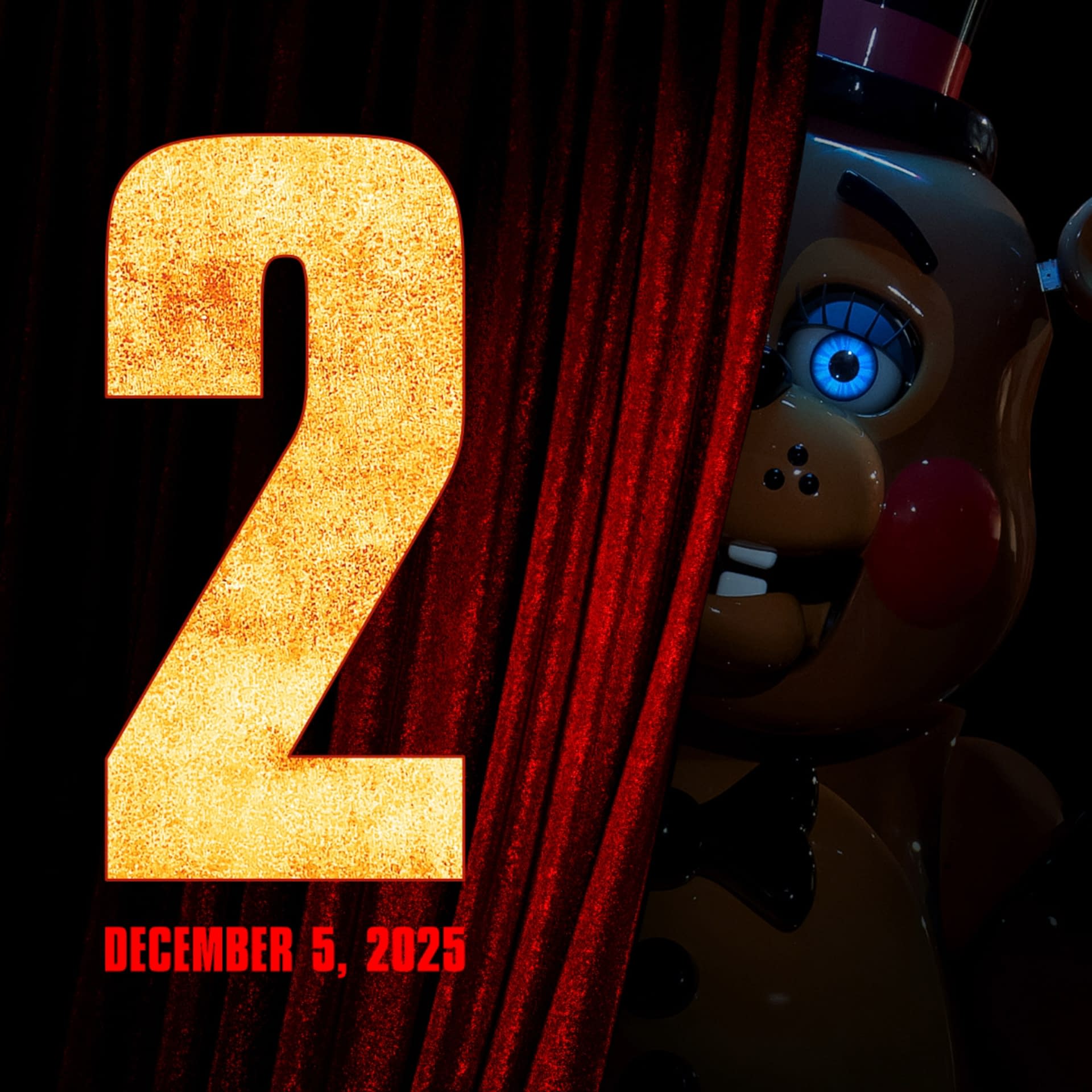
In 2025, the Five Nights at Freddy’s (FNAF) franchise reached a staggering estimated brand valuation of $1.2 billion to $1.5 billion. This valuation accounts for global box office returns from the cinematic sequel, massive retail merchandise revenue, steady video game sales across all platforms, and a prolific publishing arm.
The Cinematic Explosion and Box Office Dominance
The primary driver for the exponential growth of the Five Nights at Freddy’s franchise value leading into 2025 was its aggressive and highly successful expansion into film. When the first movie debuted in late 2023, it shattered expectations for day-and-date releases, proving that the IP had transitioned from a cult indie game to a mainstream cultural powerhouse. By the time the sequel, Five Nights at Freddy’s 2, dominated the box office in late 2025, the brand had cemented its place alongside horror giants like Resident Evil and The Conjuring.
The partnership between Scott Cawthon and Blumhouse Productions proved to be one of the most lucrative deals in modern horror history. Because the films were produced with relatively modest budgets—often under $30 million—the profit margins were astronomical. In 2025, analysts noted that the franchise's ability to draw in both the younger Gen Z/Gen Alpha demographic and nostalgic millennials created a "perfect storm" for ticket sales and subsequent streaming licensing deals. These films did more than just generate immediate cash; they revitalized interest in the older games, creating a cyclical revenue model where every new movie trailer sparked a spike in digital game downloads.
Video Game Revenue: From Indie Roots to Multi-Platform Giant
While the movies garnered the headlines, the core of the FNAF valuation remains its expansive gaming library. As of 2025, the franchise encompasses over a dozen titles, including the original core series, the VR-focused Help Wanted series, and the massive open-world Security Breach. The shift from Scott Cawthon as a solo developer to partnering with professional studios like Steel Wool Studios allowed the franchise to scale its technical ambitions.
Revenue in the gaming sector is split into three primary streams:
- Premium Sales: Direct purchases of titles like Five Nights at Freddy's: Into the Pit (the 10th-anniversary title) and various console ports continue to provide a high-margin floor for the brand's income.
- DLC and Microtransactions: Expansions such as the Ruin DLC for Security Breach and ongoing content for Help Wanted 2 have extended the monetization lifecycle of individual releases.
- Mobile Dominance: The FNAF titles remain perennial top-sellers on the iOS App Store and Google Play Store, where their low entry price and high "jump-scare" replayability make them favorites for mobile gamers and streamers alike.
By 2025, the total units sold across the entire franchise exceeded 40 million copies worldwide. This massive install base provides a level of brand loyalty that few other independent horror IPs can claim, contributing significantly to the $1.2 billion+ valuation.
The Merchandising Powerhouse: Turning Scares into Souvenirs
A critical component of "how much Five Nights at Freddy's is worth" lies in its retail presence. Unlike many horror franchises that struggle to find a foothold in the toy aisle, FNAF was tailor-made for collectability. The character designs—Freddy, Bonnie, Chica, and Foxy—are iconic, easily recognizable, and infinitely adaptable into various product formats.
Licensing agreements with companies like Funko, Sanshee, and McFarlane Toys have turned the franchise into a multi-generational retail staple. In 2025 alone, FNAF merchandise, ranging from plushies and action figures to clothing and home decor, generated an estimated $200 million in licensed retail sales. The "blind box" mystery figures, in particular, utilized the franchise’s deep lore and character variants to encourage repeat purchases.
The genius of the FNAF merchandising strategy is its accessibility. It successfully bridged the gap between niche specialty stores like Hot Topic and mass-market retailers like Walmart and Target. This ubiquity ensured that even during years without a major game release, the brand remained visible and profitable through physical product sales.
Literary Success and Transmedia Storytelling
Often overlooked in financial analyses is the FNAF publishing empire. Scott Cawthon’s collaboration with Scholastic resulted in multiple series of books, including the Fazbear Frights anthologies and the Tales from the Pizzaplex series. These books do not just exist as peripheral marketing material; they are central to the lore, making them "required reading" for the franchise's most dedicated fans.
By 2025, the FNAF book series had sold over 15 million copies globally. The high volume of releases—often several books per year—creates a consistent revenue stream that buffers the more volatile income from film and game development cycles. Furthermore, the books serve as a testing ground for new characters and concepts that eventually make their way into the games and movies, effectively acting as low-cost R&D for the multi-million dollar arms of the business.
Analyzing the Financial Pillars of 2025
To understand the scale of the Five Nights at Freddy's valuation, it is helpful to compare it to other major intellectual properties in the horror and indie gaming space. The following table illustrates the franchise's standing relative to its peers as of the 2025-2026 period.
Comparative Franchise Valuation Table (2025 Estimates)
| Franchise Name | Primary Revenue Driver | Estimated Global Valuation | Media Reach |
|---|---|---|---|
| Five Nights at Freddy's | Multi-media (Film/Merch/Games) | $1.2B - $1.5B | High (Global Cinema + Retail) |
| Resident Evil | AAA Video Games | $2.5B - $3.0B | High (30+ Years of History) |
| Poppy Playtime | Merchandise & Digital Sales | $150M - $250M | Medium (YouTube/Digital Focused) |
| The Conjuring Universe | Box Office / Streaming | $2.1B | High (Cinematic Only) |
| Bendy | Merch & Indie Games | $100M - $180M | Medium (Cult Following) |
The data shows that while FNAF may not yet have the decades of history behind Resident Evil, its rapid ascent and diversified revenue streams have placed it in the "billion-dollar club" faster than almost any other independent IP in history. The high valuation in 2025 is a testament to the brand's ability to maintain relevance across a decade of rapid industry change.
Scott Cawthon’s Personal Net Worth vs. Franchise Valuation
It is important to distinguish between the valuation of the Five Nights at Freddy's brand and the personal net worth of its creator, Scott Cawthon. While Cawthon has stepped back from the front-facing roles of development and community management, he remains the sole owner of the intellectual property. Unlike many creators who sell their IP to a major conglomerate like Disney or Sony, Cawthon has maintained a "hands-on" approach to licensing.
Because he has not sold the rights, Cawthon captures a significantly higher percentage of the royalties than typical developers. In 2025, financial experts estimated Scott Cawthon’s personal net worth to be between $150 million and $300 million, though this figure is heavily dependent on his private investments and the specific structure of his licensing deals with Blumhouse and Scholastic. His wealth is a direct reflection of the franchise's health, but the "worth" of the brand itself is much higher because it includes the projected future earnings and the market value if the IP were ever to be put up for sale.
Factors Sustaining the FNAF Value in 2026 and Beyond
As we look at the brand from the perspective of 2026, several factors ensure its value remains stable or continues to grow:
- Community-Driven Content: The FNAF community on platforms like YouTube and TikTok continues to generate billions of views. Creators who analyze the lore or play the games provide "free" marketing that keeps the brand at the forefront of the digital zeitgeist.
- Legacy Status: Having survived over ten years in the spotlight, FNAF is no longer a "trend." It has become a foundational horror experience for an entire generation, ensuring long-term value through nostalgia and "legacy" sequels.
- Technological Adaptation: The franchise has successfully pivoted to VR and AR, showing an ability to adapt to new gaming hardware as it becomes available.
- Controlled Scarcity: Cawthon and his partners have been careful not to over-saturate the market to the point of "brand fatigue," managing releases to maintain high levels of anticipation.
FAQ
Is Five Nights at Freddy's the most valuable horror franchise?
No, but it is among the most valuable "modern" horror franchises. While legacy IPs like Resident Evil have a higher total valuation due to their 30-year history and high-budget AAA titles, FNAF is arguably more profitable on a per-dollar-invested basis due to its lower production costs and massive merchandise margins.
How does the 2025 movie sequel affect the brand's worth?
The 2025 sequel is a major "valuation event." A successful sequel proves that the first film wasn't a fluke and establishes a reliable cinematic universe. This increases the brand's value in the eyes of investors and potential buyers, as it guarantees future theatrical and streaming revenue.
Does Scott Cawthon still own 100% of the franchise?
Yes. Despite his semi-retirement and the involvement of studios like Steel Wool and Blumhouse, Scott Cawthon remains the primary owner of the IP. He oversees the creative direction and lore, ensuring that all licensed products and media stay true to the original vision, which maintains the brand's integrity and value.
Why is FNAF merchandise so valuable?
The value of the merchandise lies in its wide demographic appeal. It attracts young children who like the "creepy-cute" aesthetic, teenagers who follow the lore, and adult collectors who value limited-edition releases. This broad appeal is rare in the horror genre and is a key driver of the $1.2 billion+ valuation.
What is the most expensive part of the FNAF franchise?
From a development standpoint, the modern console games like Security Breach and the feature-length films are the most expensive. However, from a value-generation standpoint, the licensing of the characters for toys and apparel is the most lucrative and "valuable" arm of the business due to its high volume and consistent demand.
Recommended Actions for Investors and Creators
For those looking to understand or engage with the financial side of the FNAF phenomenon in 2026, several key steps are recommended:
- Monitor Licensing Trends: Keep a close eye on retail data regarding "cult horror" merchandise. The health of the FNAF brand is often visible in the toy aisles of major retailers before it shows up in quarterly reports.
- Analyze Transmedia Synergy: Use FNAF as a case study for how to successfully bridge the gap between indie gaming and Hollywood. The "Cawthon Model" of retaining IP rights while outsourcing production is a blueprint for modern independent creators.
- Evaluate Lore Engagement: For those in the media space, the depth of community engagement with the "lore" of a franchise is a leading indicator of its long-term financial viability. If fans are still making 20-minute theory videos, the brand's value is likely to remain high.