The Missouri Constitution serves as the supreme law of the state, defining the structure of government, the rights of its citizens, and the legislative processes that govern the Show-Me State. As of 2026, it remains a living document shaped by decades of legislative sessions, judicial interpretations, and voter-approved ballot initiatives.
Historical Foundation and Constitutional Evolution
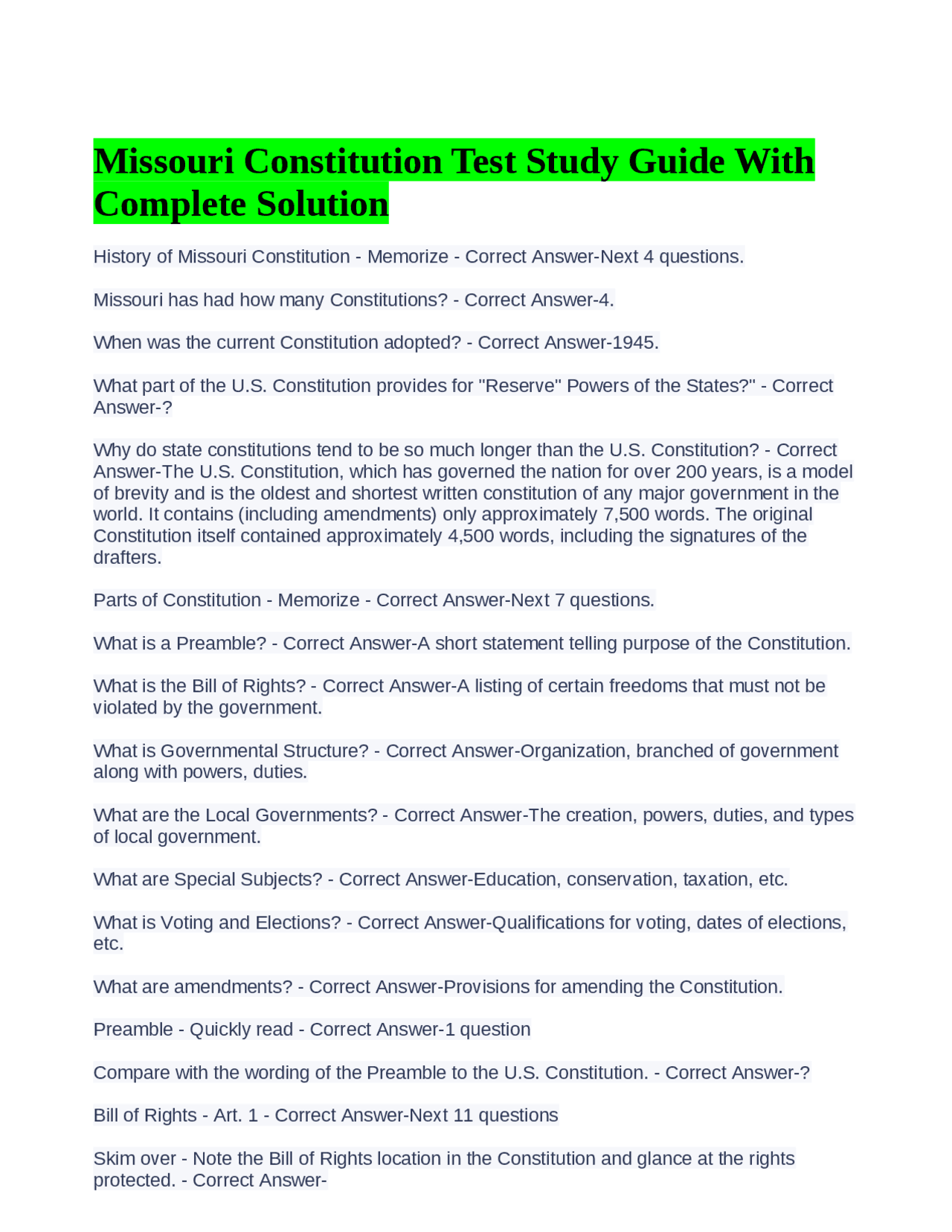
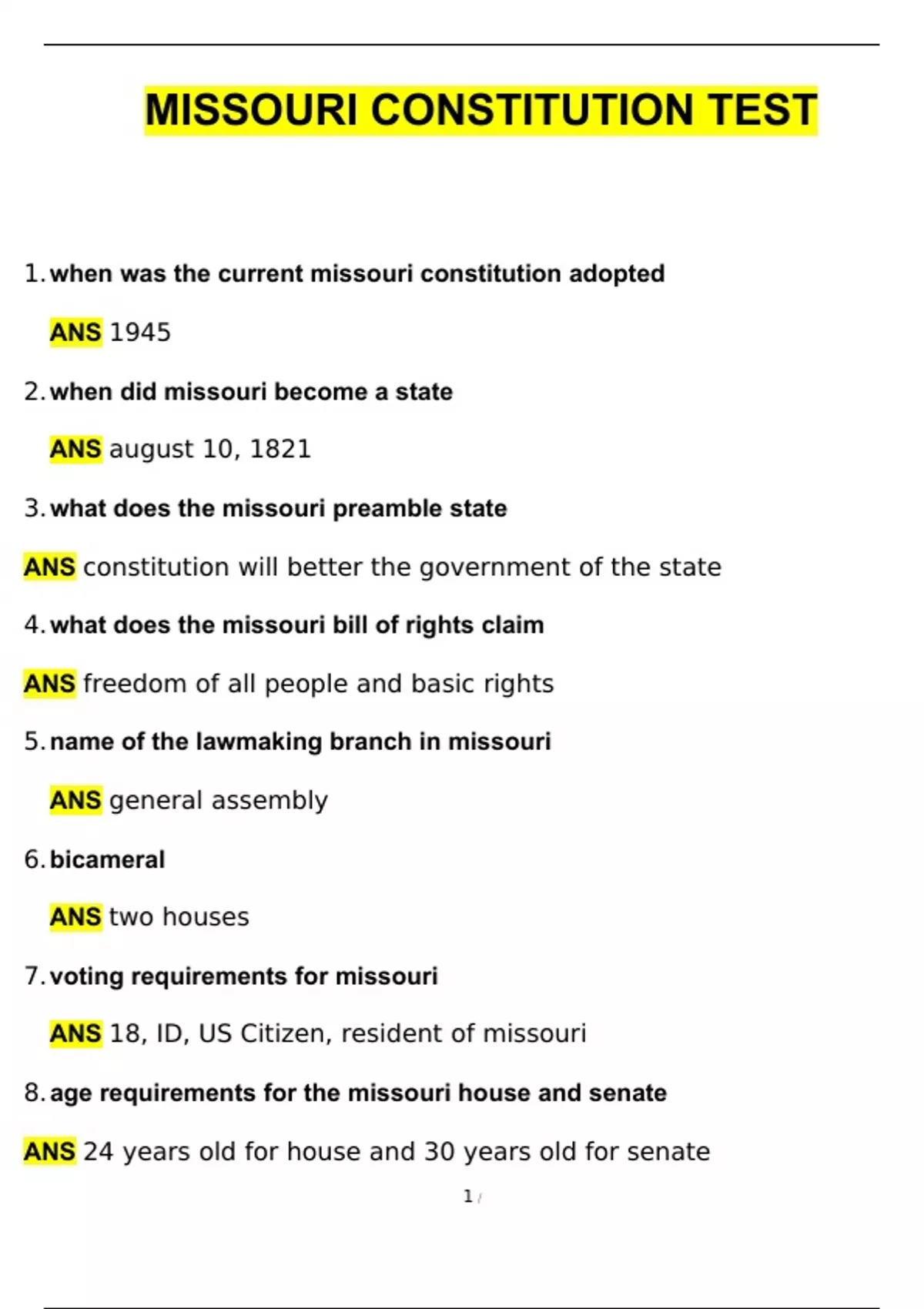
Adopted in 1945, the current Missouri Constitution replaced the state's previous 1875 version. This transition marked a significant modernization of Missouri’s administrative framework, designed to streamline government operations and increase gubernatorial authority while preserving checks and balances. Unlike the United States Constitution, which is rarely amended, the Missouri Constitution is frequently updated through the referendum process.
By 2026, the document includes numerous amendments ratified by voters to address emerging issues in technology, healthcare, and economic policy. The constitutional convention process remains a dormant but potent mechanism, as Missouri law mandates that the question of calling a convention must be submitted to the voters every twenty years, with the next mandatory consideration scheduled for the upcoming decade.
The Three Branches of Missouri Government
The structure of Missouri’s state government follows a strict separation of powers, as outlined in the initial articles of the state constitution.
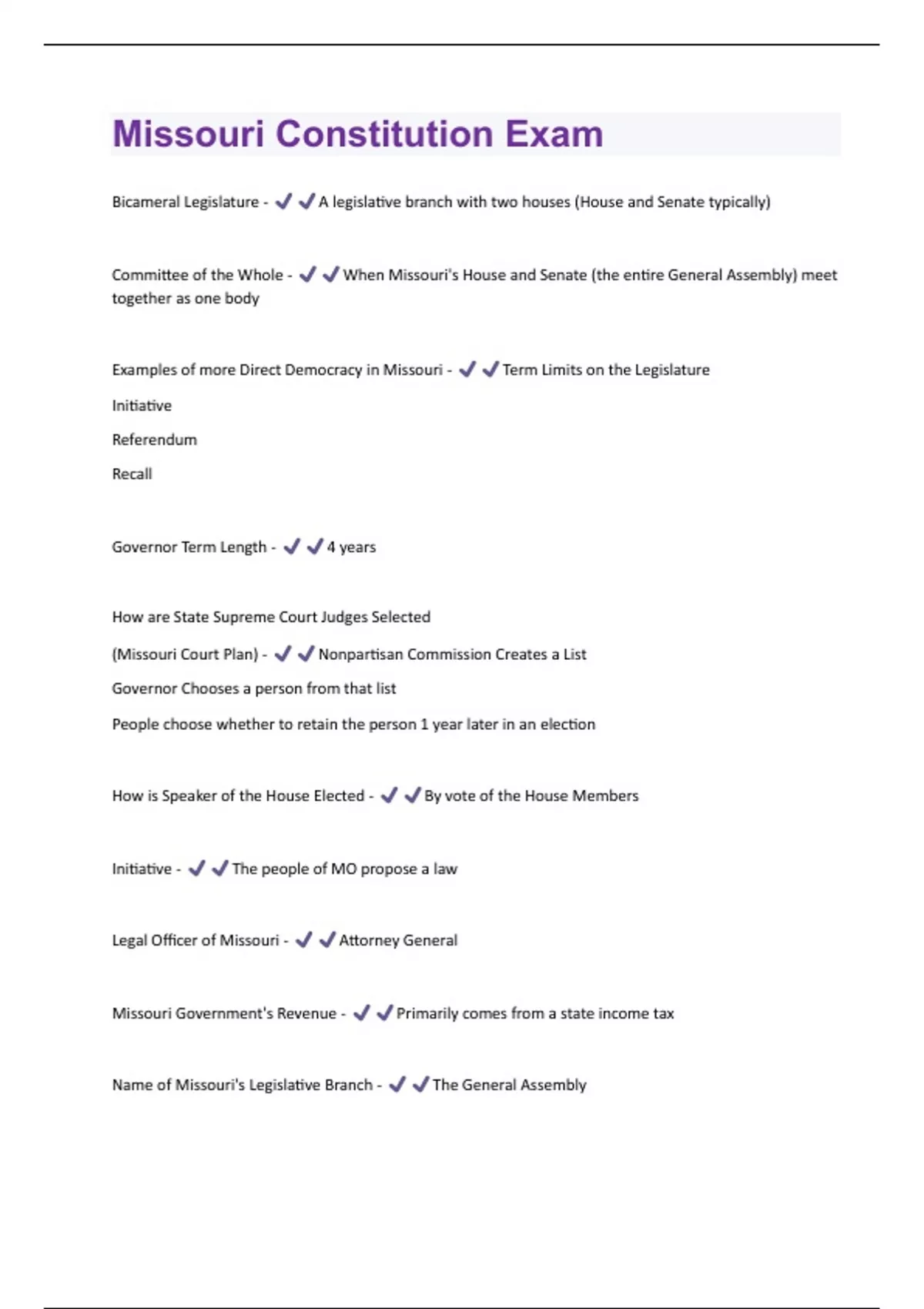
- Legislative Branch: Comprising the General Assembly, this branch is responsible for drafting state statutes and the annual budget. It is a bicameral body consisting of the Senate and the House of Representatives.
- Executive Branch: Led by the Governor, this branch enforces state law. It includes key constitutional offices such as the Lieutenant Governor, Secretary of State, Auditor, Treasurer, and Attorney General, all of whom are elected independently.
- Judicial Branch: Governed by the Missouri Supreme Court, this branch interprets the law. Missouri utilizes a unique non-partisan court plan for the selection of appellate judges, intended to minimize political influence in judicial appointments.
Key Constitutional Articles and Voter Rights
The Bill of Rights, located in Article I, serves as the most frequently cited portion of the document. It guarantees protections that often exceed those found in the federal constitution, such as specific provisions regarding the right to keep and bear arms, the right to hunt and fish, and extensive protections regarding property rights and eminent domain.
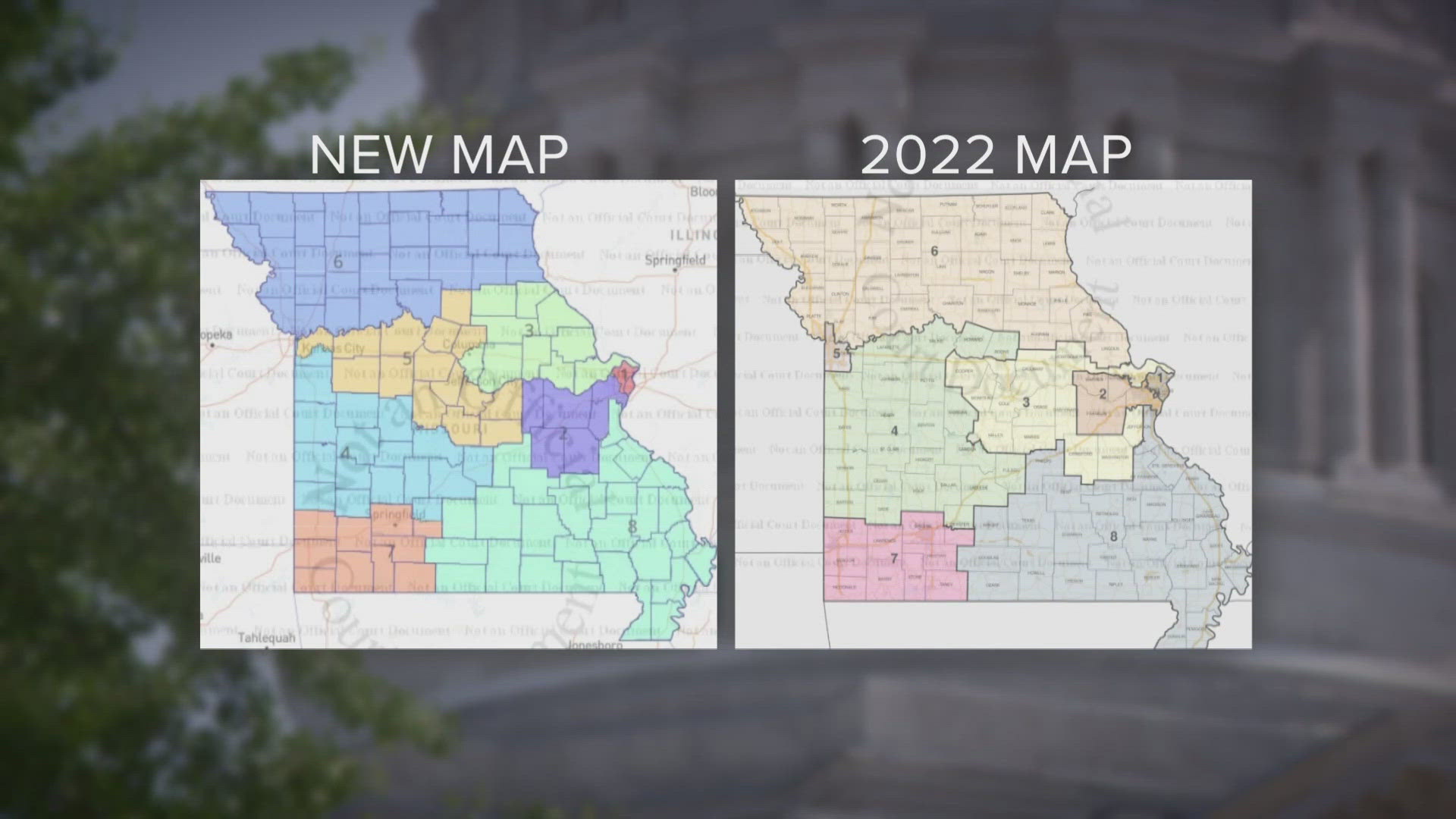
In recent years leading up to 2026, significant focus has shifted toward Article III, which delineates the initiative petition process. This process allows citizens to propose constitutional amendments directly to the ballot, a feature that has fundamentally shifted policy regarding tax structures, infrastructure funding, and administrative regulations.
| Constitutional Article | Primary Focus | Regulatory Scope |
|---|---|---|
| Article I | Bill of Rights | Individual liberties and protections |
| Article III | Legislative Department | Lawmaking, referendums, and initiatives |
| Article IV | Executive Department | Administration and state agencies |
| Article V | Judicial Department | Court jurisdiction and judge selection |
| Article X | Taxation | Revenue limits and fiscal accountability |
The Impact of Initiative Petitions on 2026 Legislative Policy
The Missouri Constitution provides a robust framework for direct democracy. The initiative petition process requires signatures from registered voters in a specific number of congressional districts to qualify for the ballot. Once qualified, a simple majority vote is sufficient to amend the state constitution.
This mechanism has created a dynamic legislative landscape. By 2026, the interaction between the General Assembly and the constitutional amendment process has become a critical area of study for legal experts. Legislative efforts to increase the threshold for constitutional amendments have been a recurring topic of debate, reflecting the tension between maintaining constitutional integrity and upholding the tradition of popular sovereignty.
Operational Requirements for Constitutional Amendments
Signature Thresholds Proponents must collect signatures equivalent to eight percent of the legal voters in two-thirds of the congressional districts to propose a constitutional amendment.
Ballot Certification The Secretary of State holds the authority to certify the language of the petitions, ensuring they meet the legal requirements regarding clarity and fiscal impact statements.
Judicial Review Once certified, the text is subject to judicial review to determine whether the proposed changes violate the federal constitution or other existing Missouri constitutional mandates.
Fiscal Accountability and Article X
Article X of the Missouri Constitution is essential for understanding the state’s financial health. Often referred to as the Hancock Amendment, this section imposes strict limits on the state's ability to increase taxes without voter approval and restricts the growth of state government spending.
In the 2026 fiscal climate, these provisions require the state legislature to balance revenue volatility against the need for public service funding. Compliance with Article X is a major factor in Missouri's credit rating and bond issuance, as the state must maintain strict accounting of "total state revenues" against a pre-defined limit.
Expert Insight: Navigating the Legal Framework
For citizens and business entities, understanding the Missouri Constitution is not merely an academic exercise but a practical necessity. When engaging with state agencies or evaluating proposed policy changes, referencing the specific article of the constitution provides the necessary authority to interpret the scope of government power.
If you are researching a specific clause, always consult the most current version provided by the Office of the Secretary of State. Unlike static legal books, the online versions of the constitution are updated immediately following the certification of election results, ensuring that you are working with the 2026-compliant language.
Frequently Asked Questions
How does an amendment become part of the Missouri Constitution? An amendment is added by a majority vote of the people in a statewide election following a successful initiative petition or a proposal by the General Assembly. This process ensures that any change to the state's foundational document requires broad public consensus.
Can the Missouri Constitution grant fewer rights than the US Constitution? No, the state constitution cannot diminish the fundamental rights guaranteed by the US Constitution. It can, however, provide additional protections and rights that are not explicitly outlined at the federal level.
What is the role of the Hancock Amendment in 2026? The Hancock Amendment acts as a fiscal constraint, limiting how much the state can collect and spend. It serves as a taxpayer protection measure that forces the legislature to justify revenue increases to the voting public.
How often are constitutional conventions held in Missouri? The constitution mandates that a question regarding a constitutional convention be placed before the voters every 20 years. This ensures the public periodically has the opportunity to decide if a total restructuring of the document is necessary.
Where can I find the official text of the Missouri Constitution? The official, up-to-date text is hosted on the Missouri Secretary of State's website. It is the primary legal resource for verifying the exact language of any article or section.
What is the Non-Partisan Court Plan? It is a merit-based system for selecting judges for appellate courts. It involves a commission selecting qualified candidates, from which the Governor makes an appointment, intended to prioritize legal expertise over partisan affiliation.
Conclusion
The Missouri Constitution remains the bedrock of state governance and individual freedom. As we progress through 2026, the document’s agility in responding to citizen-driven initiatives ensures that it remains relevant to the evolving needs of the population. By adhering to the principles of separation of powers and fiscal restraint, the state continues to provide a predictable, albeit dynamic, environment for its residents and businesses. Ensure that your engagement with state policy is grounded in the current constitutional provisions to guarantee compliance and maximize your civic participation.