Alan Alexander Milne (1882–1956) was a prolific British author, playwright, and humorist best known for creating the world-renowned "Winnie-the-Pooh" series. While his stories about the Hundred Acre Wood achieved unprecedented global success, Milne was a multifaceted writer whose career spanned satirical journalism, detective fiction, and high-society drama during the early 20th century.
Early Life and the Intellectual Foundations of A. A. Milne
Born on January 18, 1882, in Hampstead, London, Alan Alexander Milne was raised in an environment that prioritized intellectual curiosity and literary expression. His father, John Vine Milne, ran Henley House School, a small private school where young Alan received his early education. Notably, one of his teachers was the legendary science fiction pioneer H.G. Wells, who remained a lifelong influence and friend. This early exposure to high-level literary thought shaped Milne’s sharp wit and his ability to blend sophisticated humor with accessible prose.
Milne’s academic trajectory led him to Westminster School and later to Trinity College, Cambridge, where he studied mathematics on a scholarship. However, his true passion lay in writing. During his university years, he edited and wrote for the student magazine The Granta. This period was crucial for honing his "light verse" and satirical style, which eventually caught the attention of the editors at Punch, the premier British humor and satire magazine of the era. By 1906, Milne had joined the staff at Punch as an assistant editor, contributing essays and sketches that established him as one of the most recognizable voices in British journalism before the outbreak of World War I.
From Playwright to Children’s Poet: The Evolution of a Writer
Before the first bear ever appeared in his manuscripts, Milne was a celebrated dramatist. His transition from journalism to the stage was marked by several successful West End plays, such as Mr. Pim Passes By (1919) and The Dover Road (1921). His writing during this period was characterized by "drawing-room" wit—sophisticated, gentle, and reflective of the British upper-middle class. He served as a signals officer in the Royal Warwickshire Regiment during World War I, an experience that, while harrowing, reinforced his desire to create works that celebrated innocence and domestic tranquility.
The pivot toward children's literature was not a calculated career move but rather a result of his domestic life. In 1920, his son, Christopher Robin Milne, was born. The nursery became a source of inspiration, leading to the publication of When We Were Very Young in 1924. This collection of poetry introduced a preliminary version of a bear named "Edward," but more importantly, it established Milne’s collaboration with the illustrator E.H. Shepard. Shepard’s delicate pen-and-ink drawings were essential to the work's success, providing a visual language that complemented Milne’s rhythmic, playful cadence.
The Birth of the Hundred Acre Wood: 1924–1928
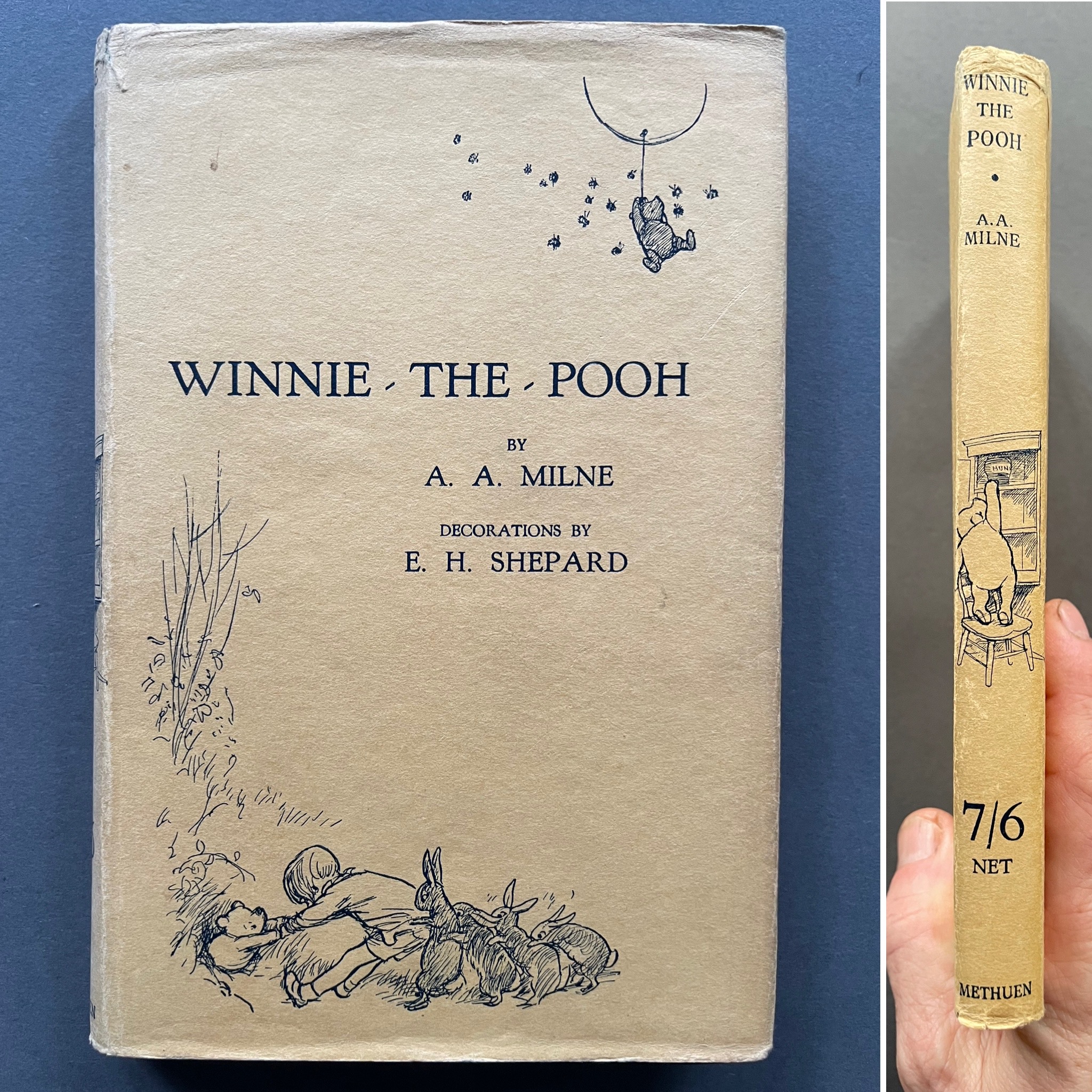
The definitive "Winnie-the-Pooh" era began in earnest with the publication of the eponymous book in 1926. The characters were famously based on his son's stuffed animals: a Teddy bear (bought at Harrods), a donkey, a piglet, and a tiger. The setting, the Hundred Acre Wood, was a fictionalized version of Ashdown Forest in East Sussex, where the Milne family spent their summers.
The creative process was a delicate balance of reality and imagination. Milne did not merely transcribe his son’s play; he constructed a philosophical microcosm. Each character represented a distinct human archetype:
- Winnie-the-Pooh: The "Bear of Very Little Brain" who embodied a Zen-like contentment and accidental wisdom.
- Piglet: The personification of anxiety overcoming itself through loyalty.
- Eeyore: A masterclass in melancholic humor and the necessity of social inclusion.
- Tigger: The boundless, often exhausting energy of youth and self-confidence.
Milne’s prose was technically sophisticated, utilizing "capitalized important words" to mimic the way a child perceives the weight of certain concepts. This stylistic choice helped bridge the gap between adult readers and children, making the books a staple for multi-generational reading.
The Core Works of the Winnie-the-Pooh Canon
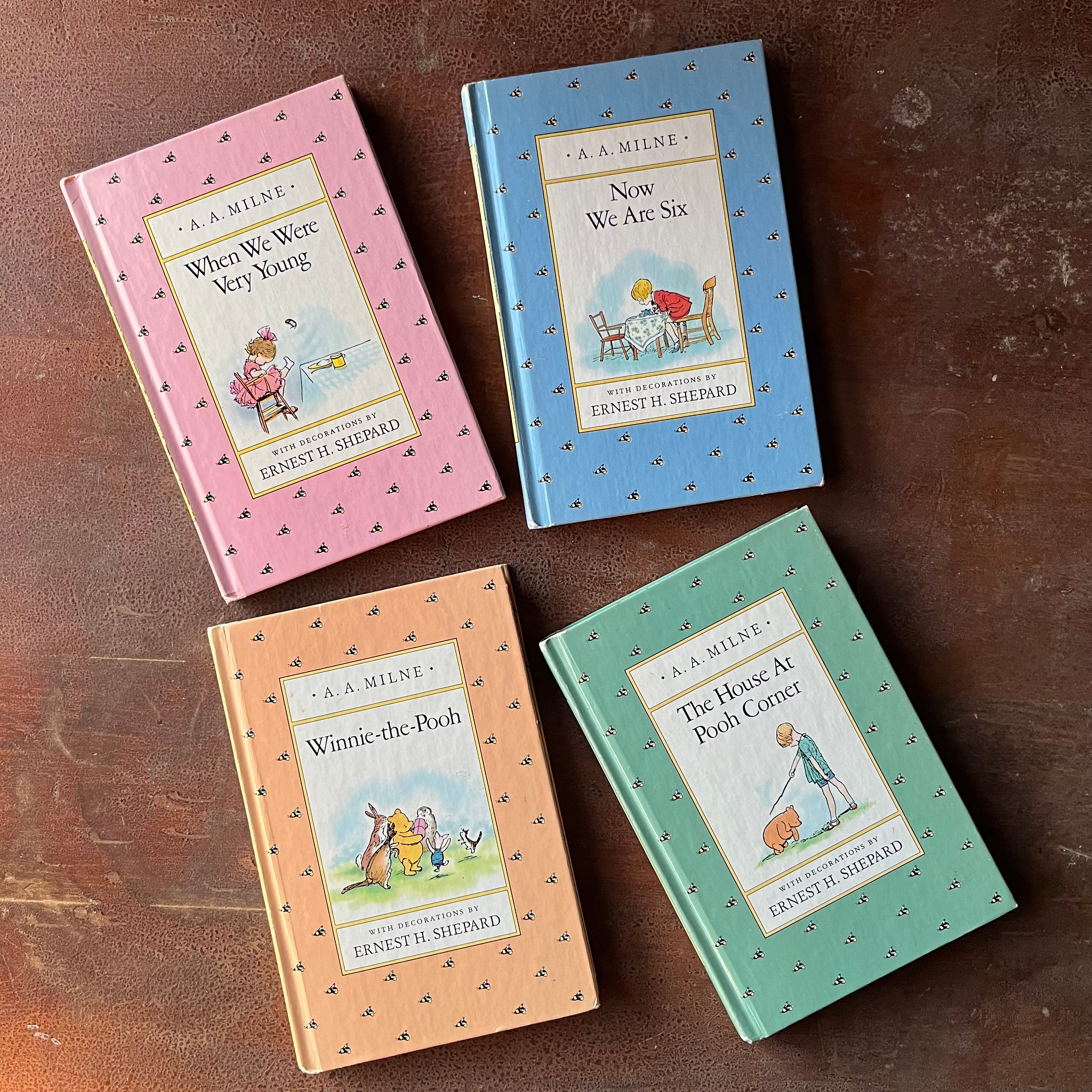
The "Pooh" series is surprisingly concise, consisting of only four primary volumes published over a five-year span. Despite the vast amount of modern merchandise and media, the original literary foundation remains the bedrock of the franchise's integrity.
| Title | Publication Year | Genre | Key Introduction/Event |
|---|---|---|---|
| When We Were Very Young | 1924 | Poetry | First mention of the bear and Christopher Robin's world. |
| Winnie-the-Pooh | 1926 | Story Collection | Introduction of the main cast and the Hundred Acre Wood. |
| Now We Are Six | 1927 | Poetry | Deepening of the "childhood innocence" theme as the boy grows. |
| The House at Pooh Corner | 1928 | Story Collection | The introduction of Tigger and the poignant "goodbye" finale. |
These four books were an immediate commercial sensation. By 1926, the American publisher E.P. Dutton was reporting record-breaking sales. However, this success created a "Golden Cage" for Milne, as the public and critics alike began to demand more children's stories, largely ignoring his efforts to return to adult drama and detective novels like The Red House Mystery (1922).
Analysis of Narrative Style and Psychological Depth
One of the reasons Milne’s work has endured into 2026 is its profound psychological resonance. Unlike many Victorian children's books, Milne did not rely on heavy-handed moralizing or religious instruction. Instead, he utilized situational irony and understatement. The humor often stems from the characters' lack of self-awareness, which adult readers find endearing and children find relatable.
The character of Christopher Robin acts as a benevolent, parental deity within the stories—the one who "fixes" things—while Pooh and the others represent different facets of the human psyche. Scholars have often pointed to the "Tao of Pooh," suggesting that Milne’s writing mirrors Eastern philosophical concepts of "Wu Wei" (effortless action). Pooh does not struggle against the world; he flows with it, finding honey and happiness through a lack of ego.
Furthermore, Milne’s use of language was revolutionary for the genre. He respected the intelligence of his young audience, using words like "expedition" (famously misspelled as "expotition") and "sustenance." This technical layering ensures that the books remain engaging even after dozens of rereadings, as the linguistic playfulness reveals itself differently to various age groups.
The Paradox of Success: Milne’s Complicated Relationship with the Pooh Legacy
As the 1930s progressed, A. A. Milne found himself in a difficult position. He was a writer of high-society comedies and political essays who had become "the man who wrote about the bear." He famously remarked that he felt he had said goodbye to that world with The House at Pooh Corner, yet the world refused to let him leave.
This tension extended to his relationship with his son. Christopher Robin Milne later wrote about the difficulties of being the "real" Christopher Robin, feeling that his father had "filched from him his good name and had left him with nothing but the empty fame of being his son." While they eventually reached a level of reconciliation, the legacy of Winnie-the-Pooh was a complex burden for the family.
Milne continued to write—producing the anti-war book Peace with Honour (1934) and his autobiography It’s Too Late Now (1939)—but none of his later works could escape the long shadow of the Hundred Acre Wood. In the literary circles of 2026, Milne is studied not just as a children's author, but as a cautionary example of how a single monumental success can redefine and restrict a creator's identity.
Preservation and Global Influence in 2026
In 2026, the status of Milne’s work has entered a new phase of cultural history. With the original 1926 Winnie-the-Pooh having entered the public domain in 2022 (and subsequent works following), the literary world has seen an explosion of new interpretations. However, the original manuscripts and E.H. Shepard’s illustrations remain protected in terms of their specific artistic heritage by institutions like the Victoria and Albert Museum.
The 2026 perspective on Milne emphasizes his role in the "Golden Age of Children's Literature," alongside figures like Kenneth Grahame and J.M. Barrie. His work is recognized for its "Englishness"—that specific blend of pastoral comfort and polite eccentricity—but its themes of friendship and the preservation of childhood remain universal. The Pooh books have been translated into over 50 languages, including a famous Latin version, Winnie ille Pu, which became the only book in a foreign language to ever make the New York Times Bestseller List.
Frequently Asked Questions
Did A. A. Milne write anything for adults?
Yes, Milne was a prolific writer for adults before and after his children's books. He wrote 18 plays and 3 novels, including the classic detective story The Red House Mystery (1922). He was also a prominent essayist for Punch magazine, known for his humorous and observational non-fiction.
Why did E.H. Shepard's illustrations matter so much?
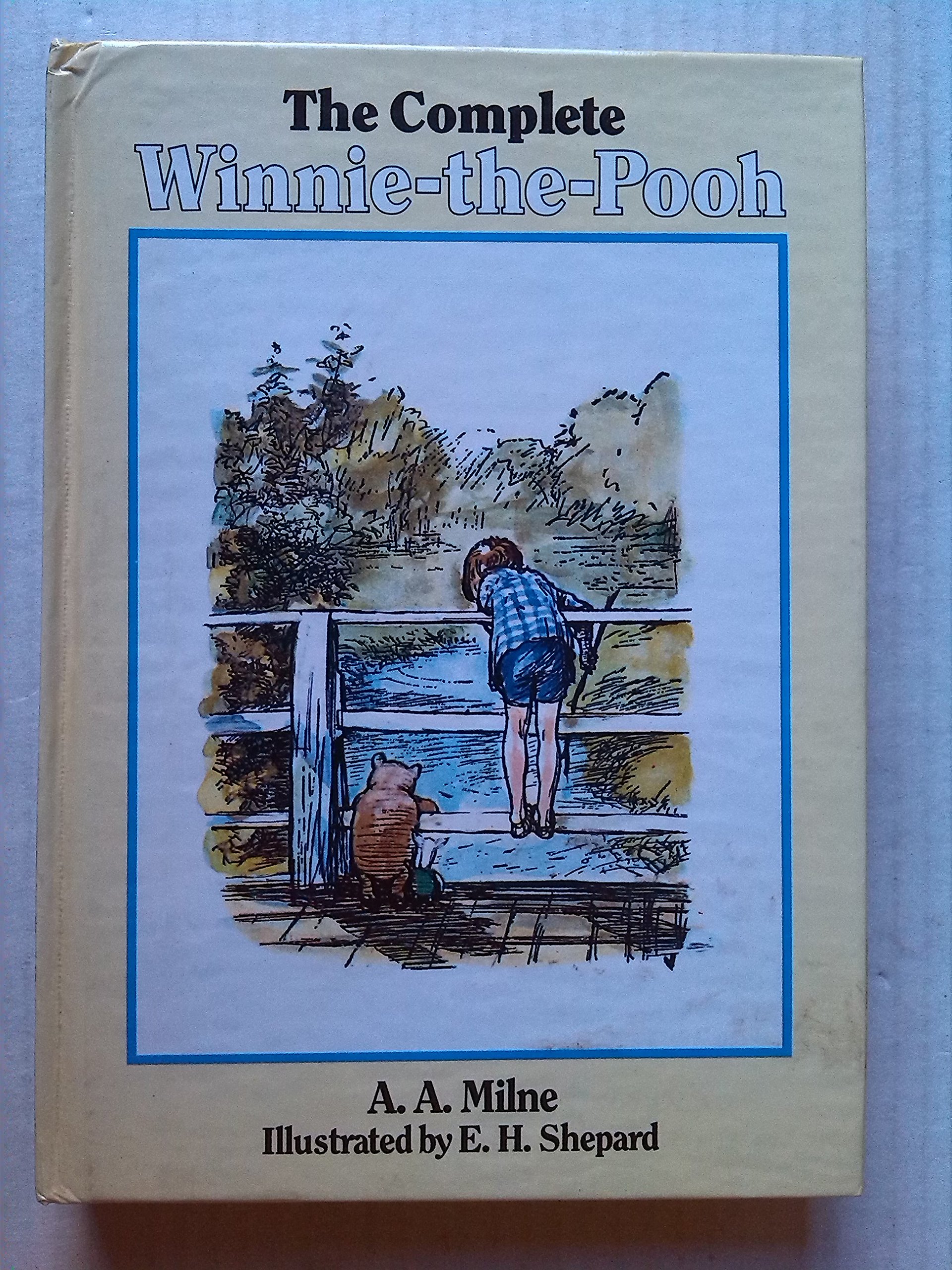
E.H. Shepard did not just illustrate the books; he gave them a visual soul. His sketches were based on real locations in Ashdown Forest and the actual toys owned by Christopher Robin. His "Classic Pooh" style is distinct from the later Disney adaptations and is considered a masterpiece of 20th-century book illustration.
Is Winnie-the-Pooh based on a real bear?
The name "Winnie" came from a Canadian black bear named Winnipeg, which Christopher Robin saw at the London Zoo. The "Pooh" part of the name supposedly came from a swan the family encountered on holiday. The personality of the bear in the books, however, was entirely a creation of Milne’s imagination.
When did the Winnie-the-Pooh books enter the public domain?
The original book Winnie-the-Pooh (1926) entered the public domain in the United States on January 1, 2022. The House at Pooh Corner (1928), which introduced the character Tigger, entered the public domain in 2024. This allows for new creative works to use the characters, though the Disney version of the characters remains under separate copyright.
Exploring the Hundred Acre Wood Today
For those looking to connect with A. A. Milne’s legacy in 2026, the best course of action is to visit Ashdown Forest in East Sussex, England. Many of the locations from the books, such as the "Poohsticks Bridge" and the "Enchanted Place," are preserved for the public. Reading the original texts in their unedited form—prior to modern adaptations—is the most effective way to appreciate Milne’s technical mastery of language and his unique ability to capture the fleeting essence of childhood.