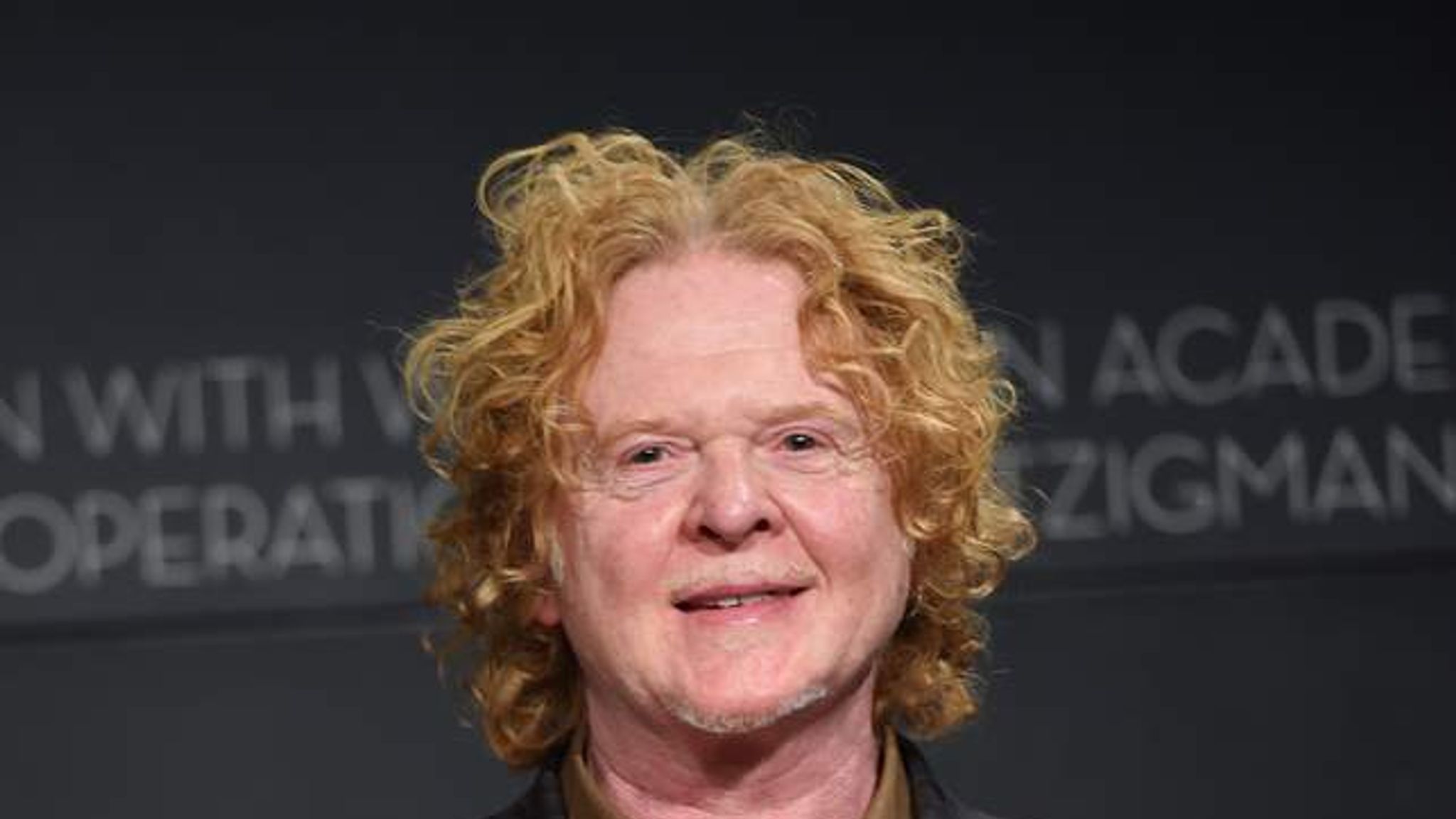
Mick Hucknall, the iconic frontman and primary songwriter of Simply Red, holds an estimated net worth of approximately $60 million (£45 million to £50 million). His wealth is derived from more than 50 million record sales worldwide, lucrative global concert tours, full ownership of his master recordings, and strategic corporate filings registered with UK public authorities.
- MICK HUCKNALL WEALTH ENGINE
- Master Royalty Rights Ownership (Simply Red Records Entities)
- Global Live Performance (Worldwide Stadium Tours)
- Property & Land Holdings (UK & European Real Estate)
Career Footprint: From Punk Roots to Simply Red’s Global Success
Michael James Hucknall was born in Denton, Lancashire, in 1960. His early musical trajectory began during the late-1970s punk movement after attending the famous June 1976 Sex Pistols concert at Manchester’s Lesser Free Trade Hall. Inspired by the performance, Hucknall formed the punk group The Frantic Elevators, releasing several singles, including an early version of "Holding Back the Years."
Following the dissolution of The Frantic Elevators in 1984, Hucknall assembled a new ensemble alongside local Manchester musicians, forming Simply Red. Signing with Elektra Records, the group released their debut album, Picture Book, in 1985. The album spawned the global hit single "Money's Too Tight (To Mention)" and a re-recorded version of "Holding Back the Years," which reached number one on the US Billboard Hot 100 and cemented Hucknall's position as a premier soul-pop vocalist.
SIMPLY RED DISCOGRAPHY TIMELINE
- 1985: Picture Book ("Holding Back the Years")
- 1989: A New Flame ("If You Don't Know Me...")
- 1991: Stars ("Stars", "Something")
- 1995: Life ("Fairground")
Throughout the late 1980s and 1990s, Simply Red produced a string of multi-platinum albums:
- Picture Book (1985): International breakthrough featuring original compositions and soul covers.
- A New Flame (1989): Achieved massive success powered by the single "If You Don't Know Me by Now."
- Stars (1991): Became the best-selling album in the UK for two consecutive years (1991 and 1992), earning 12x Platinum certification from the British Phonographic Industry (BPI).
- Life (1995): Contained "Fairground," the band's first UK number-one single.
As the sole continuous member and main songwriter of Simply Red, Hucknall maintained artistic control and a dominant financial share in the band's commercial output. His distinct vocal range, combined with soul, pop, and reggae influences, enabled the group to maintain steady arena-filling tours across Europe, Asia, and the Americas for over four decades.
Estimated Net Worth and Primary Revenue Streams
Financial analyses and industry consensus place Mick Hucknall’s total asset base at approximately $60 million. Unlike many recording artists from the 1980s who suffered under predatory publishing contracts, Hucknall transitioned early into independent rights management, capturing a higher percentage of downstream revenue.
| ESTIMATED REVENUE STREAM BREAKDOWN |
|---|
| 1. Songwriting & Publishing Royalties (PRS/MCPS) |
| 2. Master Recording Streams & Physical Sales (Simply Red Records) |
| 3. Global Live Performance & Festival Headlining Guarantees |
| 4. Real Estate, Agricultural Assets, and Private Equity |
1. Songwriting and Publishing Royalties
Because Hucknall holds primary or sole songwriting credits on Simply Red's top-performing tracks—including "Holding Back the Years," "Stars," "Something Got Me Started," and "Fairground"—he collects performance and mechanical royalties globally. Registered through rights management agencies such as PRS for Music, these works generate steady background revenue from radio broadcast, synchronization licenses in television and film, digital streaming platforms, and public performance fees.
2. Touring and Live Performance Receipts
Live touring remains one of Hucknall's largest income generators. Simply Red regularly tours European arenas and international festival circuits. By controlling the production and touring companies directly, Hucknall retains a large percentage of gross ticket receipts, VIP packages, and merchandise sales, minimizing intermediary promoter markups.
3. Master Recording Ownership
A key financial decision in Hucknall's career occurred in the early 2000s when Simply Red parted ways with major record labels. Transitioning to his own independent label, Simply Red Records, Hucknall gained direct control over distribution and licensing rights for subsequent releases. Controlling the master catalog allows an artist to receive up to 70%–80% of net digital streaming revenue, compared to traditional major-label royalty rates that often range from 15% to 25%.
Public Records Analysis: UK Corporate Filings and Business Entities
Under United Kingdom corporate law, limited companies must submit annual accounts and confirmation statements to UK Companies House. A review of official corporate registers reveals the active and historic corporate architecture supporting Hucknall’s business activities.
- MICK HUCKNALL / PSC
- SIMPLY RED LIMITED (Live Touring & Operations)
- BLOOD RED LIMITED (Music Production & IP)
Key corporate entities tied to Mick Hucknall include:
- Simply Red Limited: Serving as a primary vehicle for live performance operations, group logistics, and brand management. Corporate filings outline director appointments, shareholder capital, and balance sheet assets covering music production equipment and tour cash reserves.
- Blood Red Limited: Historically used for creative endeavors, music production, and intellectual property management. Filings disclose Persons with Significant Control (PSC) registers, confirming Hucknall’s dominant ultimate beneficial ownership (typically holding 75% or more of voting rights).
- Simply Red Records Limited: The operational hub for independent album releases, managing digital distribution agreements, physical manufacturing contracts, and sub-licensing deals across international territories.
Public balance sheets for these entities disclose retained earnings, trade debtors (uncollected royalty allocations), cash reserves, and short-term operational liabilities. By analyzing these disclosures, market analysts can observe the consistent liquidity managed within Hucknall's corporate network.
Property Holdings, Land Records, and Asset Investments
Beyond the music industry, Hucknall's net worth is backed by significant investments in real estate and physical land holdings across the UK and Continental Europe.
| Real Estate Entity | Region/Location | Primary Purpose |
|---|---|---|
| Glenavon Estate | Moray, Scotland | Fishing, Forestry, Land |
| Surrey Estate | South East England | Primary Residence |
| Sicilian Vineyard | Taormina, Sicily | Wine Production Asset |
1. The Glenavon Estate (Scotland)
One of Hucknall’s notable real estate holdings was the Glenavon Estate located in Banffshire, Scotland, within the Speyside region. Purchased in the late 1990s, the estate encompassed thousands of acres of moorland, forestry, and prime salmon fishing rights along the River Spey. Public filings accessible via the Registers of Scotland document the property deeds, land boundaries, and estate rights. Hucknall managed the land for sport fishing and estate tourism before putting portions of the estate on the market in subsequent years.
2. Residential Real Estate in England
Hucknall has owned multi-million-pound properties in South East England, including an estate in Surrey and prime residential property in London. Public searches in the HM Land Registry reveal property transfers, charge registers, and title ownership records detailing these real estate holdings.
3. European Agricultural Investments (Il Cantante, Sicily)
A long-time enthusiast of fine wines, Hucknall established an agricultural investment in Sicily, Italy, near Mount Etna. Operating under the label Il Cantante ("The Singer"), the estate produced high-end Sicilian wines in collaboration with local viticulturists. While agricultural ventures carry high overhead costs, they offer portfolio diversification outside standard financial instruments.
Financial Structure Comparison: Major Label vs. Independent Model
Mick Hucknall's financial trajectory shifted significantly when he moved from a standard major-label contract to an independent, self-owned model. The table below illustrates how this structural transition affected revenue retention across his primary revenue channels:
| Revenue Category | Traditional Major Label Model (Pre-2000s) | Independent Label Model (Simply Red Records) |
|---|---|---|
| Master Royalty Rate | 12% – 20% of net wholesale price | 70% – 80% of net digital/physical revenue |
| Publishing Rights | Shared with major publishers; partial retention | Direct ownership through private publishing entities |
| Touring Receipts | Cross-collateralized against record production debt | Kept separate via dedicated touring companies (Simply Red Ltd) |
| Merchandise Control | Heavy label/agent commission cuts | Direct control of venue, online, and direct-to-fan sales |
| Public Filing Transparency | Buried within label accounting audits | Transparent via annual UK Companies House filings |
Legal Disclaimers and Limitations of Public Estimates
When examining net worth figures and corporate records for public figures, several analytical limitations must be noted:
Data Boundary Notice: Public company records (Companies House) and land registers (HM Land Registry, Registers of Scotland) provide factual documentation of UK-based corporate assets, directional mortgages, and equity distribution. However, private liquid accounts, off-balance-sheet personal holdings, international trusts, and non-UK tax structures remain private. Estimates of total net worth are built on public asset valuations, historic royalty yields, and standard industry multipliers. They should be evaluated as informed financial estimates rather than exact accounting figures.
Frequently Asked Questions
What is Mick Hucknall’s estimated net worth?
Mick Hucknall’s net worth is estimated at approximately $60 million (£45 million to £50 million). This figure accounts for his publishing catalog, master recording ownership, global concert touring revenues, real estate holdings, and private business ventures.
How many records has Simply Red sold worldwide?
Simply Red has sold over 50 million albums globally since their founding in 1984. Their 1991 album Stars alone sold over 3.4 million copies in the UK, making it one of the top-selling albums in British music history.
Does Mick Hucknall own the rights to Simply Red’s music?
Yes. After fulfilling his major-label commitments with Elektra/East West, Hucknall launched his independent label, Simply Red Records. Through this entity and his publishing arrangements, he holds ownership over his independent master recordings and songwriting rights.
Where can official business records for Mick Hucknall be verified?
Official corporate records—including annual balance sheets, officer listings, and Persons with Significant Control (PSC) registers—can be searched directly via the official UK Companies House online service. Real estate title deeds are registered with HM Land Registry (for England and Wales) and Registers of Scotland (for Scottish property).
Is Mick Hucknall still active with Simply Red?
Yes. Hucknall continues to tour and release music under the Simply Red name, remaining the sole original continuous member and main decision-maker for the band's operations and live performances.
Accessing and Researching Public Corporate Records
For financial analysts, journalists, and legal researchers seeking to verify business entities associated with recording artists, official registers offer transparent access points:
- UK Companies House: Search the official register using company names (e.g., Simply Red Limited) or director names (Michael James Hucknall) to view historic balance sheets, annual confirmation statements, and corporate mortgages.
- HM Land Registry: Obtain official title registers and title plans to confirm property transactions, corporate charges, and legal ownership of real estate in England and Wales.
- PRS for Music & ISWC Databases: Check international song registration databases to review credits, registered work codes, and rights attribution for original compositions.
By combining public company registry filings with real estate records and publishing databases, researchers can build an accurate, evidence-backed assessment of an artist's long-term business architecture and commercial standing.