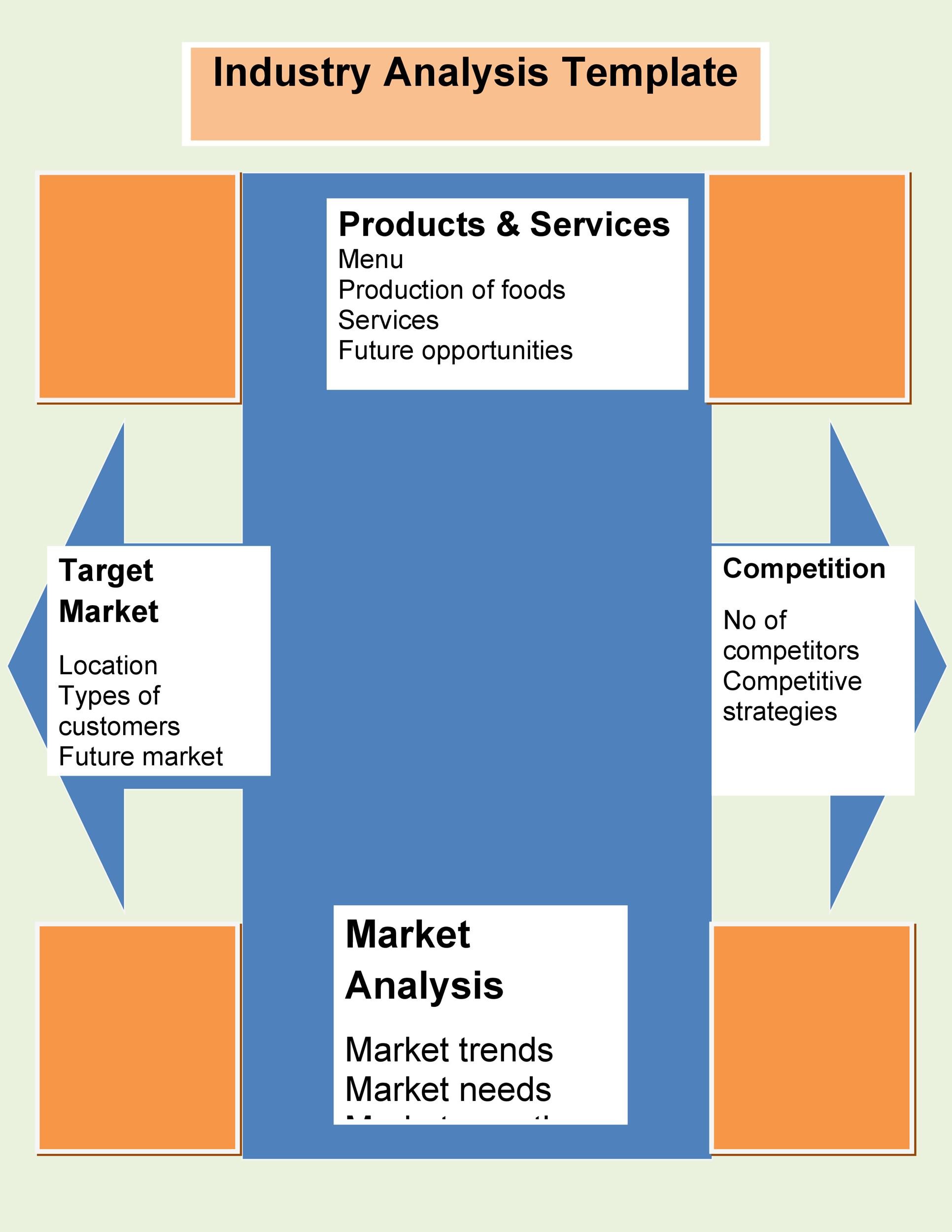
Market analysis is the systematic process of gathering and evaluating data regarding a specific industry’s dynamics, including customer behavior, competitor strategies, and economic trends. By identifying market size and growth potential, businesses can mitigate risks, allocate resources efficiently, and uncover high-value opportunities to maintain a competitive advantage in a volatile environment.
The Strategic Framework of Market Analysis
Market analysis serves as the bedrock of any successful business strategy. In the economic landscape of 2026, where data is generated at an unprecedented velocity, the ability to distill information into actionable insights separates market leaders from those who merely react to shifts. A robust market analysis does not just look at where a business stands today; it evaluates the historical trajectory and projects future conditions based on verifiable data points.
The primary objective of a market analysis is to provide a holistic view of the "playing field." This involves understanding the volume and value of the market, the various customer segments that exist within it, and the buying patterns that drive revenue. Without this foundation, marketing efforts become speculative, and product development may lack the necessary alignment with actual consumer needs.
Furthermore, market analysis provides a reality check for internal assumptions. Many organizations fall into the trap of confirmation bias, seeking data that supports their existing beliefs. A rigorous, objective analysis forces decision-makers to confront uncomfortable truths, such as a shrinking market share or the emergence of a disruptive technological trend that threatens their core business model.
Quantifying Market Potential: TAM, SAM, and SOM
To effectively assess a business opportunity, analysts must break down the market into manageable and measurable layers. These layers are commonly referred to as TAM, SAM, and SOM. Understanding these metrics is essential for securing investment and setting realistic growth targets.
- Total Addressable Market (TAM): This represents the total revenue opportunity available if a product or service achieved 100% market share. It is the broadest view of the market and is useful for understanding the long-term potential of an industry. For example, a company producing electric vehicle (EV) charging stations would view the entire global EV infrastructure market as its TAM.
- Serviceable Addressable Market (SAM): This is the portion of the TAM that is actually targeted by a company’s products or services within its geographic reach and technological capabilities. Following the EV example, the SAM might be limited to charging stations compatible with North American power grids and regulatory standards.
- Serviceable Obtainable Market (SOM): Also known as "share of market," this is the portion of the SAM that a company can realistically capture in the short term, given its current resources, competition, and marketing budget. This figure is critical for operational planning and cash flow forecasting.
Accurately calculating these figures requires a blend of top-down and bottom-up research methodologies. Top-down analysis starts with large-scale industry reports (e.g., from Gartner or Statista) and applies percentages to narrow down to the specific niche. Bottom-up analysis involves multiplying the total number of potential customers by the average annual spend per customer, offering a more granular and often more reliable projection.
Competitive Intelligence: Beyond Benchmarking
In 2026, competitive intelligence has evolved from simple SWOT (Strengths, Weaknesses, Opportunities, Threats) analyses to real-time monitoring of competitor ecosystems. Understanding who you are up against is not just about knowing their prices; it is about understanding their supply chains, their technological debt, and their customer sentiment.
A comprehensive competitor analysis should categorize rivals into three groups:
- Direct Competitors: Companies offering the same products or services to the same audience (e.g., Coca-Cola vs. Pepsi).
- Indirect Competitors: Companies offering different products that satisfy the same customer need (e.g., a movie theater vs. a streaming service).
- Potential Entrants: Tech-native startups or established firms from adjacent industries that could pivot into your space.
To gain a technical edge, analysts should utilize tools that track digital footprints, such as SEO rankings, patent filings, and job postings. An increase in hiring for specialized AI engineers at a competitor’s firm, for instance, is a leading indicator of an upcoming product pivot or feature update. By mapping these signals, a business can anticipate moves rather than just responding to them after the fact.
Environmental Scanning through PESTLE Analysis
Markets do not exist in a vacuum. They are constantly influenced by external macro-environmental factors. The PESTLE framework is the gold standard for identifying these external forces and evaluating their potential impact on market stability and growth.
- Political: This includes government stability, trade policies, and tax regulations. In 2026, geopolitical shifts frequently impact international supply chains and market accessibility.
- Economic: Factors such as inflation rates, currency fluctuations, and consumer disposable income. Analysts must monitor central bank policies as they directly correlate to the cost of capital for business expansion.
- Social: Demographic shifts, lifestyle trends, and cultural changes. The rise of "conscious consumerism" and the aging population in developed economies are critical social factors to consider.
- Technological: The rate of innovation, R&D activity, and automation. The integration of generative AI and edge computing into daily business operations remains a primary driver of market disruption.
- Legal: Employment laws, consumer protection regulations, and health and safety standards. Keeping abreast of data privacy laws (like the evolution of GDPR and various regional equivalents) is non-negotiable for modern market analysis.
- Environmental: Climate change policies, carbon footprint regulations, and the availability of raw materials. Sustainability is no longer a corporate social responsibility (CSR) "add-on" but a core component of market viability.
Methodologies for Modern Data Acquisition
The quality of a market analysis is directly proportional to the quality of the data supporting it. Analysts distinguish between primary and secondary research, using a combination of both to achieve a balanced view.
Primary Research
Primary research involves gathering original data directly from the source. This is often more expensive and time-consuming but yields the most specific insights. Common methods include:
- Surveys and Questionnaires: Quantifiable data from a specific target demographic.
- Focus Groups: Qualitative insights into consumer emotions and perceptions.
- In-Depth Interviews: High-level perspectives from industry experts or long-term clients.
- Observational Studies: Analyzing how consumers interact with products in real-world environments.
Secondary Research
Secondary research utilizes existing data collected by others. This is the starting point for most analyses because of its cost-effectiveness. Sources include:
- Government Statistics: Agencies like the U.S. Census Bureau or the Bureau of Labor Statistics provide essential demographic and economic data.
- Trade Associations: Industry-specific groups often publish annual reports and trend summaries.
- Financial Reports: Publicly traded companies’ 10-K and 10-Q filings provide deep dives into competitor performance and risk factors.
- Academic Journals: peer-reviewed studies offer insights into long-term behavioral trends and technological shifts.
Analytical Models and Tools Comparison
Choosing the right framework is essential for structuring the data collected during the analysis. The following table compares common models used by strategists in 2026.
| Framework | Primary Purpose | Best Used For | Key Advantage |
|---|---|---|---|
| Porter’s Five Forces | Analyzing industry attractiveness | Assessing competitive intensity | Identifies profit potential |
| SWOT Analysis | Internal/External assessment | Strategic planning sessions | Simple and versatile |
| PESTLE Analysis | Macro-environmental scanning | Market entry or expansion | Identifies long-term risks |
| Growth-Share Matrix | Portfolio management | Resource allocation | Visualizes product lifecycle |
| Value Chain Analysis | Operational efficiency | Identifying competitive advantage | Pinpoints cost-saving areas |
Leveraging AI and Predictive Analytics in 2026
By 2026, market analysis has transitioned from descriptive (what happened) and diagnostic (why it happened) to predictive (what will happen) and prescriptive (how to make it happen). Artificial Intelligence (AI) and machine learning models now process vast datasets—including social media sentiment, satellite imagery of retail parking lots, and real-time shipping manifests—to forecast market shifts before they manifest in traditional reports.
Predictive analytics allows firms to identify "micro-segments" within their audience. Instead of broad categories like "Millennials," AI can identify specific clusters of users based on hyper-specific behaviors, such as "suburban telecommuters who prioritize renewable energy and high-frequency fitness subscriptions." This level of precision enables highly targeted marketing campaigns that yield significantly higher conversion rates than traditional methods.
However, the human element remains vital. While AI can identify patterns, it lacks the context of human intuition and ethical judgment. A senior analyst's role in 2026 is to interpret the "signals" generated by AI and translate them into a coherent narrative that aligns with the brand’s mission and values.
Avoiding Common Pitfalls in Market Interpretation
Even with the best data, a market analysis can fail if the interpretation is flawed. One of the most common mistakes is ignoring the "Niche." Many businesses try to appeal to everyone and end up appealing to no one. A successful analysis should identify specific underserved segments where a company can achieve dominance.
Another pitfall is over-reliance on historical data. In a rapidly changing technological landscape, what worked three years ago might be irrelevant today. Analysts must distinguish between "cyclical trends" (which repeat) and "structural shifts" (which change the market permanently). For example, a temporary dip in interest rates is cyclical, while a transition from ownership to a subscription-based economy is a structural shift.
Finally, underestimating barriers to entry can lead to catastrophic business failures. Even if a market looks profitable, high capital requirements, strict regulatory hurdles, or strong brand loyalty toward incumbents can make it nearly impossible for a newcomer to survive. A rigorous market analysis must objectively assess these obstacles.
How often should a market analysis be updated?
A market analysis should be a "living document." For most industries, a comprehensive annual review is the minimum requirement. However, in fast-moving sectors like technology or finance, quarterly updates—or even real-time dashboards—are necessary to capture shifting consumer sentiments and competitive moves.
What is the most cost-effective way for a small business to conduct market analysis?
Small businesses should prioritize secondary research using free or low-cost resources like government databases, industry blogs, and social media analytics. Conducting small-scale primary research through customer feedback forms and Google Trends can also provide valuable insights without the need for a large consulting budget.
What is the difference between market research and market analysis?
While the terms are often used interchangeably, market research is the act of gathering information about consumers and the market. Market analysis is the interpretation and evaluation of that information to make strategic business decisions. Research provides the data; analysis provides the "So what?"
Can market analysis predict a recession?
Market analysis can identify "leading indicators" of an economic downturn, such as declining consumer confidence, rising inventory levels, or shifts in the yield curve. While it cannot predict the exact timing of a recession with 100% certainty, it allows businesses to build contingency plans and manage their risk exposure effectively.
How do I analyze a market with no existing competitors?
If there are no direct competitors, look at "adjacent" markets. Analyze how customers are currently solving the problem your product addresses. This is often referred to as "latent competition." If the problem isn't being solved at all, the analysis should focus heavily on validating that a genuine demand exists and that the lack of competition isn't due to an unviable market.
Developing a Market Entry Strategy
Once the analysis is complete, the final step is to translate the findings into a concrete market entry or expansion plan. This involves selecting a target segment, defining a unique value proposition, and determining the optimal pricing and distribution channels.
The immediate next action for any strategist is to prioritize the findings. Identify the top three opportunities and the top three threats revealed by the analysis. For each, assign a responsible team member and a deadline for developing a tactical response. By moving quickly from data to action, a business ensures that its market analysis remains a tool for growth rather than just an academic exercise.