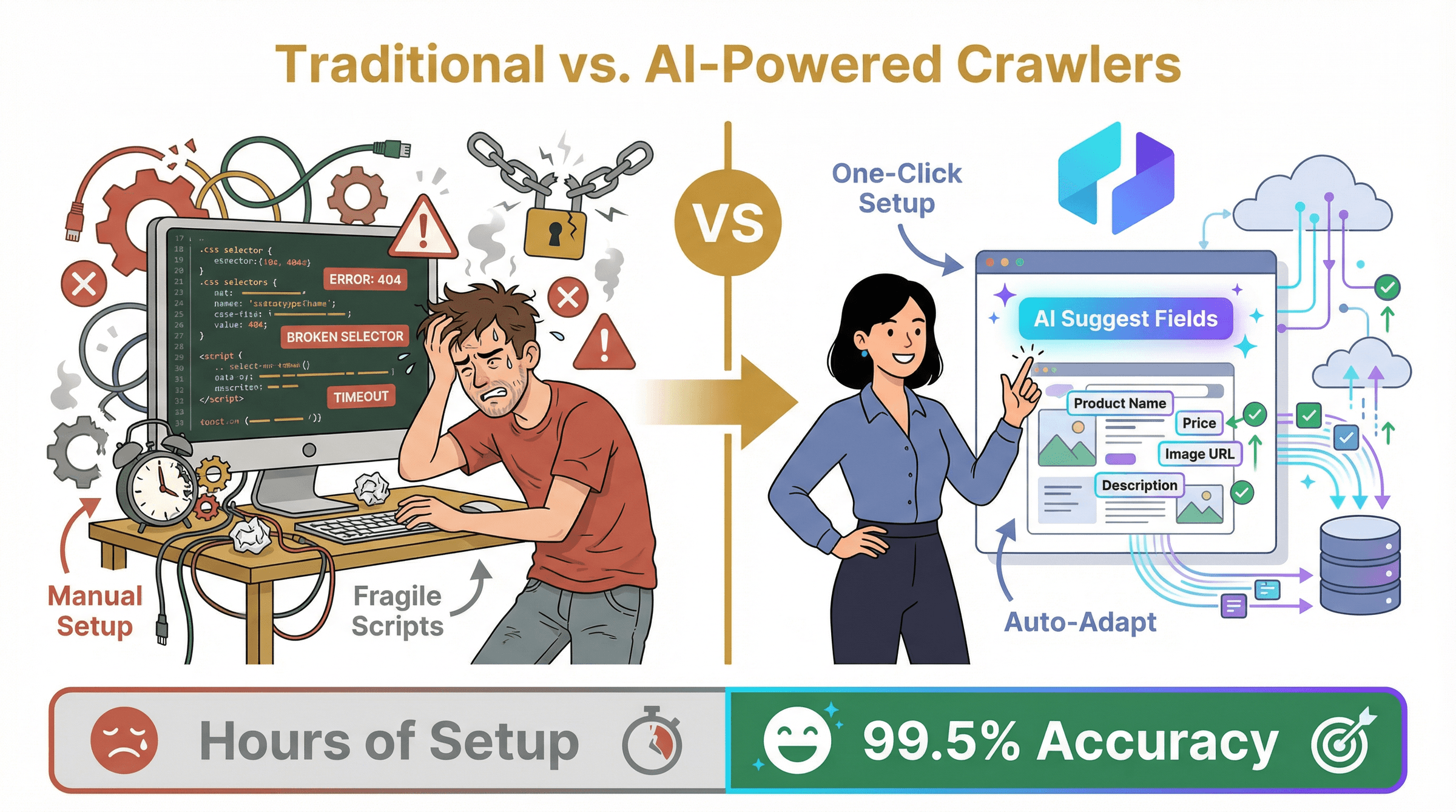
List crawlets represent a specialized architectural evolution in modern web data extraction, combining the low-footprint automation of micro-crawlers with structured list-parsing capabilities. Within technical SEO, data engineering, and competitive intelligence operations, managing these specialized extraction units efficiently determines whether search engine bots and data pipelines capture critical assets or get blocked by advanced perimeter security systems. Understanding how to deploy, optimize, and maintain list crawlets in 2026 requires mastery over modern headless browser rendering, JavaScript execution overhead, rate-limiting protocols, and compliance with updated enterprise data privacy frameworks.
Understanding List Crawlets and Their Technical Architecture
List crawlets are modular, lightweight data-extraction scripts or containerized micro-services engineered specifically to parse, index, and extract structured item links and metadata from categorical index pages, pagination sequences, and search engine results pages. Unlike monolithic enterprise web scrapers that attempt to ingest entire domain trees blindly, list crawlets operate with surgical precision. They target high-value directory nodes, product catalogs, forum indices, and sitemap derivatives to feed downstream deep-crawl workers.
The underlying architecture of a modern list crawlet relies on asynchronous event loops and stateless execution models. By decoupling the discovery phase (identifying items within a list) from the extraction phase (scraping individual item details), system architects can scale processing power dynamically. In 2026, web architectures heavily rely on Client-Side Rendering (CSR) via frameworks like React, Next.js, and Vue. Consequently, list crawlets must incorporate robust headless rendering layers—such as optimized Chromium instances or browserless cloud endpoints—to successfully intercept and parse DOM trees after asynchronous JavaScript execution completes.
Operational Core Principle Statelessness and Decoupling: List crawlets must never store session state locally across scaling clusters. Every pagination request or URL extraction payload must be handled asynchronously via distributed message brokers like Apache Kafka or RabbitMQ, ensuring zero data loss during high-velocity scraping campaigns.
Core Technical Specifications and Performance Metrics
Optimizing list crawlets for enterprise environments demands strict adherence to performance benchmarks and infrastructural thresholds. When deploying these scripts across distributed serverless functions or containerized Kubernetes pods, engineers must monitor specific technical parameters to prevent IP blacklisting, memory leaks, and CPU throttling.
| Performance Metric | Target Threshold | Optimization Technique |
|---|---|---|
| Time to First Byte (TTFB) | Under 300ms | Utilize edge-rendered DNS and HTTP/3 multiplexing |
| DOM Parsing Latency | Under 120ms per page | Implement native Rust-based HTML parsers instead of heavy regex |
| Memory Footprint per Node | Under 156MB RAM | Strip out unused browser extensions and block image/font assets |
| Proxy Rotation Interval | Every 15 to 30 requests | Integrate dynamic residential proxy pools with TLS fingerprint spoofing |
| Success Rate Benchmark | Greater than 98.4% | Implement exponential backoff and automatic CAPTCHA-solving hooks |
Maintaining these metrics ensures that list crawlets operate beneath the threshold of advanced Bot Management systems deployed by platforms like Cloudflare, Akamai, and PerimeterX. Failing to optimize memory footprints during large-scale list parsing frequently results in container crashes and unhandled promise rejections in Node.js or Python runtime environments.
Step-by-Step Implementation Guide for Modern List Crawlets
Deploying a high-performance list crawlet requires a disciplined engineering approach, moving from target mapping to deployment and monitoring. The following workflow outlines the precise steps required to build a resilient list-parsing unit in 2026.
- Target Schema Mapping and DOM Analysis: Inspect the target list page using developer tools to identify stable CSS selectors, XPath expressions, or JSON-LD schema markup blocks that reliably encapsulate target item URLs and pagination tokens.
- Environment and Runtime Setup: Initialize a lightweight execution environment using an asynchronous runtime environment. Configure the network layer to handle custom User-Agent rotation, HTTP headers, and JA3/JA4 TLS handshake signatures to mimic legitimate desktop browsers.
- Request Routing and Proxy Management: Integrate a rotating proxy middleware layer that automatically switches IP addresses based on status code responses (e.g., triggering an immediate proxy rotation upon encountering HTTP 403, 429, or 503 errors).
- Asynchronous DOM Extraction: Execute the parsing script to extract list items, validate URL structures against regex filters to avoid duplicate queuing, and push valid target URLs into the primary redis queue for deep crawlers.
- Rate Limiting and Jitter Integration: Program random temporal delays (jitter) between consecutive requests to simulate human browsing patterns and avoid triggering velocity-based Web Application Firewall (WAF) triggers.
- Error Logging and Dead Letter Queues (DLQ): Configure comprehensive error handling to catch timeout exceptions and unexpected markup changes, routing failed payloads to a DLQ for manual inspection or automated schema healing.
Comparative Analysis: Monolithic Crawlers vs. List Crawlets
Choosing the right extraction strategy impacts infrastructure costs, maintenance overhead, and data freshness. The following comparison illustrates why modular list crawlets outperform traditional monolithic systems in complex modern web ecosystems.
| Evaluation Criteria | Monolithic Enterprise Crawlers | Modern List Crawlets |
|---|---|---|
| Infrastructure Cost | High; requires dedicated, heavy server clusters | Low; executes efficiently on serverless or edge functions |
| Maintenance Overhead | High; breaking changes require complete system updates | Low; modular design allows isolated script patching |
| Scalability and Speed | Slow; tightly coupled discovery and extraction phases | Extremely High; parallelized list discovery feeds fast workers |
| WAF Evasion Difficulty | Difficult; predictable traffic patterns and heavy footprints | Simple; lightweight, highly distributed requests with randomized signatures |
| Resource Utilization | Inefficient; high memory and CPU consumption per node | Highly Optimized; strips unnecessary media and styles |
Advanced E-E-A-T Considerations: Compliance, Security, and Ethics
Deploying automated data extraction tools in 2026 requires strict alignment with global data privacy regulations, including GDPR, CCPA, and evolving international AI scraping governance acts. Professional technical SEO strategists must ensure that list crawlets respect standard web protocols such as robots.txt directives, crawl-delay parameters, and server load thresholds. Scraping personally identifiable information (PII) or bypassing strict access control walls without authorization creates severe legal liabilities. Furthermore, maintaining transparent corporate contact policies within custom User-Agent strings allows site administrators to communicate directly with operators should crawl velocity inadvertently impact server performance.
Frequently Asked Questions About List Crawlets
What is the primary function of a list crawlet in technical SEO?
A list crawlet is designed exclusively to extract URLs, item titles, and pagination tokens from index and category pages to populate deep-crawling queues. By focusing solely on lists rather than deep content, it optimizes resource allocation and speeds up data discovery.
How do modern list crawlets bypass advanced bot detection systems?
They bypass detection by utilizing dynamic residential proxy rotation, randomized HTTP headers, TLS fingerprint spoofing, and realistic human-like browsing jitter. These techniques prevent perimeter security walls from flagging the traffic as automated.
Are list crawlets legal to use on public websites?
Yes, provided they respect robots.txt directives, do not bypass authentication walls, avoid scraping personal data protected by privacy laws, and do not disrupt the target server's normal operational availability.
What programming languages are best suited for building list crawlets?
Python (using libraries like HTTPX, Playwright, or Scrapy) and JavaScript/TypeScript (using Node.js with Puppeteer or Cheerio) are the industry standards due to their robust asynchronous networking and DOM parsing capabilities.
How do list crawlets handle infinite scrolling pages?
List crawlets handle infinite scrolling by simulating programmatic scroll events within a headless browser instance, waiting for network requests to fetch subsequent JSON or HTML payloads, and parsing the newly appended DOM elements iteratively.
What causes a list crawlet to experience high memory consumption?
High memory consumption is typically caused by unoptimized headless browser instances that load unnecessary binary assets like images, fonts, and stylesheets, or by failing to clear the browser DOM cache between pagination requests.
Conclusion and Strategic Recommendations
Mastering the deployment of list crawlets is essential for technical SEO professionals and data engineers aiming to maintain a competitive edge in 2026. By prioritizing lightweight architectures, decoupling discovery from deep extraction, and strictly adhering to modern WAF evasion and compliance standards, organizations can ensure continuous, reliable data pipelines. Audit your current scraping infrastructure today, transition monolithic jobs into modular list-parsing micro-services, and optimize your proxy rotation and DOM parsing efficiencies to safeguard your operational data streams.