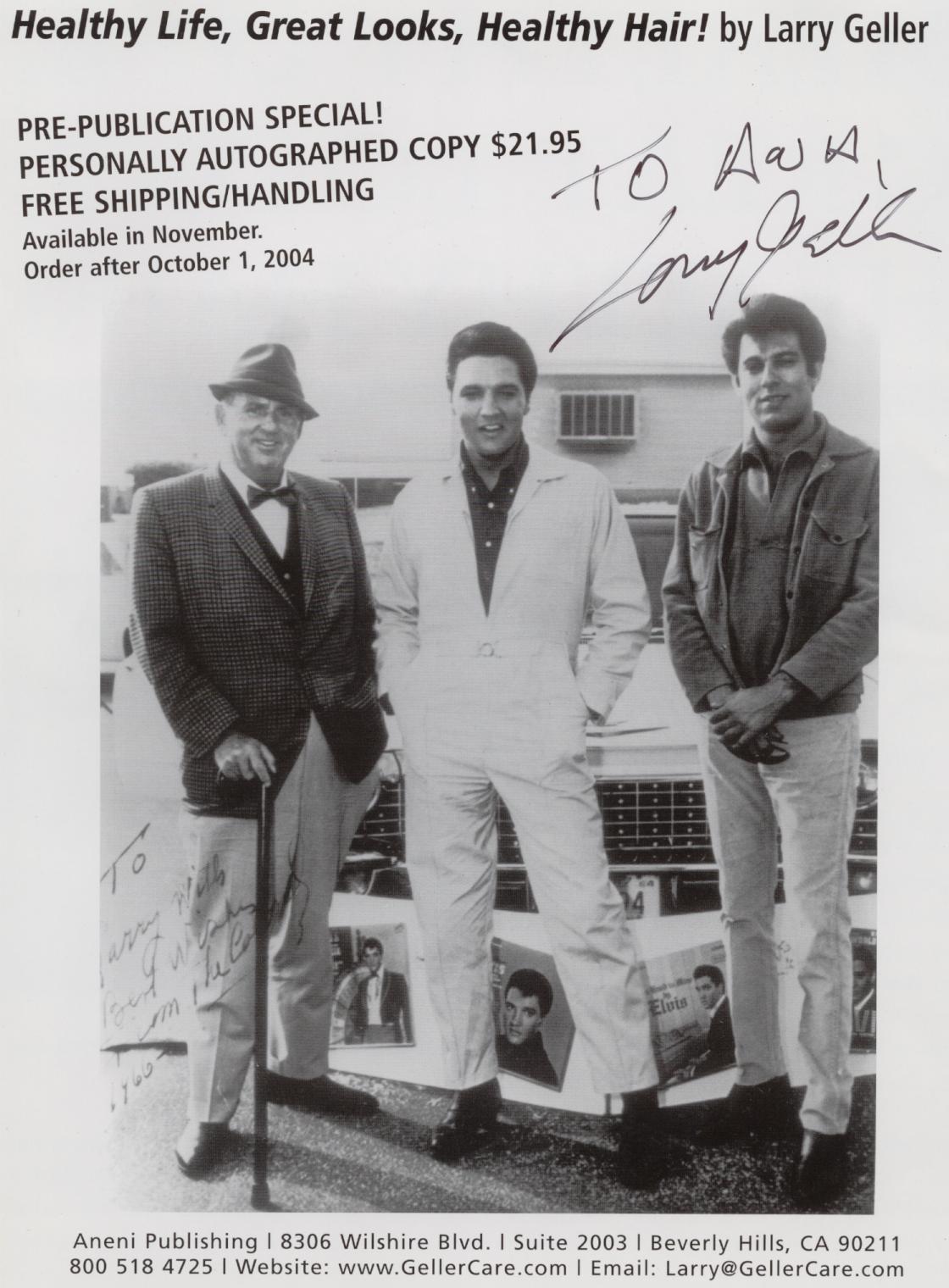
Larry Geller is best known as the personal hairstylist and spiritual advisor to Elvis Presley, serving as a pivotal figure in the entertainer's inner circle from 1964 until 1977. Beyond maintaining the King’s legendary jet-black pompadour, Geller introduced Presley to metaphysical literature and philosophy, significantly influencing the superstar’s private intellectual life and his lifelong search for religious meaning.
The Professional Origins of a Master Stylist
Before he was known as a confidant to the most famous man in the world, Larry Geller was a rising star in the burgeoning world of men’s high-fashion hairstyling. In the early 1960s, Geller worked at the prestigious Jay Sebring Salon in West Hollywood. Sebring was a revolutionary figure in the industry, pioneering the "Sebring Method," which treated men’s hair with the same precision and structural care as women’s high-fashion cuts. This era marked a transition from the traditional barbershop "clippers and cream" approach to a more sophisticated, styled look that required specialized tools and products.
Geller’s technical proficiency was exceptional. He mastered the use of blow-dryers—a rarity for men’s styling at the time—and understood the chemistry of hair color. This technical depth became crucial when he was summoned to the set of the film Roustabout in April 1964. Elvis Presley was reportedly unhappy with his hair, which had become stiff and unnaturally dull due to the heavy waxes and poor-quality dyes used by studio makeup departments. Geller’s ability to restore health, sheen, and a natural flow to Presley’s hair while maintaining the "blackest black" hue immediately secured his position in the Elvis Presley entourage.
The relationship between a stylist and a high-profile client is inherently intimate, but for Geller and Presley, it transcended the typical professional boundary. Because styling Elvis’s hair could take up to two hours a day—especially during the grueling years of back-to-back film productions—the two had ample time for uninterrupted conversation. These sessions became the foundation for a spiritual partnership that would last over a decade.
The Spiritual Catalyst: Transforming the King’s Inner Life
While the public saw Elvis Presley as a rock-and-roll rebel turned movie star, Geller discovered a man who was deeply dissatisfied with the artifice of Hollywood. During their first meeting, Presley allegedly asked Geller, "Why am I Elvis Presley? What is the purpose of my life?" This existential query opened the door for Geller to share his own interests in metaphysics, religion, and philosophy.
Geller began supplying Presley with books that were far removed from the mainstream literature of the time. These included works such as The Prophet by Kahlil Gibran, Autobiography of a Yogi by Paramahansa Yogananda, and various texts on Theosophy, Buddhism, and New Age mysticism. For Presley, who had been raised in the fundamentalist Assembly of God church, these books offered a broader perspective on the divine and his own place in the universe.
The influence of these teachings began to manifest in Presley’s creative output. Music historians often point to the late 1960s as a period where Elvis’s gospel recordings took on a more profound, soul-searching quality. The "1968 Comeback Special" and the song "If I Can Dream" reflected a burgeoning social and spiritual consciousness that Geller helped nurture. However, this spiritual awakening was not welcomed by everyone in Presley’s life, leading to significant internal friction within the "Memphis Mafia."
Conflict with the Memphis Mafia and Colonel Tom Parker
Larry Geller’s position as a "spiritual advisor" made him a target for the Memphis Mafia—Presley’s group of bodyguards, cousins, and friends—as well as his manager, Colonel Tom Parker. To the Colonel, Geller was a dangerous influence who filled Elvis’s head with "nonsense" that distracted him from the business of making movies and money. The Colonel feared that Elvis’s growing interest in meditation and Eastern philosophy might lead him to abandon his career or alienate his traditional Southern fan base.
The tension reached a breaking point in the late 1960s. Members of the entourage viewed Geller as a "Rasputin-like" figure who had too much control over Elvis’s thoughts. There were reports of "book-burning" incidents at Graceland, where the Colonel allegedly ordered the disposal of the metaphysical library Geller had helped Elvis build. Under intense pressure from Parker and the core members of the entourage, Geller was eventually pushed out of the inner circle around 1967, shortly before Elvis’s marriage to Priscilla Beaulieu.
Geller’s departure marked a period where Elvis’s spiritual explorations became more solitary and, some argue, more erratic. However, the bond between the two men was never truly severed. Geller eventually returned to Elvis’s side in the mid-1970s, remaining with him until the very end.
The Return and the Final Years
When Geller returned to work for Elvis in the 1970s, the landscape had changed. Presley was now a permanent fixture on the Las Vegas stage, battling declining health and an increasing dependency on prescription medications. Geller’s role shifted from being a primary spiritual guide to a steadying presence during the chaotic final years of touring.
During the 1970s, Geller continued to manage Elvis’s image, ensuring the King looked impeccable for every performance despite his physical struggles. He was one of the few people who could speak candidly with Elvis about his health and his emotional state. Geller often recounted how Presley would retreat to his books during late-night sessions on the tour bus or in hotel suites, seeking the peace that remained elusive in his public life.
The depth of Geller’s loyalty was most poignantly demonstrated on August 16, 1977. Following Presley’s death at Graceland, Geller was tasked with the heart-wrenching duty of styling Elvis’s hair one last time for his funeral. This final act of service underscored the unique position Geller held—not just as a technician of beauty, but as a guardian of the man’s dignity.
Literary Contributions and Historical Preservation
Since 1977, Larry Geller has dedicated much of his life to preserving a specific side of the Elvis Presley story—the side that the Colonel and the Memphis Mafia often tried to suppress. Geller has authored several books that provide a counter-narrative to the "pill-popping caricature" often portrayed in sensationalist biographies.
His writings, such as If I Can Dream: Elvis' Own Story, offer a first-hand account of Presley’s intellectual curiosity. Geller’s perspective is essential for researchers and fans who want to understand the "searcher" behind the "superstar." He provides context for the books Presley underlined and the marginalia he left behind, which are now archived at Graceland.
Summary of Larry Geller’s Primary Literary Works
| Title | Publication Year | Key Focus |
|---|---|---|
| If I Can Dream: Elvis' Own Story | 1989 | A comprehensive memoir of their relationship and spiritual journey. |
| Elvis' Search for God | 1998 | Focuses specifically on the religious and metaphysical books Elvis studied. |
| Leaves of Elvis' Garden | 2007 | A collection of spiritual insights and quotes inspired by Geller's time with Presley. |
| The Quest for Elvis | 1990 | Co-authored with Jess Stearn, examining the deeper psyche of the King. |
Technical Impact on the "Elvis Look"
It is impossible to discuss Geller without acknowledging his technical contributions to pop culture. The "Elvis Look" of the 1970s—the high collars, the capes, and the impeccably coiffed, dark hair—owed much to Geller’s maintenance. He used specific products to ensure the hair didn't move under the intense heat of stage lights and sweat.
Geller utilized a combination of high-grade dyes (often mixing shades to achieve the "blue-black" depth) and specialized conditioners to counteract the damage caused by frequent dyeing. In an era before "celebrity stylists" were a standard part of a touring entourage, Geller was a pioneer, showing how an artist’s physical appearance could be meticulously managed to maintain a "larger than life" persona.
Frequently Asked Questions
Was Larry Geller really a "spiritual advisor" or just a hairdresser?
Geller was professionally hired as a hairstylist, but his role evolved naturally into a spiritual advisor because of Elvis's personal interests. Elvis was a man who often felt isolated by fame and sought out people who could discuss deeper philosophical truths. Geller provided the literature and the intellectual sounding board that Elvis craved, making the "spiritual advisor" title an accurate description of their interpersonal dynamic.
Why did Colonel Tom Parker dislike Larry Geller?
Colonel Parker viewed anyone who influenced Elvis outside of his (the Colonel's) control as a threat. Parker’s management style was built on total dominance of Elvis's career and image. He believed Geller’s focus on Eastern philosophy and meditation was "weird" and could damage Elvis's commercial appeal as a mainstream American idol.
Did Larry Geller write any of Elvis's songs?
No, Larry Geller was not a songwriter. However, he heavily influenced the themes of the songs Elvis chose to record in the late 60s and 70s. His influence is most felt in Elvis’s selection of gospel and "searching" ballads that reflected his internal spiritual state.
Is Larry Geller still active in the Elvis community in 2026?
As of 2026, Larry Geller remains one of the most respected "original" members of the Elvis inner circle. While he is in his mid-80s, he continues to participate in authorized documentaries and historical projects, primarily focusing on the spiritual and humanitarian legacy of Presley rather than the sensationalist aspects of his life.
How did Geller change Elvis’s hair color?
Elvis was naturally a sandy blond/light brown. Before meeting Geller, he used basic retail dyes or even shoe polish in his early days to achieve a dark look. Geller professionalized this process, using high-end salon dyes and structural cutting techniques that allowed the hair to have volume and "swing" while remaining a deep, consistent black.
Accessing the Geller Narrative
For those seeking to understand the authentic history of Elvis Presley, engaging with Larry Geller’s work is a necessary step. His accounts serve as a vital corrective to the purely commercial or tragic narratives often found in mainstream media. To explore this topic further, readers should prioritize primary sources such as the official Graceland archives or Geller’s own published memoirs, which provide the most direct insight into the private conversations that shaped the King’s worldview.
In 2026, the study of Elvis Presley has moved toward a more holistic view of the man as a complex cultural figure. Larry Geller stands as the primary witness to the intellectual and spiritual labor that Presley performed in the shadows of his fame, proving that the King was much more than just a voice and a face—he was a dedicated seeker of truth.