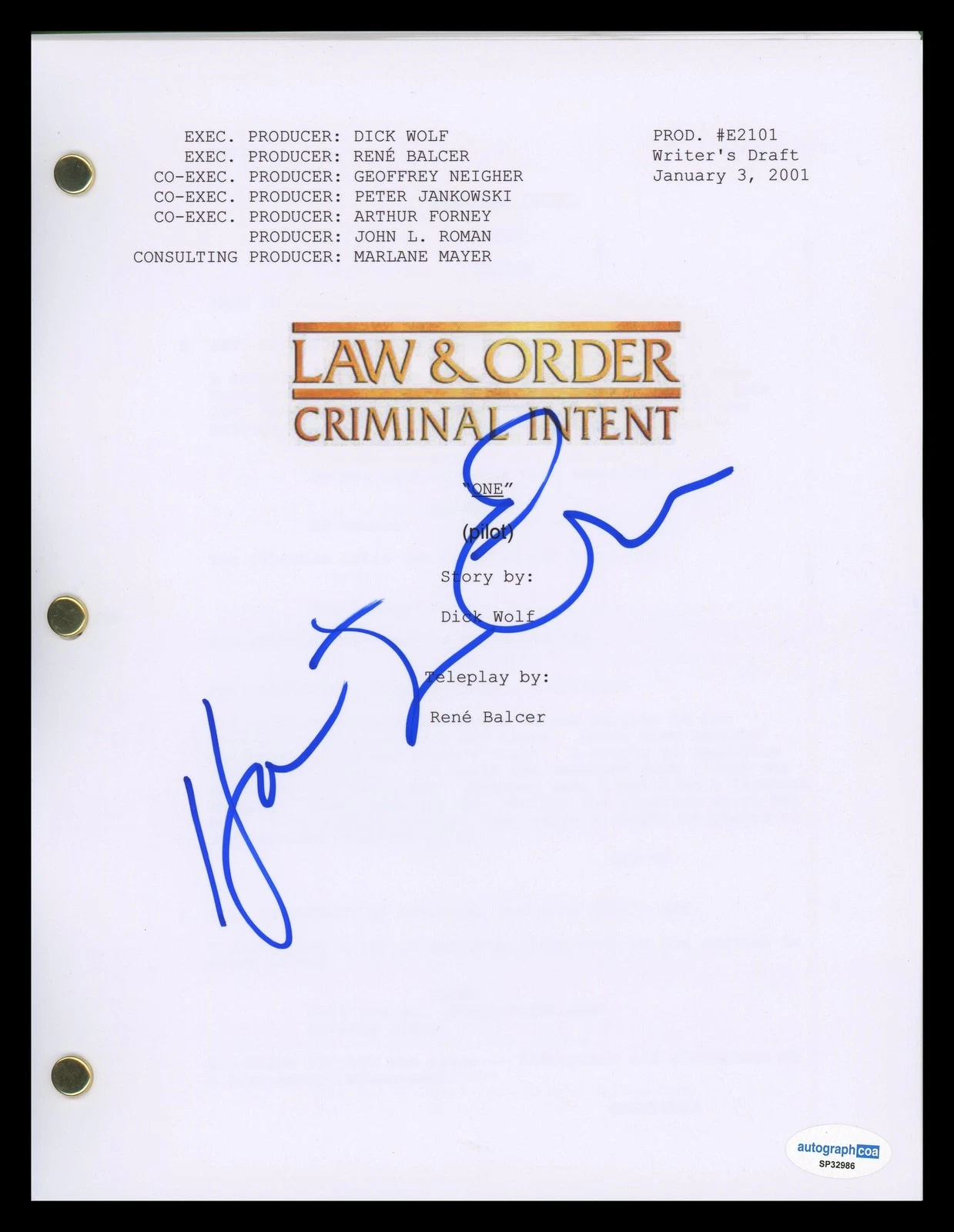
Kathryn Erbe is a highly regarded American actress best known for her compelling portrayals of complex, intellectual, and authoritative characters in television and film. Her career, which spans over four decades, is defined by her long-standing tenure as Detective Alexandra Eames on the iconic police procedural Law & Order: Criminal Intent and her significant contributions to independent cinema and theater.
Early Life and Foundations in Theater
Born in Newton, Massachusetts, Kathryn Erbe’s trajectory toward professional acting was rooted in formal training and a deep commitment to the craft of theater. She attended New York University’s Tisch School of the Arts, where she refined her ability to embody nuanced characters, a trait that would eventually define her screen presence.
Before achieving widespread recognition on television, Erbe was a prominent figure in the New York theater scene. Her work with the Steppenwolf Theatre Company in Chicago was particularly influential, providing her with the platform to tackle challenging roles in classic and contemporary plays. This background in ensemble-based, character-driven performance prepared her for the rigorous demands of episodic television. Her theater pedigree, which includes a Tony Award nomination for her performance in The Speed of Darkness (1991), established her reputation as a serious, dedicated artist capable of profound emotional resonance.
The Definitive Role: Alexandra Eames
For many, Kathryn Erbe is synonymous with the character of Detective Alexandra Eames. Joining Law & Order: Criminal Intent in 2001, Erbe portrayed a cynical, experienced, and highly intelligent investigator who served as the perfect foil to the eccentric Robert Goren, played by Vincent D'Onofrio.
The success of this partnership relied on the unspoken rapport between the two actors. Unlike other procedural dramas that focused heavily on the mechanics of the crime, Criminal Intent utilized Erbe’s understated style to ground the show’s more flamboyant narrative elements. Eames was portrayed as a "street-smart" detective whose personal history—including being the daughter of a police officer and navigating the loss of her husband—added layers of resilience and depth. Erbe’s portrayal was noted for its consistency and restraint; she rarely relied on histrionics, opting instead to convey Eames' internal state through subtle physical cues and sharp, deliberate delivery. Her tenure on the series lasted until the show's conclusion in 2011, making her one of the most recognizable faces in the Law & Order franchise.
Filmography and Breadth of Roles
While television provided stability and fame, Erbe’s filmography showcases her willingness to take on diverse and often challenging independent projects. Throughout the 1990s and 2000s, she appeared in films that ranged from psychological dramas to period pieces.
Some of her most notable film appearances include:
- What About Bob? (1991): An early comedic role that displayed her timing alongside Bill Murray and Richard Dreyfuss.
- Stir of Echoes (1999): A supernatural thriller where she played Maggie Witzky, a performance that highlighted her capability in high-tension, genre-based storytelling.
- Dream with the Fishes (1997): A gritty independent drama that solidified her reputation as an actress willing to push boundaries and explore darker, more complex thematic territory.
Her film choices demonstrate a clear preference for projects that prioritize character development over spectacle. This consistent selection has helped her maintain a "working actor" ethos, where the quality of the narrative arc often supersedes the prestige of a blockbuster budget.
Comparison of Career Phases
The following table outlines the distinct eras and primary focal points of Kathryn Erbe’s professional career, illustrating the evolution from stage success to television icon.
| Period | Primary Focus | Notable Achievement | Character Archetype |
|---|---|---|---|
| 1980s – 1990s | Theater & Indie Film | Tony Nomination (1991) | Dramatic Lead |
| 2001 – 2011 | Network Television | Detective Alexandra Eames | Procedural Professional |
| 2012 – 2026 | Episodic TV & Guest Roles | Continued Character Work | Authority / Mature Lead |
Crafting the Intellectual Detective
In the landscape of 21st-century police procedurals, the archetype of the "female detective" was often treated with tropes that focused on work-life balance or gender-based conflict. Kathryn Erbe chose a different path for Alexandra Eames. She approached the role with a focus on competence and professional autonomy. By stripping away extraneous emotional exposition, Erbe allowed the audience to respect Eames primarily for her intellect and her unwavering dedication to the law.
This performance style is indicative of her overall approach to acting: research, psychological preparation, and a deep respect for the script. Even in her guest roles on later series, such as How to Get Away with Murder or The Sinner, Erbe maintains this level of professional gravity. She is frequently cast as figures of authority—lawyers, judges, or high-ranking officers—because her onscreen presence commands a natural sense of gravitas and trustworthiness.
Challenges and Longevity in the Industry
Navigating a career in the entertainment industry for over 40 years requires more than just talent; it requires a strategic understanding of how roles change as an actress ages. Erbe has successfully transitioned from the youthful lead to the veteran character actor who anchors a narrative.
One of the significant challenges for actors in long-running television series is the risk of being typecast. While "Eames" is undoubtedly her most famous role, Erbe has mitigated the potential for typecasting by returning periodically to stage work and selecting guest roles that subvert the "detective" image. By keeping her professional identity rooted in the versatility she learned early on at the Steppenwolf, she has ensured that her career is not limited by the success of a single decade or a single character.
Frequently Asked Questions
Did Kathryn Erbe return to the Law & Order franchise after 2011?
Yes. Kathryn Erbe reprised her iconic role as Alexandra Eames in the 2021 revival of Law & Order: Criminal Intent's spin-off ecosystem, specifically appearing in Law & Order: Special Victims Unit. This return allowed fans to see an evolved version of the character, now operating in a different administrative capacity within the criminal justice system.
Is Kathryn Erbe still active in professional theater?
While she is primarily known for her television work, Erbe maintains a connection to the stage. She has frequently participated in New York theater workshops and off-Broadway productions throughout the last decade, prioritizing roles that offer creative challenges rather than commercial viability.
How did Kathryn Erbe prepare for the role of Detective Alexandra Eames?
Erbe has noted in interviews that her preparation involved observing the dynamic between detectives in real-world settings and focusing on the internal hierarchy of the NYPD. She worked closely with showrunner Dick Wolf’s production team to ensure that her police procedure and weapon handling were authentic, prioritizing realism over dramatic flair.
What is the significance of her work with the Steppenwolf Theatre Company?
The Steppenwolf Theatre Company is known for its raw, ensemble-based style. Working there allowed Erbe to develop an "acting from the inside out" technique. This training is the foundation of her ability to hold her own against intense co-stars, as it emphasizes active listening and reaction over performative acting.
Does Kathryn Erbe have a specific acting philosophy?
Erbe is widely characterized by her preference for "low-key" performance. She has frequently expressed in discussions regarding her craft that she is uninterested in stardom for its own sake, preferring roles that allow her to disappear into a character rather than playing a version of herself.
Pursuing a Career in Character Acting
For those interested in following a career path similar to that of Kathryn Erbe, the most practical step is to prioritize training that focuses on the fundamentals of performance—specifically, the ability to work within an ensemble. The industry frequently overlooks the importance of the "supporting" professional who provides the backbone for a story. By investing time in local theater, participating in workshop productions, and studying the nuances of character-driven scripts, aspiring actors can build the necessary range to sustain a long-term career. Focusing on the craft rather than the spotlight ensures that an actor remains employable and challenged throughout different phases of the industry.