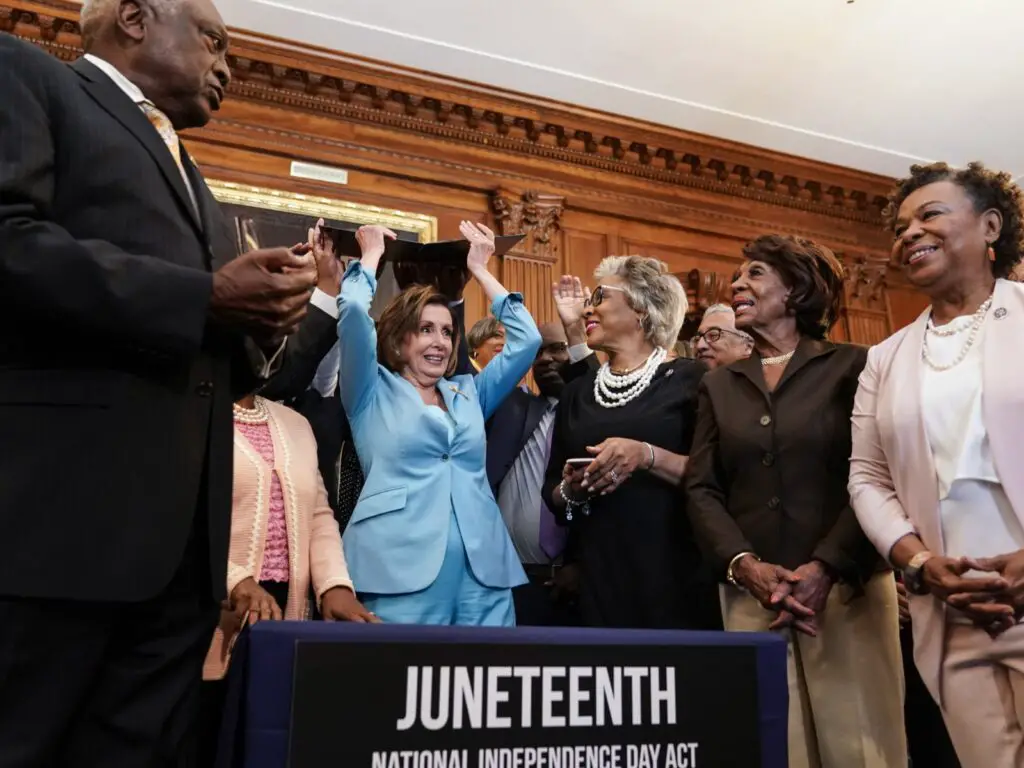
Juneteenth, observed annually on June 19, is a fully recognized federal holiday in the United States, commemorating the emancipation of enslaved African Americans. Signed into law in 2021, the holiday triggers mandatory closures for non-essential federal government operations, federal reserve banks, and major financial exchanges, significantly impacting liquidity and settlement timelines across the national economy.
The Legislative Status of Juneteenth National Independence Day
The legal foundation of the holiday rests upon the Juneteenth National Independence Day Act, which was signed into law on June 17, 2021. As of 2026, this status remains unchanged, maintaining its designation as a legal public holiday under Title 5 of the United States Code. The statute mandates that if June 19 falls on a Saturday, the holiday is observed on the preceding Friday; if it falls on a Sunday, it is observed on the following Monday.
The designation serves as a formal acknowledgment of the events of June 19, 1865, when Major General Gordon Granger arrived in Galveston, Texas, to announce the end of the Civil War and the liberation of the last remaining enslaved people in the region. By elevating this to a federal status, the government integrates the holiday into the federal calendar alongside established days such as Independence Day and Veterans Day. For federal employees, this translates into a paid day off, and for federal offices, it necessitates a cessation of public-facing services.
Financial Market Closures and Liquidity Implications
The most immediate economic impact of the Juneteenth holiday is the broad synchronization of financial market closures. Because the holiday is federally recognized, the Federal Reserve System closes its facilities. Consequently, the major exchanges—including the New York Stock Exchange (NYSE) and the Nasdaq—suspend regular trading sessions.
This closure affects several key financial mechanisms:
- Settlement Cycles: With the transition to T+1 settlement cycles in the modern market, a holiday mid-week can disrupt the standard delivery-versus-payment timeline. Traders and clearing houses must account for the lack of processing on June 19, effectively pushing settlement deadlines forward by one business day.
- Bond Markets: The Securities Industry and Financial Markets Association (SIFMA) publishes annual holiday recommendations, consistently designating Juneteenth as a full market holiday for fixed-income trading in the United States.
- Banking Infrastructure: The Federal Reserve’s Automated Clearing House (ACH) service and the Fedwire Funds Service do not operate on this day. Organizations that rely on these systems for payroll, vendor payments, or interbank transfers must schedule their transactions to bypass the holiday to ensure timely execution.
Economic Impact Analysis
The economic ripple effects of the Juneteenth National Holiday are twofold: they represent both the direct costs associated with government administrative downtime and the broader cultural-economic shift that accompanies a federal holiday.
From a macroeconomic perspective, a federal holiday creates a temporary reduction in daily economic output, particularly in sectors tied to government contracting or public administration. However, this is balanced by the increase in consumer spending associated with holiday observance. Retailers, local businesses, and hospitality sectors often experience a shift in consumer activity patterns during the week of June 19.
Moreover, the formalization of the holiday has led to an increase in corporate adoption. Many private-sector employers now provide Juneteenth as a paid company holiday, which influences labor costs and operational scheduling. While businesses that operate globally or in industries requiring continuous service (such as manufacturing or emergency services) must account for additional holiday pay premiums, the trend toward widespread adoption underscores a shift in professional norms and corporate social responsibility frameworks.
Comparison of Federal Holiday Operational Impacts
| Entity/Service | Operational Status on Juneteenth | Impact Level |
|---|---|---|
| Federal Government Offices | Closed | High |
| Federal Reserve Banks | Closed | High |
| NYSE / Nasdaq | Closed | High |
| US Postal Service | Suspended (Mail Delivery) | Moderate |
| Commercial Banks | Discretionary (Branches often closed) | Moderate |
| Retail/Private Sector | Optional (Increasingly paid holiday) | Low to Moderate |
Addressing Operational Challenges: Payroll and Procurement
For businesses, the most significant risk associated with the holiday is the failure to adjust workflows for the federal closure. Payroll departments that do not account for the federal bank holiday often face delays in direct deposits. If a payroll cycle aligns with June 19, companies must initiate the payment process at least 24 to 48 hours earlier to ensure funds are credited before the holiday closure begins.
Procurement and supply chain management teams also face challenges. Because government administrative offices are shuttered, the processing of permits, contract approvals, and regulatory filings is frozen. Companies engaged in high-volume public procurement must anticipate these delays during the June timeframe to avoid potential bottlenecks in their project timelines.
Frequently Asked Questions
Does the stock market close for Juneteenth?
Yes, the major United States stock exchanges, including the NYSE and Nasdaq, observe Juneteenth as a standard market holiday. There is no trading conducted on the floors or through electronic systems during the recognized federal holiday hours.
Are commercial banks open on Juneteenth?
While federal reserve banks are strictly closed, the operations of commercial banks are at the discretion of the individual institution. However, because the Federal Reserve’s clearing services are unavailable, most commercial banks close their physical branches and suspend check processing services on this day.
How does the holiday affect T+1 settlement rules?
Under T+1 (Trade date plus one business day) settlement rules, any trade executed on the business day preceding June 19 will have its settlement date shifted. The holiday is not counted as a business day, meaning the settlement timeline effectively "skips" the holiday, extending the wait time for the final exchange of securities and cash.
Are federal government services completely unavailable?
Non-essential services—such as passport processing, IRS assistance, and standard administrative functions—are suspended. Essential services, including national security operations, emergency responders, and critical infrastructure management, continue to function at operational capacity, though employees in these roles may receive holiday premium pay.
Is the Juneteenth holiday observed on a different day if it falls on a weekend?
Yes. If June 19 falls on a Saturday, it is observed on the preceding Friday. If it falls on a Sunday, it is observed on the following Monday, ensuring that federal workers receive a day of observance that aligns with the spirit of the federal mandate.
Recommendations for Business Operations
To mitigate risks associated with the holiday, organizations should perform a "calendar review" at the start of each fiscal year. Identify the specific day of the week on which June 19 falls and update internal operational calendars accordingly. Ensure that all automated financial workflows—specifically payroll, accounts payable, and liquidity management systems—are configured to pause or execute in advance of the holiday. For international firms, confirm that cross-border transaction protocols acknowledge the U.S. holiday, as foreign counterparts may not observe the same market closures, leading to potential reconciliation discrepancies.