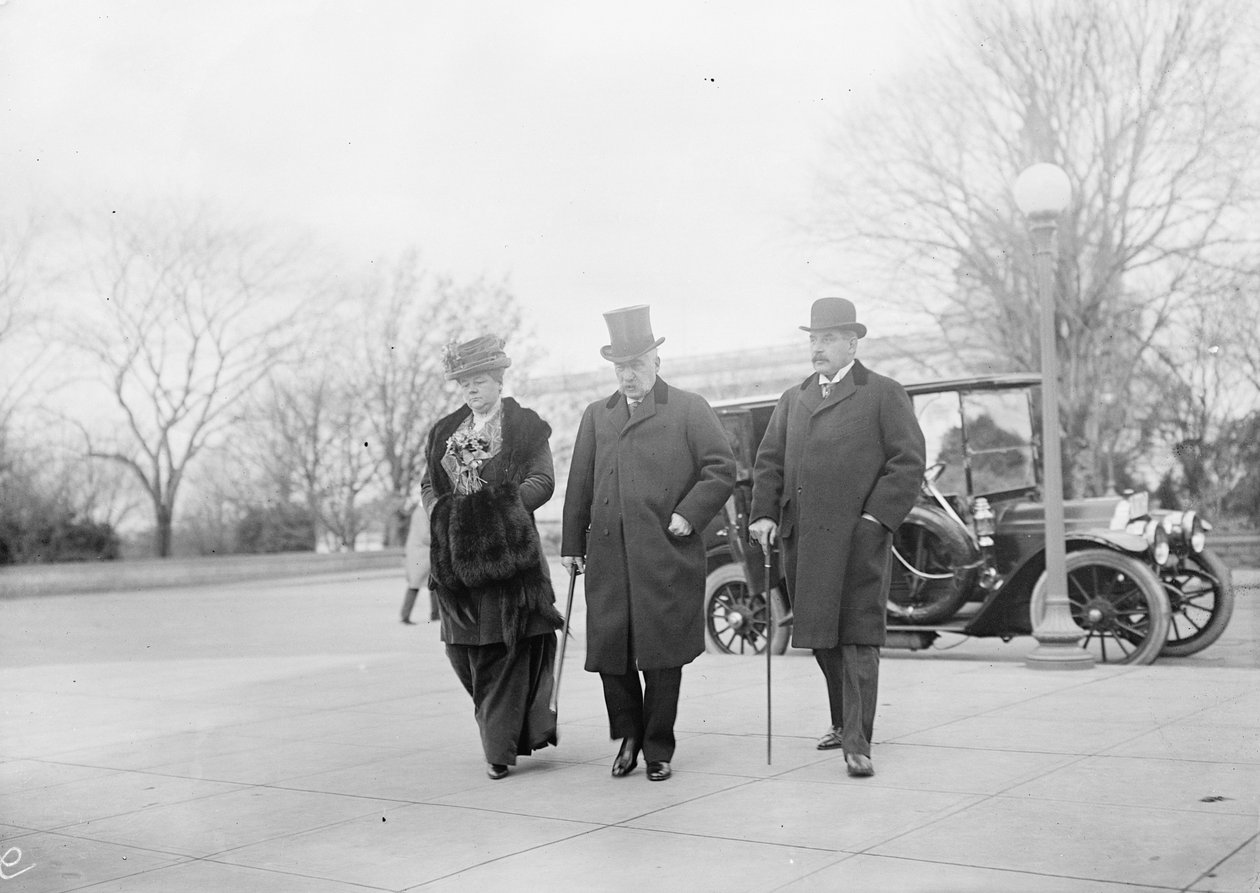
John Pierpont Morgan built his immense wealth and financial dominance by acting as the primary capital conduit between European investors and expanding American enterprise. Through private merchant banking, he consolidated chaotic, over-leveraged sectors—primarily railroads and industrial manufacturing—by forcing corporate reorganizations, eliminating price competition, securing executive board representation, and taking substantial equity stakes and underwriting fees during major corporate mergers.
The Financial Foundation: Merchant Banking and European Capital
John Pierpont Morgan did not start from poverty; he was born into financial privilege as the son of Junius Spencer Morgan, a prominent international banker based in London. However, Morgan transformed his family’s existing mercantile connections into an unprecedented global financial network. After studying in Europe and gaining early experience at Duncan, Sherman & Company, Morgan established his own merchant banking firm in New York. His primary competitive advantage was his direct line to British and European capital markets, which were desperate for high-yielding investments during the 19th-century expansion of the United States.
At the time, American capital markets were fragmented, prone to wild speculation, and lacked institutional trust. European investors were eager to participate in American growth but were frequently burned by fraudulent ventures, phantom railroad stock, and sudden defaults. Morgan established a strict personal reputation for financial orthodoxy, transparency, and accountability. Foreign investors realized that a project underwritten by Morgan carried an implicit guarantee of fiscal discipline.
Through his firm Drexel, Morgan & Company (which later became J.P. Morgan & Co. in 1895), Morgan charged lucrative fees for placing American securities with European buyers. Rather than acting as a passive broker, he operated as an active custodian of capital. He monitored how corporations used raised funds, audited financial statements, and insisted on protecting investor returns. This positioning allowed him to accumulate vast initial capital reserves, which he subsequently deployed to buy under-priced assets during economic downturns and secure controlling equity stakes across North American commerce.
"Morganization": Restructuring the American Railroad Network
By the 1870s and 1880s, the American railroad system was crippled by ruinous competition, speculative overbuilding, fraudulent stock watering, and rate wars. Competing lines repeatedly slashed passenger and freight tariffs below operating costs to bankrupt rivals, resulting in widespread defaults that threatened both domestic commerce and international investor confidence. Morgan recognized that an unmanaged free market in capital-intensive infrastructure was self-destructive to long-term profitability.
Morgan stepped in to pioneer a systematic restructuring process that corporate historians termed "Morganization." The mechanism was straightforward but execution-heavy:
Debt Restructuring: Morgan acquired controlling interest or received proxies from desperate shareholders of insolvent or struggling rail lines.
Capital Reduction: He forced bondholders to accept lower interest rates or exchange debt for equity, instantly reducing the enterprise's fixed annual costs.
Market Allocation: He compelled rival railroad executives onto his yacht, the Corsair, or into his Madison Avenue residence, forcing them to sign binding agreements that divided traffic territories and fixed minimum shipping rates.
Governance Control: In exchange for providing fresh capital, Morgan demanded seats on the board of directors and established voting trusts that placed long-term strategic control directly in the hands of his partners.
Vulnerable / Debt-Laden Railroads
Capital Infusion & Debt Cutbacks
Elimination of Price-Cutting Wars
Board Seats & Voting Trusts (J.P. Morgan)
Restored Profitability & Ongoing Fees
His work with the Albany and Susquehanna Railroad, the Erie Railroad, the Philadelphia and Reading, and the New York Central demonstrated the financial power of this model. By 1889, Morgan had convened the Interstate Commerce Railway Association to stabilize rates nationwide. By the late 1890s, Morgan’s firm controlled or heavily influenced over 50,000 miles of American railway—roughly one-sixth of the entire national network—generating massive, reliable dividend income and capital appreciation for his firm.
Industrial Consolidation: Creating Corporate Giants
Once Morgan demonstrated that horizontal integration and financial discipline could stabilize railroads, he applied the same blueprint to manufacturing and technology. During the late 19th century, rapid technological advances had led to industrial overcapacity. Factories produced more goods than the market could absorb at profitable price levels, leading to severe price wars similar to those in the railroad sector.
Morgan solved this structural volatility through large-scale industrial consolidation—creating enormous corporations known as "trusts" or horizontal monopolies that dominated their respective markets.
The Formation of General Electric (1892)
Morgan was an early backer of Thomas Edison and funded the Edison Electric Light Company. However, as the electrical power sector expanded, Edison faced intense competition from George Westinghouse and the Thomson-Houston Electric Company. Realizing that continuous patent litigation and price cutting were eroding profit margins, Morgan orchestrated a merger in 1892 between Edison General Electric and Thomson-Houston to form the General Electric Company (GE). In doing so, Morgan marginalized Edison’s preference for direct current (DC) in favor of alternating current (AC) efficiency, streamlined production, and secured dominant control over the nation’s electric power grid equipment.
The Birth of U.S. Steel (1901)
Morgan’s crowning industrial achievement occurred in 1901 with the buyout of Andrew Carnegie’s steel empire. Carnegie was the low-cost producer of steel in America, but he threatened to build his own finished-goods tube and wire mills, which would have devastated competing manufacturers financed by Morgan.
Recognizing the potential for an all-out industrial price war, Morgan authorized Charles M. Schwab to negotiate a purchase price with Carnegie. Carnegie wrote his price on a slip of paper: $480 million (equivalent to hundreds of billions in modern currency). Morgan accepted without hesitation.
Morgan combined Carnegie Steel with dozens of other steel, iron, and transportation companies—including Federal Steel, National Steel, and the Rockefeller iron ore properties—to create the United States Steel Corporation. Capitalized at $1.4 billion, U.S. Steel became the world’s first billion-dollar corporation, controlling roughly 60 percent of all steel production in the United States. Morgan’s firm netted an estimated $62 million in syndicate fees alone for structuring the deal, while retaining massive blocks of stock and total control over executive governance.
Key Restructurings and Financial Deals
The scale of Morgan’s transactions redefined the structure of modern corporate finance. Below is a comparative breakdown of major corporate interventions engineered by Morgan’s investment syndicate:
| Entity / Deal | Year | Primary Industry | Mechanism / Strategy | Strategic & Financial Result |
|---|---|---|---|---|
| New York Central Railroad | 1879 | Transportation | Placed 200,000 shares with British investors without depressing market price. | Secured first major board seat; proved value of international placement power. |
| West Shore Railroad Reorganization | 1885 | Transportation | Leased line to New York Central; eliminated destructive parallel competition. | Established the "Morganization" template of territorial rate-fixing. |
| General Electric (GE) | 1892 | Electrical Manufacturing | Merged Edison General Electric with Thomson-Houston. | Created a dominant electrical monopoly; reduced patent and pricing wars. |
| U.S. Treasury Gold Syndicate | 1895 | Sovereign Finance | Contracted with President Cleveland to supply $62 million in gold. | Restored U.S. gold reserves; earned high spread and international acclaim. |
| Federal Steel Company | 1898 | Heavy Industry | Merged secondary steel mills and ore deposits to challenge Carnegie. | Laid structural foundation for total market consolidation. |
| United States Steel Corp. | 1901 | Heavy Industry | Purchased Carnegie Steel for $480M; merged 10 major steel producers. | Created world's first $1.4B enterprise; captured 60% U.S. market share. |
| International Mercantile Marine (IMM) | 1902 | Transatlantic Shipping | Combined major transatlantic steamship lines (including White Star Line). | Mixed success due to over-capitalization, but demonstrated global reach. |
Financial Intermediation: How Morgan Monetized Structural Control
A common misconception is that Morgan accrued his fortune purely through cash reserves or sole ownership of physical assets like factories and rail lines. In reality, J.P. Morgan’s personal net worth at his death in 1913 was estimated at around $80 million (excluding his vast art collection)—a sum substantially smaller than contemporary titans like John D. Rockefeller or Andrew Carnegie. Rockefeller famously remarked, "To think, he wasn't even a rich man."
Instead of relying solely on equity ownership, Morgan built wealth through financial intermediation and institutional leverage. His monetization strategies relied on four distinct mechanisms:
- Underwriting Fees and Syndicate Spreads: When launching a massive consolidation like U.S. Steel, Morgan assembled syndicates of banks to guarantee stock purchases. The syndicate charged substantial fees for underwriting the issuance risks and taking companies public.
- Capital Appreciation of Retained Shares: Morgan routinely kept large blocks of common and preferred stock in newly formed conglomerates as part of his compensation. As these merged companies achieved pricing power and cost efficiencies, their stock values soared.
- Control of Bank Deposits: Through J.P. Morgan & Co. and affiliated institutions like the Guaranty Trust Company and First National Bank of New York, Morgan commanded billions of dollars in commercial and institutional deposits. He redirected these deposits toward high-yielding enterprise loans and strategic acquisitions.
- Board Seats and Directorships: By maintaining interlock directorships across banks, insurance companies, railroads, and industrial firms, Morgan ensured that corporate purchases, shipping contracts, and refinancing deals were systematically funneled through his own financial network.
De Facto Central Banker: The Panics of 1893 and 1907
Before the creation of the Federal Reserve System in 1913, the United States lacked a central monetary authority capable of acting as a lender of last resort. During severe financial crises, J.P. Morgan personally stepped into that void, using his immense personal prestige and capital control to stabilize the entire nation's financial system—a role that further solidified his influence and wealth.
The Gold Reserve Crisis of 1895
Following the Panic of 1893, a run on the nation’s gold supply threatened to force the U.S. government off the gold standard. President Grover Cleveland faced financial collapse. Morgan traveled to Washington and cited an obscure 1862 Civil War statute that allowed the Secretary of the Treasury to purchase gold coin without public bidding.
Morgan formed an international private banking syndicate that supplied the U.S. Treasury with 3.5 million ounces of gold, half of it sourced from Europe. In exchange, the syndicate received U.S. government bonds at a favorable price, which they resold to investors at a massive profit, demonstrating that a private banker held more financial credit than the sovereign government itself.
The Panic of 1907
In October 1907, a failed corner on the stock of the United Copper Company triggered a systemic run on New York trust companies. With major institutions failing and the New York Stock Exchange facing imminent shutdown due to liquidity shortages, Morgan locked New York’s top bank executives inside his Library on 36th Street.
- 1907 Banking Run
- Morgan Locks Bankers in 36th Street Library
- Audits Solvent Trust Companies Overnight
- Directs $30M+ Liquidity Injection to NYSE & Banks
- Market Stabilized; Federal Reserve Concept Born
He audited their books overnight, decided which institutions were solvent, and forced the healthy bank leaders to pledge over $30 million to rescue vulnerable trusts, clear stock exchange trades, and keep the City of New York from default. His decisive leadership ended the panic, but the concentration of power displayed by one private citizen alarmed the public, directly accelerating the passage of the Federal Reserve Act in 1913.
Modern Lessons in Capital Allocation and Deal Structuring
Understanding how J.P. Morgan built his wealth offers durable lessons for corporate finance, investment analysis, and private equity dealmaking:
1. Capital Discipline Trumps Unbridled Growth
Morgan proved that rapid revenue growth without profit margins leads to systemic enterprise failure. When evaluating modern competitive sectors, capital allocation strategies that prioritize sustainable pricing power and reduced fixed leverage over unconstrained expansion reflect Morgan's core principle of capital conservation.
2. Value Creation Through Rational Consolidation
Morgan’s strategy of combining fragmented, price-slashing competitors into unified corporate entities remains the foundational thesis of modern private equity roll-ups. By eliminating redundant corporate overhead, streamlining supply chains, and establishing operational efficiency, financial sponsors unlock enterprise value that fragmented assets cannot generate independently.
3. The Power of Credibility in Financial Intermediation
The ultimate currency J.P. Morgan traded was not physical gold or paper equity, but institutional trust. Foreign capital flowed to Morgan because he prioritized risk mitigation and governance oversight. For modern institutional investors and fund managers, maintaining strict fiduciary standards and governance rights provides a long-term moat against market volatility.
Frequently Asked Questions
What was "Morganization" in simple terms?
"Morganization" was J.P. Morgan’s process of taking over troubled or bankrupt companies—primarily railroads—restructuring their debt, cutting fixed costs, eliminating destructive price competition through territorial agreements, and placing his partners on the board of directors to enforce long-term management discipline.
How much was J.P. Morgan worth compared to John D. Rockefeller?
At his death in 1913, J.P. Morgan’s estate was valued at roughly $80 million (around $2.5 billion today, excluding his art collection). By contrast, John D. Rockefeller’s fortune exceeded $900 million at its peak. Morgan’s power lay not in the sheer volume of his personal liquid assets, but in his operational control over trillions of dollars of client, institutional, and corporate capital.
Did J.P. Morgan own U.S. Steel outright?
No. Morgan did not own U.S. Steel as a sole proprietor. He organized the financial syndicate that bought out Andrew Carnegie and combined multiple steel producers into a single holding company. Morgan's firm retained major equity stakes, earned millions in advisory and underwriting fees, and controlled the board of directors, but ownership was distributed among thousands of public shareholders.
Why was J.P. Morgan investigated by the Pujo Committee?
In 1912, the U.S. House of Representatives formed the Pujo Committee to investigate the existence of a secret "Money Trust"—a small group of Wall Street financiers led by J.P. Morgan who allegedly controlled American banking, industry, and transportation through interlocking directorships and concentrated credit reserves. The committee's findings fueled public demand for anti-trust regulation and the creation of the Federal Reserve.
What was J.P. Morgan’s role in creating the Federal Reserve?
Although Morgan died months before the Federal Reserve Act was officially passed in December 1913, his actions during the Panic of 1907 convinced lawmakers that the U.S. financial system could no longer rely on a single private banker to act as a lender of last resort. The panic triggered government studies that ultimately resulted in the creation of a public-private central bank.
Recommended Strategy for Analyzing Historical Corporate Consolidations
To properly analyze historic corporate consolidations like those executed by J.P. Morgan, financial analysts and researchers should evaluate deals using a structured framework:
- Examine the Pre-Deal Market Structure: Identify whether the industry suffered from overcapacity, high fixed costs, price-slashing competition, or unsustainable debt loads.
- Review the Financial Engineering Mechanism: Assess how debt was reduced, how equity swaps were negotiated, and what underwriting fees were captured by the syndicate sponsors.
- Analyze Post-Merger Operational Efficiency: Measure whether the newly formed entity achieved margin expansion through economies of scale, reduced administrative overhead, or pricing power.
- Evaluate Regulatory and Legal Impact: Review how historic anti-trust policies (such as the Sherman Antitrust Act of 1890) reacted to market concentration, setting precedents for modern enterprise valuation and merger clearance.