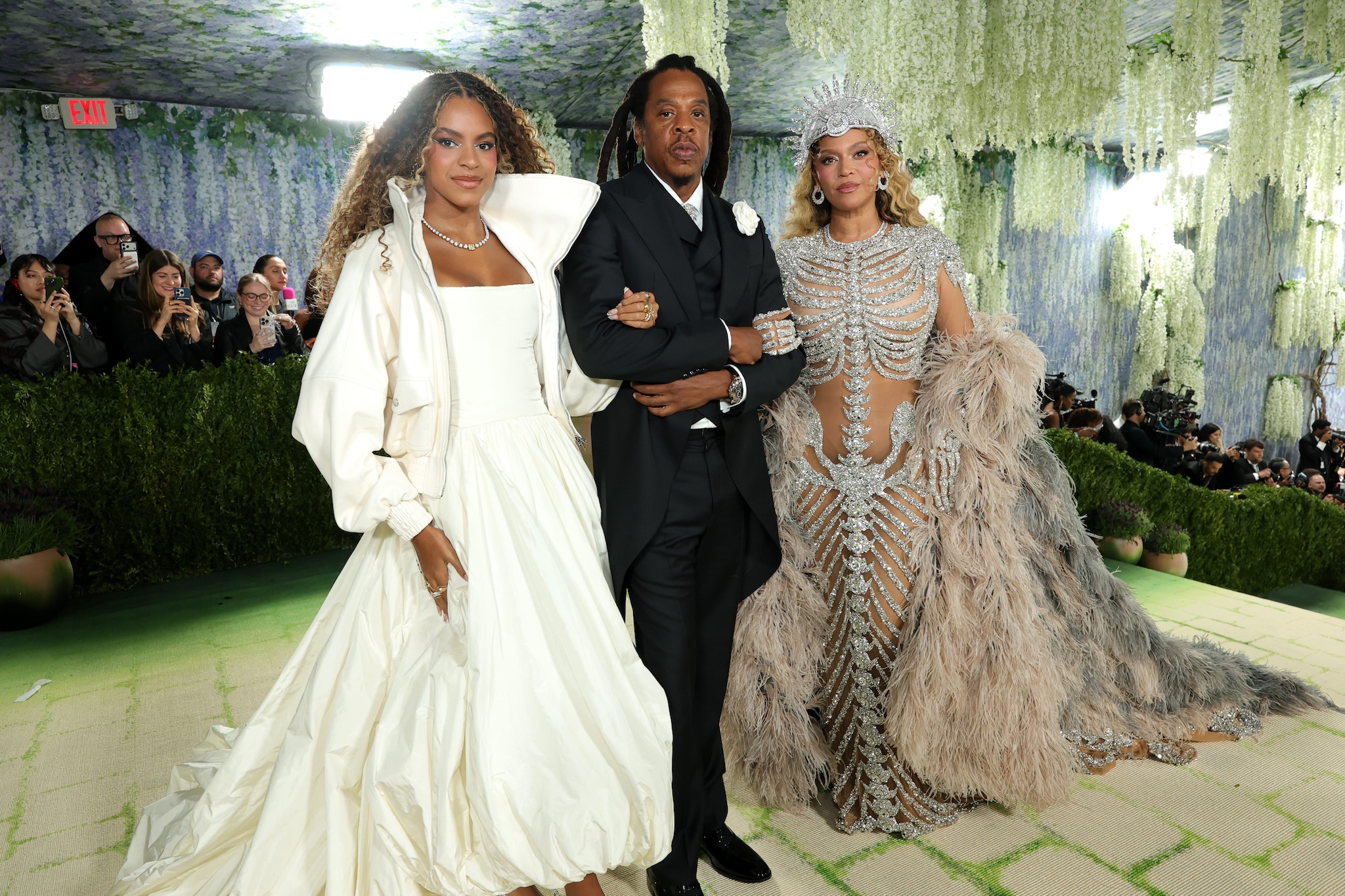
Blue Ivy Carter has appeared on several of Jay-Z’s most significant tracks, beginning with her recorded cries on "Glory" in 2012 and progressing to more complex vocal contributions on the album 4:44 and the collaborative project Everything Is Love. These features serve as a sonic timeline of her development and highlight Jay-Z’s thematic focus on family legacy and generational wealth.
The Historic Debut: "Glory" (2012)
The most famous and historically significant collaboration between Jay-Z and his eldest daughter occurred just days after her birth. Released in January 2012, "Glory" was a standalone single produced by Pharrell Williams that served as an emotional tribute to the arrival of Blue Ivy. The track is notable for its raw vulnerability, as Jay-Z discusses the couple’s previous struggles with pregnancy loss before celebrating the "most beautiful thing in this world."
Blue Ivy is officially credited on the song as "B.I.C.", making her the youngest person ever to appear on a Billboard chart. At just two days old, her coos and cries were recorded and mixed into the song's outro. This was not merely a sentimental gesture; it established a precedent for her involvement in the family business from infancy.
The song peaked on the Billboard Hot R&B/Hip-Hop Songs chart, and its cultural impact was immediate. It signaled a shift in Jay-Z’s persona from the "hustler" and "mogul" to a protective father concerned with the continuity of his name. For technical enthusiasts, the integration of an infant’s vocalizations into a high-fidelity studio track required careful EQ balancing to ensure the "organic" sounds of the hospital room didn't clash with Pharrell’s lush, soulful production.
The 4:44 Era: "Blue's Freestyle" and "Legacy"
By 2017, Blue Ivy’s role in Jay-Z’s music evolved from involuntary sounds to active participation. On his critically acclaimed thirteenth studio album, 4:44, she appears on two distinct tracks that highlight different facets of her growing personality.
Blue's Freestyle / We Family
Included as a bonus track on the physical and Deluxe editions of 4:44, "Blue's Freestyle" is exactly what the title suggests: a nearly minute-long rap performance by a then five-year-old Blue Ivy. Unlike her debut on "Glory," this was a conscious performance. The lyrics, while naturally abstract given her age, contained the viral line, "Never seen a ceiling in my whole life," which many critics interpreted as a metaphor for the limitless potential of the next generation of the Carter-Knowles dynasty.
From a technical standpoint, the track demonstrated Blue Ivy's natural sense of rhythm. Producers noted that her ability to stay "on beat" with the looped percussion was advanced for a child of five, sparking early conversations about her eventual entry into the music industry as a professional.
Legacy
"Legacy" serves as the closing track of the standard edition of 4:44, and it begins with Blue Ivy asking a poignant question: "Daddy, what's a will?" This spoken-word intro sets the stage for one of Jay-Z’s most introspective songs, where he outlines his plans for his assets, his art, and his children's future. Her voice acts as the catalyst for the entire narrative, grounding the high-level financial discussions in a personal context. The track samples Donny Hathaway’s "Someday We’ll All Be Free," creating a somber yet hopeful atmosphere that bridges the gap between the civil rights era and the modern quest for Black economic empowerment.
The Carters and "Everything Is Love": "BOSS" (2018)
In 2018, Jay-Z and Beyoncé released their joint album, Everything Is Love, under the name The Carters. While the album focused heavily on their marital reconciliation and joint success, Blue Ivy made a memorable cameo on the track "BOSS."
On this track, Blue Ivy appears during the outro to give a shoutout to her younger siblings, Rumi and Sir Carter. She says, "Shoutout to Rumi and Sir, love, Blue," followed by a playful laugh. While brief, this appearance was strategically placed on a song that celebrates the couple’s status as industry "bosses." It reinforced the idea that the "brand" was no longer just two individuals, but a full family unit.
The production on "BOSS" features heavy brass and a triumphant beat, and Blue’s inclusion provides a lighthearted contrast to the song’s competitive lyrics regarding net worth and corporate independence. By 2018, these appearances had become a hallmark of Jay-Z's later work, serving as "Easter eggs" for fans who followed the family’s journey.
Comparative Overview of Blue Ivy Carter's Featured Appearances
The following table summarizes the primary tracks where Blue Ivy Carter is featured alongside Jay-Z, detailing her specific contribution and the project's release year.
| Year | Song Title | Album / Project | Nature of Contribution | Official Credit |
|---|---|---|---|---|
| 2012 | Glory | Standalone Single | Newborn cries and heartbeat | B.I.C. |
| 2017 | Blue's Freestyle | 4:44 (Bonus Track) | Full rap verse/freestyle | Blue Ivy Carter |
| 2017 | Legacy | 4:44 | Spoken word intro | Uncredited (Vocal appearance) |
| 2018 | BOSS | Everything Is Love | Spoken word outro | Uncredited (Vocal appearance) |
| 2019 | Brown Skin Girl | The Lion King: The Gift | Intro/Outro and Lead Vocals | Blue Ivy Carter |
Note: While "Brown Skin Girl" is primarily a Beyoncé track, Jay-Z is a featured artist and co-writer on the project, making it a significant part of their shared family discography.
The Technical and Legal Evolution of the "B.I.C." Credit
The decision to credit Blue Ivy as "B.I.C." on "Glory" was more than a stylistic choice; it had significant implications for royalty distribution and intellectual property. By crediting her on a Billboard-charting song, Jay-Z ensured that she was recognized as a professional entity from birth.
In the years following her debut, the "Blue Ivy Carter" brand became a subject of legal trademarking. This allowed the family to protect her name for use in various commercial ventures, including music, entertainment services, and consumer goods. When she appeared on 4:44, the credits were more formalized, reflecting her transition from a "subject" of the music to a "contributor."
For audio engineers working on these tracks, the challenge often involved capturing "found sound" in non-studio environments. "Glory" famously used sounds recorded in a hospital setting, which required significant noise reduction and isolation techniques to make the audio suitable for a professional mix. By the time of the 4:44 recordings, Blue Ivy was recorded using professional-grade microphones, likely the Sony C-800G or Telefunken ELA M 251, which are staples in Jay-Z’s recording sessions.
Cultural Impact and Global Recognition
Blue Ivy’s features on Jay-Z’s songs have contributed to her becoming one of the most decorated young individuals in entertainment history. Her involvement in the broader Carter-Knowles musical ecosystem led to her winning a Grammy Award for Best Music Video for "Brown Skin Girl" at age nine.
These features have also sparked a broader conversation in the music industry about "nepo-babies" and the ethics of child stardom. However, Jay-Z has consistently framed her involvement as an apprenticeship. In various interviews, he has emphasized that he does not force her into the booth; rather, she is a constant presence in his creative environment and often asks to participate when she feels inspired by a beat.
The public's perception of these features has shifted over time. Initially viewed as a "gimmick" or a cute addition to a song, Blue Ivy’s contributions are now analyzed with the same scrutiny as any other featured artist. Her "ceiling" line in "Blue's Freestyle" is frequently cited in hip-hop forums as a clever bit of wordplay, regardless of whether it was coached or spontaneous.
Does Blue Ivy have a Grammy for a Jay-Z song?
No, her Grammy win is currently for "Brown Skin Girl," which is a collaboration with her mother, Beyoncé, Wizkid, and Saint Jhn. While Jay-Z was a major part of the Lion King: The Gift project, the award itself is not for a song where Jay-Z is the primary credited artist.
What was the first song Blue Ivy ever appeared on?
The first song was "Glory," released in January 2012. She was only two days old when her cries were recorded for the track, which earned her a Guinness World Record as the youngest person to have a song on a Billboard chart.
Is Blue Ivy's rap on "4:44" improvised?
Jay-Z has indicated in interviews that "Blue's Freestyle" was largely spontaneous. She was reportedly wearing headphones and rapping over the beat for five minutes, and the producers edited down the best portions into the 45-second clip found on the album.
Why is she credited as B.I.C. on some songs?
"B.I.C." stands for Blue Ivy Carter. In 2012, this was used as a way to give her credit on the Billboard charts while maintaining a slight degree of privacy or stylistic flair. In later years, she has been credited by her full name.
Are there any other unreleased songs featuring Blue Ivy?
While there are likely many recordings in the Roc Nation archives, only the tracks on Glory, 4:44, and Everything Is Love are officially recognized as part of Jay-Z's commercial discography featuring his daughter.
Following the Carter Legacy
To fully appreciate the evolution of Blue Ivy’s features, listeners should start with "Glory" and move chronologically through "Legacy" and "Blue's Freestyle." This progression provides a unique window into the father-daughter relationship and the literal sound of a child growing up within the world of high-stakes music production. As of 2026, these early recordings remain foundational texts for understanding the Carter family's impact on 21st-century hip-hop. For those interested in the technical side, pay close attention to the transitions between the spoken-word sections and the primary verses, which demonstrate the high-level mixing standards maintained by Jay-Z’s long-term engineers.