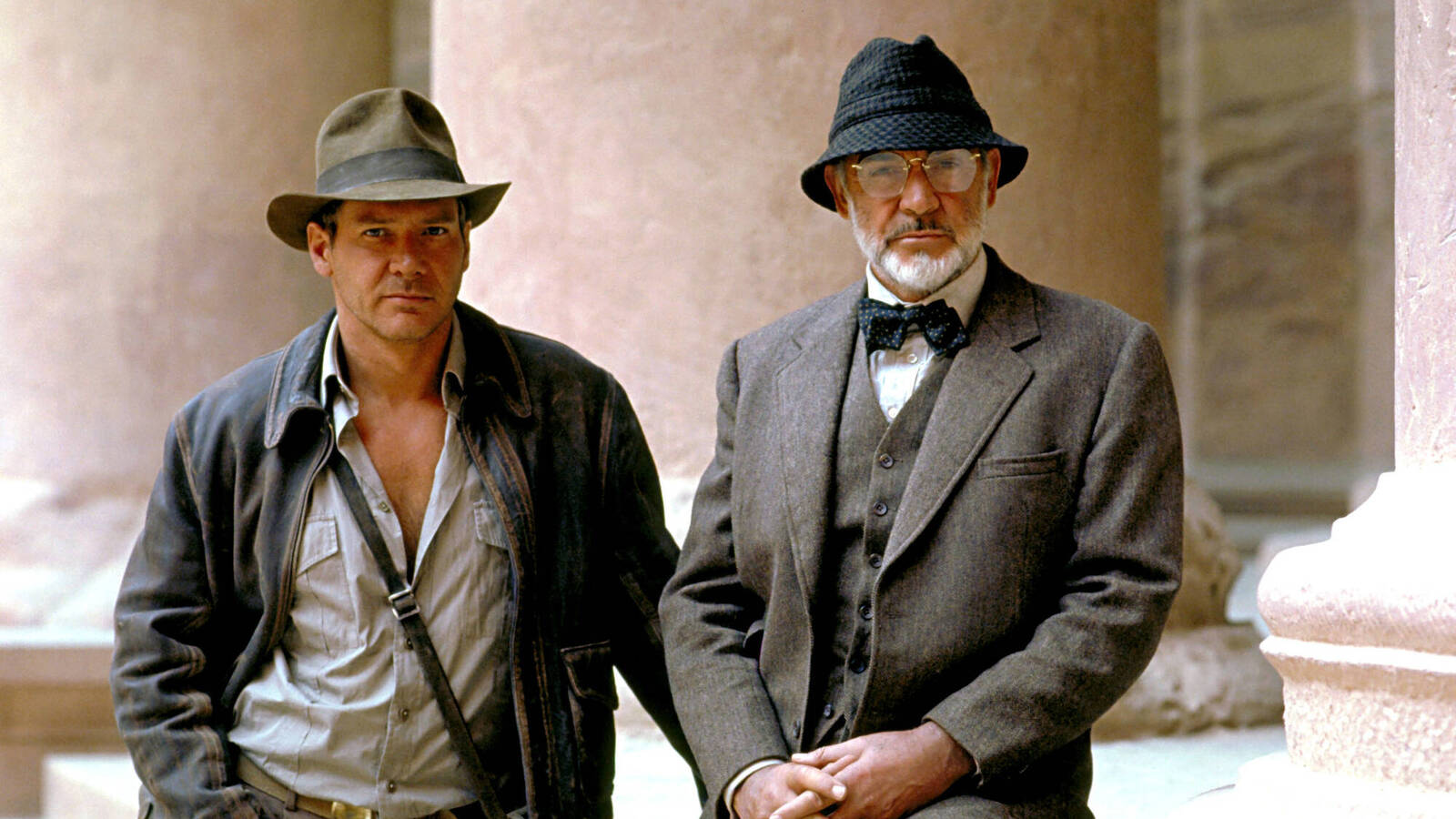
In official Indiana Jones canon, Indiana Jones' son, Mutt Williams (born Henry Jones III), died in combat during the Vietnam War after enlisting in the United States Army. His death occurs off-screen between the events of Indiana Jones and the Kingdom of the Crystal Skull (2008) and Indiana Jones and the Dial of Destiny (2023).
The Fate of Mutt Williams: How Indiana Jones' Son Died in Canon
The definitive answer to the fate of Mutt Williams is revealed during the events of the 2023 feature film Indiana Jones and the Dial of Destiny. Set primarily in 1969 against the backdrop of the Apollo 11 moon landing celebrations and the escalating Vietnam War, the film explicitly addresses what happened to the character following his introduction fifteen years earlier.
During a quiet, emotionally pivotal scene between Indiana Jones (Harrison Ford) and Helena Shaw (Phoebe Waller-Bridge), Indy reveals that his son, born Henry Jones III, enlisted in the United States military—specifically the U.S. Army—to fight in the Vietnam War. Indy explains that Mutt joined the armed forces largely out of youthful rebellion and a desire to spite his father following an intense argument between the two.
Shortly after deploying overseas, Mutt was killed in action. While the film does not depict the combat scene or name a specific military unit or Vietnamese province, the reality of his death is established as absolute canon. Mutt did not go missing in action; his body was returned home, and his death shattered the domestic stability of the Jones family. The emotional weight of losing their only child drove a severe wedge between Indiana Jones and Marion Ravenwood (Karen Allen), leading to their legal separation prior to the start of the fifth film.
Character Background: Who Was Mutt Williams?
Mutt Williams was introduced to audiences in the 2008 blockbuster Indiana Jones and the Kingdom of the Crystal Skull, directed by Steven Spielberg. Played by actor Shia LaBeouf, the character was designed as a homage to 1950s youth culture, drawing heavily on Marlon Brando's iconic portrayal of Johnny Strabler in the 1953 film The Wild One.
- Henry "Indiana" Jones Jr. + Marion Ravenwood
- Henry Jones III ("Mutt Williams")
- Born: 1938 (Conceived before Events of 1938)
- Died: Mid-1960s (Killed in Action, Vietnam War)
- Henry Jones III ("Mutt Williams")
Birth and Early Life
Born in 1938, Henry Jones III was conceived shortly before the events of Raiders of the Lost Ark (or between Raiders and the late 1930s, as retroactively established). However, Indiana Jones was entirely unaware of the pregnancy. Marion Ravenwood raised her son independently, eventually marrying Colin Williams, an RAF pilot who stepped in as a father figure. Mutt grew up believing Colin was his biological father. Colin Williams was subsequently killed in combat during World War II, leaving Marion to raise Mutt as a single mother.
The Greaser Persona and Reconnection with Indy
By 1957, when Kingdom of the Crystal Skull takes place, Mutt was a nineteen-year-old high school dropout working as a motorcycle mechanic. Outfitted in a leather jacket, carrying a switchblade, and obsessively combing his pompadour hair, Mutt tracked down Dr. Henry Jones Jr. to help save his mother, Marion, and mutual friend Harold Oxley (John Hurt) from Soviet agents led by Irina Spalko (Cate Blanchett).
Throughout their trek across South America in search of the titular crystal skull of Akator, Indy and Mutt formed a reluctant mentor-mentee bond. Indiana frequently criticized Mutt's decision to drop out of school, while Mutt mocked Indy's academic background and advanced age. Mid-adventure, Marion revealed to both men that Mutt was, in fact, Indiana's biological son, born Henry Jones III.
By the conclusion of the 1958-set epilogue in Kingdom of the Crystal Skull, Indiana Jones and Marion Ravenwood were married in a traditional church ceremony, with Mutt serving as Indy's best man. The film's final shot teased the potential passing of the torch when a gust of wind blew Indy's signature fedora to Mutt's feet; however, before the young man could put it on, Indy snatched the hat back, signaling that the franchise belonged strictly to the elder archeologist.
Behind the Scenes: Why Shia LaBeouf Didn't Return
The decision to kill off Mutt Williams off-screen was driven by a mix of real-world production decisions, public actor commentary, and creative choices made by the filmmaking team behind Dial of Destiny.
Public Fallout Following Kingdom of the Crystal Skull
Following the release of Kingdom of the Crystal Skull in 2008, the film received mixed reactions from long-time fans and film critics, with much of the backlash directed toward the film's reliance on CGI, aliens (interdimensional beings), and the characterization of Mutt Williams—particularly a widely panned scene in which Mutt swings through the jungle alongside CGI monkeys.
In 2010, Shia LaBeouf publicly criticized the film during an interview at the Cannes Film Festival. LaBeouf admitted that he felt he had "dropped the ball" on a beloved legacy franchise and claimed that Harrison Ford and Steven Spielberg were also unsatisfied with the final product. Ford publicly responded to LaBeouf's comments shortly after, calling his co-star a "think-of-a-word idiot" for criticizing their own film while emphasizing that an actor's duty is to support the project.
Creative Direction for The Dial of Destiny
When director James Mangold took over the helm for the fifth film from Steven Spielberg, the creative team evaluated how to address the character of Mutt Williams. Mangold and screenwriters Jez Butterworth and John-Henry Butterworth decided against simply recasting the role or pretending the character never existed.
Instead of ignoring Mutt's presence, Mangold chose to integrate his absence into the emotional core of Indiana Jones' late-life narrative. Rather than bringing Shia LaBeouf back or writing a throwaway line explaining that Mutt had simply moved away to pursue a motorcycle career, the writers used the Vietnam War—a defining conflict of the late 1960s—to create a tragedy that grounded Indiana Jones in deep, authentic human grief.
Emotional and Narrative Impact of Mutt's Death on Indiana Jones
Mutt Williams' death is not merely a piece of trivia; it serves as the primary psychological engine for Indiana Jones in Indiana Jones and the Dial of Destiny.
A Broken Family in 1969
When readers and viewers meet Indiana Jones in 1969, he is a broken, solitary man. Living in a modest New York apartment, retired from Hunter College, and facing an empty personal life, Indy is grieving the loss of his son. The trauma of Mutt's death was too heavy for his marriage to withstand. Marion filled for legal separation, unable to look at Indy without feeling the shared weight of their grief and the guilt of their final arguments with Mutt.
The Desire to Alter History
The tragic loss of Mutt provides Indy with a profound motivation during his quest for Archimedes' Dial (the Antikythera), a mechanical device capable of detecting fissures in time. When Helena Shaw asks Indy what he would do if he could travel through time—assuming an archeologist would want to witness the construction of the pyramids or visit ancient Rome—Indy responds with tragic intimacy.
Indy states that he would not seek historical discovery; instead, he would go back to the mid-1960s to stop his son from enlisting. He reflects on the guilt of telling Mutt he was wasting his life, an argument that impelled the young man to join the Army to prove a point. Indy expresses his desire to tell his son that he loved him and to prevent him from dying in a war thousands of miles away.
- Mutt's Death in Vietnam
- Marriage Breakdown (Indy & Marion Separate)
- Indy's Isolation & Grief in 1969
- Narrative Motivation for time-travel desire (Dial of Destiny)
Reconciliation and Healing
This profound sense of loss heightens the emotional resolution of Dial of Destiny. At the climax of the film, after surviving a voyage to Ancient Syracuse in 212 BC, Indy expresses a desire to remain in the past, feeling he has nothing left to return to in 1969. Helena Shaw forcefully knocks him out to bring him back to the present, understanding that staying in the past is an act of surrender to his grief.
Upon waking in his 1969 New York apartment, Indy is reunited with Marion Ravenwood, who was contacted by Helena. The two acknowledge their shared grief over Mutt, understanding that while they cannot bring their son back, they do not have to carry the burden of his loss alone. The film ends with the couple recreating the famous "Where doesn't it hurt?" scene from Raiders of the Lost Ark, symbolizing their path toward emotional recovery.
Summary Timeline of Mutt Williams' Life and Canon History
The following table outlines the complete chronological history of Mutt Williams (Henry Jones III) across the official Indiana Jones cinematic canon:
| Year / Period | Event / Milestone | Canon Source / Media | Key Details & Context |
|---|---|---|---|
| 1938 | Conception & Birth | Kingdom of the Crystal Skull (Dialog) | Conceived by Marion Ravenwood and Indiana Jones; Indy remains unaware of the pregnancy. |
| 1940s | Upbringing by Colin Williams | Kingdom of the Crystal Skull (Dialog) | Raised believing RAF pilot Colin Williams was his father; Colin dies in WWII combat. |
| Mid-1950s | School Dropout & Mechanic | Kingdom of the Crystal Skull | Adopts the name "Mutt", leaves formal education, works on motorcycles, adopts 1950s greaser style. |
| 1957 | Search for the Crystal Skull | Kingdom of the Crystal Skull (2008 Film) | Teams up with Indy; discovers Indy is his biological father; rescues Marion from Soviet agents. |
| 1958 | Parents' Wedding | Kingdom of the Crystal Skull (Epilogue) | Serves as best man at Marion and Indiana Jones' wedding ceremony. |
| Mid-1960s | Military Enlistment | Dial of Destiny (Dialog Reference) | Enlists in the U.S. Army to spite Indy after a family argument regarding his career path. |
| Mid-1960s | Killed in Action (KIA) | Dial of Destiny (Dialog Reference) | Dies while deployed during the Vietnam War; body returned to the U.S. for burial. |
| 1969 | Legacy & Narrative Impact | Dial of Destiny (2023 Film) | His death drives Indy's emotional arc, temporary separation from Marion, and eventual reconciliation. |
Canonical Standing and Expanded Lore
While Mutt Williams appeared on screen in only one feature film (Kingdom of the Crystal Skull), his character was integrated into wider franchise media prior to the release of Dial of Destiny.
Literature and Novelizations
The official film novelization of Kingdom of the Crystal Skull, written by James Rollins, provided additional internal monologue regarding Mutt's upbringing. In the book, Mutt's relationship with school and authority is explored in greater detail, highlighting his struggle to find an identity distinct from the academic background of his mother's family and the memory of his non-biological father, Colin.
Furthermore, a series of young-adult novels released around 2008—such as Indiana Jones and the Army of the Dead—and various comic adaptations briefly referenced Mutt's early years. However, none of these materials contradicted or altered the ultimate outcome established in Dial of Destiny: Mutt's lifetime ended in the jungles of Southeast Asia during the Vietnam conflict.
Franchise Continuity
Lucasfilm maintains a strict approach to feature film canon. Statements made on screen in Indiana Jones and the Dial of Destiny override any speculative expanded universe material. Because Indiana Jones explicitly tells Helena Shaw in Dial of Destiny that his son is dead, there is no ambiguity regarding Mutt Williams' survival in official franchise lore.
Frequently Asked Questions
Did Shia LaBeouf appear in Indiana Jones and the Dial of Destiny?
No, Shia LaBeouf did not appear in Indiana Jones and the Dial of Destiny, either through new footage or cameo voice work. The character of Mutt Williams is referenced solely through dialogue and photographic props present in Indy's apartment.
Why did Mutt Williams join the military?
According to Indiana Jones in Dial of Destiny, Mutt enlisted in the U.S. Army out of rebellion and anger. Following a bitter argument with Indy about his life choices and lack of formal education, Mutt joined the military to spite his father and prove his independence.
Is Mutt Williams mentioned in any other Indiana Jones movies?
Mutt Williams appears physically in Indiana Jones and the Kingdom of the Crystal Skull (2008) and is heavily discussed as a major narrative plot point in Indiana Jones and the Dial of Destiny (2023). He is not mentioned in the original trilogy (Raiders of the Lost Ark, Temple of Doom, or The Last Crusade), as his character was created for the 2008 film.
Did Indiana Jones and Marion stay separated after Mutt died?
Indy and Marion were legally separated for a period following Mutt's death due to the overwhelming grief that tore their marriage apart. However, by the end of Indiana Jones and the Dial of Destiny, the two reconcile and restore their relationship.
Was Mutt Williams' real name Henry Jones III?
Yes. Mutt Williams was born Henry Jones III, named after his biological father (Henry "Indiana" Jones Jr.) and grandfather (Henry Jones Sr., played by Sean Connery in The Last Crusade). He adopted the alias "Mutt Williams" during his teenage years.
Exploring the Indiana Jones Canon
For enthusiasts looking to explore the complete storyline of the Jones family across media, understanding how the cinematic releases connect with non-film material provides a fuller picture of the character arcs.
To experience the complete narrative of Mutt Williams and its impact on Indiana Jones, fans should review the franchise in internal chronological order:
- The Young Indiana Jones Chronicles (1908–1920s)
- Indiana Jones and the Temple of Doom (Set in 1935)
- Raiders of the Lost Ark (Set in 1936)
- Indiana Jones and the Last Crusade (Set in 1938)
- Indiana Jones and the Kingdom of the Crystal Skull (Set in 1957–1958)
- Indiana Jones and the Dial of Destiny (Set in 1969, with a 1944 prologue)
By viewing the 2008 and 2023 films sequentially, viewers can appreciate how Mutt's arrival in Kingdom of the Crystal Skull and his tragic off-screen fate in Dial of Destiny frame the final chapter of Indiana Jones' long life.
EDITORIAL CATEGORY METADATA: