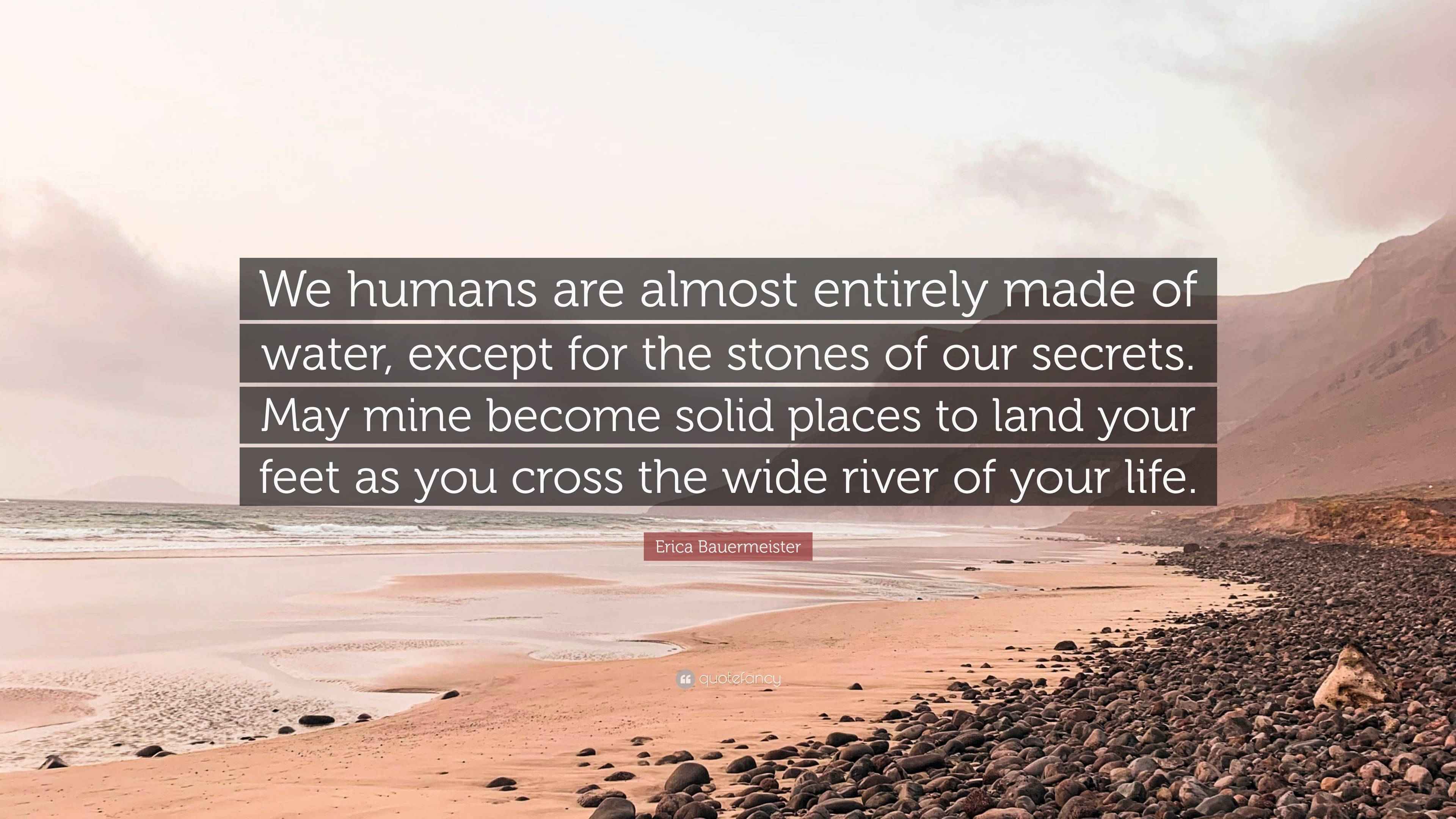
Humans are not literally made of "dirt" or soil in the geological sense, but there is a profound chemical connection between the human body and the Earth’s crust. While we are biological organisms composed primarily of water and carbon-based organic molecules, the elemental building blocks—such as oxygen, carbon, hydrogen, nitrogen, calcium, and phosphorus—are the same elements found in the Earth's soil, atmosphere, and water.
The Elemental Reality of Human Biology
To understand the relationship between humans and the environment, we must look at our composition at the atomic level. The human body is a complex system of chemical reactions, but it is fundamentally built from a relatively small list of chemical elements. Roughly 96% of the human body mass consists of just four elements: oxygen, carbon, hydrogen, and nitrogen.
These elements are not unique to living organisms. They are the same elements that constitute the air we breathe, the water we drink, and the minerals found in the Earth's crust. When people ask if humans are made of "dirt," they are often referring to this shared material basis. Scientific inquiry confirms that there is no "mystical" substance required to build a human; the universe recycled existing matter to construct the biological machinery of life.
The Difference Between Biological and Geological Structures
While the elemental ingredients are the same, the arrangement of those elements distinguishes a human being from a pile of soil. Dirt, or soil, is a complex mixture of weathered rock particles, decaying organic matter, air, and water. It is an abiotic (non-living) or decaying medium that supports life.
Humans, conversely, are organized into highly complex, self-replicating systems. The difference lies in the molecular complexity. In soil, carbon exists primarily in inorganic forms (like carbonates) or as remnants of decomposed organic material (humus). In the human body, carbon is the backbone of intricate proteins, lipids, nucleic acids, and carbohydrates that facilitate metabolism, movement, and consciousness. We are not just a collection of elements; we are an organized process fueled by energy.
Chemical Breakdown of the Human Body
Scientists categorize the elements within the human body into two primary groups: bulk elements and trace elements. The bulk elements provide the structural framework, while trace elements often serve as catalysts for biochemical reactions.
Table 1: Comparison of Common Elemental Composition
| Element | Human Body (Approx. %) | Earth's Crust (Approx. %) | Primary Role in Biology |
|---|---|---|---|
| Oxygen | 65% | 46.6% | Water and organic compounds |
| Carbon | 18% | 0.02% | Structural backbone of life |
| Hydrogen | 10% | 0.14% | pH regulation and energy transfer |
| Nitrogen | 3% | <0.01% | Essential for DNA and proteins |
| Calcium | 1.5% | 4.1% | Bone structure and signaling |
| Phosphorus | 1.0% | 0.10% | Energy storage (ATP) and DNA |
Note: Percentages for the human body are based on total mass for an average adult. Earth's crust data represents elemental abundance by mass in the lithosphere.
The Origins of Biological Matter
The elements that compose a human body—and the dirt beneath our feet—have a common origin: the stars. Through the process of stellar nucleosynthesis, stars forge heavier elements like carbon and oxygen from lighter ones like hydrogen and helium. When these stars explode in supernovae, they scatter these elements throughout the galaxy.
Over billions of years, these elements coalesced to form the Earth. Geological processes, including weathering and volcanic activity, distributed these elements into the soil and atmosphere. Through the process of evolution, life emerged by harnessing these specific chemical resources. Therefore, the statement that we are "of the earth" is scientifically accurate in a cosmological and geochemical sense, even if the "dirt" we walk on is not yet in the refined, biological state of a living human.
Why the Confusion Persists
The idea that humans are made of "dust" or "dirt" is a common theme in ancient literature, mythology, and religious texts worldwide. Because these traditions predated modern chemistry and biology, they provided a metaphorical explanation for the reality that when humans die, their bodies break down into basic substances that resemble the earth.
Science validates the physical observation: organic decay eventually returns the elements of a human body—calcium, carbon, phosphorus—back into the soil cycle. This is the natural recycling process of the biosphere. The confusion often stems from failing to distinguish between elements (the raw material) and structure (the biological information that makes a human).
Addressing Common Questions
H3: Do we contain all the elements found in soil?
Not exactly. While there is significant overlap, soil contains high concentrations of elements like silicon and aluminum, which are abundant in the Earth's crust but serve no known biological function in the human body. Conversely, humans require specific trace elements like iodine or selenium, which may not be present in every type of soil.
H3: Are we physically identical to the ground?
No. While we share the same atomic "parts," those parts are arranged in vastly different ways. Soil is an inorganic, granular mixture. Human bodies are structured through cellular biology, which requires constant energy input and complex homeostasis to maintain existence.
H3: Does the human body truly return to dust?
In a chemical sense, yes. Upon death, the complex organic molecules (proteins, fats, DNA) are broken down by microbes into simpler inorganic compounds. These minerals then integrate into the soil, essentially becoming part of the environment, which may eventually be absorbed by plants and re-enter the food chain.
H3: Is there a scientific term for this connection?
Biologists often use the term "biogeochemical cycling" to describe how chemical elements move between living organisms and the non-living environment, including the soil, water, and atmosphere. This confirms that we are part of a continuous, closed system on Earth.
Next Steps for Further Research
If you are interested in the chemical history of the human body and the Earth, you can explore the following areas:
- Stellar Nucleosynthesis: Research how the Big Bang and subsequent star deaths created the periodic table.
- Biogeochemistry: Study the global cycles of nitrogen, carbon, and phosphorus to understand how these elements move from the soil into living tissues.
- Trace Element Analysis: Examine how the human body selectively utilizes rare elements from the environment to perform critical biological functions.
For authoritative data on elemental abundance, consult resources provided by the International Union of Pure and Applied Chemistry (IUPAC) or peer-reviewed biochemistry textbooks focusing on bioinorganic chemistry.