The A Head Full of Dreams Tour was the seventh concert tour undertaken by the British rock band Coldplay, running from March 2016 to November 2017. Spanning 122 shows across five continents, it remains one of the highest-grossing and most visually ambitious concert series in music history, defined by its use of LED technology, pyrotechnics, and a philosophy of global inclusivity.
Origins and Conceptual Shift from Ghost Stories
To understand the scale of the A Head Full of Dreams Tour, one must first look at the era that preceded it. In 2014, Coldplay released Ghost Stories, a somber, intimate album that reflected frontman Chris Martin's personal life at the time. The band chose to perform only a handful of small-scale shows for that record, deliberately avoiding a massive stadium circuit. However, by the time A Head Full of Dreams was conceived in late 2015, the band’s creative energy had shifted toward a vibrant, kaleidoscopic aesthetic.
The tour was designed to be the antithesis of its predecessor. Where Ghost Stories was blue, muted, and internal, the A Head Full of Dreams Tour was an explosion of color, drawing inspiration from the Hindu festival of Holi and the concept of the "Flower of Life." The primary objective was to create a shared, communal experience that transcended cultural and linguistic barriers. This was evident from the tour's launch in South America—a region known for its passionate audiences—rather than the traditional starting points of North America or Europe.
The tour also served as a celebration of the band's longevity. Having been together for two decades by the time the tour concluded in 2017, the performances functioned as a "greatest hits" showcase while seamlessly integrating new, upbeat tracks like "Adventure of a Lifetime" and "Hymn for the Weekend." This blend of nostalgic anthems and modern pop-rock helped the band secure a diverse multi-generational audience, cementing their status as the premier stadium act of the 2010s.
Stage Design and Technical Spectacle
The technical infrastructure of the A Head Full of Dreams Tour set new standards for stadium productions. The stage was designed by Misty Buckley and Paul Normandale, featuring a sprawling setup that included a primary stage (A-stage), a secondary stage at the end of a long catwalk (B-stage), and a smaller, intimate stage located at the back of the floor area (C-stage). This configuration allowed the band to move throughout the stadium, ensuring that even fans in the furthest reaches felt a sense of proximity to the performers.
One of the most iconic elements of the tour was the use of Xylobands—LED wristbands distributed to every audience member. While Coldplay had pioneered this technology during the Mylo Xyloto Tour in 2012, the A Head Full of Dreams iteration utilized advanced infrared technology to synchronize the entire stadium into a living light show. The bands would pulse in rhythm with the music, change colors to match the theme of specific songs (such as yellow for "Yellow" or red for "Fix You"), and create intricate patterns across the seating tiers.
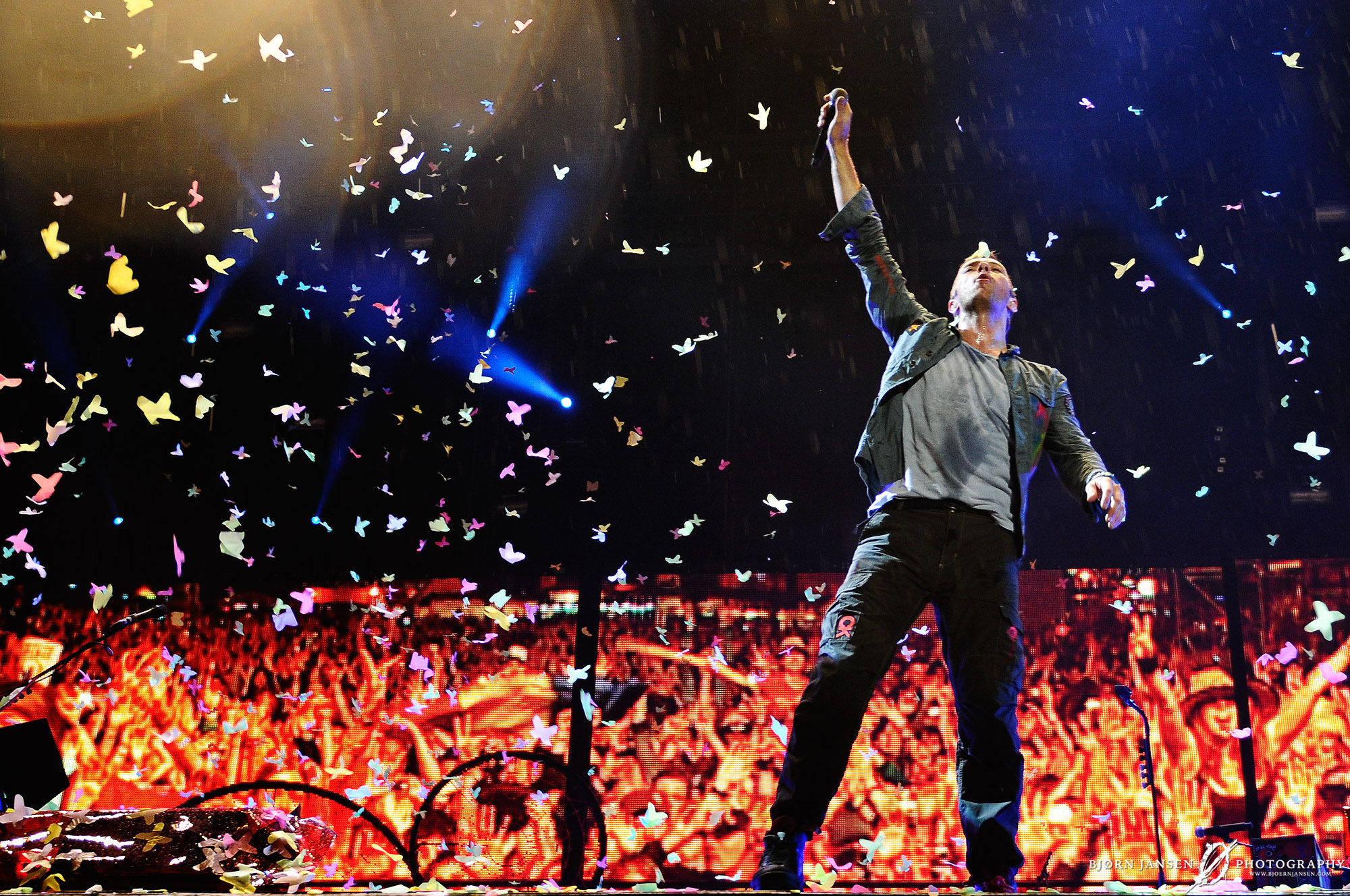
Beyond the lighting, the production incorporated massive quantities of biodegradable confetti (often shaped like stars and birds), laser arrays, and pyrotechnics. Screen content was equally vital, featuring psychedelic visuals and live feeds treated with colorful filters to maintain the tour's "dream-like" aesthetic. The logistical feat of transporting this equipment across 31 countries required a massive crew and a fleet of chartered aircraft and trucks, highlighting the sheer industrial scale of modern global touring.
Global Reach and Notable Performances
The tour was structured into eight distinct legs, strategically moving between hemispheres to maximize outdoor stadium availability. It began at the Estadio Ciudad de La Plata in Argentina and famously ended at the same venue twenty months later. This symmetry provided a narrative arc to the tour, emphasizing the band's deep connection with Latin American audiences.
Significant milestones occurred throughout the run. In June 2016, the band headlined the Glastonbury Festival for a record-breaking fourth time, a performance that served as a centerpiece for the European leg. Another notable moment was the band’s performance at the Global Citizen Festival in Mumbai, marking their first-ever show in India. This performance was particularly significant given the heavy influence of Indian culture on the A Head Full of Dreams album art and music videos.
The North American legs were characterized by massive sold-out runs in iconic venues such as the Rose Bowl in Pasadena and MetLife Stadium in New Jersey. In 2017, the tour expanded into Asia, hitting markets like Taiwan, South Korea, and the Philippines, where the demand for tickets reached unprecedented levels. The sheer geographical breadth of the tour was a testament to the band’s universal appeal, as they managed to sell out stadiums in markets with vastly different musical landscapes.
Setlist Dynamics and Fan Engagement
The setlist for the A Head Full of Dreams Tour was meticulously crafted to balance high-energy stadium rockers with moments of acoustic intimacy. Shows typically opened with the title track, "A Head Full of Dreams," immediately accompanied by a massive release of confetti and pyrotechnics to set a high-energy tone. From there, the band would weave through decades of material, ensuring that both casual fans and "Oldplay" devotees were satisfied.
A unique feature of this tour was the "Fan Request" segment. Before each show, fans were encouraged to upload short videos to Instagram requesting a specific song and explaining why it was meaningful to them. The band would then perform a stripped-back version of the chosen song on the C-stage. This initiative served two purposes: it made each show feel unique and it allowed the band to play rarer tracks from their catalog, such as "Don't Panic," "Us Against the World," or "See You Soon," which might not have fit in the main stadium set.
The transition between stages was a choreographed part of the experience. The move to the B-stage often featured the band's more electronic or dance-heavy tracks, while the C-stage allowed for a "busking" atmosphere. This movement kept the momentum of the three-hour show from flagging and allowed Chris Martin to interact directly with different sections of the crowd.
Statistical Impact and Commercial Success
By the time the final pyrotechnic went off in La Plata in November 2017, the A Head Full of Dreams Tour had etched its name into the record books. It grossed a total of $523,033,518, making it the third highest-grossing concert tour of all time at the point of its conclusion (surpassed only by U2’s 360° Tour and The Rolling Stones' A Bigger Bang Tour).
| Category | Statistic |
|---|---|
| Total Gross | $523,033,518 |
| Total Attendance | 5,389,586 |
| Number of Shows | 122 |
| Continents Visited | 5 (South America, Europe, North America, Asia, Oceania) |
| Highest Grossing Single Venue | Stade de France, Saint-Denis ($19,884,214 over 3 shows) |
| Tour Duration | 595 Days |
| Average Attendance per Show | 44,177 |
The financial success was matched by massive attendance figures, with over 5.3 million tickets sold. This commercial performance proved that despite the rise of digital streaming and the perceived decline of traditional rock bands, there remained a massive global appetite for high-production, communal live music experiences.
Documentation: The Butterfly Package
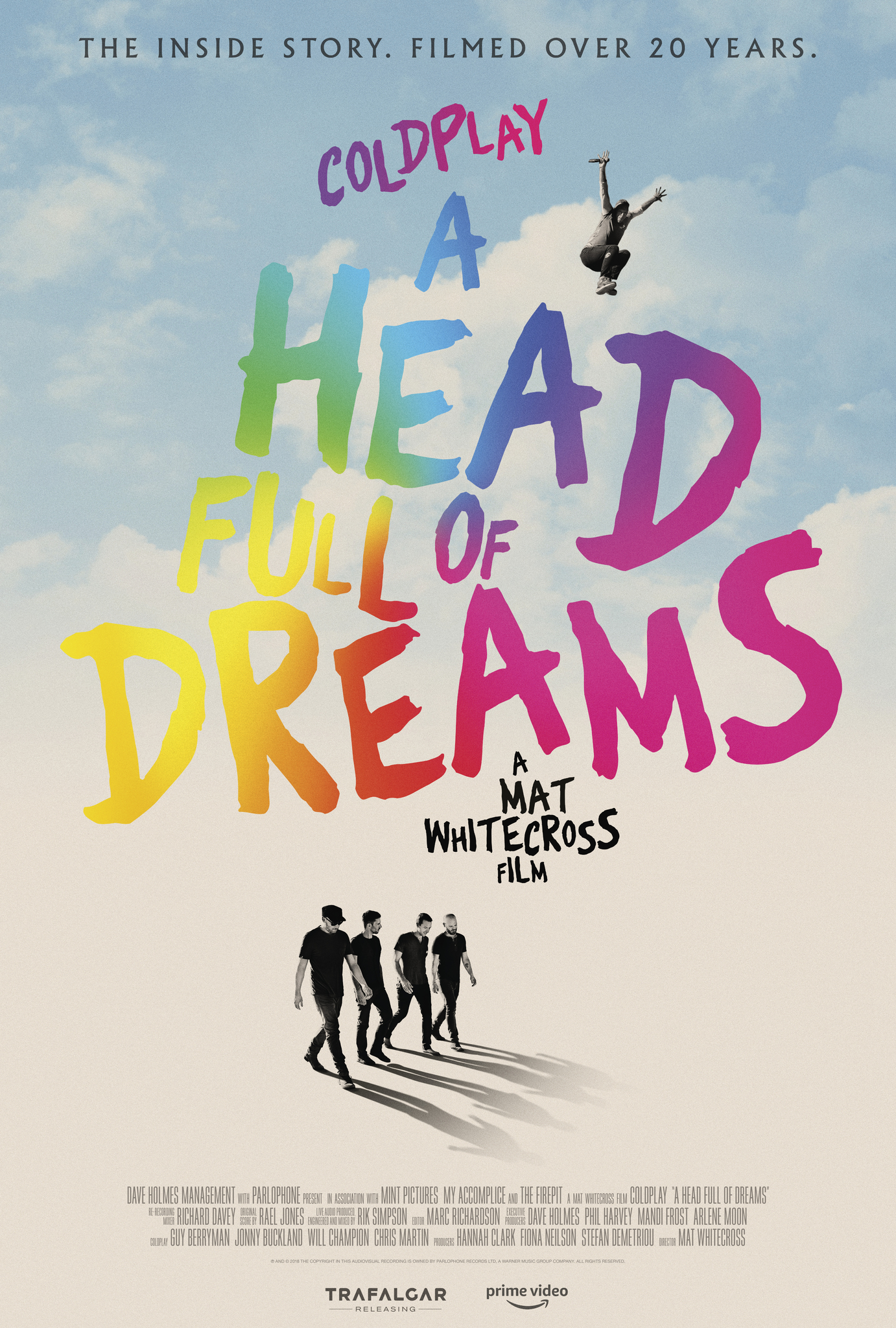
The tour's legacy was captured in the "Butterfly Package," released in late 2018. This comprehensive release included the Live in Buenos Aires album, which covered the final show of the tour in its entirety, and the Live in São Paulo concert film. Additionally, it featured the documentary Coldplay: A Head Full of Dreams, directed by Mat Whitecross.
The documentary provided a behind-the-scenes look not just at the tour, but at the band's entire twenty-year history. It highlighted the tensions, the friendships, and the sheer logistical madness of putting on a world tour. By releasing this package, the band allowed fans to relive the experience of the tour in high definition, ensuring that the visual spectacle of the Xylobands and the "Flower of Life" stage would be preserved for future generations. For many fans in 2026, these recordings remain the definitive way to experience the band's peak stadium era.
Cultural Legacy and Future Influence
Looking back from 2026, the A Head Full of Dreams Tour is viewed as the blueprint for the "modern mega-tour." It successfully integrated social activism (through partnerships with Global Citizen), cutting-edge fan interaction technology, and a visual identity that was instantly recognizable across social media platforms. It also set the stage for the band’s later Music of the Spheres World Tour, which took the sustainability and inclusivity goals of the 2016-2017 run to even greater heights.
The tour’s emphasis on "oneness" and "love" was occasionally dismissed by critics as sentimental, but the sheer number of attendees and the emotional resonance reported by fans suggested it struck a chord in a politically polarized era. It remains a high-water mark for Coldplay, representing a moment where their commercial power and creative vision were in perfect alignment.
FAQ
How many shows were played during the A Head Full of Dreams Tour?
The band performed 122 shows in total. The tour began on March 31, 2016, in Argentina and concluded on November 15, 2017, also in Argentina. It was divided into eight distinct legs across nearly two years.
What are Xylobands and how were they used?
Xylobands are LED-filled wristbands that use infrared receivers to receive data signals. During the tour, lighting directors programmed the bands to flash, change color, and pulse in sync with the music. This turned the entire audience into a coordinated part of the stage lighting, creating a visually immersive environment.
Who were the opening acts for the tour?
Because the tour was so long, opening acts varied by region. Major artists who supported the band included Alessia Cara, Tove Lo, Lianne La Havas, Izzy Bizu, and Mew. In many Latin American markets, local artists were also given the opportunity to open the shows.
Is there a concert film of the A Head Full of Dreams Tour?
Yes, the Live in São Paulo concert film captures the full stadium experience. It was released as part of the "Butterfly Package" in 2018, which also includes a documentary about the band's history and a live album recorded in Buenos Aires.
What was the highest-grossing leg of the tour?
The North American legs were particularly lucrative, but the European stadium dates in mid-2017 saw some of the highest per-show grosses, particularly during multi-night residencies at the Stade de France in Paris and Wembley Stadium in London.
Reliving the Experience Today
If you are looking to experience the A Head Full of Dreams Tour in 2026, the best course of action is to view the Live in São Paulo concert film available on most major streaming and digital purchase platforms. For a deeper look at the band's journey during this period, the Mat Whitecross documentary provides essential context on how four college friends managed to maintain a cohesive unit while operating the world's largest musical production.