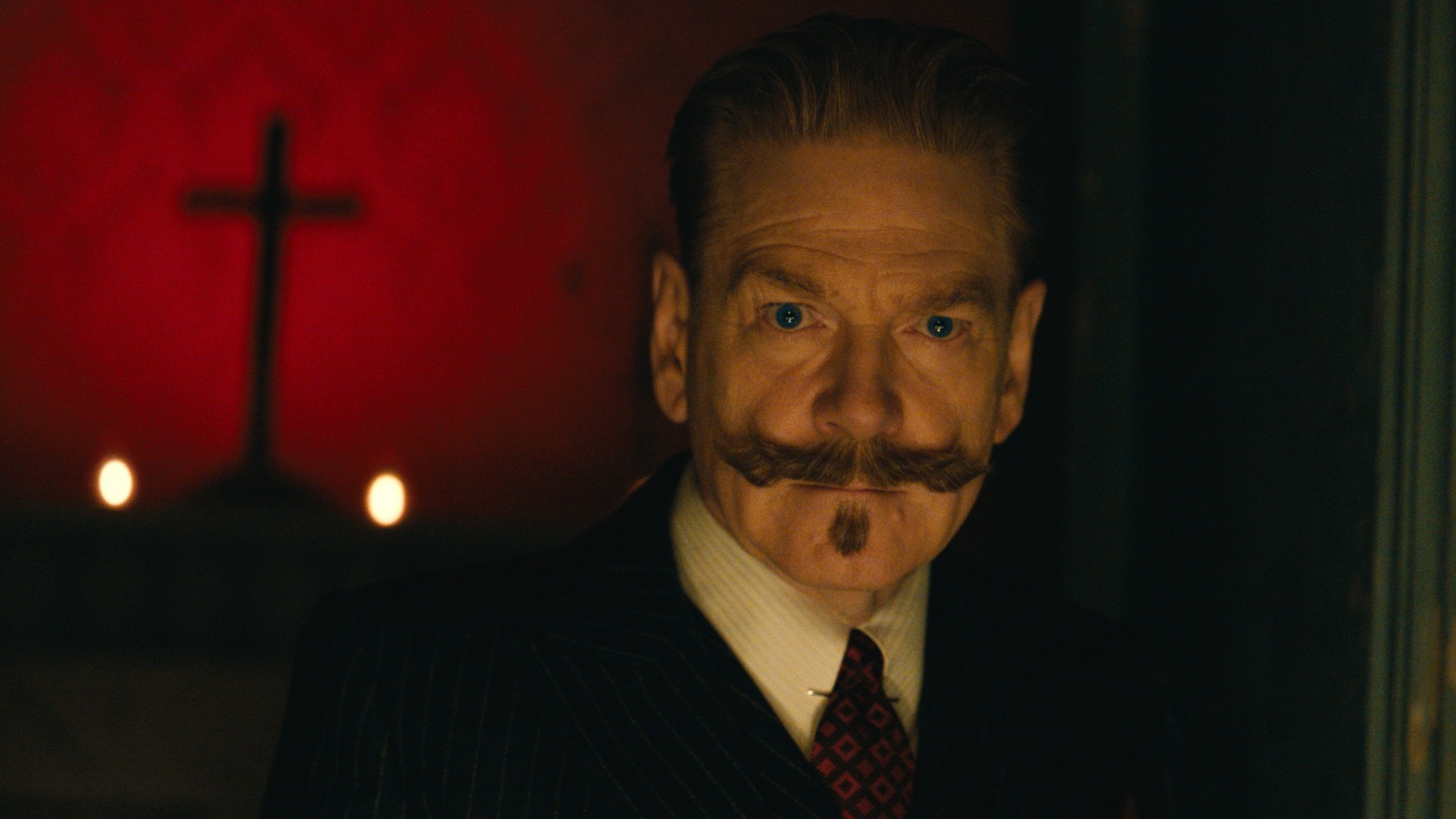
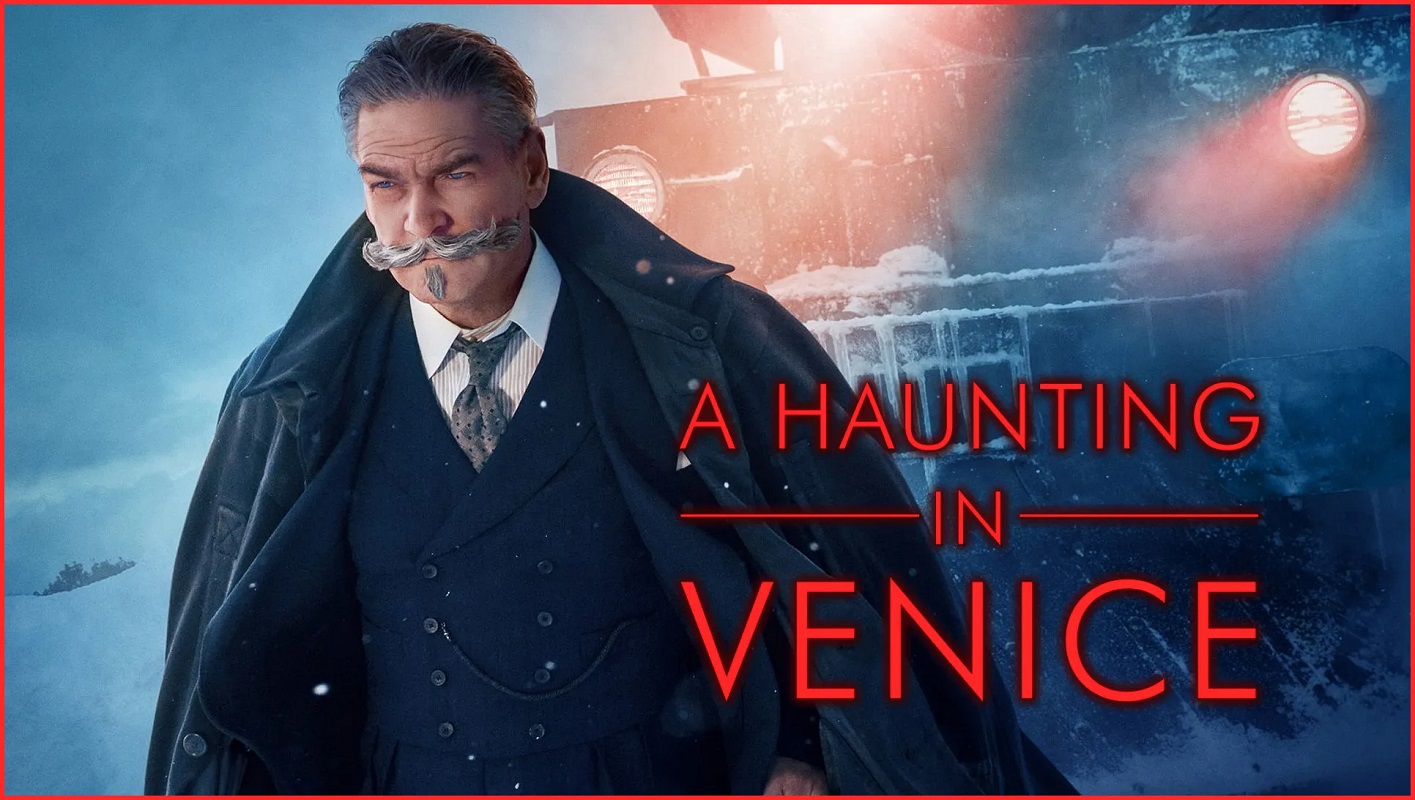
A Haunting in Venice is a 2023 psychological mystery film directed by and starring Kenneth Branagh as the iconic detective Hercule Poirot. Set in post-World War II Venice, the narrative departs from traditional Agatha Christie adaptations by incorporating supernatural elements and horror tropes. The film follows a retired Poirot who is reluctantly drawn into a séance at a haunted palazzo, leading to a complex murder investigation.
Conceptual Origins and Literary Basis
The film serves as the third installment in Kenneth Branagh’s series of Hercule Poirot adaptations, following Murder on the Orient Express (2017) and Death on the Nile (2022). Unlike its predecessors, which were based on some of Christie’s most famous novels, A Haunting in Venice is loosely adapted from the 1969 novel Hallowe'en Party.
Screenwriter Michael Green significantly altered the source material to facilitate a tonal shift. While the original book focuses on a child’s murder in a village setting, the film relocates the action to a decaying, supposedly haunted Venetian palazzo on All Hallows' Eve. This change was intentional, aimed at moving the franchise away from the "whodunit" prestige drama style toward a claustrophobic, gothic thriller aesthetic. The film explores the conflict between Poirot’s rigid, rationalist worldview and the possibility of genuine paranormal activity, challenging the detective’s legendary skepticism.
Plot Synopsis and Narrative Progression
The story begins in 1947, two years after the conclusion of the Second World War. Hercule Poirot has sequestered himself in Venice, living in self-imposed exile, weary of the inhumanity he witnessed during the conflict. His peace is interrupted by Ariadne Oliver, a successful mystery novelist and old friend, who invites him to a Halloween party at the home of Rowena Drake, a former opera singer.
The centerpiece of the evening is a séance conducted by Joyce Reynolds, a medium who claims she can communicate with the spirit of Rowena’s daughter, Alicia, who died under mysterious circumstances a year prior. Poirot attends the event with deep skepticism, intending to expose the medium as a fraud. However, when a guest is murdered, a sudden, violent storm traps all attendees inside the palazzo. As the night progresses, Poirot is forced to confront both the terrestrial killers within the house and his own encroaching sense of psychological dread. The narrative functions as a procedural mystery where the "locked room" conceit is compounded by the atmospheric isolation of the Venetian canals and the psychological fragility of the suspects.
Main Cast and Character Dynamics
The film features an ensemble cast, characteristic of the Christie adaptation style, blending established stars with emerging talent. Each character represents a specific psychological archetype affected by the trauma of the recent war.
- Kenneth Branagh as Hercule Poirot: The retired detective who must reconcile his belief in cold, hard facts with the unsettling events occurring in the palazzo.
- Tina Fey as Ariadne Oliver: A sharp, cynical author who acts as a foil to Poirot, pushing him out of his solitude and back into the realm of investigation.
- Michelle Yeoh as Joyce Reynolds: The enigmatic medium whose performance forms the catalyst for the night's events.
- Kelly Reilly as Rowena Drake: The grieving mother and hostess whose hidden history with her daughter provides the primary motive for the gathered group.
- Camille Cottin as Olga Seminoff: The intense, devoted housekeeper who harbors deep suspicions about the true nature of the tragedy surrounding the Drake family.
- Jamie Dornan and Jude Hill as Dr. Leslie and Leopold Ferrier: A father and son duo struggling with the aftermath of war-induced trauma; their relationship serves as an emotional anchor for the film’s exploration of guilt.
Key Production and Technical Elements
The technical execution of A Haunting in Venice relies heavily on visual storytelling to distinguish it from the previous, more opulent entries in the franchise. Cinematographer Haris Zambarloukos utilized extreme close-ups, Dutch angles, and wide-angle lenses to create a sense of unease and distortion. The production design focuses on the crumbling opulence of the Venetian palazzo, emphasizing shadows, peeling wallpaper, and the oppressive presence of water.
The sound design is particularly critical to the film’s success as a thriller. Because the film relies on the uncertainty of whether events are "haunted" or "staged," the ambient noise—the groaning of the old structure, the howling wind, and the relentless rain—is used to blur the line between natural phenomena and the supernatural. The score, composed by Hildur Guðnadóttir, mirrors this tension, moving from clinical, rhythmic precision to discordant, organic textures that emphasize the characters' fraying nerves.
Comparative Analysis of Film Features
The following table summarizes the key stylistic and thematic differences between A Haunting in Venice and the preceding films in Branagh’s Poirot series.
| Feature | Murder on the Orient Express | Death on the Nile | A Haunting in Venice |
|---|---|---|---|
| Genre | Classical Mystery | Romantic Drama/Mystery | Gothic Horror/Mystery |
| Setting | Train (Closed/Public) | Cruise Ship (Closed/Private) | Palazzo (Haunted/Claustrophobic) |
| Primary Theme | Justice vs. Law | Love and Greed | Faith vs. Rationalism |
| Visual Tone | Grand/Expansive | Vibrant/Sun-drenched | Dark/Distorted/Gothic |
| Supernatural | None | None | Ambiguous/Psychological |
Frequently Asked Questions
Is A Haunting in Venice a true sequel to the previous Poirot films?
Yes, it is the third film in the series directed by Kenneth Branagh. While it maintains continuity regarding the character of Hercule Poirot, it functions as a standalone mystery, meaning viewers do not need to watch the previous films to understand the plot, though it provides deeper insight into Poirot’s post-war state of mind.
Is the movie genuinely scary or is it just a mystery?
The film is classified as a psychological mystery with strong horror elements. It uses the "haunted house" trope to build atmosphere and suspense, but at its core, it remains a whodunit. Much of the tension comes from the ambiguity of whether the "ghosts" seen by the characters are real or products of their own psychological trauma.
How closely does the film follow the original Agatha Christie book?
The film is very loosely adapted from the 1969 novel Hallowe'en Party. The screenplay keeps the core idea of a party and a child's mystery, but changes the setting from an English village to Venice and shifts the tone significantly toward horror. Most of the supporting characters and the specific nature of the plot have been reinvented for the screen.
Why is Hercule Poirot retired at the start of the film?
Poirot retires due to the disillusionment he experienced following World War II. Having witnessed the worst of human nature, he loses his appetite for justice and seeks to escape the burden of solving murders, living in isolation to avoid the people and events that necessitate his services.
Where was the film actually shot?
While the story takes place entirely within a Venetian palazzo, much of the filming occurred on soundstages in the United Kingdom to achieve the specific, controlled lighting and claustrophobic framing required by the director. Exterior shots of Venice were used to establish the setting, but the interior "haunted" environment was a constructed set.
Next Actions and Recommendation
For those interested in exploring the film, it is recommended to view it in a low-light setting to fully experience the gothic cinematography and the detailed sound design. If you enjoy the intersection of classic detective fiction and supernatural thrillers, pay close attention to the dialogue between Poirot and Ariadne Oliver; their exchanges provide the intellectual scaffolding for the film’s final resolution. If the mystery holds your interest, the source novel Hallowe'en Party offers an interesting point of contrast, demonstrating how drastically a story can be reframed through atmospheric changes.