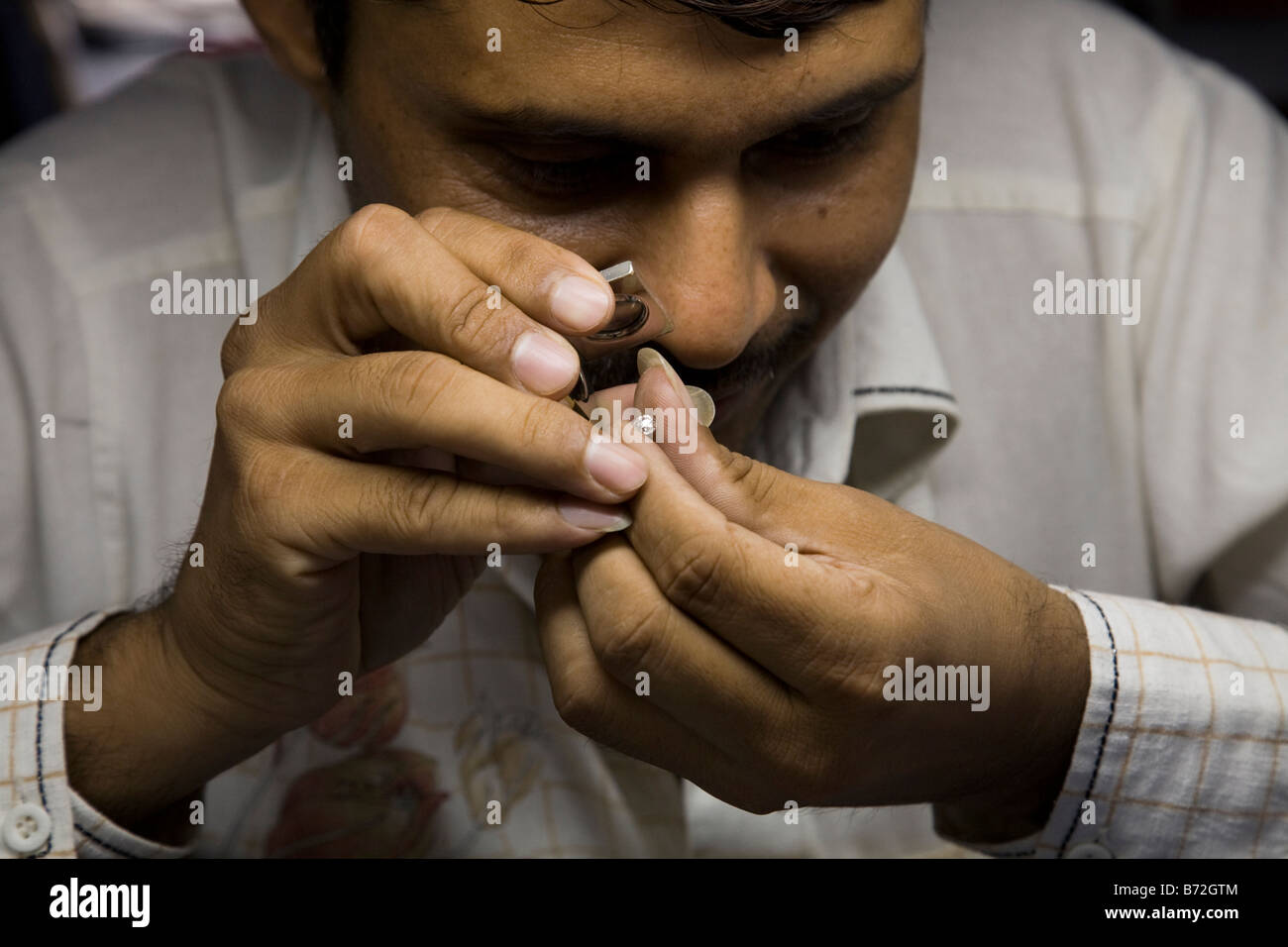
As of 2026, Hari Krishna Exports maintains a commanding financial presence in the global diamond industry with an estimated annual turnover exceeding ₹12,000 crore (approximately $1.45 billion USD). The company's net worth is anchored by its extensive manufacturing infrastructure in Surat, significant real estate holdings, and its prestigious status as a De Beers Sightholder.
The Economic Scale of Hari Krishna Exports in the Global Market
Hari Krishna Exports (HK) has evolved from a small diamond cutting unit established in 1992 into one of the world's most prominent diamond manufacturing and exporting conglomerates. By 2026, the company’s financial footprint extends across the entire diamond value chain, from sourcing rough stones to retailing finished jewelry through its domestic brand, Kisna. The scale of the company is not merely measured in revenue but in its processing capacity; the firm handles millions of carats annually, maintaining a workforce of over 8,000 skilled professionals.
The company’s financial stability is deeply rooted in its "Direct Sourcing" model. As a Sightholder with De Beers and a preferred customer of Rio Tinto and Alrosa (subject to evolving geopolitical sanctions), HK Exports bypasses many of the traditional "middleman" costs that plague smaller firms. This vertical integration allows the company to maintain healthy profit margins even during periods of price volatility in the rough diamond market.
Furthermore, the opening of the Surat Diamond Bourse—the world’s largest office building—has significantly enhanced the logistical efficiency and asset valuation of HK Exports. By centralizing large portions of their trading operations within this hub, the company has optimized its operational expenditures, contributing to a robust bottom line.
Estimated Net Worth and Revenue Breakdown
While Hari Krishna Exports is a privately held entity and does not publicly disclose its full balance sheet, industry analysts and trade reports provide a clear picture of its financial trajectory. The company’s valuation is a composite of its annual turnover, fixed assets, and brand equity.
Annual Turnover and Growth
The company’s turnover has shown resilience despite global economic shifts. In the 2024-2025 fiscal period, the company reported revenues in the range of ₹10,000 crore to ₹13,000 crore. Moving into 2026, this figure remains stable, supported by a resurgence in demand from luxury markets in the United States and China, alongside a burgeoning domestic market in India.
Asset Valuation
The net worth of HK Exports is heavily supported by its physical infrastructure. This includes:
- The HK Hub (Surat): A state-of-the-art manufacturing facility that spans hundreds of thousands of square feet, equipped with advanced laser cutting and automated polishing technology.
- Real Estate: High-value corporate offices in the Bharat Diamond Bourse (Mumbai) and international presence in hubs like Hong Kong, Belgium, and the UAE.
- Inventory: At any given time, the company holds a multi-million dollar inventory of both rough and polished diamonds, which serves as a liquid asset base.
Brand Equity and Kisna Diamonds
The financial overview must also include "Kisna Diamond & Gold Jewelry," the company’s retail arm. Launched to capture the domestic Indian consumer, Kisna has expanded to thousands of outlets across India. This diversification provides a hedge against the fluctuations of the export market, contributing significantly to the group's overall enterprise value.
Comparative Financial Standing in the Diamond Industry
To understand the net worth of Hari Krishna Exports, it is essential to compare it with other industry leaders. The Indian diamond sector is highly competitive, yet HK Exports remains in the top tier of exporters.
| Metric | Hari Krishna Exports (Est. 2026) | Industry Average (Top Tier) |
|---|---|---|
| Annual Revenue | ₹12,000 - ₹15,000 Crore | ₹8,000 - ₹10,000 Crore |
| Global Presence | 80+ Countries | 30 - 50 Countries |
| Primary Sourcing | De Beers, Rio Tinto, Alrosa | Secondary Market / Tenders |
| Employee Base | 8,000+ | 2,000 - 5,000 |
| Technological Depth | High (In-house R&D) | Moderate (Standard Machinery) |
This comparison highlights that HK Exports operates at a scale significantly above the average large-scale manufacturer. Their ability to maintain a massive workforce and consistent sourcing contracts places them in a unique "too big to fail" category within the Surat diamond ecosystem.
The Financial Impact of the "Bonus King" Philosophy
A unique aspect of the Hari Krishna Exports financial overview is its aggressive reinvestment in human capital. The founder, Savji Dholakia, gained international fame for gifting hundreds of cars, apartments, and fixed deposits to employees as performance bonuses. While these actions are often viewed through a philanthropic lens, they represent a strategic financial decision.
By offering these unprecedented incentives, the company has achieved one of the lowest attrition rates in the diamond industry. In an industry where "stone leakage" (theft) and the loss of highly skilled polishers to competitors are major financial risks, HK’s loyalty programs serve as a form of insurance. The cost of these bonuses is often offset by the gains in productivity and the reduction in recruitment and training expenses.
From a technical SEO and financial analysis perspective, this "loyalty equity" adds an intangible but vital layer to the company's net worth. It creates a brand reputation that attracts the best talent and the most reliable business partners, which in turn facilitates smoother credit lines and better terms with international diamond miners.
Future Financial Outlook and Industry Challenges
As we look at the financial landscape of 2026, Hari Krishna Exports faces several macroeconomic challenges that influence its net worth and projected earnings.
The Rise of Lab-Grown Diamonds (LGDs)
The diamond industry has been disrupted by the rapid adoption of lab-grown diamonds. HK Exports has had to navigate this carefully. While they remain primarily a natural diamond powerhouse, the price pressure on smaller natural stones (stars and melees) due to LGD competition has impacted margins. The company’s response has been to double down on high-quality, large-carat natural stones where the value proposition remains distinct.
Geopolitical Sanctions and Supply Chain Ethics
The ongoing scrutiny of Russian diamonds (Alrosa) due to geopolitical conflicts has forced major players like HK Exports to implement rigorous blockchain-based tracking systems. Ensuring that every stone is "conflict-free" and compliant with G7 regulations requires significant capital investment in tracking technology. However, being an early adopter of these standards has allowed HK Exports to maintain its "Preferred Supplier" status with luxury retailers in the West who demand total transparency.
Technological Integration
Investment in AI-driven grading and automated polishing continues to be a major capital expenditure. By 2026, the company has integrated advanced scanning technology that maximizes the "yield" from a rough stone. Even a 1% increase in the yield of a multi-million dollar parcel of rough diamonds can result in significant profit increases.
Operational Infrastructure and Physical Assets
The valuation of Hari Krishna Exports is inseparable from its massive physical footprint. The company's headquarters in the Bharat Diamond Bourse (BDB) in Mumbai acts as the financial nerve center, handling the complexities of international trade, currency hedging, and credit management.
In Surat, the manufacturing units are more than just factories; they are high-tech laboratories. The company has invested heavily in "Green Initiatives," including solar-powered facilities, which have reduced operational costs over the long term. These sustainability efforts are not just for PR; they contribute to the company's ESG (Environmental, Social, and Governance) score, which is increasingly important for securing international financing and maintaining partnerships with global luxury brands like Signet or Tiffany & Co.
Furthermore, the company's expansion into the HK Hub reflects a shift toward consolidated operations. By bringing various stages of production—from planning and cleaving to final grading—under one roof, the company has reduced the "internal lead time," allowing them to respond faster to market demand shifts. This agility is a key driver of their sustained turnover.
Understanding the Risks to Net Worth
No financial overview is complete without acknowledging the risks. The diamond industry is highly cyclical and sensitive to interest rate changes. Since much of the rough diamond purchasing is done through credit (Ushance bills), fluctuations in global interest rates can significantly impact the cost of doing business.
- Currency Fluctuations: As an export-oriented unit (EOU), HK Exports is highly exposed to the USD-INR exchange rate. While a weaker Rupee generally helps exporters, extreme volatility can make financial planning difficult.
- Consumer Preference Shifts: Gen Z and Millennial consumers in 2026 are increasingly leaning toward "ethical" and "sustainable" luxury. If the natural diamond industry fails to market itself effectively against lab-grown alternatives, the long-term valuation of companies like HK Exports could be pressured.
- Regulatory Changes: Changes in import/export duties by the Government of India or the introduction of new taxes in key markets like the US or UAE can directly impact the company’s net margin.
FAQ
What is the estimated turnover of Hari Krishna Exports in 2026?
As of 2026, Hari Krishna Exports is estimated to have an annual turnover of approximately ₹12,000 crore to ₹15,000 crore. This figure fluctuates based on the global demand for polished diamonds and the price of rough stones.
Who is the owner of Hari Krishna Exports?
The company was co-founded by Savji Dholakia and his brothers. It remains a family-run enterprise, with various members of the Dholakia family, including Ghanshyam Dholakia, holding key executive positions.
How many employees does Hari Krishna Exports have?
The company employs over 8,000 people, primarily based in its manufacturing facilities in Surat and its corporate offices in Mumbai. They are well-known for their employee welfare programs and high retention rates.
Does Hari Krishna Exports deal in lab-grown diamonds?
While HK Exports is historically a natural diamond specialist and a De Beers Sightholder, many large diamond houses have begun exploring or creating separate divisions for lab-grown diamonds. However, their primary revenue and brand identity remain rooted in the natural diamond sector.
What is the significance of being a De Beers Sightholder for their net worth?
Being a Sightholder means the company has a guaranteed supply of rough diamonds directly from the source. This stability is a massive financial asset, as it ensures consistent production and allows for better long-term financial planning compared to companies that must rely on unpredictable diamond auctions.
Strategic Outlook for Stakeholders
For those analyzing the financial health of Hari Krishna Exports, the primary takeaway is the company's successful transition from a volume-based manufacturer to a brand-driven global entity. Their diversification into retail via Kisna, their investment in sustainable manufacturing, and their early adoption of supply-chain transparency technology have created a "moat" around their business.
Investors and industry observers should monitor the company's ability to maintain its Sightholder status and its adaptation to the lab-grown diamond market. While the diamond industry faces structural changes, the sheer scale of HK Exports' assets and its deeply entrenched global distribution network suggest that its net worth will remain among the highest in the Indian gems and jewelry sector for the foreseeable future.