The original Gatorade formula, developed in 1965 at the University of Florida, was actually not colored in the vibrant neon hues we see today, but was instead a pale, translucent yellow-green tint derived from its lemon-lime flavoring and the natural color of its electrolyte and carbohydrate blend.
Understanding the history and evolution of sports drinks requires looking back at how early laboratory formulations transformed into a global commercial beverage phenomenon. When the beverage was first brewed for the Florida Gators football team, visual aesthetics took a backseat to physiological performance. Over the decades, corporate acquisitions, flavor expansions, and changing consumer preferences transformed how these beverages look on store shelves. Examining the original color profile offers a fascinating window into the intersection of sports science, commercial marketing, and food technology.
The Origins of Gatorade at the University of Florida
In the summer of 1965, a team of investigators led by Dr. Robert Cade at the University of Florida College of Medicine set out to solve a pressing athletic problem: why Florida Gators football players were suffering disproportionately from heat exhaustion and dehydration during games. The coaching staff noted that players lost significant body weight through sweat and experienced sharp declines in second-half performance due to electrolyte depletion and blood sugar crashes.
Dr. Cade collaborated with Dr. H. James Free, Dr. Dana Shires, and Dr. Alejandro de Quesada to analyze the physiological composition of sweat. They discovered that athletes lost not only water, but also critical quantities of sodium and potassium, alongside depleting their carbohydrate reserves. To combat this, the research team formulated an ingestible solution consisting of water, sodium, potassium, sugar, phosphate, and lemon juice for palatability.
When this initial concoction was mixed and served to the freshman football team, it lacked any artificial food coloring. The lemon juice combined with the powdered chemical salts yielded a cloudy, pale yellow-green appearance. Players initially referred to the beverage as "ade," but it quickly earned the moniker Gatorade. Although the players initially spat out the salty mixture during early trials, they soon realized its performance benefits, leading to a dramatic improvement in second-half stamina and the birth of the modern sports drink industry.
The True Appearance of the First Commercial Batch
The earliest iterations of Gatorade were entirely unconcerned with visual branding or high-visibility shelf appeal. Because the primary objective was purely functional—replenishing fluids, electrolytes, and carbohydrates efficiently—the aesthetic qualities of the drink were incidental.
The color of that first batch can be described as a muted, translucent greenish-yellow. This shade was a natural byproduct of using real lemon juice concentrate combined with water, cane sugar, sodium chloride, potassium citrate, and monopotassium phosphate. There were no synthetic dyes added to enhance vibrancy, as the product was initially manufactured in small quantities in a university laboratory for athletic consumption rather than retail distribution.
When Stokely-Van Camp acquired the commercial rights to distribute Gatorade nationally in the late 1960s, they maintained this basic flavor profile, which became known as Lemon-Lime. Even as production scaled up from university laboratories to industrial bottling plants, the pale yellow-green shade remained the standard for the brand’s flagship offering. It was not until the introduction of new flavor variations in the 1970s and 1980s that the color palette of the product line began to diversify dramatically.
| Flavor Era | Approximate Introduction Year | Original Color Profile | Key Ingredients Causing Color |
|---|---|---|---|
| Original Lemon-Lime | 1965 | Pale translucent yellow-green | Lemon juice concentrate, natural mineral salts |
| Orange | 1973 | Bright opaque orange | Citric acid, natural/artificial orange flavor, FD&C Yellow No. 6 |
| Lemon Ice | 1980s | Clear / Water-white | Filtered water, sugar, citric acid, sodium citrate (no dyes) |
| Fruit Punch | 1983 | Deep translucent red | FD&C Red No. 40, fruit flavor concentrates |
| Glacier Freeze | 1997 | Vivid translucent light blue | FD&C Blue No. 1, crisp cooling flavoring agents |
Evolution into Artificial Dyes and Vibrant Hues
As the brand grew under Stokely-Van Camp and later under the ownership of the Quaker Oats Company in 1983 (and subsequently PepsiCo in 2001), commercial strategy shifted toward visual differentiation on retail shelves. Consumers needed to instantly distinguish between flavors without reading fine-print labels, prompting the widespread adoption of certified food colorings.
The introduction of Orange flavor in 1973 brought the first major departure from the original pale yellow-green aesthetic, utilizing bright orange dyes to match consumer expectations of citrus taste. Throughout the 1980s and 1990s, the rollout of Fruit Punch, Riptide Rush, and Glacier Freeze established a neon-bright color vocabulary that came to define sports drinks globally.
This evolution relied on synthetic color additives approved by regulatory bodies like the U.S. Food and Drug Administration (FDA). These dyes—such as FD&C Yellow No. 5, Yellow No. 6, Red No. 40, and Blue No. 1—provided batch-to-batch consistency, enhanced shelf stability against light degradation, and created the intense saturation that marketing teams recognized as a powerful visual driver of consumer thirst-quenching appeal.
Dispelling Myths About "Stokely's Finest" and Original Shades
A common piece of sports trivia often misleads enthusiasts regarding the color of the very first Gatorade. Rumors occasionally circulate that the original formulation was dark green, bright red, or even transparent.
These misconceptions usually stem from confusion with later product line extensions or regional formulations introduced decades after the university trials. For instance, the transparent "Lemon Ice" flavor, introduced much later, often leads people to assume early drinks lacked color entirely, while the deep green variations of "Citrus Cooler" or "Frost" variants are sometimes retroactively projected onto the 1965 formulation.
To clarify the historical record:
- Was it ever blue or red? No. Blue and red colorways did not exist in the Gatorade catalog until decades after its university inception.
- Was it flavored like modern lemon-lime? The original taste profile was much sharper and more acidic, relying heavily on raw lemon juice and salt proportions that would taste quite different from today's sweetened formulations.
- Did the university team drink colored liquids? Photographic evidence and accounts from Dr. Cade confirm the liquid was cloudy, pale, and un-dyed.
The Cultural Impact of Gatorade Colors in Professional Sports
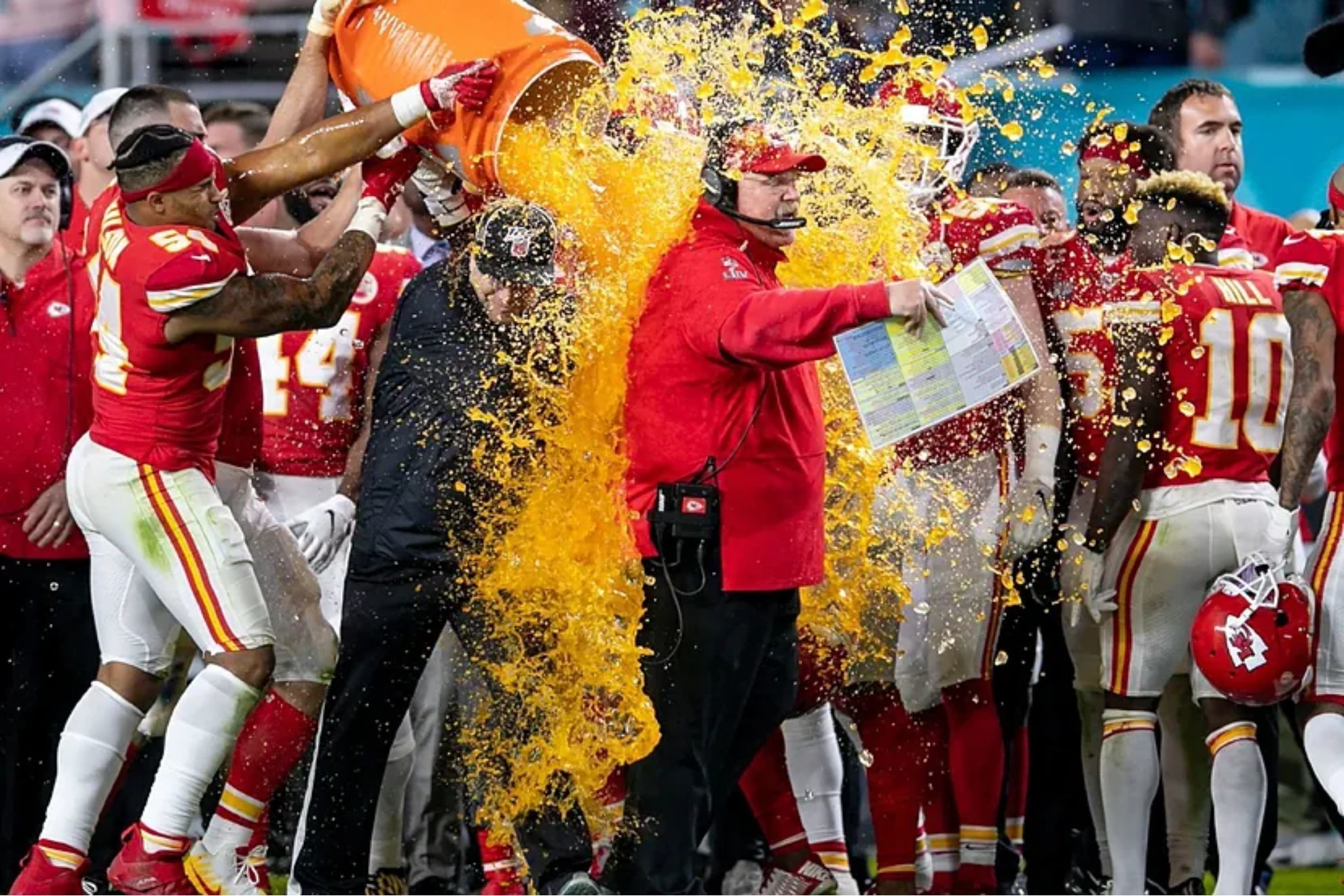
Beyond laboratory formulation and retail marketing, Gatorade colors achieved a unique place in popular culture through the tradition of the "Gatorade Shower." This ritual, where players dump a massive cooler of the beverage over their head coach's head following a major victory, transformed the colors from simple liquid traits into iconic visual symbols of athletic triumph.
The tradition reportedly began during the 1984 season when the New York Giants, coached by Bill Parcells, dumped a cooler of orange Gatorade over defensive coordinator Bill Belichick and later head coach Bill Parcells. As television broadcasts shifted to high-definition color, the vivid neon streams of orange, lemon-lime, and blue splashing across victorious coaches created unforgettable broadcast moments.
Fans began associating specific colors with legendary teams and championship games. The visual spectacle of bright orange or yellow liquid contrasting against green turf or stadium lights cemented the brand's aesthetic permanence in sports history, far transcending its humble, un-dyed origins in a Gainesville medical lab.
Frequently Asked Questions About Original Gatorade Colors
What was the exact color of the first Gatorade ever made?
The original Gatorade was a pale, translucent yellow-green shade. It lacked artificial dyes and derived its appearance entirely from natural lemon juice, water, and dissolved mineral salts used in the 1965 University of Florida laboratory recipe.
When did Gatorade start using artificial colors?
Artificial food colorings were introduced as the brand transitioned from a regional university project into a commercial product distributed by Stokely-Van Camp in the late 1960s and expanded heavily through the 1970s and 1980s to differentiate new flavors like orange and fruit punch.
Why did the original formula look cloudy?
The initial batches were cloudy because they were mixed directly from basic ingredients—including real lemon juice concentrate and unrefined powdered salts—without industrial filtration systems or stabilizing agents used in modern manufacturing.
Are any modern Gatorade flavors free of artificial dyes?
While most mainstream varieties utilize synthetic FD&C dyes for vibrant coloration, certain specialty lines or specific formulations have occasionally offered clear or lightly tinted options, though the vast majority of core flavors rely on approved food colorings for visual consistency.
Did the original flavor taste like today's Lemon-Lime Gatorade?
The original 1965 recipe tasted significantly saltier and more sharply acidic than modern lemon-lime formulations. The proportions of sodium, potassium, and sugar were adjusted over the decades to improve commercial palatability while maintaining electrolyte absorption efficacy.
Identifying Authentic Historical Formulations
For collectors, sports historians, and beverage researchers examining vintage packaging or promotional materials, verifying the authenticity of early Gatorade artifacts requires attention to container typography, ingredient labeling laws, and corporate ownership markers. Early bottles from the Stokely-Van Camp era feature distinct glass or early plastic structures that differ substantially from contemporary injection-molded containers. Anyone evaluating historical claims about sports nutrition milestones should cross-reference university athletic archives with documented corporate timelines to ensure absolute accuracy regarding product specifications and launch dates.