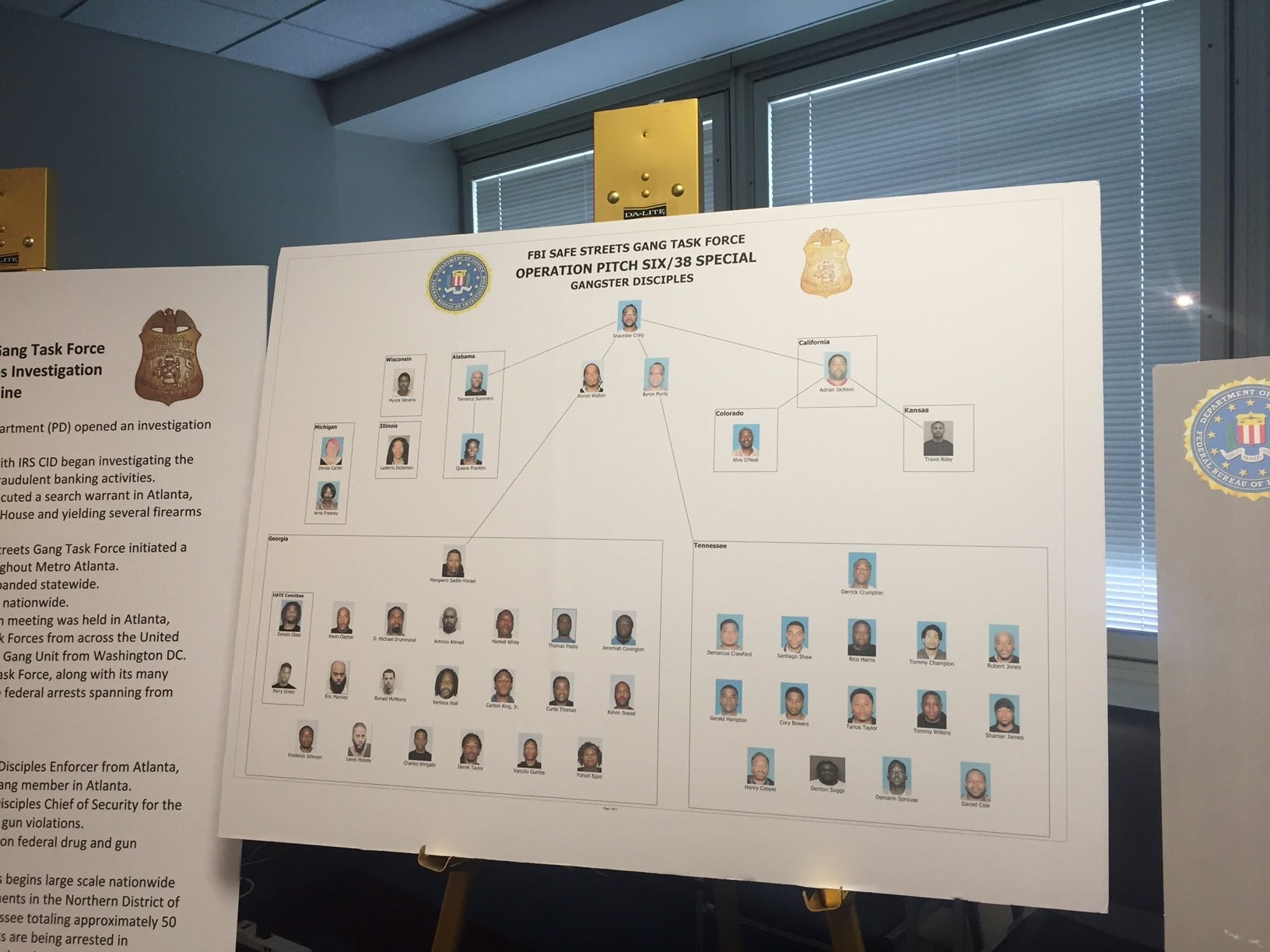
The Gangster Disciples (GD) represent a complex socio-historical phenomenon rooted in urban sociology and criminal justice studies. This article provides an objective analysis of the organization's evolution, operational structures, and the persistent challenges facing municipal law enforcement and community intervention programs as of the 2026 calendar year.
Historical Foundations and Organizational Taxonomy
The Gangster Disciples originated in the late 1960s on the South Side of Chicago. Through a strategic merger of the High Supreme Gangsters and the Black Disciples, the organization established a rigid, bureaucratic hierarchy designed to mirror corporate governance models. By 2026, researchers and law enforcement agencies identify the organization not merely as a street-level collective, but as a fragmented network of autonomous sets.
The structural integrity of the organization has historically been defined by a clear, albeit decentralized, chain of command. In the current 2026 operating environment, the traditional "board of directors" model has largely dissipated, replaced by localized factions that prioritize territorial control and illicit revenue diversification. Understanding this shift is essential for criminologists and public policy analysts assessing urban safety metrics.
Structural Comparison: Historical vs. Modern Operational Frameworks
The transition from a centralized national entity to localized cells has significantly altered the strategic response required by community stakeholders. The following table illustrates the key differences in organizational characteristics observed over recent decades leading into 2026.
| Feature | Historical (1970s-1990s) | Modern (2026) |
|---|---|---|
| Leadership Structure | Highly Centralized Hierarchy | Fragmented/Localized Cells |
| Primary Influence | Massive Geographic Consolidation | Hyper-Local Neighborhood Control |
| Communication | Direct Verbal/Handwritten Orders | Encrypted Digital Messaging |
| Revenue Model | Traditional Street-Level Activity | Diversified Illicit Digital Commerce |
| Membership Entry | Formalized Initiation Protocols | Ad-hoc/Social Media Influenced |
Digital Transformation and Modern Illicit Modalities
In 2026, the digital landscape has fundamentally changed the operational profile of street-based organizations. Rather than relying on physical presence alone, elements associated with the Gangster Disciples and similar groups have migrated to encrypted communication platforms and decentralized digital marketplaces. This migration complicates standard surveillance methodologies utilized by the Department of Justice and local law enforcement agencies.
Operational Insight: The Role of Digital Signals Intelligence
Modern investigative strategies now rely heavily on open-source intelligence and digital footprint analysis. Law enforcement agencies in 2026 have moved away from simple physical surveillance, focusing instead on the metadata analysis of digital communication to identify clusters of illicit activity. This technological pivot is considered the gold standard in contemporary urban policing.
Sociological Impact and Community Intervention Strategies
The presence of organized factions in urban environments necessitates comprehensive public health approaches. Effective interventions in 2026 rely on the "Violence Interrupter" model, which treats community-based violence as a communicable public health issue.
Key strategies currently employed by municipal task forces include:
- Cognitive Behavioral Therapy (CBT) integration for at-risk youth populations to reduce impulsivity in high-stress environments.
- Economic opportunity pipelines that provide alternatives to the shadow economy, specifically targeting individuals aged 16-24.
- Trauma-informed care protocols for communities that have experienced prolonged cycles of systemic instability.
- Data-driven policing that focuses on precision deterrence rather than mass enforcement, reducing the social friction associated with traditional patrolling.
Legal and Penal Landscape in 2026
The judicial response to gang-related criminal activity has evolved toward a focus on federal Racketeer Influenced and Corrupt Organizations (RICO) statutes. By 2026, federal prosecutors emphasize the prosecution of leadership tiers, aiming to disrupt the organizational continuity of these factions.
It is important to note that the legal definition of gang involvement continues to face scrutiny regarding Constitutional protections. In 2026, defense strategies increasingly focus on the lack of direct physical evidence connecting individuals to broader criminal conspiracies, necessitating a high burden of proof for the state to demonstrate "concerted criminal enterprise."
Frequently Asked Questions (FAQ)
What is the current status of the Gangster Disciples in 2026?
The organization functions as a loose collection of localized, autonomous groups rather than a centralized national entity. Their influence is primarily defined by hyper-local territorial interests.
How has technology affected the organization's operations?
Modern factions utilize encrypted messaging and digital platforms to manage activities, significantly complicating traditional surveillance and intelligence gathering for law enforcement.
What are the most effective strategies for reducing gang involvement?
Evidence-based programs, such as violence interruption and targeted economic development, are currently viewed as the most effective methods for mitigating the influence of street-level organizations.
How do federal authorities address these groups today?
Federal agencies primarily utilize RICO statutes to target the organizational structure and leadership, focusing on long-term investigations that aim to dismantle the economic viability of these groups.
Why is it difficult to quantify the membership of these groups in 2026?
Due to the shift toward loose, decentralized sets, membership is often transient and lacks formal registration, making accurate census-taking impossible for both sociologists and law enforcement.
Implementing Sustainable Community Solutions
Addressing the existence of organizations like the Gangster Disciples requires a long-term commitment to institutional reform. Success in 2026 is measured not just by the reduction of criminal activity, but by the successful integration of marginalized populations into the formal economic sphere. Municipalities that have seen the most success are those that have bridged the gap between law enforcement, mental health professionals, and community leaders.
For organizations seeking to impact these communities, the focus must shift from punitive measures to proactive development. The integration of high-speed digital infrastructure, reliable local job training, and robust educational support remains the most viable pathway toward long-term stabilization. By addressing the fundamental socioeconomic drivers that led to the formation of such groups in the 20th century, modern society can create a more resilient foundation for future generations.