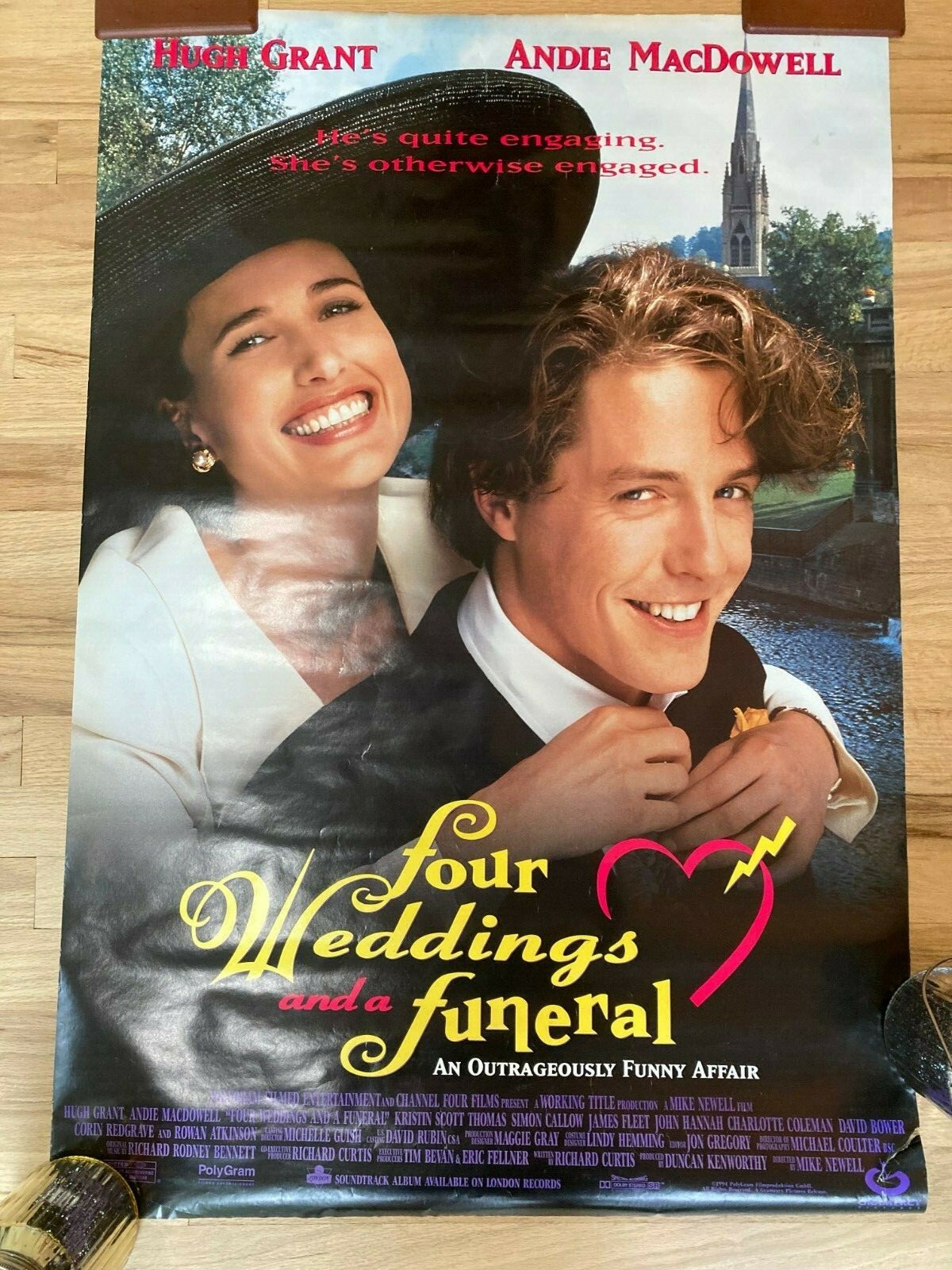
The Four Weddings and a Funeral movie cast is headlined by Hugh Grant as the charmingly disorganized Charles and Andie MacDowell as the enigmatic American, Carrie. This definitive ensemble features a stellar British cast including John Hannah, Simon Callow, Kristin Scott Thomas, James Fleet, Charlotte Coleman, and David Haig.
Released in 1994, Four Weddings and a Funeral remains a seminal work in the romantic comedy genre. Directed by Mike Newell and written by Richard Curtis, the film did more than just provide a platform for Hugh Grant’s international stardom; it redefined the "ensemble comedy" by creating a group of friends whose chemistry felt authentic, lived-in, and deeply relatable. As we look back from 2026, the film’s legacy is inextricably tied to these performances, which balanced high-society farce with genuine emotional gravity.
The Leading Duo: Hugh Grant and Andie MacDowell
At the heart of the narrative is the "will-they-won't-they" dynamic between Charles and Carrie. Their relationship serves as the primary thread connecting the titular five events, providing the narrative tension required to sustain the episodic nature of the script.
Hugh Grant as Charles
Hugh Grant’s portrayal of Charles established the "bumbling Brit" persona that would define much of his career through the late 1990s and early 2000s. Charles is a man perpetually late, socially awkward yet undeniably charismatic, and deeply terrified of commitment. Grant’s performance is a masterclass in comic timing, utilizing stutters, self-deprecating humor, and expressive physicality to make a character who could have been annoying seem incredibly sympathetic. In 2026, critics still point to this role as the archetype for the modern romantic lead—vulnerable and flawed rather than overtly heroic.
Andie MacDowell as Carrie
Andie MacDowell plays Carrie, the independent American woman who captivates Charles from their first meeting. Unlike many romantic interests of the era, Carrie is sexually liberated and emotionally complex, often keeping Charles (and the audience) at arm’s length. While her character has been the subject of much debate over the decades—specifically regarding her "Is it raining?" line in the finale—MacDowell provides a necessary foil to the eccentric British group. She represents the "outsider" perspective, highlighting the specific cultural quirks of the British upper-middle class.
The Inner Circle: Defining the Friends’ Ensemble
The strength of Four Weddings and a Funeral lies in its supporting cast. These characters are not merely background noise; they represent various facets of love, loss, and loneliness.
Kristin Scott Thomas as Fiona
Fiona is arguably the most tragic figure in the film. As the wealthy, sharp-tongued, and impeccably dressed friend, she harbors a deep, unrequited love for Charles. Kristin Scott Thomas delivers a performance of remarkable restraint. Her "confession" scene to Charles is often cited as one of the film’s most poignant moments, showcasing the pain of being the "eternal friend." Scott Thomas won a BAFTA for this role, confirming her status as one of Britain’s most versatile actresses.
Simon Callow as Gareth
Simon Callow brings an explosion of energy to the screen as Gareth, the larger-than-life, joyous heart of the group. Gareth is exuberant, wealthy, and deeply devoted to his partner, Matthew. His character is crucial because he represents the most successful "marriage" in the film, despite it not being a legal one at the time the film was set. Gareth’s sudden death provides the "Funeral" of the title, shifting the film from a lighthearted comedy into a profound meditation on grief and the value of life.
John Hannah as Matthew
John Hannah’s performance as Matthew, Gareth’s partner, provides the film’s emotional climax. Before this film, Hannah was relatively unknown, but his recitation of W.H. Auden’s "Stop all the clocks" (Funeral Blues) at Gareth's service remains one of the most famous scenes in cinema history. The sincerity and quiet dignity Hannah brings to the role provided a groundbreaking representation of gay grief in a mainstream 1990s film, a legacy that continues to be celebrated by film historians in 2026.
James Fleet as Tom
James Fleet plays Tom, the "richest man in England" and perhaps the most socially inept member of the group. Tom is kind-hearted but eternally confused. Fleet, who would later find fame in The Vicar of Dibley, plays the role with a gentle innocence. His character's journey—finding love with someone just as awkward as he is—provides a sweet counterbalance to the more cynical romantic subplots.
Charlotte Coleman as Scarlett
The late Charlotte Coleman played Scarlett, Charles’s eccentric, brightly-dressed roommate. Scarlett represents the younger, more bohemian side of the social circle. Coleman’s energy was vital to the film’s pacing, providing a sense of chaotic fun. Her search for love, culminating in a surprising connection at the final wedding, remains a fan-favorite arc. Coleman’s performance is remembered fondly as a highlight of her tragically short career.
Memorable Supporting Roles and Iconic Cameos
The film’s episodic structure allowed for a variety of secondary characters to leave a lasting impression, often through brief but high-impact scenes.
- Rowan Atkinson as Father Gerald: Perhaps the most famous cameo in the film, Atkinson plays a nervous trainee priest who repeatedly fumbles the wedding vows. His performance is a classic piece of physical and verbal comedy, providing a reprieve from the tension of the second wedding.
- David Haig as Bernard and Sophie Thompson as Lydia: This couple provides much of the "cringe" comedy. Bernard and Lydia are the "average" couple whose disastrous second wedding (where everyone is hungover and miserable) serves as a cautionary tale about the pressures of social expectation.
- Corin Redgrave as Hamish: Playing Carrie's fiancé and later husband, Redgrave embodies the "wrong" choice—a wealthy, older, and somewhat pompous man who serves as the primary obstacle to Charles and Carrie’s happiness.
Complete Cast and Character Reference Table
The following table summarizes the primary cast members and their roles within the film's social and narrative structure.
| Actor | Character | Role in the Group | Key Character Trait |
|---|---|---|---|
| Hugh Grant | Charles | The Protagonist | Socially awkward, commitment-phobic |
| Andie MacDowell | Carrie | The Love Interest | Elusive, independent, American outsider |
| Kristin Scott Thomas | Fiona | The "Best Friend" | Sophisticated, cynical, secretly in love |
| Simon Callow | Gareth | The Life of the Party | Exuberant, generous, the "Heart" |
| John Hannah | Matthew | Gareth’s Partner | Quiet, loyal, emotionally grounded |
| James Fleet | Tom | The Wealthy Friend | Extremely dim-witted but kind |
| Charlotte Coleman | Scarlett | The Roommate | Eccentric, youthful, energetic |
| David Bower | David | Charles’s Brother | Observant, uses BSL, voice of reason |
| Rowan Atkinson | Father Gerald | The Vicar | Nervous, prone to verbal blunders |
| Sophie Thompson | Lydia | The Bride (Wedding 2) | High-strung, emotionally expressive |
The Enduring Legacy of the Cast’s Performances
The success of Four Weddings and a Funeral triggered a "British Invasion" of the romantic comedy genre. In the years following its release, the "Richard Curtis Style"—defined by a witty, upper-class ensemble—became a global standard.
The casting was particularly effective because it didn't rely on established A-list stars (at the time). Instead, it built a team of formidable stage and screen actors who could handle the rapid-fire dialogue and the shift between comedy and tragedy. For Hugh Grant, it was the start of a decade of dominance in the genre. For John Hannah and Kristin Scott Thomas, it served as a springboard to international dramatic roles.
In 2026, the film is frequently studied for its "ensemble chemistry." Unlike many modern comedies where characters feel like they were written in isolation, the cast of Four Weddings behaves like a group that has known each other for twenty years. They interrupt each other, share private jokes, and offer a level of comfort that is difficult to manufacture without exceptional casting and direction. This authenticity is why the movie continues to find new audiences decades after its original premiere.
Frequently Asked Questions
Who played the deaf brother in Four Weddings and a Funeral?
David Bower played David, Charles’s brother. Bower is a deaf actor, and his inclusion was praised for providing authentic representation. His character often serves as the "voice of reason," using British Sign Language (BSL) to communicate truths that the other characters are too embarrassed to say out loud.
Did any of the cast members appear in the 2019 miniseries?
While the 2019 television adaptation of Four Weddings and a Funeral (created by Mindy Kaling) featured a new cast, Andie MacDowell made a special guest appearance as a different character (Mrs. Howard), serving as a bridge between the original film and the new iteration.
Which actor won a BAFTA for their role in the film?
Both Hugh Grant and Kristin Scott Thomas won BAFTA Awards for their performances. Grant won for Best Actor in a Leading Role, and Scott Thomas won for Best Actress in a Supporting Role. The film itself also won the BAFTA for Best Film.
Is the cast from the movie involved in any "sequels"?
There was no feature-length sequel, but the original cast reunited in 2019 for a short film titled One Red Nose Day and a Wedding. This charity special, created for Comic Relief, caught up with the characters 25 years later, featuring the marriage of Charles and Carrie’s daughter.
What happened to Charlotte Coleman?
Charlotte Coleman, who played the beloved character Scarlett, passed away in 2001 at the age of 33 due to a bronchial asthma attack. She is remembered as one of the most vibrant talents of her generation, and her performance in Four Weddings remains her most iconic role.
Finding More About the Ensemble
For those looking to explore the filmography of this legendary cast further, viewing the British Film Institute’s (BFI) archives provides deep insights into the production's impact on UK cinema. Additionally, checking the official BAFTA Awards database allows fans to track the various accolades this specific cast received during the 1994-1995 awards season.
Whether you are a long-time fan or a newcomer to the genre in 2026, the performances in Four Weddings and a Funeral offer a masterclass in ensemble acting. To truly appreciate the cast's work, consider watching the film alongside other Richard Curtis classics like Notting Hill or Love Actually to see how the "ensemble archetype" evolved over the decades.