Establishing a Limited Liability Company (LLC) in Connecticut requires precise adherence to the Connecticut Uniform Limited Liability Company Act. As of 2026, the state has fully modernized its business filing infrastructure through the CONCORD system, necessitating a digital-first approach to entity formation. This guide provides the technical framework and legal requirements for domestic entity creation, ensuring your business remains compliant with both the Connecticut Secretary of the State (SOTS) and the evolved federal transparency mandates.
Strategic Name Selection and Distinguishability Standards
The first technical hurdle in Connecticut LLC formation is securing a name that satisfies the "distinguishable upon the record" standard maintained by the Secretary of the State. In 2026, the automated cross-referencing system scans not only active LLCs but also reserved names, corporations, and limited partnerships.
Your chosen name must contain a specific designator such as Limited Liability Company, L.L.C., or LLC. Connecticut law allows for the abbreviation of Limited as Ltd. and Company as Co. However, the name cannot imply a purpose other than what is permitted by the LLC’s articles or state law. For example, using words like Bank, Trust, or Insurance requires specific secondary approvals from the Connecticut Department of Banking or the Insurance Department.
Name Reservation Protocol
If you have identified the perfect name but are not ready to file the Certificate of Organization, you should execute an Application for Reservation of Name. This reservation holds the name for 120 days. In 2026, this filing is conducted via the CONCORD portal for a fee of $60. This prevents competitors from poaching a strategic brand name during your final capital-raising or planning stages.
Designating a Registered Agent in the 2026 Regulatory Environment
Connecticut law requires every LLC to maintain a Registered Agent (physically located within the state) to accept service of process and official legal correspondence. By 2026, the SOTS has tightened the requirements for agent availability, ensuring that the designated party is accessible during standard business hours.
You have two primary options for a Registered Agent:
- Individual Agent: A resident of Connecticut, which can include yourself or an employee.
- Business Entity Agent: A domestic or foreign corporation or LLC that has a certificate of authority to transact business in Connecticut.
While acting as your own agent saves the annual $150–$300 service fee, it exposes your home or business address to public record and requires your presence at that location consistently. Professional registered agent services in 2026 offer integrated compliance dashboards that automatically sync with the Connecticut Secretary of the State's data feeds, providing real-time alerts for filing deadlines.
Filing the Certificate of Organization via CONCORD
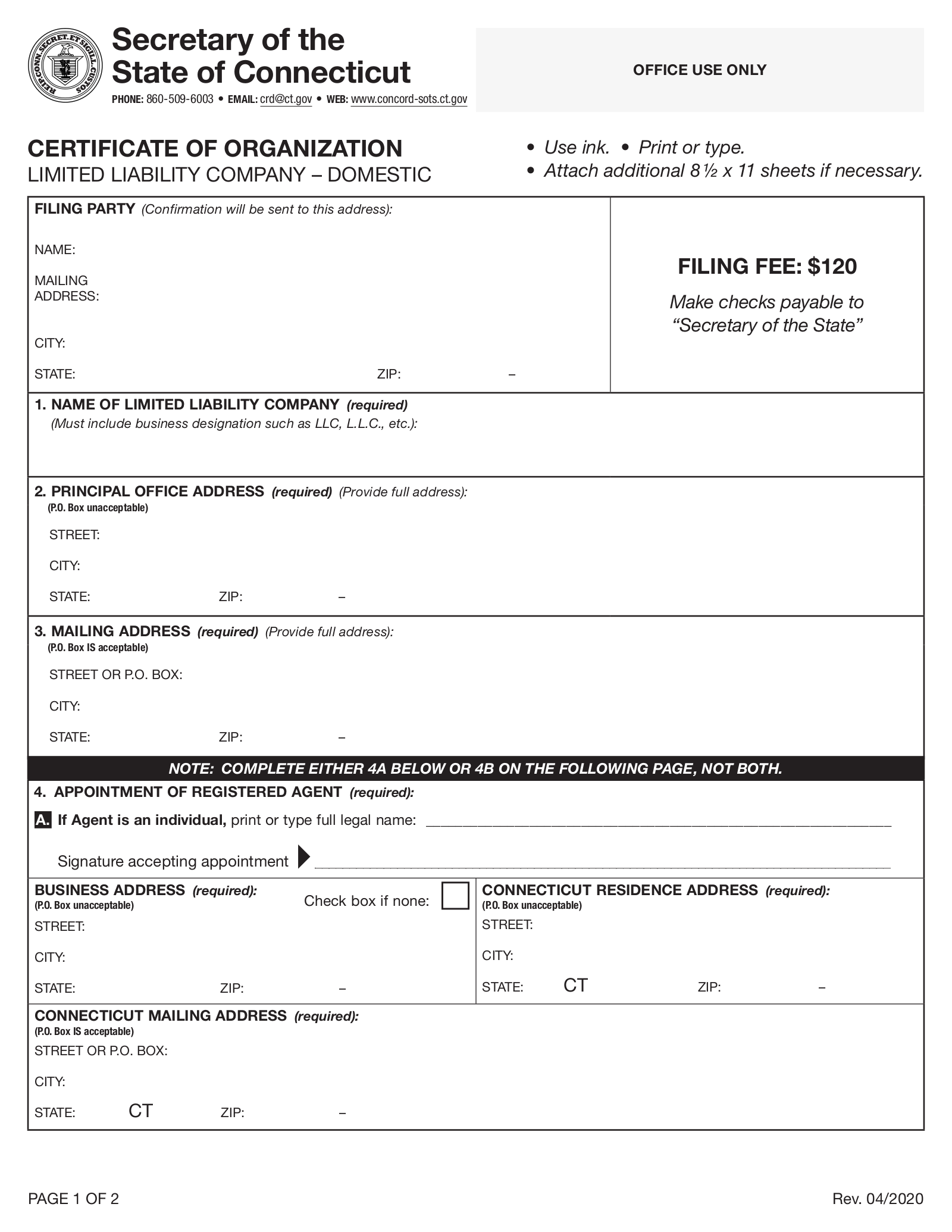
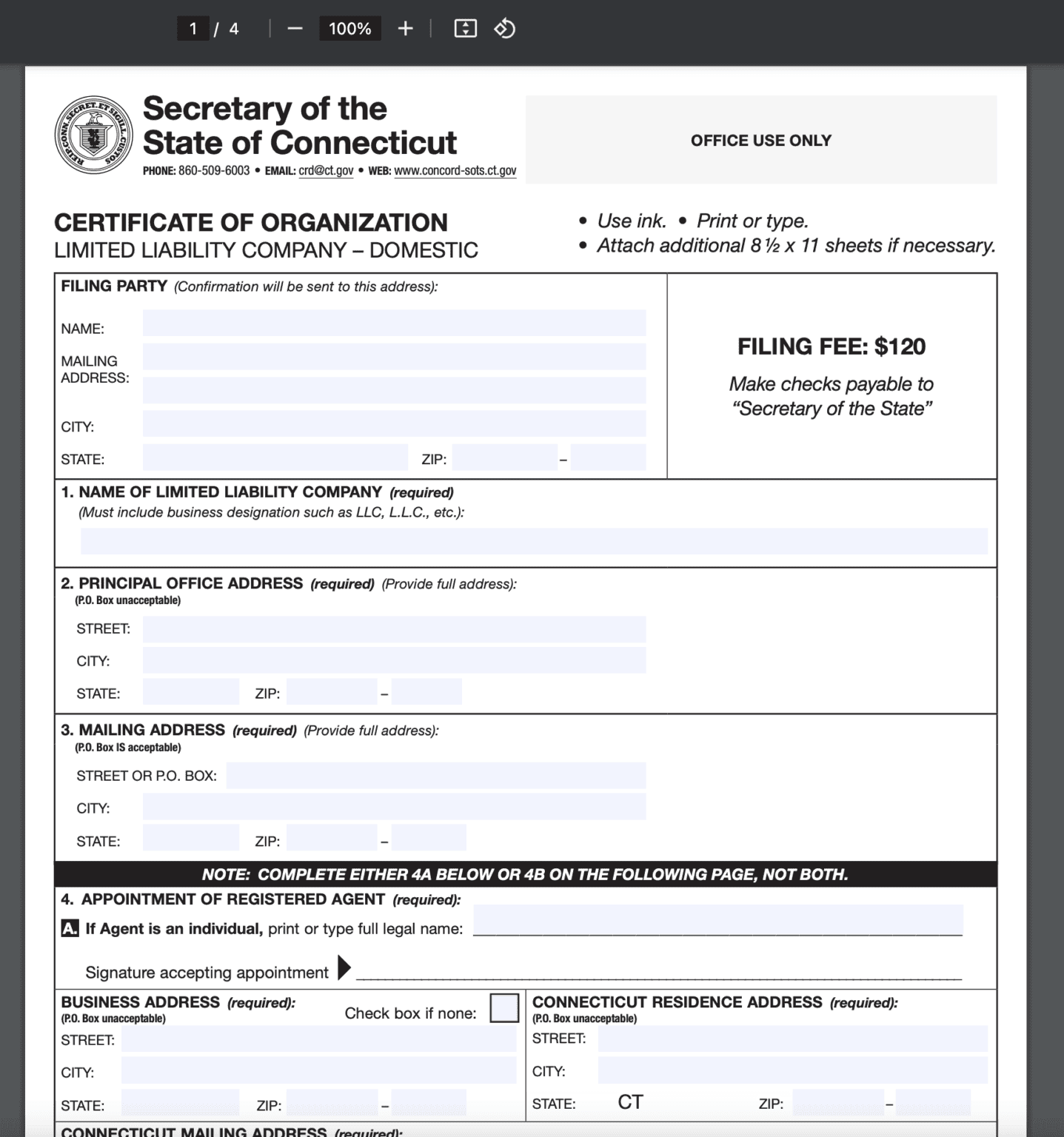
The Certificate of Organization is the core legal document that creates your LLC. In 2026, paper filings are largely deprecated in favor of the CONCORD online system. To file, you must provide specific data points that define the structure of your entity.
| Filing Component | Requirement Detail | 2026 Statutory Fee |
|---|---|---|
| LLC Name | Must include "LLC" or "Limited Liability Company" | Included |
| Principal Office Address | Physical address (No P.O. Boxes allowed) | Included |
| Registered Agent | Name, address, and signature of acceptance | Included |
| Manager/Member Structure | Identification of at least one member or manager | Included |
| Electronic Signature | Executed by an "Organizer" | Included |
| Standard Filing Fee | Base cost for domestic LLC formation | $120.00 |
| Expedited Service | Optional 24-hour processing | +$50.00 |
When submitting the Certificate of Organization, you must specify whether the LLC will be Member-Managed or Manager-Managed. In a Member-Managed LLC, all owners participate in daily operations. In a Manager-Managed LLC, the members appoint a specific individual or group (who may or may not be members) to handle the company's affairs. This choice has significant implications for your 2026 Operating Agreement and fiduciary responsibilities.
Post-Formation: The Federal Corporate Transparency Act (CTA)
By 2026, the Corporate Transparency Act is a mature regulatory framework. Every new Connecticut LLC must file a Beneficial Ownership Information (BOI) Report with the Financial Crimes Enforcement Network (FinCEN). This is not a state-level filing but is mandatory for almost all small businesses formed in CT.
The BOI report requires the disclosure of "Beneficial Owners"—anyone who owns at least 25% of the entity or exercises substantial control over it. Failure to file this report within 30 days of formation in 2026 can result in civil penalties exceeding $500 per day. As an SME strategist, I recommend completing this filing immediately after receiving your stamped Certificate of Organization from the SOTS to avoid administrative oversight.
Drafting a Technical Operating Agreement
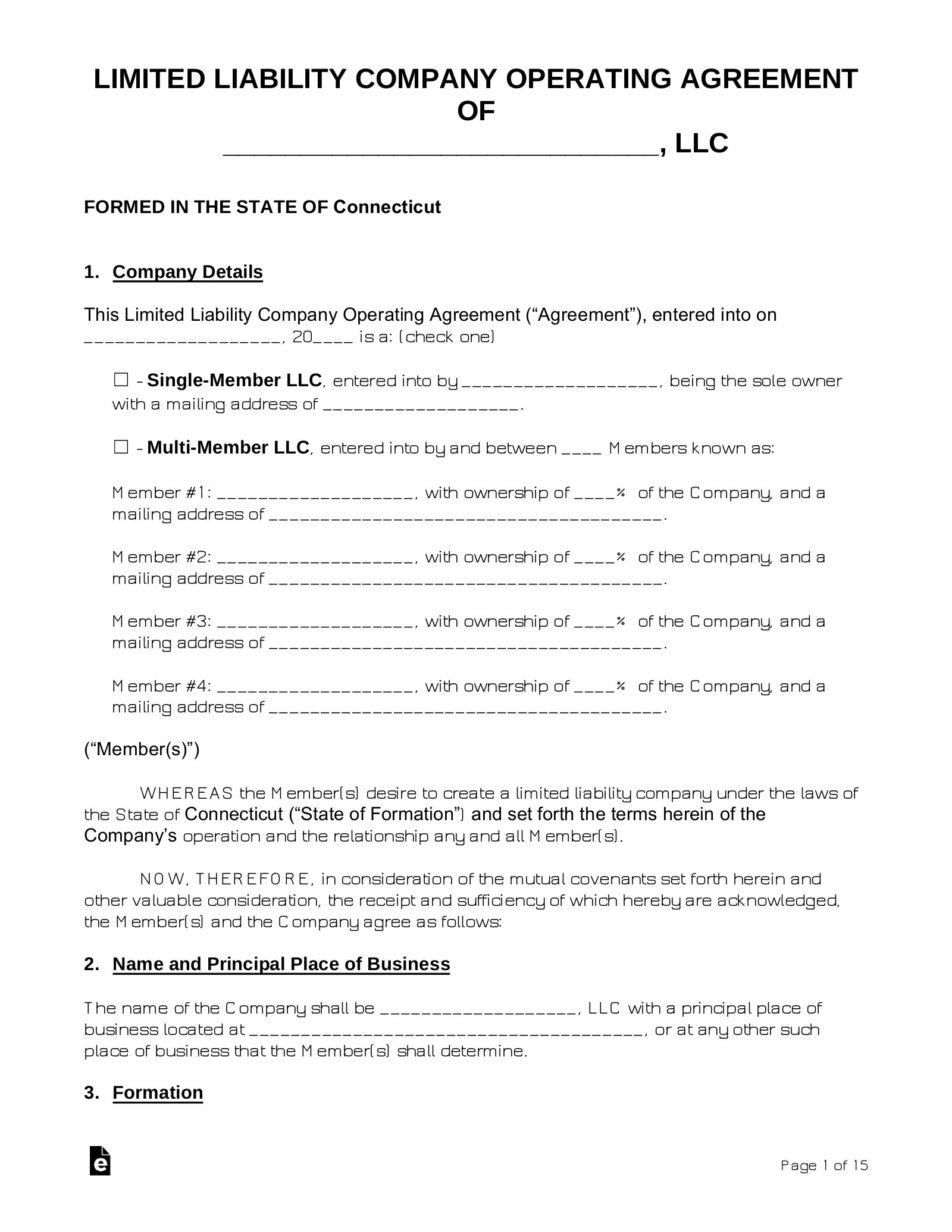
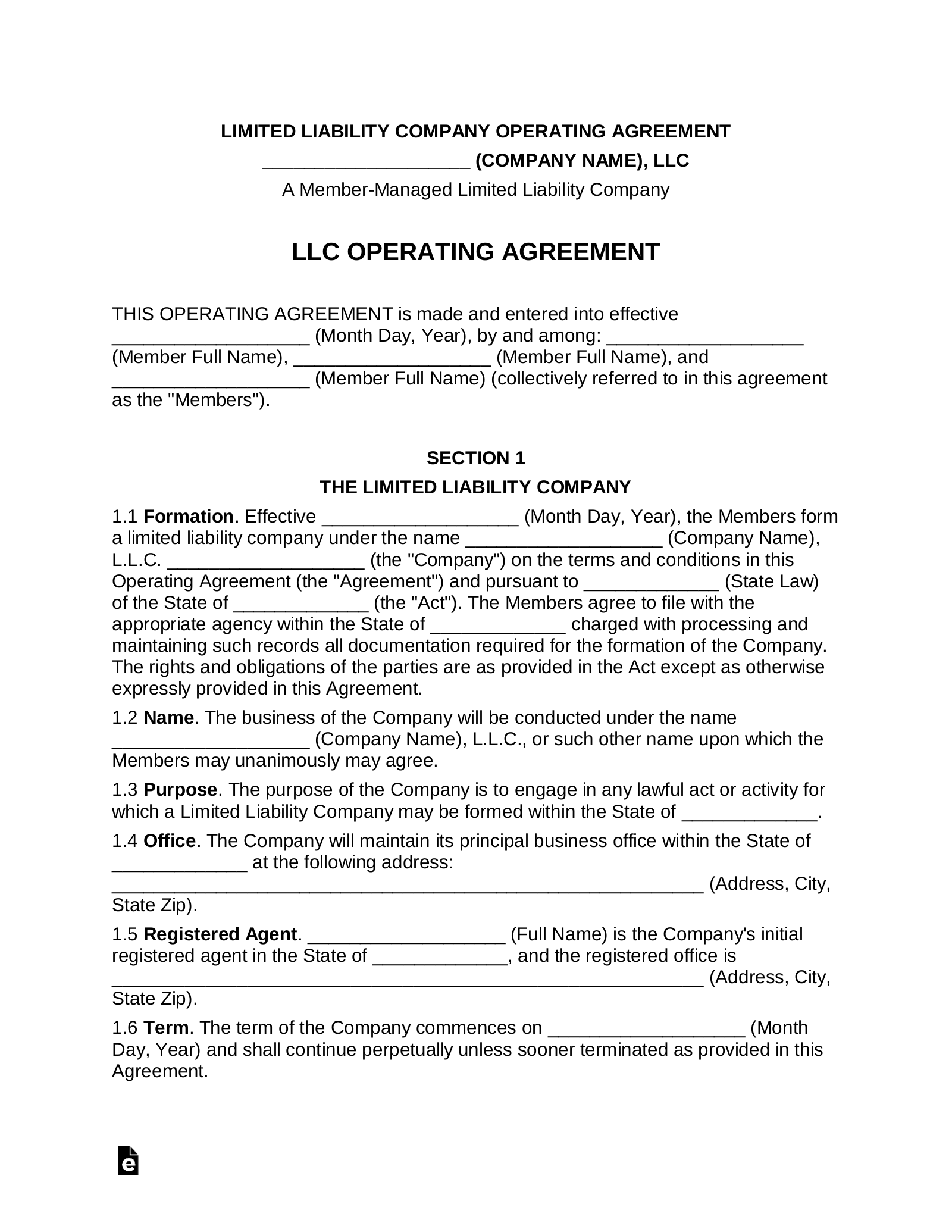
Connecticut is an "all-in" state regarding the Uniform Limited Liability Company Act, meaning that if you do not have a written Operating Agreement, the state’s default statutes will govern your business. In 2026, relying on default statutes is a significant operational risk.
A robust Operating Agreement for a CT LLC should detail:
- Capital Contributions: Exact amounts of cash, property, or services contributed by each member.
- Distribution Rules: How and when profits are allocated (which does not necessarily have to follow ownership percentages).
- Dissolution Protocols: The specific technical steps required to wind down the business or buy out a departing member.
- Voting Rights: Whether voting is per capita (one vote per person) or pro-rata (based on ownership percentage).
Obtaining an EIN and State Tax Registration
Once the LLC is legally recognized, you must interface with the Internal Revenue Service (IRS) and the Connecticut Department of Revenue Services (DRS).
1. Federal Employer Identification Number (EIN): Think of the EIN as a Social Security number for your business. It is required for opening a Connecticut business bank account and hiring employees. You can obtain this for free via the IRS website.
2. Connecticut myconneCT Registration: In 2026, all state tax registrations are handled through the "myconneCT" portal. Depending on your business activity, you may need to register for:
- Sales and Use Tax: If you sell tangible personal goods or taxable services.
- Income Tax Withholding: If you have employees.
- Pass-Through Entity (PTE) Tax: Connecticut is unique in its mandatory PTE tax for certain LLCs, though 2026 legislative updates have adjusted the thresholds for small entities.
Comparing Formation Methods: 2026 Analysis
Prospective business owners often choose between three paths for formation. Each has distinct technical and financial trade-offs.
DIY Formation via CONCORD
This method is the most cost-effective, totaling $120 in state fees. It is suitable for single-member LLCs with no complex intellectual property. The primary risk is the lack of a customized Operating Agreement, which can lead to "piercing the corporate veil" if the business is sued.
Professional Filing Services
Services like specialized legal-tech platforms provide a middle ground. They automate the Registered Agent service and BOI reporting. In 2026, these services typically range from $300 to $600. They are ideal for entrepreneurs who want a "compliance-in-a-box" solution but do not need complex tax structuring.
Legal Counsel (Boutique Business Law)
For multi-member LLCs or those seeking venture capital, hiring a Connecticut business attorney is mandatory. While costs range from $1,500 to $5,000, this path ensures that your Operating Agreement is custom-tailored to protect against minority shareholder oppression and complex tax liabilities.
Maintaining Compliance: The Annual Report
The most common reason for LLC dissolution in Connecticut is the failure to file the Annual Report. In 2026, the SOTS sends electronic reminders to the Registered Agent on file.
The report is due every year between January 1st and April 1st. The filing fee is $80. This report does not disclose financial data; it simply confirms the current principal office address and the names of the managers or members. Failure to file for two consecutive years will result in administrative dissolution, which terminates your limited liability protection and requires a $100 reinstatement fee plus all back-filing costs.
Frequently Asked Questions
How long does it take to form an LLC in CT in 2026?
Standard online processing through the CONCORD system typically takes 3 to 5 business days. If you utilize the expedited service for an additional $50, your LLC can be approved within 24 hours of submission.
Can I be my own registered agent in Connecticut?
Yes, provided you are a resident of Connecticut and have a physical street address in the state where you can be reached during business hours. You cannot use a P.O. Box for this role.
Do I need a separate business license in CT?
The LLC formation itself is not a business license. Depending on your industry (e.g., construction, healthcare, liquor sales), you may need professional or occupational licenses from the Department of Consumer Protection or other state agencies.
What is the Connecticut Pass-Through Entity Tax?
Connecticut requires LLCs taxed as partnerships or S-corporations to pay a tax at the entity level on income derived from Connecticut sources. However, members typically receive a corresponding credit on their individual state income tax returns to avoid double taxation.
Is an Operating Agreement required by law in CT?
While Connecticut law does not strictly require you to file your Operating Agreement with the state, the Connecticut Uniform Limited Liability Company Act assumes your entity is governed by its own agreement. Without one, you are subject to default state rules that may not align with your business goals.
What are the ongoing costs for a CT LLC?
The primary recurring cost is the $80 Annual Report fee. You should also budget for Registered Agent fees (if using a third party) and any applicable municipal personal property taxes on business equipment.
Critical Checklist for Connecticut LLC Success in 2026
To ensure your entity remains in good standing and provides the maximum liability shield, follow this technical checklist:
- Verify name availability via the CONCORD "Business Inquiry" tool.
- Appoint a Registered Agent with a verified CT physical address.
- File the Certificate of Organization and pay the $120 fee.
- Submit your Beneficial Ownership Information (BOI) report to FinCEN within 30 days.
- Draft and execute a written Operating Agreement.
- Apply for an EIN from the IRS.
- Register for state taxes via the myconneCT portal.
- Set a calendar alert for the January 1st – April 1st Annual Report window.
By following this structured approach, you leverage Connecticut’s robust legal framework to protect your personal assets while positioning your business for growth in the 2026 economic landscape.