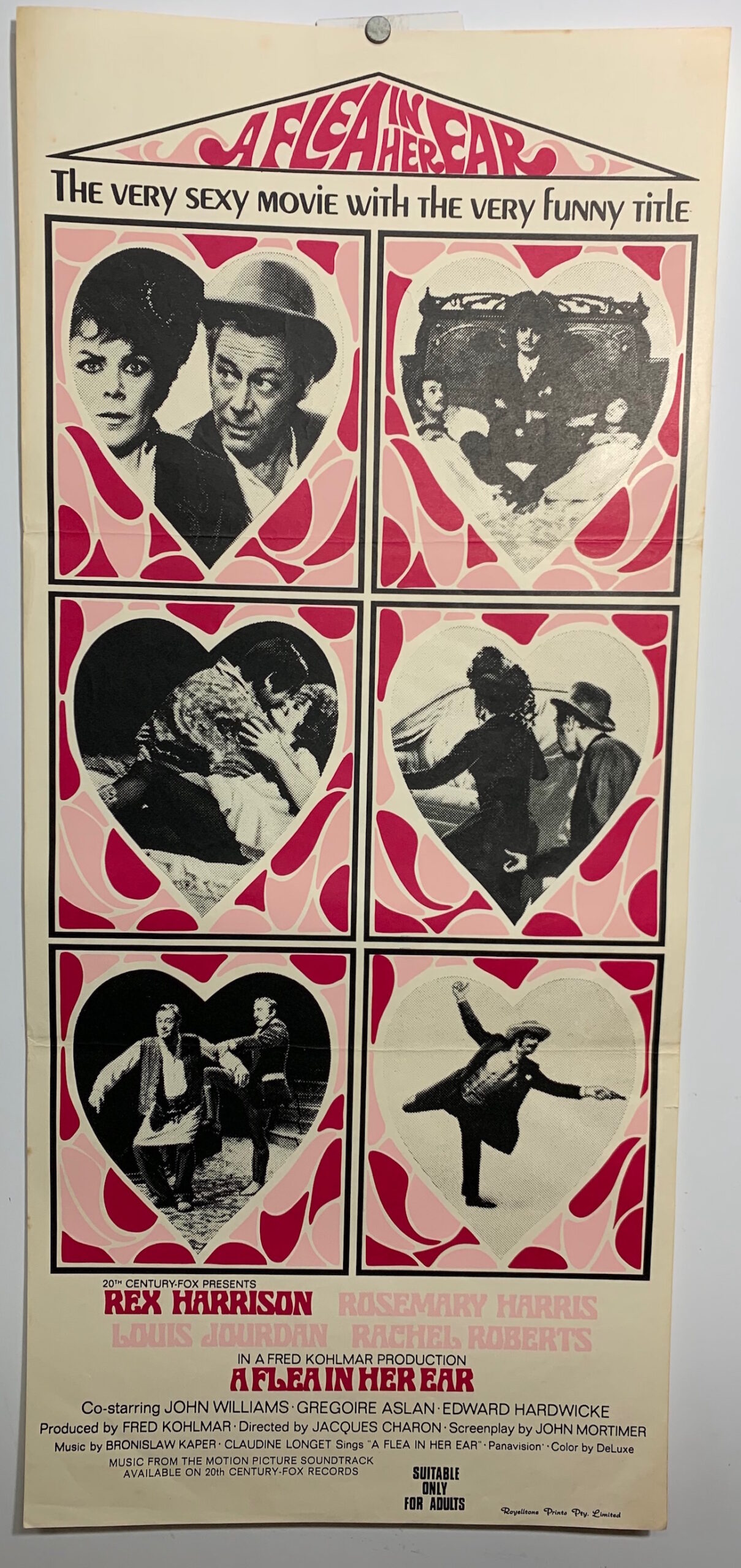
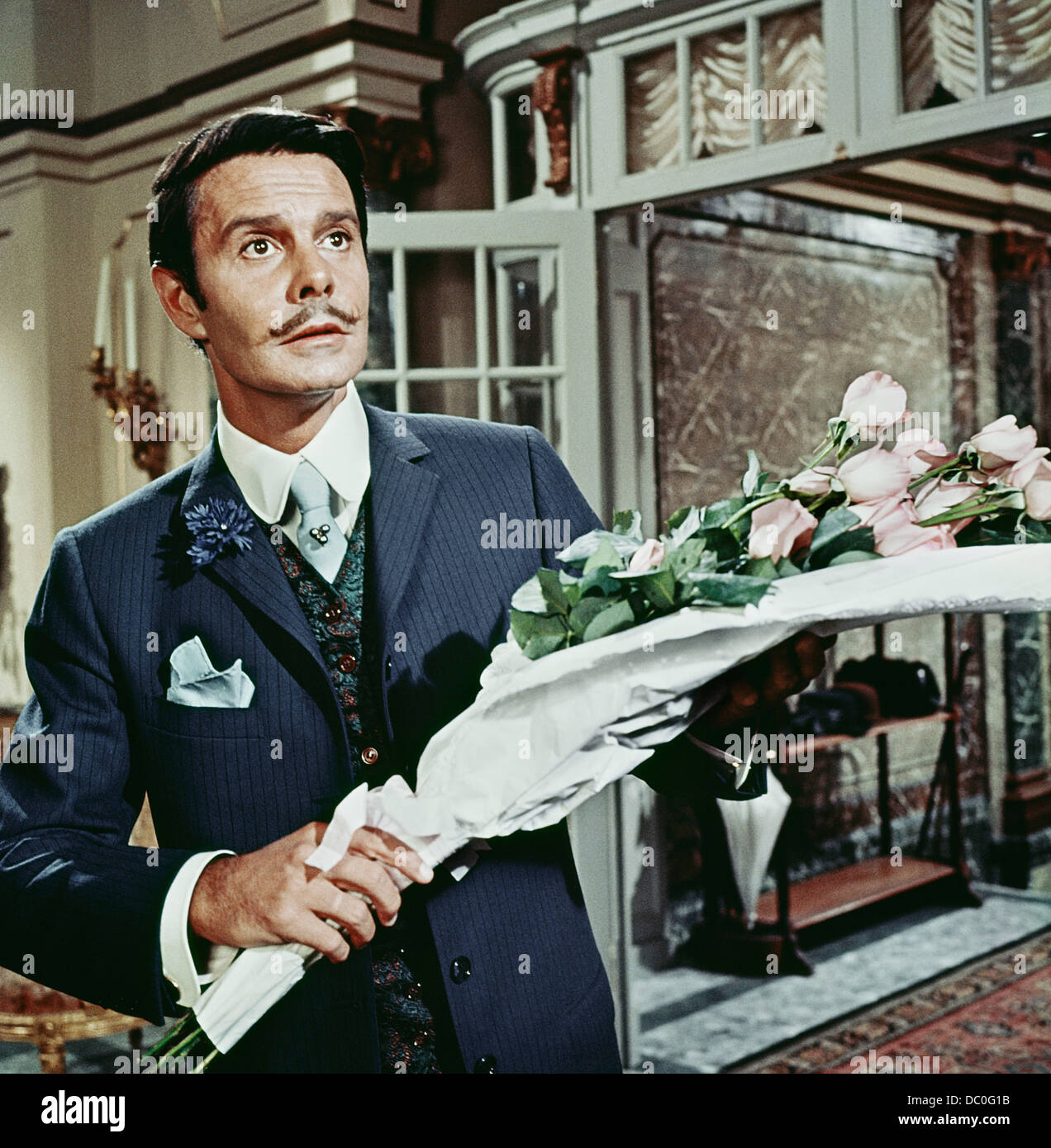
A Flea in Her Ear (1968) is a cinematic adaptation of Georges Feydeau’s classic 1907 French boulevard farce La Puce à l'oreille, directed by Jacques Charon and starring Rex Harrison. The film follows a wife’s ill-fated scheme to test her husband’s fidelity, sparking a cascade of mistaken identities. It remains significant as a rare, high-budget cinematic preservation of classical stage farce mechanics.
Origins and Adaptation: From Belle Époque Theatre to Panavision Cinema
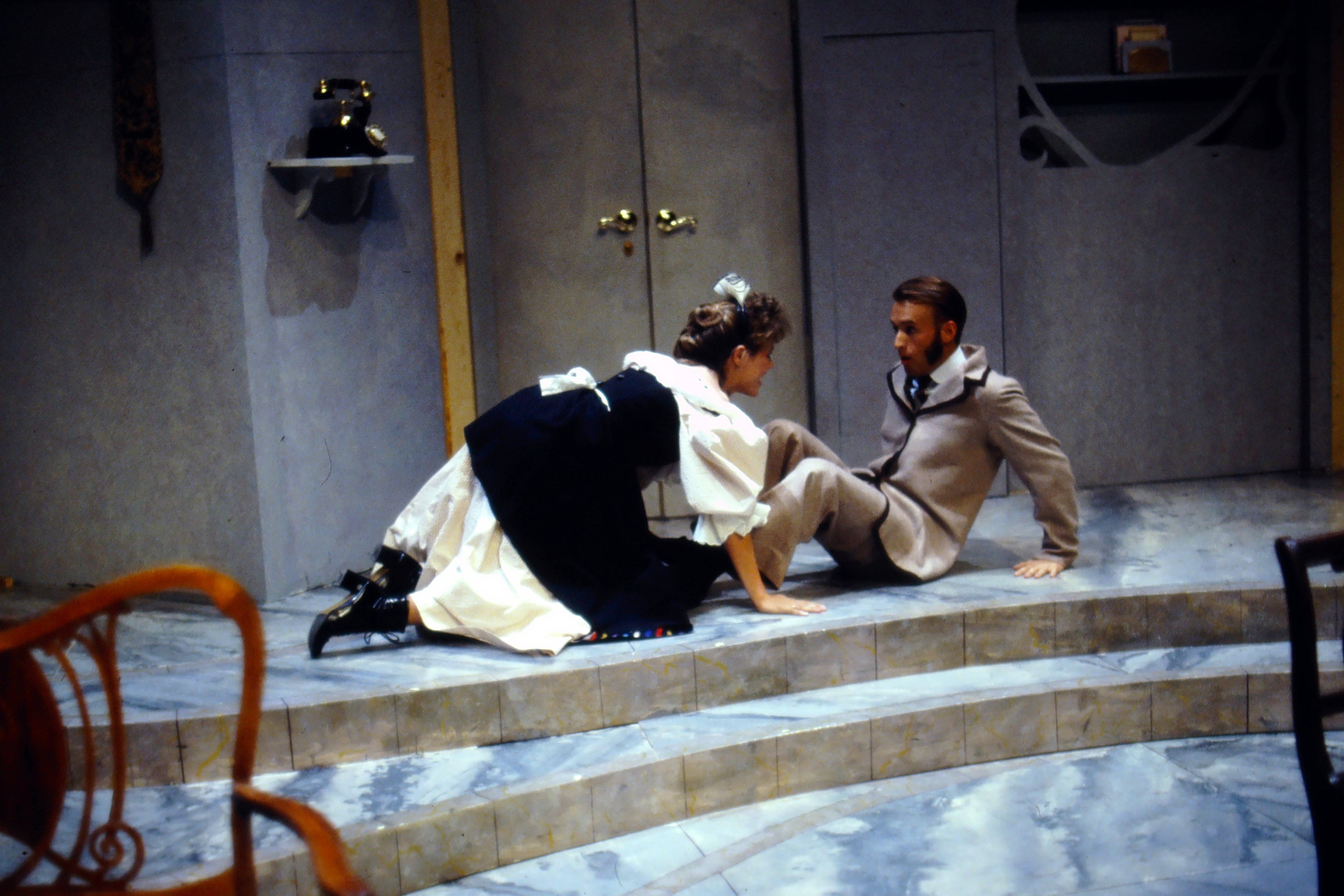
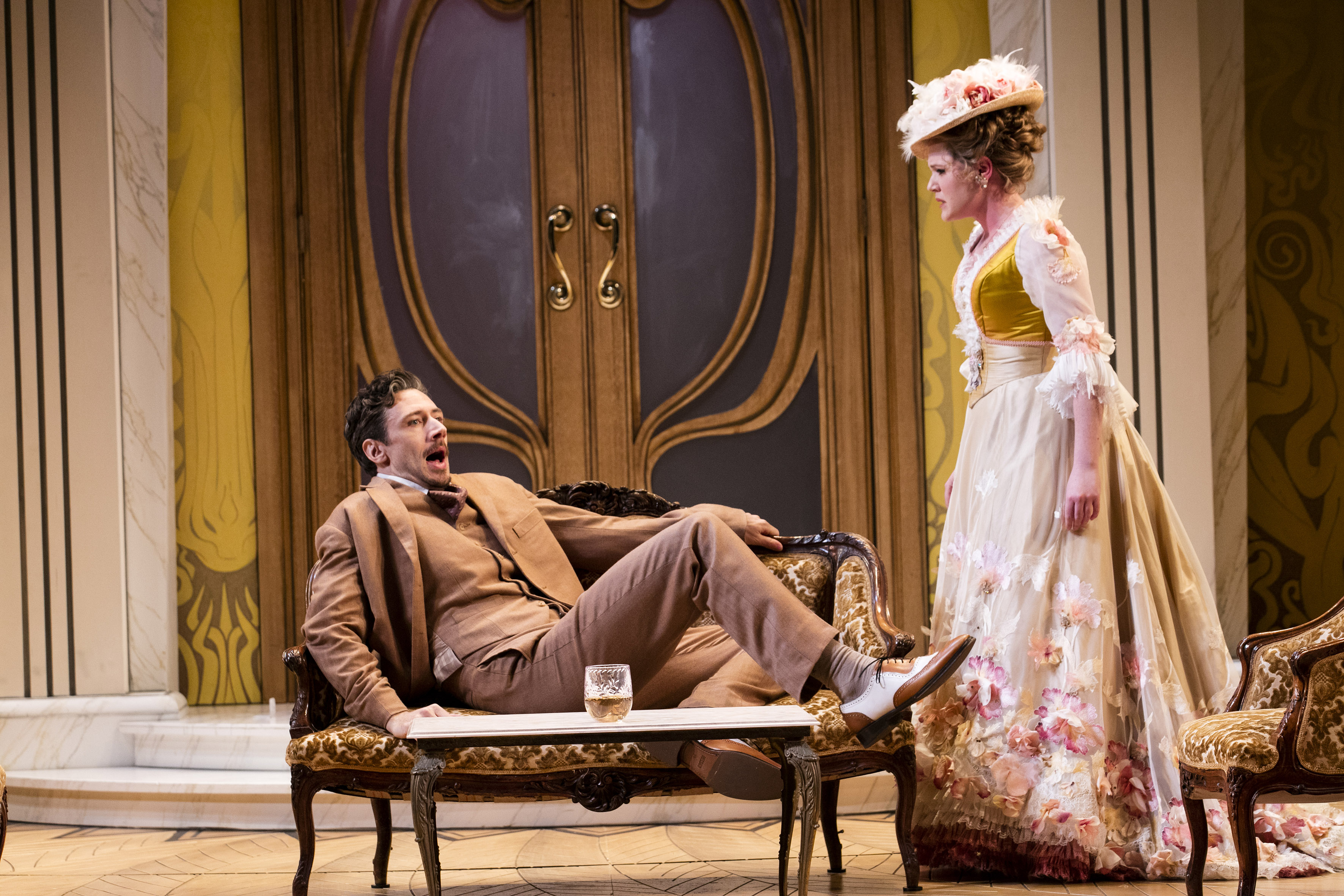
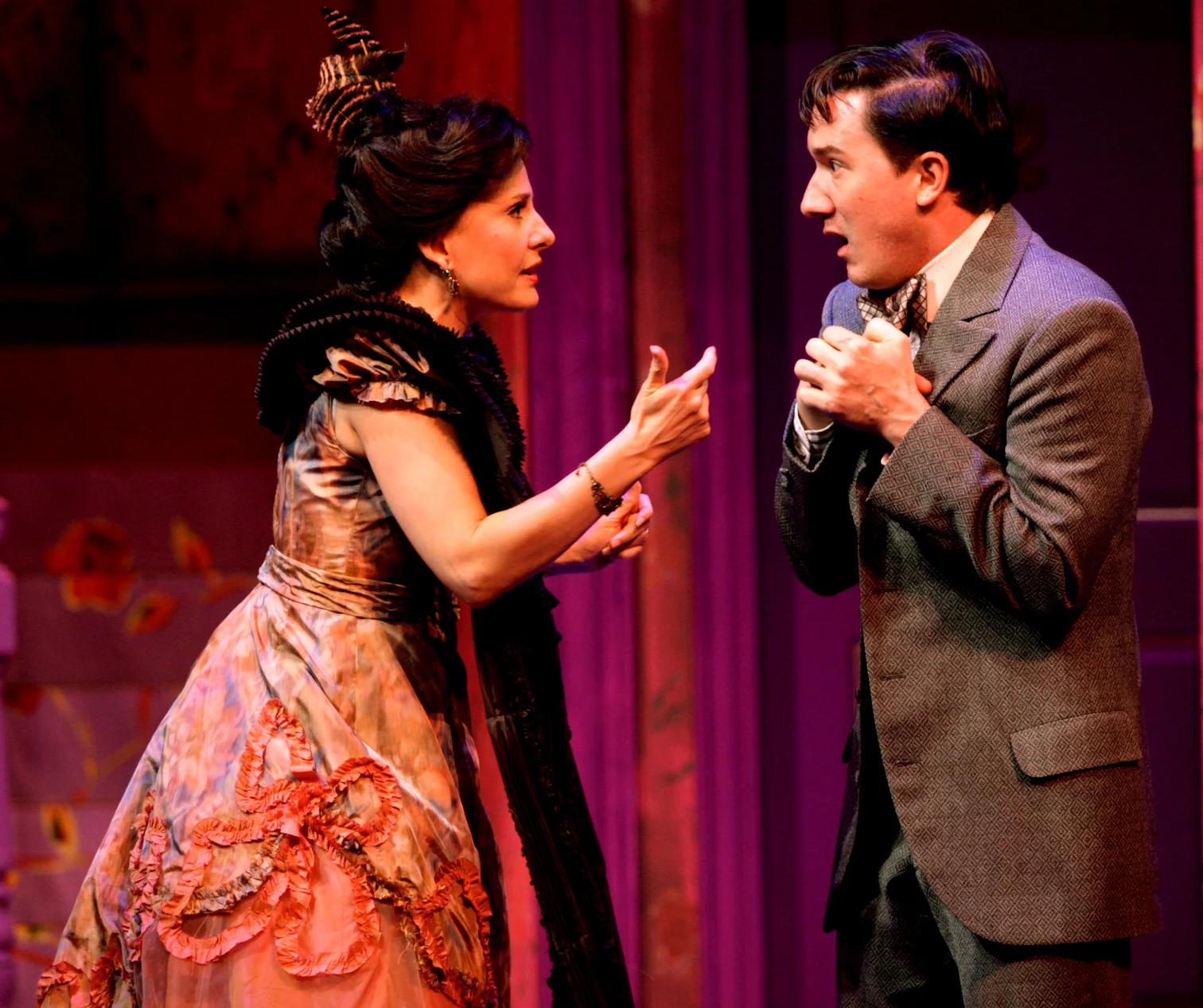
To understand the 1968 feature film A Flea in Her Ear, one must first examine its theatrical lineage. The story originated in 1907 as La Puce à l'oreille, written by Georges Feydeau, the master of French boulevard farce. Feydeau's plays were designed with mathematical precision, relying on split-second timing, overlapping doors, secret rendezvous, and absurd coincidences that exposed the hypocrisies of late-nineteenth and early-twentieth-century bourgeois society.
In the mid-1960s, British playwright John Mortimer crafted a acclaimed English translation for London's Royal National Theatre. Directed by Jacques Charon—a distinguished actor and director from the Comédie-Française—the stage production was a triumphant critical success. It demonstrated that Feydeau's frantic French comedy could translate seamlessly into English dialogue while maintaining its precise physical choreography.
Recognizing the stage production's popularity, 20th Century Fox financed a film adaptation released in 1968. The studio retained Charon as director and brought back Mortimer to adapt his own stage text for the screen. Producer Laurence Harvey assembled an elite international cast led by Oscar-winner Rex Harrison, Rosemary Harris, Louis Jourdan, and Rachel Roberts. By mounting the production in widescreen Panavision and DeLuxe Color, the filmmakers sought to transform a intimate, door-slamming stage comedy into an opulent cinematic spectacle.
Plot Mechanics and Dual Roles: The Anatomy of Farce
The narrative of A Flea in Her Ear relies on a classic farcical premise: a misunderstanding that spirals out of control due to panic, pride, and deceit. The plot centers on Gabrielle Chandebisse (Rosemary Harris), who suspects her seemingly devoted husband, Victor Emmanuel Chandebisse (Rex Harrison), of infidelity due to a sudden, uncharacteristic decline in his marital attentions.
Determined to catch him in the act, Gabrielle enlists her friend Suzanne Carlos (Rachel Roberts) to write an anonymous, romantic letter inviting Victor to a discreet rendezvous at the dubious Hotel Coq d'Or. However, Victor does not intend to cheat. Believing the letter was intended for his handsome friend Henri de Salles (Louis Jourdan), Victor generously gives the letter to Henri instead.
- [Gabrielle Chandebisse]
- Writes Trap Letter
- Sends to [Victor Chandebisse]
- (Misinterpretation) Hands letter to [Henri de Salles]
- Converging at [Hotel Coq d'Or]
- [Victor Chandebisse] (Refined Insurance Exec)
- [Poche the Porter] (Identical Drunken Porter)
The situation escalates dramatically when all parties converge at the Hotel Coq d'Or—a establishment featuring revolving walls and eccentric patrons. The primary engine of the film's second half is the uncanny physical resemblance between Victor Chandebisse and the hotel’s drunken, bumbling hall porter, Poche (both played by Rex Harrison).
Harrison’s dual performance serves as the centerpiece of the film's physical comedy:
- Victor Emmanuel Chandebisse: A dignified, conservative, and easily bewildered insurance executive who cannot comprehend why hotel staff treat him like a menial laborer.
- Poche: A dim-witted, heavily intoxicated porter who continually wanders into delicate situations, oblivious to the panic caused by his presence.
As character after character mistakes Poche for Victor and Victor for Poche, the film unleashes a series of narrow escapes, jealous duels involving Suzanne's hot-tempered Spanish husband Don Carlos Embrouglio, and frantic chases through the hotel corridor.
Production Overview and Key Technical Details
Translating stage farce to screen requires balancing tight spatial mechanics with cinematic movement. The production team utilized widescreen framing and detailed set design to replicate the geometry of the stage within real locations and studio soundstages in Paris.
| Production Feature | Historical and Technical Details |
|---|---|
| Original Playwright | Georges Feydeau (La Puce à l'oreille, 1907) |
| Screenplay Adaptation | John Mortimer |
| Director | Jacques Charon (Comédie-Française) |
| Cinematographer | Charles Lang (18-time Academy Award nominee) |
| Production Design | Georges Wakhévitch |
| Lead Cast | Rex Harrison (Victor / Poche), Rosemary Harris (Gabrielle), Louis Jourdan (Henri), Rachel Roberts (Suzanne) |
| Studio / Distributor | 20th Century Fox |
| Aspect Ratio / Process | 2.35:1 Panavision (DeLuxe Color) |
| Release Year | 1968 |
Why A Flea in Her Ear Still Matters in Cinematic History
While A Flea in Her Ear achieved modest box office success upon its 1968 release, its significance in film history and performance studies has endured. Modern viewers, film scholars, and theatrical historians study the film for several key reasons.
1. A Rare Visual Record of Comédie-Française Stage Techniques
Farce is inherently a theatrical medium. Its humor relies heavily on the audience seeing the entire stage at once—knowing which character is behind which door while watching another character walk into a trap. Film typically breaks spatial continuity through close-ups and quick cuts, which can disrupt the delicate rhythm of farce.
Because director Jacques Charon was a master of traditional French theatrical farce, A Flea in Her Ear acts as a bridge between stage tradition and film direction. Charon often relied on wide Panavision shots, allowing actors to execute complex physical business within a single frame. The film serves as a preserved artifact of mid-century European stage choreography captured on 35mm film.
2. Rex Harrison’s Double Performance
Rex Harrison was best known for his roles in My Fair Lady (1964) and Doctor Dolittle (1967). A Flea in Her Ear challenged him with physical slapstick that contrasted sharply with his refined persona.
- REX HARRISON DUAL PERFORMANCE
- VICTOR
- Refined
- High-status
- Rigid posture
- Fastidious
- POCHE
- Sluggish
- Low-status
- Stooped gait
- Sloppy
- VICTOR
His ability to switch instantly between Victor’s rigid, aristocratic posture and Poche’s sluggish, stooped gait offers a masterclass in comic physical transformation. Comparing Harrison’s performance in this film to his stage work provides valuable insight into how classical actors adapted their body language for widescreen cameras.
3. The Culmination of Studio-Era European Location Spectacle
The late 1960s represented a transitional era for Hollywood studios like 20th Century Fox. Before the rise of gritty New Hollywood cinema in the 1970s, studios invested heavily in lush, European-shot comedy and musical productions.
Shot on location in France with stunning lighting by veteran cinematographer Charles Lang, A Flea in Her Ear captures the visual extravagance of late-1960s studio filmmaking. The elaborate period costumes, Belle Époque set decorations, and vivid color palettes make the film visually distinct from modern low-budget farce adaptations.
4. A Study in Cross-Cultural Adaptation
Translating nineteenth-century French comedy into mid-twentieth-century English cinema presents distinct cultural challenges. John Mortimer’s script preserves Feydeau's underlying critique of marital insecurity and social hypocrisy while tuning the dialogue for English-speaking audiences. Studying the screenplay offers valuable lessons for dramaturgs, translators, and screenwriters tasked with adapting classic foreign-language stage plays for modern audiences.
Critical Reception and Comparative Legacy
Upon its release in late 1968, A Flea in Her Ear received mixed reviews from film critics. Reviewers at the time, such as those writing for The New York Times, noted that the film occasionally struggled to maintain the relentless pace required by farce when transitioning from stage to camera. Film editing naturally breaks up the live momentum that propels theatrical performances.
However, retrospectives offer a more balanced perspective. When evaluated alongside modern adaptations of stage comedies, A Flea in Her Ear stands out for its high production values and refined performances.
| Traditional Stage Farce | Cinematic Farce (1968 Film) |
|---|---|
| Fixed audience view | Dynamic camera moves & edits |
| Real-time physical momentum | Spatial freedom & location shoots |
| Exaggerated stage projection | Subtler camera-ready facial acting |
| Relies on spatial continuity | Uses wide Panavision framing |
Rather than comparing it strictly to live theatre, modern cinema historians view the film as a unique hybrid: a high-budget studio experiment that brought classical French boulevard comedy to mainstream global audiences.
Frequently Asked Questions
What does the phrase "a flea in her ear" mean?
The idiom "to have a flea in one's ear" means to suffer an unexpected rebuff, a sharp chastisement, or to be sent away with a troubling idea planted in one's mind. In the context of the play and film, it refers to Gabrielle’s sudden, nagging suspicion that her husband is being unfaithful to her.
Who wrote the original play that the film is based on?
The film is based on the 1907 French play La Puce à l'oreille, written by Georges Feydeau. Feydeau is widely considered one of the most influential writers of French boulevard farce, famous for his intricate plots, door-slamming mechanics, and satirical view of bourgeois marriage.
Does Rex Harrison play two different characters in the film?
Yes. Rex Harrison plays dual roles: Victor Emmanuel Chandebisse, a wealthy and respectable insurance executive, and Poche, a dim-witted, alcoholic porter working at the Hotel Coq d'Or. The plot's central confusion relies on characters mistaking one man for the other.
How does the 1968 film differ from the original stage play?
While John Mortimer’s screenplay remains largely faithful to Feydeau's original plot mechanics, the 1968 film expands the setting visually. Instead of keeping the action confined to interior stage sets, the film utilizes real Parisian locations, open-air carriage sequences, and elaborate architectural set pieces designed specifically for widescreen cameras.
Is A Flea in Her Ear available to watch on modern streaming services?
Streaming availability varies by region and licensing agreements. A Flea in Her Ear is periodically available on digital rental platforms and streaming services that catalog classic 20th Century Fox titles. It has also been released on home video formats, including DVD and manufacture-on-demand MOD Blu-ray editions by archival home entertainment distributors.
Viewing Recommendations for Classic Cinema Enthusiasts
For scholars, actors, and classic film enthusiasts interested in exploring A Flea in Her Ear, the following approach will maximize your appreciation of its place in cinematic history:
- Observe the Spatial Framing: Pay close attention to how director Jacques Charon uses long shots during the middle section set at the Hotel Coq d'Or. Notice how he keeps multiple doorways in frame to preserve the spatial geometry necessary for farce.
- Analyze Harrison’s Acting Mechanics: Study how Rex Harrison uses posture, vocal inflection, and facial expressions to distinguish Victor from Poche without relying heavily on prosthetic makeup.
- Compare Stage and Screen Rhythm: Read John Mortimer’s stage translation alongside watching the film to observe where camera edits replace physical stage business, noting how rhythm shifts between live theatre and edited cinema.
By approaching A Flea in Her Ear not merely as a 1960s slapstick comedy, but as an ambitious attempt to translate century-old French theatrical choreography into mid-century Hollywood spectacle, modern viewers can appreciate its craft, historical context, and enduring value.