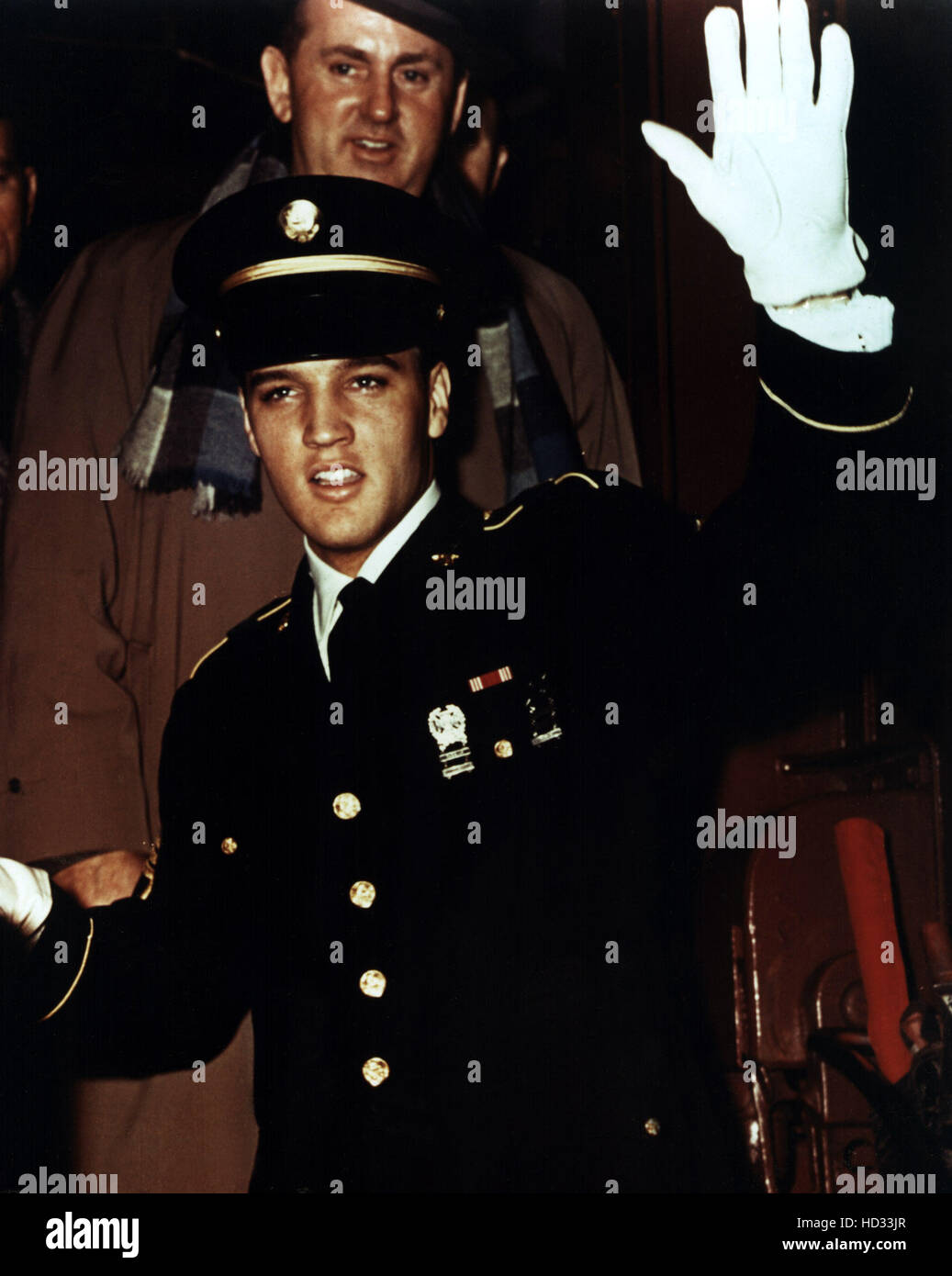
Elvis Presley and Colonel Tom Parker constructed a business relationship that fundamentally reshaped the modern entertainment industry, though its financial legacy was heavily defined by disadvantageous royalty splits, missed global opportunities, and the eventual landmark restructuring of the Elvis Presley estate after the singer's death.
The professional partnership between Elvis Presley and his manager, Colonel Tom Parker (born Andreas Cornelis van Kuijk), remains one of the most studied and scrutinized business arrangements in pop culture history. Built upon absolute control, relentless touring, merchandising, and high-stakes Hollywood film contracts, their alliance generated unprecedented wealth. However, it also exposed profound structural flaws in how early rock and roll artists managed their intellectual property, image rights, and long-term financial security. Understanding this legacy requires a rigorous examination of their foundational business deal, the operational mechanics of Parker's management, the near-collapse of Graceland's finances, and the modern corporate entity that finally secured the Presley fortune.
The Foundations of the Partnership and the 50-50 Split
The formal business relationship between Elvis Presley and Colonel Tom Parker began in March 1956, when Parker became Presley's sole representative. Before this formal arrangement, Parker had acted as an advisor while steering Presley's career away from small-time regional promoters toward RCA Victor, where Parker orchestrated the buyout of Presley's Sun Records contract for a historic $40,000.
While the RCA deal was a masterstroke that provided Presley with national distribution and a substantial advance, the underlying management agreement established a deeply unfavorable dynamic. Parker initially claimed a standard 25 percent commission on Presley’s earnings, which was higher than the industry average of 15 to 20 percent for artist management at the time. By the early 1960s, as Presley's film career dominated his output, Parker's financial take escalated significantly. Through various renegotiated contracts and verbal understandings, Parker frequently secured a 50 percent split on numerous ventures, effectively operating as an equal business partner rather than a traditional artist manager.
This arrangement became a point of contention among music industry observers and later legal examiners. Unlike contemporary managers who provided specialized administrative oversight while allowing artists to retain publishing and songwriting royalties, Parker leveraged Presley's absolute reliance on him to consolidate control. Parker famously did not allow Presley to tour internationally—allegedly because Parker, an undocumented immigrant from the Netherlands, lacked a passport and feared deportation if he left the United States. This restriction deprived Presley of massive global revenues during the height of the British Invasion and European music booms, anchoring the singer's income primarily to domestic touring, merchandising, and Hollywood box office returns.
Merchandising Exploits and the Hollywood Era
Parker’s business strategy relied heavily on volume, licensing, and merchandising rather than long-term asset accumulation or equity retention. During the mid-to-late 1950s, Parker authorized a staggering array of Elvis-branded merchandise, ranging from "I Love Elvis" badges and lipsticks to stuffed hound dogs and cardboard guitars. While these items cemented Presley's status as a cultural phenomenon, the licensing deals were structured poorly. Parker often traded long-term royalty percentages for upfront lump-sum payments to satisfy immediate cash flow demands, leaving millions of dollars in potential passive income on the table.
| Business Venture | Parker / Management Strategy | Financial Impact on Presley |
|---|---|---|
| RCA Record Contract | High initial advance ($40k buyout) | Secured national reach, but high splits |
| Merchandising Deals | Upfront lump-sum cash buyouts | Traded long-term royalties for cash |
| Hollywood Film Contracts | Quantity over quality (31 films) | Saturated market, stifled artistic growth |
| International Touring | Total ban on overseas concerts | Lost hundreds of millions in global revenue |
The Hollywood phase of Presley’s career, which spanned from 1960 to 1969, perfectly illustrated Parker's transactional philosophy. Parker locked Presley into a rigid, repetitive formula of low-budget musical films produced by Paramount, Metro-Goldwyn-Mayer, and United Artists. While these films were financially reliable and cheap to produce, they saturated the market, alienated serious music critics, and distanced Presley from the burgeoning counterculture rock scene of the late 1960s. Parker prioritized securing substantial upfront salaries and percentages of the gross box office for himself and Presley, ignoring the artistic degradation of his client's brand until the 1968 NBC Television Special briefly revitalized Presley's credibility as a live performer.
The Financial State of the Estate at the Time of Presley's Death
When Elvis Presley died on August 16, 1977, his personal finances were in a state of alarming vulnerability, despite having lifetime earnings estimated in the tens of millions of dollars. Maintaining Graceland, supporting a sprawling entourage known as the "Memphis Mafia," funding lavish personal expenses, and enduring aggressive taxation left the liquid estate severely depleted. Probate records revealed that Presley's liquid cash assets amounted to less than $1 million at the time of his passing.
Colonel Parker’s continued involvement immediately following the death compounded the financial crisis. Parker negotiated a blanket buyout of Presley's past record royalties with RCA in 1973—selling off the master rights to all recordings made prior to that year for a lump sum of $5.4 million, of which Presley received half after Parker took his customary massive commission. This short-sighted transaction permanently stripped the estate of billions of streams and physical sales royalties from foundational hits like "Heartbreak Hotel," "Hound Dog," and "All Shook Up."
Furthermore, the annual maintenance costs for Graceland, combined with estate taxes, threatened to force a public liquidation of the property. The estate was losing hundreds of thousands of dollars annually, and executors feared that the home and its contents would have to be sold off to satisfy creditors and tax liabilities.
The Landmark Legal Investigation and the Dismantling of Parker's Control
The turning point for the financial legacy of Elvis Presley arrived when Priscilla Presley, acting as co-executor of the estate for their minor daughter Lisa Marie Presley, initiated a thorough legal investigation into Colonel Parker's management practices in 1980. Presided over by a Tennessee judge, the court-appointed independent investigation led by attorney Blanchard Tual uncovered a pattern of exploitative financial arrangements.
The investigation revealed that Parker’s 50 percent commission rate was exorbitant and far outside industry standards. More damningly, Tual's report exposed that Parker had systematically failed to act in his client's best financial interests, utilizing Presley's earnings to cover questionable debts and maintaining an iron grip on merchandising and publishing rights through complex shell entities.
Rather than engaging in a protracted, highly public trial that would damage both parties, the estate reached a definitive legal settlement with Parker in 1983. Under the terms of the agreement, the estate severed all future business ties with Parker, releasing him from past claims in exchange for a complete surrender of his management contracts. To settle remaining financial obligations, the estate purchased various Parker-held rights and agreed to pay him a diminishing percentage of certain future revenues over a transitional period. This legal victory liberated the Presley assets from external exploitation and paved the way for professional corporate management.
The Resurrection and Modern Valuation of Elvis Presley Enterprises
Following the removal of Colonel Parker, Priscilla Presley and the estate's newly appointed executives executed a radical business turnaround. The primary and most consequential decision was opening Graceland to the general public on June 7, 1982. What was initially conceived as a temporary measure to generate emergency operating capital transformed into one of the most successful heritage tourism attractions in the world, drawing hundreds of thousands of visitors annually.
To manage the burgeoning commercial interests, the estate established Elvis Presley Enterprises, Inc. (EPE). Under professional corporate stewardship, EPE systematically reclaimed control over licensing, image rights, publishing, and merchandising. Rather than accepting cheap upfront licensing fees, EPE retained equity and intellectual property rights, ensuring that the Presley name generated compounding passive income across generations.
The financial valuation of the estate soared exponentially in the decades following the 1983 settlement. In 2004, Lisa Marie Presley sold an 85 percent business stake in Elvis Presley Enterprises to FXI, a division of CKX, Inc., in a deal valuing the entire estate at approximately $100 million while retaining 100 percent ownership of Graceland Mansion itself and its personal artifacts. Subsequent acquisitions and licensing agreements—culminating in Authentic Brands Group (ABG) managing the portfolio alongside Graceland's operational team—solidified Elvis Presley as a permanent fixture on the Forbes list of top-earning deceased celebrities, routinely generating tens of millions of dollars annually.
Frequently Asked Questions
What was Colonel Tom Parker's commission split with Elvis Presley?
Colonel Parker’s commission evolved from a standard 25 percent rate in the 1950s to a lucrative 50 percent split on many major ventures, including film deals, merchandising, and overall earnings, during the 1960s and 1970s. This was significantly higher than the standard industry management fee of 15 to 20 percent.
Why did Elvis Presley never tour internationally?
Elvis Presley never performed a major concert tour outside of North America—limited strictly to three shows in Canada in 1957—primarily because Colonel Tom Parker refused to leave the United States. Parker was an undocumented immigrant born in the Netherlands who lacked legal citizenship or a passport, fearing that leaving the country would result in being denied reentry.
How much was the Elvis Presley estate worth when he died in 1977?
At the time of his death in 1977, Elvis Presley’s liquid cash estate was valued at less than $1 million, largely due to high personal spending, supporting a large entourage, maintaining Graceland, and disadvantageous financial deals. However, the underlying intellectual property and asset value were substantial once properly managed.
What was the outcome of the 1980 legal investigation into Colonel Parker?
The court-ordered investigation led by attorney Blanchard Tual concluded that Colonel Parker had systematically exploited Presley through excessive commissions and poor business deals. In 1983, the estate settled with Parker, terminating his management contract, cutting off his profit participation, and freeing the estate for professional corporate restructuring.
Who currently owns and manages Elvis Presley Enterprises?
Elvis Presley Enterprises is managed in partnership with Authentic Brands Group (ABG), which owns a controlling stake in the commercial rights. Lisa Marie Presley and her heirs retained absolute ownership of Graceland Mansion and its original historic artifact collection.
Strategic Next Actions for Managing Legacy Assets
For estate planners, artists, and rights holders analyzing the historical trajectory of the Elvis Presley catalog and estate, the primary takeaway involves the critical importance of independent oversight and structural asset retention. Modern creators must avoid short-term lump-sum buyouts of foundational masters and publishing rights in favor of long-term equity holding. Establishing rigorous fiduciary checks and separating artist management from merchandising and publishing representation prevents the concentration of power that ultimately compromised Elvis Presley’s financial legacy during his lifetime.