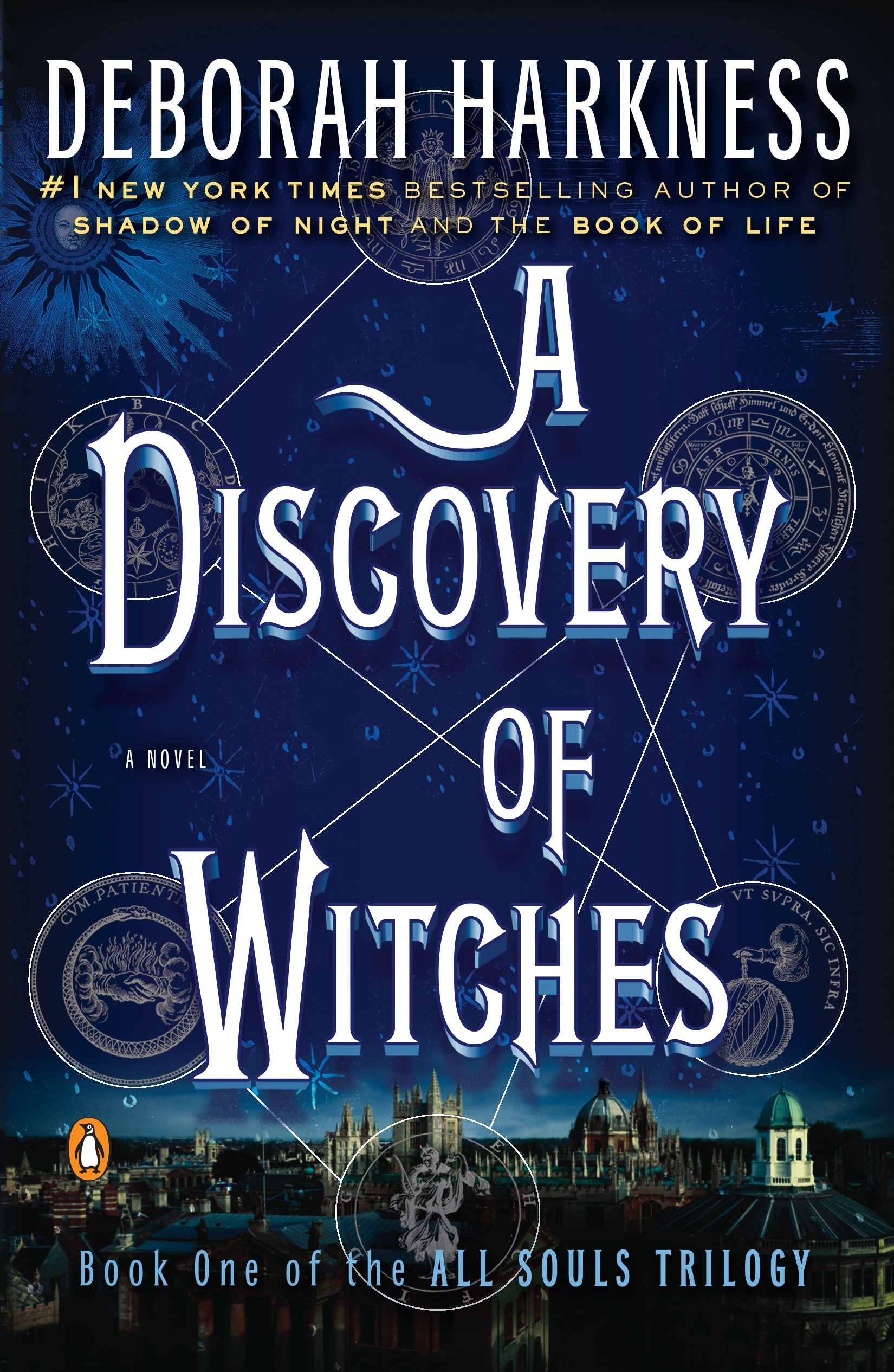
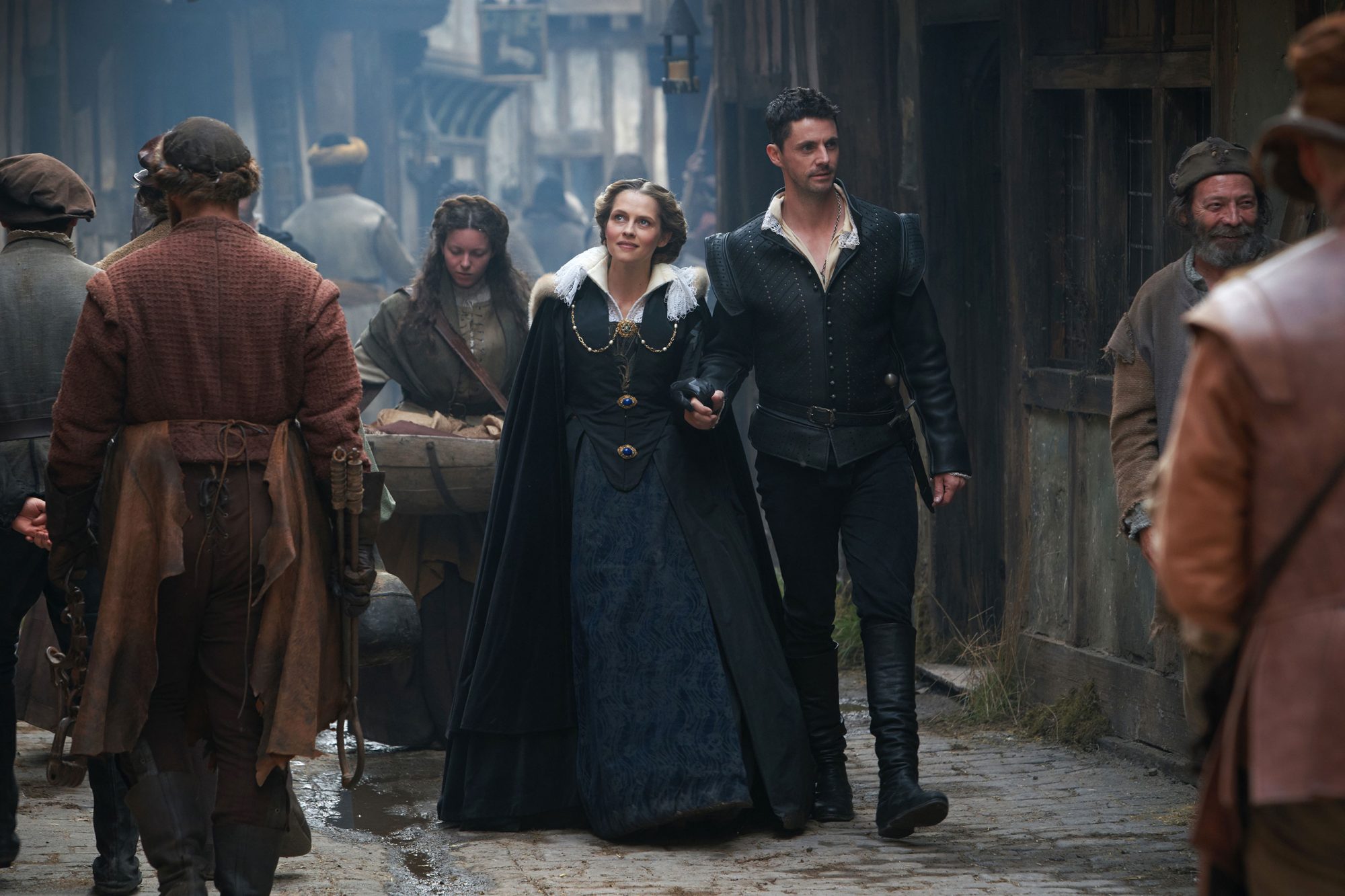
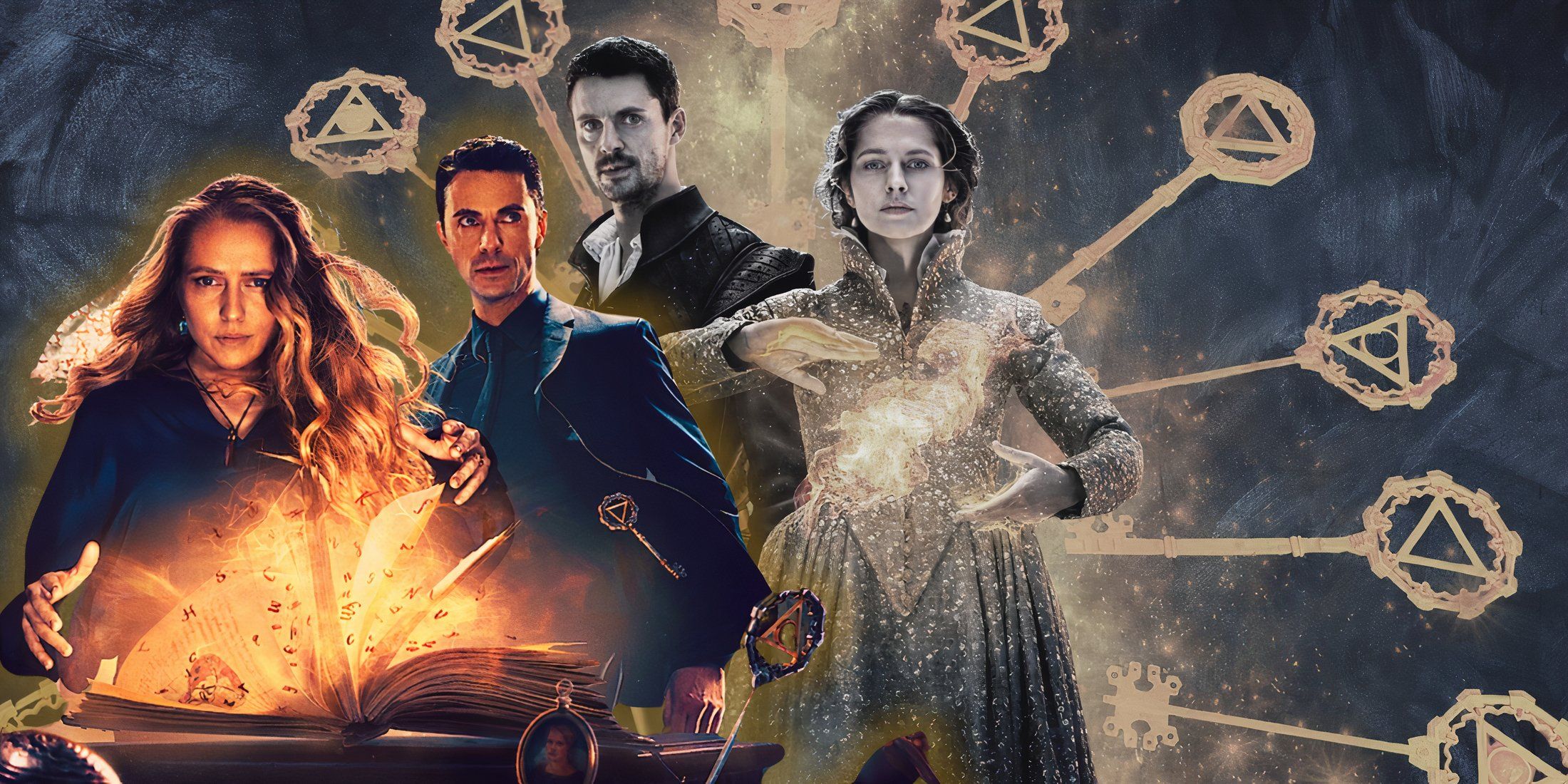
A Discovery of Witches is the acclaimed opening novel of Deborah Harkness's All Souls trilogy, as well as its hit three-season television adaptation starring Teresa Palmer and Matthew Goode. Combining academic history, supernatural romance, and creature politics, the series follows reluctant witch Diana Bishop as she uncovers an enchanted manuscript that sparks a global struggle among witches, vampires, and daemons.
Understanding the All Souls Universe: Novel Series and Chronology
Deborah Harkness, a professor of history at the University of Southern California, published A Discovery of Witches in 2011. Drawing heavily from her academic background in the history of science, alchemy, and early modern Europe, Harkness built a supernatural mythology grounded in real-world historical archives, scientific theories, and rare manuscripts. The success of the initial novel expanded the narrative into the broader All Souls series, which encompasses the core trilogy, a companion guide, and subsequent spin-off novels.
Navigating the All Souls literary world requires understanding both publication order and narrative chronology. While the original trilogy tells a complete, self-contained story centered on Diana Bishop and Matthew Clairmont, expanded novels explore the backstory of supporting characters and continue the narrative beyond the initial trilogy's conclusion.
Core Books and Publication Order
- A Discovery of Witches (2011): Introduces Dr. Diana Bishop, an American historian researching alchemy at the Bodleian Library in Oxford. When Diana accidentally summons the spellbound manuscript Ashmole 782, she triggers an influx of supernatural creatures seeking the book's secrets, forcing her to team up with geneticist and vampire Matthew Clairmont.
- Shadow of Night (2012): Picking up immediately after the events of the first book, Diana and Matthew use time-walking to travel back to 1590 Elizabethan London. The novel explores Matthew's past as a member of the historical "School of Night," while Diana searches for a tutor to help her master her unpredicted magical abilities.
- The Book of Life (2014): The dramatic finale brings the couple back to the present day to face the governing body of creatures known as the Congregation. Together, they work to solve the remaining mysteries of Ashmole 782 and decipher the genetic connections linking witches, vampires, and daemons.
- Time's Convert (2018): A companion novel focusing primarily on Matthew's vampire offspring, Marcus Whitmore, tracing his origins during the American Revolutionary War alongside the present-day transformation of his human partner, Phoebe Taylor.
- The Black Bird Oracle (2024): Extends Diana Bishop's journey as she travels to Ipswich, Massachusetts, to explore her maternal ancestry, confronting deeper family secrets and darker aspects of higher magic.
Mythological Foundations: Ashmole 782, Creature Politics, and the Covenant
The narrative architecture of A Discovery of Witches relies on a structured supernatural ecosystem. Unlike conventional urban fantasy where creatures live in hiding or engage in overt open warfare, Harkness establishes a world governed by strict bureaucratic laws, evolutionary pressures, and centuries of enforced isolation.
- The Congregation (9-Member Ruling Body)
- Witches (3 seats)
- Vampires (3 seats)
- Daemons (3 seats)
The Three Creature Species
- Witches: Wielders of elemental and higher magic. Witches can channel earth, air, fire, and water, as well as rare abilities such as time-walking, weaving, and sight. Over generations, witch bloodlines have experienced a measurable decline in raw power, a phenomenon closely tied to the loss of ancient knowledge.
- Vampires: Immortal beings created through blood transmission. Possessing enhanced strength, heightened senses, and longevity spanning millennia, vampires maintain tight patriarchal family structures. However, modern vampires face reproductive decline and a devastating neurological condition known as blood-rage.
- Daemons: Creative, erratic, and highly intellectual beings. While daemons lack explicit magical abilities or physical immortality, their unique brain chemistry makes them visionary artists, musicians, scientists, and thinkers. Despite their contributions, daemons are frequently marginalized by witches and vampires.
The Covenant and the Congregation
To maintain survival and avoid human persecution, the three species established The Covenant during the Middle Ages. Enforced by The Congregation—an international governing council consisting of nine representatives (three witches, three vampires, and three daemons) based in Venice, Italy—the Covenant strictly forbids inter-species romantic relationships and mandates total segregation between the groups.
The main conflict in A Discovery of Witches erupts when Diana (a witch) and Matthew (a vampire) form a romantic partnership to protect Ashmole 782, also known as the Book of Life. Ashmole 782 is an alchemical text missing three crucial pages. Legend holds that the manuscript contains the origin stories of all three species, explaining why each creature group seeks it: witches believe it contains their original spells, vampires hope it reveals the secret to immortality and lineage preservation, and daemons suspect it holds the key to their purpose.
The Television Adaptation: Seasons, Cast, and Production
In 2018, British production company Bad Wolf, in conjunction with Sky Studios, adapted the novels into a premium drama series titled A Discovery of Witches. Broadcast on Sky One in the United Kingdom and distributed globally across AMC, Shudder, and Sundance Now in North America, the adaptation ran for three seasons, concluding in 2022.
The series earned praise for its lush cinematic production values, faithful adherence to the source material's historical settings, and compelling lead performances. Filmed across Wales, Oxford, Venice, and France, the production faithfully recreated historical periods, including meticulous set designs for Elizabethan London in Season 2.
- Book 1: A Discovery of Witches (2011): TV Season 1 (2018) [8 Episodes]
- Book 2: Shadow of Night (2012): TV Season 2 (2021) [10 Episodes]
- Book 3: The Book of Life (2014): TV Season 3 (2022) [7 Episodes]
Key Cast and Characters
- Teresa Palmer as Dr. Diana Bishop: A tenured historian and powerful weaver-witch who initially rejects her magic following the murder of her parents, only to accept her power after opening Ashmole 782.
- Matthew Goode as Matthew Clairmont: A 1,500-year-old French vampire, nobleman, and Oxford geneticist who suffers from blood-rage while striving to understand the genetic decay of supernatural species.
- Owen Teale as Peter Knox: A high-ranking, manipulative witch representative on the Congregation who stops at nothing to secure Ashmole 782 for witch supremacy.
- Alex Kingston as Sarah Bishop: Diana's fierce aunt and a skilled witch who raises Diana at the ancestral Bishop house in Madison, New York.
- Valarie Pettiford as Emily Mather: Sarah's partner and a gentle, intuitive witch specializing in scrying and spirit communication.
- Edward Bluemel as Marcus Whitmore: Matthew's vampire son, a physician, and later Grand Master of the Knights of Lazarus who advocates for reforming creature laws.
- Lindsay Duncan as Ysabeau de Clermont: Matthew's formidable vampire mother and matriarch of the de Clermont family residing at Sept-Tours in France.
Comparing the Books and the Television Series
While the television adaptation remains notably faithful to Deborah Harkness's narrative structure, adapting complex literary world-building into visual media required key structural and character adjustments.
| Feature | Book Series (Deborah Harkness) | TV Adaptation (Bad Wolf / Sky) |
|---|---|---|
| Point of View | Primarily Diana's first-person perspective (Book 1) | Ensemble third-person visual perspective across all episodes |
| Congregation Politics | Unfolds gradually as Diana learns about creature society | Introduced in early episodes to build parallel narrative tension |
| Daemon Representation | Detailed internal monologues and subtle psychological exploration | Streamlined plotlines focusing on key figures like Sophie Norman |
| Scientific Explanations | Extensive text on DNA sequencing, cell biology, and alchemy | Visual metaphors, lab montages, and simplified dialogue |
Narrative Perspective Expansion
In the first novel, the story is told almost exclusively through Diana Bishop's first-person perspective, leaving readers unaware of off-screen events until Diana learns about them. The television adaptation expands this view immediately into an ensemble format. Viewers follow Congregation meetings in Venice, political maneuverings by Peter Knox, and the activities of Matthew's vampire relatives in France long before Diana interacts with them directly.
Pace and Scientific Complexity
Harkness's novels spend hundreds of pages detailing academic research, historical context, and genetic science. Matthew's laboratory work at Oxford involves detailed breakdowns of chromosome structures, mitochondrial DNA, and historic blood samples. The television series condenses these heavy scientific passages into visually engaging laboratory scenes and concise summaries, prioritizing narrative momentum while retaining core concepts like genetic degeneration and cross-species hybridization.
Complete Reference Matrix: Books, Seasons, and Core Themes
The following table details how the literary works correspond to the television adaptation, outlining focal settings, primary story arcs, and platform distribution.
| Source Novel | TV Adaptation | Primary Time Period & Setting | Main Story Arc & Narrative Focus | Key Historical Figures / Lore |
|---|---|---|---|---|
| A Discovery of Witches (2011) | Season 1 (2018, 8 Episodes) | Present Day: Oxford, UK; Sept-Tours, France; Madison, NY | Diana summons Ashmole 782; Diana and Matthew meet; discovery of cross-species love and initial conflict with the Congregation. | Ashmole 782 introduction, Bishop family history, basic spell-casting. |
| Shadow of Night (2012) | Season 2 (2021, 10 Episodes) | 1590 Elizabethan England; Renaissance Europe | Diana and Matthew time-walk to 16th-century London to find a magic tutor and secure the intact Ashmole 782 manuscript. | Queen Elizabeth I, Christopher Marlowe, Sir Walter Raleigh, Mary Sidney. |
| The Book of Life (2014) | Season 3 (2022, 7 Episodes) | Present Day: London, Oxford, Venice, New Orleans | Return to the present; search for missing pages; resolution of blood-rage genetic mystery; final showdown with Congregation. | Genetic DNA mapping of creatures, creation of the Scion, reform of Covenant. |
| Time's Convert (2018) | N/A (Mentioned in backstory) | 1770s American Revolution; Present Day Paris | Marcus Whitmore's vampire origin story; Phoebe Taylor's vampire transformation process. | Marquis de Lafayette, Revolutionary War medicine, vampire transformation mechanics. |
| The Black Bird Oracle (2024) | N/A | Present Day: Ipswich, Massachusetts | Diana explores her family's dark magical heritage and higher magic techniques. | Salem witch trials legacy, higher magic weaving, ancestral memory work. |
Frequently Asked Questions
What is Ashmole 782 in A Discovery of Witches?
Ashmole 782, also known as the Book of Life, is a central palimpsest manuscript in the All Souls series. It is an enchanted alchemical text containing origin secrets, magic spells, and genetic information concerning witches, vampires, and daemons. It was bound by magic so that only specific individuals, such as Diana Bishop, could unlock its pages.
Why are vampires, witches, and daemons declining in power?
In the series, all three species face species decay due to centuries of enforcing the Covenant. By forbidding inter-species relationships and encouraging isolated breeding within tight pools, the species suffered genetic stagnation. Witches lost ancient magical abilities, vampires struggled with blood-rage and infertility, and daemons faced increased mental instability.
How many seasons are in the TV adaptation of A Discovery of Witches?
The television adaptation consists of three complete seasons comprising 25 total episodes. Season 1 premiered in 2018, Season 2 in 2021, and the final Season 3 concluded in 2022. Each season directly corresponds to one book in Deborah Harkness's original All Souls trilogy.
Do you need to read the books before watching the TV show?
No, the television series is designed as a standalone adaptation that explains the necessary lore, magic systems, and character backgrounds. However, reading the books provides much deeper insights into the complex genetic science, internal character motivations, and historical context that the show condenses.
Is A Discovery of Witches based on real history?
While the supernatural elements are fictional, Deborah Harkness incorporates significant real-world history. Elias Ashmole was a real 17th-century collector whose manuscripts reside at the Bodleian Library (where Ashmole 782 is listed as missing in real life). Historical figures such as Christopher Marlowe, Sir Walter Raleigh, and Queen Elizabeth I appear as active characters during the Elizabethan time-walk narrative in Shadow of Night.
Where to Begin: Actionable Guidance for Readers and Viewers
Whether entering the All Souls universe through literature or television, following an organized approach ensures the best experience of Deborah Harkness's world.
Recommended Entry Paths
- For Television-First Viewers: Begin with Season 1 of A Discovery of Witches, available on major streaming channels including AMC+, Shudder, and regional cable networks depending on your territory. Watch the seasons sequentially (Seasons 1 through 3), as the narrative relies on continuous character arcs and evolving political stakes.
- For Literary Readers: Start with the novel A Discovery of Witches (2011), followed by Shadow of Night (2012) and The Book of Life (2014). Read Time's Convert (2018) after completing the main trilogy to explore the wider world, before proceeding to The Black Bird Oracle (2024).
- For Historical and Academic Enthusiasts: Pay close attention to Harkness's integration of real-world historical archives, particularly the real-life historical accounts of the Bodleian Library collections and early modern alchemical manuscripts documented by the actual historical figure Elias Ashmole.