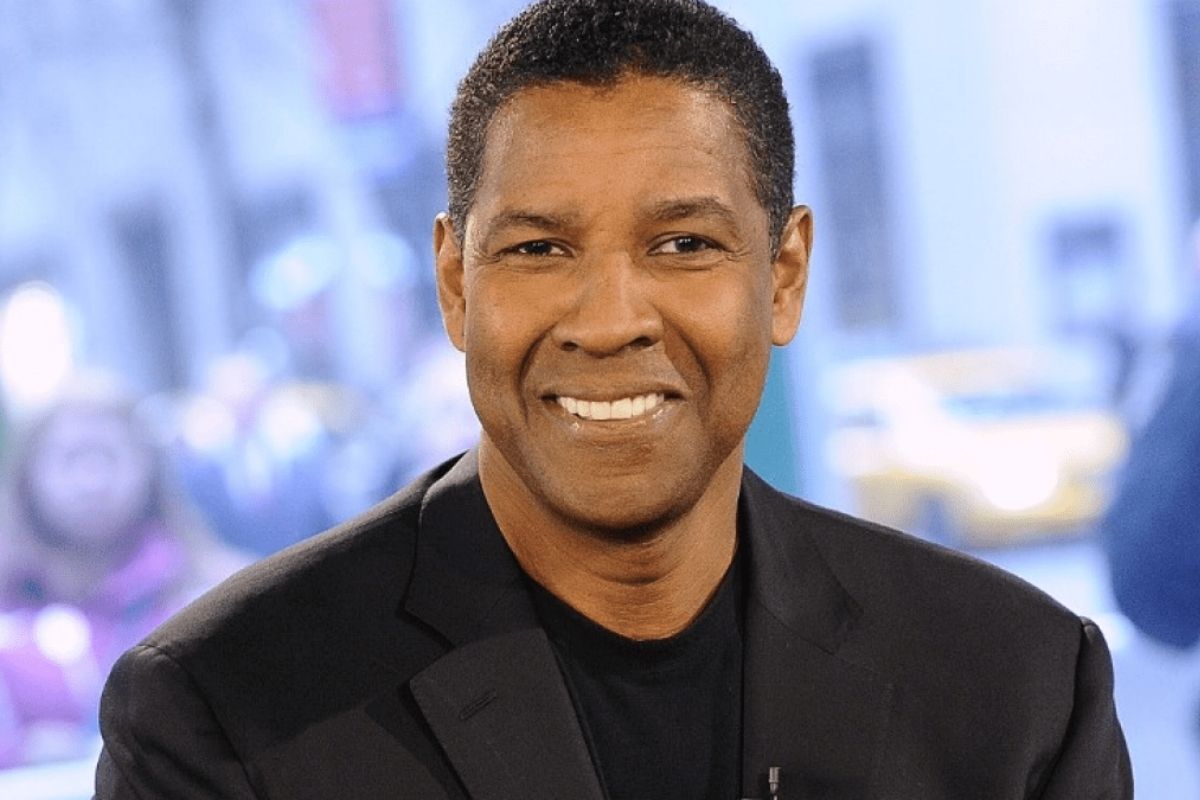
Denzel Washington remains one of the most decorated and influential actors in cinematic history, having redefined the modern leading man through a blend of moral gravity and intense charisma. With a career spanning over four decades, his work encompasses iconic dramatic roles, high-stakes action franchises, and critically acclaimed directorial projects.
The Formative Years and the Rise of a Dramatic Titan
Denzel Washington’s journey to becoming a global icon began with a rigorous focus on the craft of acting. Born in Mount Vernon, New York, Washington initially pursued journalism at Fordham University before discovering his passion for the stage. This academic background in storytelling and communication would later inform his meticulous approach to script analysis and character development. After honing his skills at the American Conservatory Theater in San Francisco, he returned to New York to pursue professional roles.
His first major break came not on the silver screen, but on television in the medical drama St. Elsewhere (1982–1988). Playing Dr. Philip Chandler, Washington became a household name, demonstrating that a Black actor could lead a prestigious ensemble cast in a complex, non-stereotypical role. During this period, he also began making waves in film, most notably in A Soldier’s Story (1984), which previewed his ability to command the screen with a quiet, yet explosive, authority.
By the late 1980s, the film industry could no longer ignore his talent. His portrayal of Private Silas Trip in the Civil War epic Glory (1989) earned him his first Academy Award for Best Supporting Actor. The performance was a masterclass in internalizing historical trauma, exemplified by the famous single-tear scene during a flogging. This victory transitioned him from a television star to a premiere cinematic force, setting the stage for a decade of dominance.
Defining the 1990s: Historical Icons and Thrillers
The 1990s served as the decade where Washington solidified his status as a cultural heavyweight. He frequently collaborated with visionary directors to tackle roles that carried significant social and historical weight. His most defining performance of this era was undoubtedly the title role in Spike Lee’s Malcolm X (1992). Washington’s transformation into the civil rights leader was so complete—capturing his evolution from "Detroit Red" to the spiritual El-Hajj Malik El-Shabazz—that it remains one of the most celebrated biographical performances in film history.
While he was lauded for his dramatic range in films like Philadelphia (1993), where he played a homophobic lawyer defending a man with AIDS, Washington also proved his viability as a commercial powerhouse. He became a staple of the "prestige thriller" genre, starring in hits such as The Pelican Brief (1993) and Crimson Tide (1995). In Crimson Tide, his on-screen sparring with Gene Hackman demonstrated his ability to hold his own against established legends, using dialogue as a weapon just as effectively as any physical action.
This period also saw the beginning of his fruitful partnership with director Tony Scott. Together, they would go on to create a series of stylish, high-octane films that redefined the action-thriller for a new generation. These roles often featured Washington as a man of few words but immense competence, a character archetype that would follow him into the later stages of his career.
The Oscar Breakthrough and Character Subversion in the 2000s
Entering the 21st century, Washington made a deliberate move to subvert his "moral hero" image. This culminated in his role as the corrupt Detective Alonzo Harris in Antoine Fuqua’s Training Day (2001). Abandoning his typical nobility for a role of pure, charismatic villainy, Washington delivered a performance that became an instant part of the cultural lexicon. His "King Kong ain't got s*** on me" monologue is frequently cited as one of the greatest improvised or semi-improvised moments in cinema.
This performance earned him the Academy Award for Best Actor, making him only the second Black man to win the award, following Sidney Poitier. The win was significant not just for its historical weight, but because it proved Washington’s versatility; he could be the villain just as convincingly as he could be the saint.
The 2000s also saw him continue his collaboration with Tony Scott in films like Man on Fire (2004) and Deja Vu (2006). In Man on Fire, Washington played John Creasy, a broken man seeking redemption through a violent crusade. This role deepened the "protector" archetype he would later perfect in The Equalizer series. Furthermore, he stepped behind the camera to direct, releasing Antwone Fisher (2002) and The Great Debaters (2007), showcasing his eye for narrative structure and his commitment to uplifting African American stories.
Directorial Mastery and the August Wilson Legacy
As Washington moved into the 2010s and 2020s, his focus expanded toward preserving the legacy of great American playwrights, specifically August Wilson. Washington’s commitment to Wilson’s "Century Cycle"—ten plays depicting the Black experience in 20th-century America—resulted in some of his most profound work. He starred in and directed the film adaptation of Fences (2016), reprising the role of Troy Maxson that he had played on Broadway to great acclaim.
The film was a critical triumph, earning several Oscar nominations and a win for his co-star Viola Davis. Washington’s direction was praised for its intimacy, focusing on the claustrophobic emotional environment of the Maxson household. He followed this by producing Ma Rainey's Black Bottom (2020) and The Piano Lesson, ensuring that these vital cultural stories reached a global cinematic audience.
Even as he approached his 70s, Washington’s work ethic remained relentless. He took on the challenging lead in Joel Coen’s The Tragedy of Macbeth (2021), delivering a minimalist, haunting performance that earned him yet another Academy Award nomination. This role proved that his Shakespearean training remained as sharp as ever, allowing him to navigate the complexities of blank verse with modern naturalism.
Key Facts and Career Milestones
To understand the scale of Denzel Washington’s career, it is helpful to look at the statistical and historical milestones he has achieved. The following table summarizes his primary accolades and significant filmography milestones.
| Category | Detail | Notable Example/Year |
|---|---|---|
| Academy Awards (Wins) | 2 Wins (Best Supporting Actor, Best Actor) | Glory (1989), Training Day (2001) |
| Academy Awards (Total Noms) | 10 Nominations (as of 2026) | The Tragedy of Macbeth, Roman J. Israel, Esq. |
| Directorial Efforts | 4 Feature Films | Fences, Antwone Fisher, The Great Debaters |
| Golden Globe Awards | 3 Wins + Cecil B. DeMille Award | The Hurricane, Glory, Training Day |
| Tony Awards | 1 Win (Best Actor in a Play) | Fences (2010) |
| AFI Life Achievement | Awarded in 2019 | Honored for career-long contribution |
| Longest Collaboration | Director Antoine Fuqua | Training Day, The Equalizer Trilogy |
| Significant 2024 Project | Gladiator II | Played Macrinus (Directed by Ridley Scott) |
Philanthropy and Industry Influence
Beyond his performances, Washington’s impact on the film industry is measured by his mentorship and philanthropy. He has been a national spokesperson for the Boys & Girls Clubs of America for over 30 years, an organization he credits with keeping him on the right path during his youth. His financial support has been instrumental in keeping various local chapters operational and providing scholarships for underprivileged students.
Perhaps most famously, Washington’s mentorship of younger actors has become legendary. After his passing, it was revealed that Washington had quietly paid for the acting studies of a young Chadwick Boseman at Oxford. This act of quiet generosity is emblematic of his approach to the industry—he views himself as a steward of the craft, responsible for ensuring the next generation is prepared to take the mantle.
In 2026, he continues to be a vocal advocate for diversity behind the camera, often insisting on inclusive crews and providing opportunities for young filmmakers of color through his production company. His influence ensures that the "Denzel Washington style"—a combination of extreme preparation, professionalism, and creative integrity—remains the gold standard for aspiring actors.
Recent Developments and Future Outlook
As we look at Washington’s career from the perspective of 2026, his recent roles show a man who is still eager to challenge himself. His turn as the manipulative power-broker Macrinus in Ridley Scott’s Gladiator II (2024) was hailed as a late-career masterpiece, bringing a sophisticated, theatrical villainy to the blockbuster arena. This role demonstrated that he can still command a massive budget film with the same ease he brings to an intimate stage play.
Looking forward, Washington has remained selective, focusing on projects that offer either historical significance or a chance to collaborate with elite filmmakers. There is ongoing buzz regarding his potential return to the director's chair for another August Wilson adaptation, as well as rumored collaborations with the next generation of "A-list" directors who grew up watching his 90s thrillers. His legacy is not merely one of past achievements but of a continuous, evolving presence that stabilizes the film industry.
Frequently Asked Questions
How many Oscars does Denzel Washington have?
As of 2026, Denzel Washington has won two Academy Awards. His first was for Best Supporting Actor in Glory (1989), and his second was for Best Actor in Training Day (2001). However, he has received 10 total nominations across his career, including nominations for acting and producing.
What is considered Denzel Washington’s best movie?
While highly subjective, critics and fans generally point to Malcolm X (1992) as his definitive dramatic performance and Training Day (2001) as his most iconic "character" role. For action fans, Man on Fire (2004) and The Equalizer (2014) are frequently cited as fan favorites.
Did Denzel Washington attend acting school?
Yes, Washington is a classically trained actor. He earned a B.A. in Drama and Journalism from Fordham University and subsequently attended the American Conservatory Theater (ACT) in San Francisco for one year before beginning his professional acting career in New York.
How many times has Denzel Washington worked with Spike Lee?
Denzel Washington and Spike Lee have collaborated on four major films: Mo' Better Blues (1990), Malcolm X (1992), He Got Game (1998), and Inside Man (2006). Their partnership is considered one of the most significant actor-director duos in modern cinema.
Is Denzel Washington still acting in 2026?
Yes, Denzel Washington remains active in the industry. While he has become more selective with his roles, focusing on prestige projects like Gladiator II and his ongoing August Wilson film cycle, he continues to be one of the most sought-after actors and producers in Hollywood.
Next Actions for Film Enthusiasts
To truly appreciate the breadth of Denzel Washington’s career, viewers should move beyond his most famous blockbusters. Start by revisiting his early stage-to-screen transitions like A Soldier’s Story, then move into the "Prestige Thriller" era of the 1990s with Crimson Tide. For those interested in his contribution to Black history and art, a marathon of his August Wilson adaptations (Fences and Ma Rainey's Black Bottom) provides a deep look at his skills as both a performer and a producer. Finally, keeping an eye on upcoming directorial announcements will offer insight into how he is shaping the future of American cinema from behind the lens.