Gap advertisements refer to strategic ad campaigns designed to identify, capture, and monetise unaddressed market segments, messaging voids, or platform inventory breaks. By conducting rigorous ad gap analysis, marketers discover high-potential audience overlap, overlooked channels, and transitional placement opportunities that competitors neglect, maximizing overall campaign return on investment (ROI).
Understanding Gap Advertising: Definition and Core Concepts
In modern media planning, gap advertising operates at the intersection of competitive market analysis, consumer behavior tracking, and digital media deployment. The methodology relies on identifying "gaps"—unserved or underserved points of contact within a consumer's decision journey or an ad platform's media inventory.
Unlike conventional advertising, which focuses on saturated channels and high-competition keywords, gap advertising actively seeks out missing touchpoints. These voids typically arise when existing market leaders focus exclusively on primary demographics, leaving secondary audiences, emerging digital channels, or mid-funnel messaging opportunities completely unaddressed.
The underlying philosophy of gap advertising is efficiency. Rather than bidding up rates in crowded ad auctions, brands deploy targeted ad creative into low-friction environments. This dual approach works strategic planning (finding market voids) alongside tactical media buying (placing ads into systemic user-experience breaks, such as app transitions or podcast pauses).
The Primary Categories of Advertising Gaps
A comprehensive gap advertising strategy requires isolating the specific type of gap your campaign aims to exploit. Most commercial gaps fall into three distinct categories.
| Strategic / Audience Gaps | Channel / Inventory Gaps | Messaging & Positioning Gaps |
|---|---|---|
| Underserved Demographics | Transitional App Screen Ads | Unanswered Customer Pain Points |
| Overlooked Micro-Moments | Unmonetized Mid-Roll Pauses | Value Proposition Differentiation |
| High-Intent Niche Queries | Contextual Programmatic Voids | Post-Purchase Support & Re-engagement |
Market and Audience Gaps
Market and audience gaps occur when specific demographic or psychographic cohorts are ignored by main-line industry campaigns. For instance, enterprise software vendors frequently tailor their primary ad spending toward C-level decision-makers. This strategy leaves a major gap at the mid-level operational manager level—the end-users who frequently evaluate software capabilities and initiate software purchasing requests.
Capturing audience gaps involves leveraging granular programmatic targeting and contextual ad networks to reach these ignored decision-makers. By speaking directly to their day-to-day challenges rather than high-level executive priorities, brands establish strong influence early in the purchase process.
Channel and Inventory Gaps
Channel and inventory gaps refer to physical or digital moments where user engagement remains high, but ad saturation is minimal. In digital environments, these often take the form of transitional or interstitial placements:
- App Transition Gaps: Full-screen or partial display ads shown between completed tasks or screen shifts within mobile applications.
- Audio/Podcast Mid-Roll Gaps: Short contextual announcements inserted into naturally occurring pauses within streamed audio content.
- Cross-Platform Gaps: Platforms where your target audience spends significant time, but direct competitors fail to maintain an active ad presence (such as niche community forums or specialized B2B publications).
By acquiring media space in these under-utilized channels, advertisers achieve higher viewability metrics and reduced effective Cost Per Thousand (CPM) rates.
Messaging and Positioning Gaps
Messaging gaps exist when competitive advertising heavily emphasizes specific product features while failing to address critical consumer concerns. For example, if all major competitors in the financial software space focus their advertising on speed and security, an unaddressed gap may exist around ease of onboarding and customer support accessibility.
Identifying messaging gaps requires systematic analysis of competitor creative assets, customer review boards, and social listening data. Positioning your ads directly within these messaging voids establishes clear differentiation without requiring higher ad budgets.
Conducting a Strategic Ad Gap Analysis (Step-by-Step)
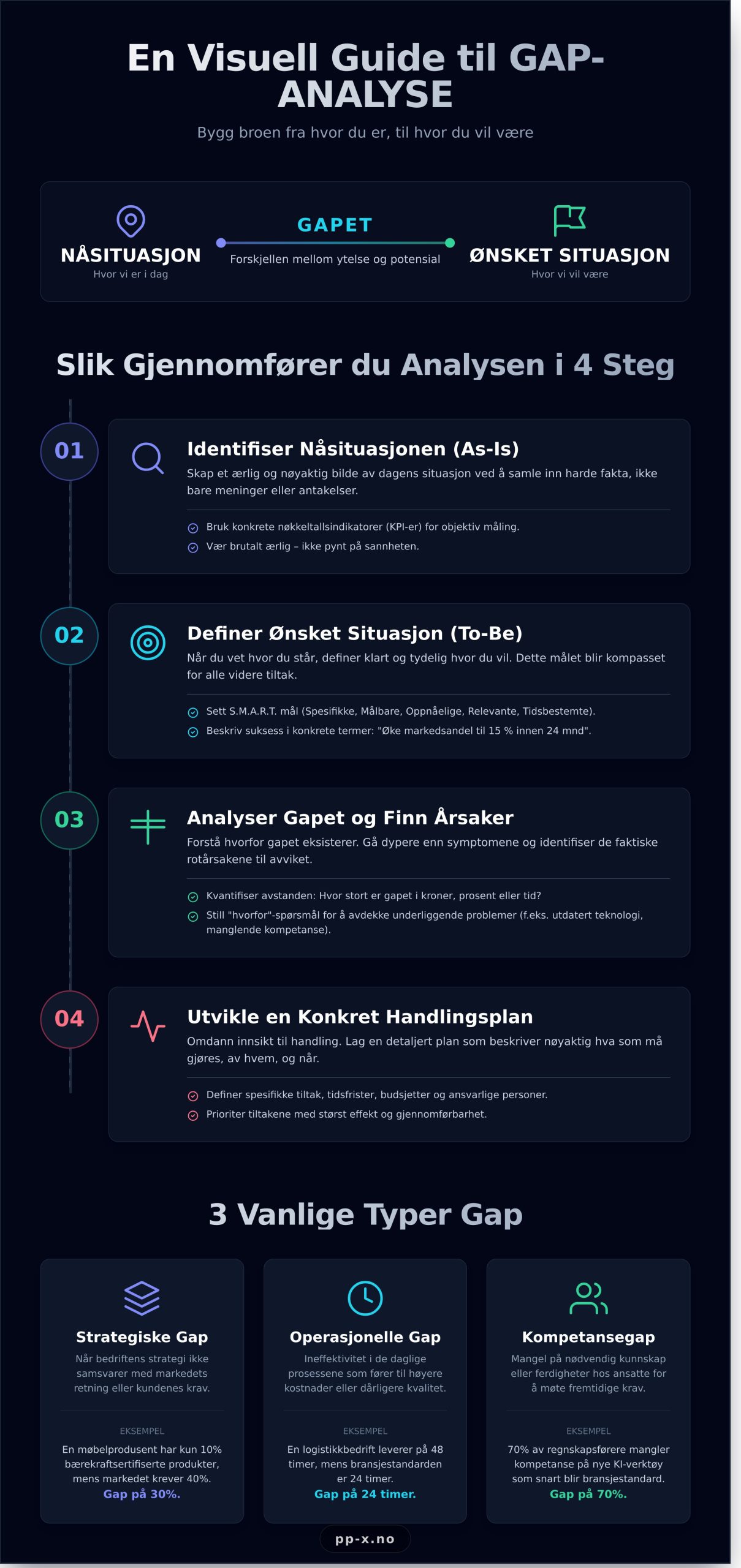
Executing a successful gap ad strategy requires structured research before launching any campaign. The following four-step process helps identify where media spend will generate the highest marginal returns.
- Step 1: Map Competitor Media & Spend
- Analyze platform presence, ad formats, and bid intensity.
- Step 2: Audit Consumer Intent & Search Voids
- Identify unaddressed long-tail search queries and pain points.
- Step 3: Evaluate Inventory & Experience Breaks
- Locate user-journey pause points and low-competition placements.
- Step 4: Develop & Deploy Counter-Positioned Creative
- Launch custom creative addressing verified market gaps.
1. Map Competitor Media Placement and Spend
Begin by auditing competitor ad activity across display, search, paid social, and video platforms. Utilize public ad transparency tools (such as the Meta Ad Library or Google Ads Transparency Center) to record:
- Primary platforms competitors rely on.
- The call-to-action (CTA) structures and offer types used.
- The specific buyer personas targeted in active creative copy.
Document where competitor activity drops off. If competitors invest heavily in top-of-funnel search terms but neglect retargeting or mid-funnel contextual display ads, you have located a potential channel gap.
2. Audit Customer Search Intent and Review Data
Cross-reference competitor coverage with actual customer inquiry patterns. Review long-tail search queries, customer forum complaints, and third-party review sites to find recurring questions that competitors fail to answer in their ad copy.
If target customers consistently express concern over pricing transparency or contract terms, create gap advertisements that directly address transparent pricing and zero long-term commitments.
3. Identify User-Experience Transitions (Inventory Gaps)
Work with programmatic buying platforms and demand-side platforms (DSPs) to locate inventory break opportunities. Target user-journey transitions where users naturally pause, such as:
- Completion of an online workflow or order confirmation page.
- Loading screens between distinct app functions.
- Natural section breaks within long-form digital publications.
Placing ads during these natural cognitive breaks yields higher recall rates compared to intrusive pop-ups that interrupt active browsing.
4. Deploy Counter-Positioned Creative
Draft targeted creative tailored directly to the identified gap. If your analysis reveals a market gap around customer service, build ad units featuring direct testimonials regarding your 24/7 support response times. Test creative variations using isolated ad groups to establish clear performance baselines.
Comparative Analysis: Evaluating Advertising Gap Strategies
Choosing the right type of gap campaign depends on your primary goal, target budget, and execution timeline. The table below compares the four major gap ad strategies across practical operational metrics.
| Gap Advertising Type | Primary Strategic Focus | Acquisition Cost Impact | Execution Complexity | Target Audience Intent |
|---|---|---|---|---|
| Audience Gap | Underserved demographics or buyer personas | Moderate reduction in Cost Per Acquisition (CPA) | Medium (requires targeted segmentation) | Low to Medium |
| Channel Gap | Low-competition digital networks and inventory | Significant reduction in Cost Per Thousand (CPM) | Low to Medium (requires platform testing) | Variable depending on placement |
| Messaging Gap | Unaddressed value propositions & pain points | High improvement in Click-Through Rate (CTR) | Low (focused on creative differentiation) | High (solution-seeking users) |
| Transitional / Interstitial Gap | Experience breaks and app loading screens | Optimized Cost Per View (CPV) and engagement | High (requires precise programmatic triggers) | Passive to Neutral |
Best Practices for Launching High-Impact Gap Ad Campaigns
To ensure your gap advertising efforts yield measurable commercial returns, adhere to these proven industry practices.
1. Maintain Creative Alignment with Context
When placing ads into transitional gaps (such as app loading screens or content pauses), match the creative to the user's immediate context. Avoid jarred transitions that disrupt user experience. A short, highly relevant ad displayed during a natural pause generates high engagement, whereas a lengthy or irrelevant video ad leads to immediate drop-off.
2. Leverage Programmatic Real-Time Bidding (RTB)
Use advanced Demand-Side Platforms (DSPs) to set strict floor pricing and bid modifiers for identified inventory gaps. Programmatic rules allow you to automatically scale up bid rates when impressions match your exact target persona in low-competition environments, maximizing your ad spend efficiency.
3. Continuously Benchmark Against Market Shift
Gap opportunities are naturally temporary. As competitors notice your growth in a previously ignored audience segment or digital channel, they will adjust their media plans. Perform quarterly ad gap audits to monitor competitive enter rates and pivot your budget toward new emerging gaps.
Common Pitfalls and How to Avoid Them
Even well-funded advertising campaigns fail when executed on flawed gap assumptions. Watch out for these three strategic errors:
- Confusing a Low-Value Market for a True Gap: A channel or audience segment may be untouched by competitors simply because it lacks commercial intent or buying power. Always validate that an unserved audience has real purchasing intent before deploying budget.
- Over-Segmentation: Dividing your targeting into overly narrow micro-gaps can severely restrict impression delivery, driving up CPMs and rendering programmatic optimization ineffective.
- Ignoring Brand Safety Standards: Placing ads into low-cost, uncompetitive display networks without checking content quality parameters can expose your brand to unsafe or low-quality environments. Always enforce strict brand safety exclusions across all DSP placements.
Key Actionable Steps to Implement Your Gap Ad Strategy
To launch a structured gap advertising campaign, follow this operational checklist:
- Run a Competitive Ad Audit: Document active competitor channels, ad formats, and value propositions using transparent ad databases.
- Conduct Keyword & Intent Gap Analysis: Identify unserved, high-intent search queries and customer pain points using search intelligence tools.
- Establish Programmatic Rules: Set up programmatic buying parameters within your DSP to bid dynamically on inventory breaks and contextually relevant ad slots.
- Craft Targeted Counter-Creative: Design responsive display, text, and video creative built specifically to address the unfulfilled market demand.
- Measure and Adjust: Monitor conversion metrics, cost per acquisition (CPA), and click-through rates (CTR) weekly to reallocate spend away from closing gaps toward new opportunities.
Frequently Asked Questions About Gap Advertising
What is the main difference between gap advertising and traditional digital advertising?
Traditional advertising generally targets high-volume, competitive channels and broad audience segments, which often leads to higher auction costs. Gap advertising focuses specifically on unexploited opportunities—such as unaddressed customer pain points, low-competition ad networks, or physical user-experience breaks—delivering higher ROI through lowered competition.
How do transitional or interstitial gap ads differ from traditional pop-up ads?
Transitional gap ads appear during natural cognitive pauses within a user journey, such as between completed app tasks, screen changes, or video chapter updates. Pop-up ads intrusive interrupt active browsing tasks, leading to high bounce rates and lower brand sentiment.
How frequently should a brand perform an ad gap analysis?
Brands operating in fast-moving industries should conduct an ad gap analysis quarterly. This ensures media planning teams identify new channel opportunities, changing consumer search behaviors, and shift spending before competitors enter identified market voids.
Can small businesses effectively execute gap advertising?
Yes. In fact, gap advertising is particularly advantageous for small-to-medium businesses (SMBs) with limited marketing budgets. By identifying low-competition long-tail keywords, niche channel placements, and specific audience pain points that enterprise competitors ignore, SMBs can secure high-converting traffic at a significantly lower cost.
How do you measure the performance of a gap ad campaign?
Measure gap ad performance using conversion-oriented metrics relative to baseline campaigns. Key Performance Indicators (KPIs) include Cost Per Acquisition (CPA), Click-Through Rate (CTR), Cost Per Thousand Impressions (CPM), and incremental lift in target conversion actions.
Next Steps for Media Planners and Marketers
To maximize your advertising efficiency in 2026, begin by auditing your current media footprint against your primary competitors. Identify at least two messaging or channel voids where customer interest remains high but competitive ad spend is minimal. Deploy a low-risk test budget focused exclusively on these gaps, track performance metrics against your core campaigns, and scale spend based on verified conversion improvements.