Since its opening in 1976, Six Flags Great America in Gurnee, Illinois, has recorded two primary fatalities directly related to ride operations or restricted area accidents. While millions of visitors attend the park safely each year, these rare incidents, occurring in 1984 and 2003, remain critical touchstones for understanding theme park safety evolution and regulatory oversight.
Historical Context of Safety at Six Flags Great America
Six Flags Great America is one of the premier theme parks in the United States, known for its extensive collection of roller coasters and family attractions. When discussing the safety record of a major park like Great America, it is essential to distinguish between ride-related fatalities, medical emergencies (such as pre-existing heart conditions), and security-related incidents.
In the theme park industry, "ride-related fatalities" typically refer to incidents caused by mechanical failure, operator error, or a guest entering a restricted zone while the ride is in motion. As of 2026, the historical data for Six Flags Great America shows that the park maintains a safety record that is statistically superior to many other forms of recreational transport and entertainment. However, the incidents that have occurred provided the impetus for significant changes in state law and park-wide safety protocols.
Understanding these events requires looking back at the specific mechanics of the rides involved and the regulatory environment of the time. In the early 1980s, theme park regulation was less centralized than it is today. The incidents at Great America played a role in the development of more stringent inspection criteria, particularly within the state of Illinois, which now operates under some of the most rigorous amusement ride safety acts in the country.
Detailed Chronology of Fatal Incidents
While the park has seen millions of successful cycles across dozens of attractions, two specific dates stand out in its nearly five-decade history. These events are studied by safety professionals to prevent recurrence through better engineering and stricter personnel training.
The 1984 Willard’s Whizzer Accident
The first and perhaps most cited fatal accident at the park occurred on March 29, 1984, involving the Willard’s Whizzer roller coaster (now known simply as Whizzer). This ride is a spiral-lift coaster designed by Anton Schwarzkopf. Unlike traditional chain-lift coasters, the Whizzer uses an electric motor on each car to ascend a spiral incline.
In this incident, two trains collided at the loading station. A 13-year-old boy was killed and several others were injured when a train failed to stop and crashed into the back of a stationary train in the station. Investigation into the crash revealed that the ride's braking system, which relied on a series of computer-controlled blocks, failed to engage correctly.
Following this tragedy, the park implemented several redundant safety systems. The Whizzer was eventually retrofitted with an entirely new braking system and updated sensors to ensure that two trains could never occupy the same block of track. Despite the accident, the ride remains a fan favorite and is one of the few remaining "Speedracers" in the world, largely due to the massive safety overhauls performed in the decades following 1984.
The 2003 Batman: The Ride Employee Fatality
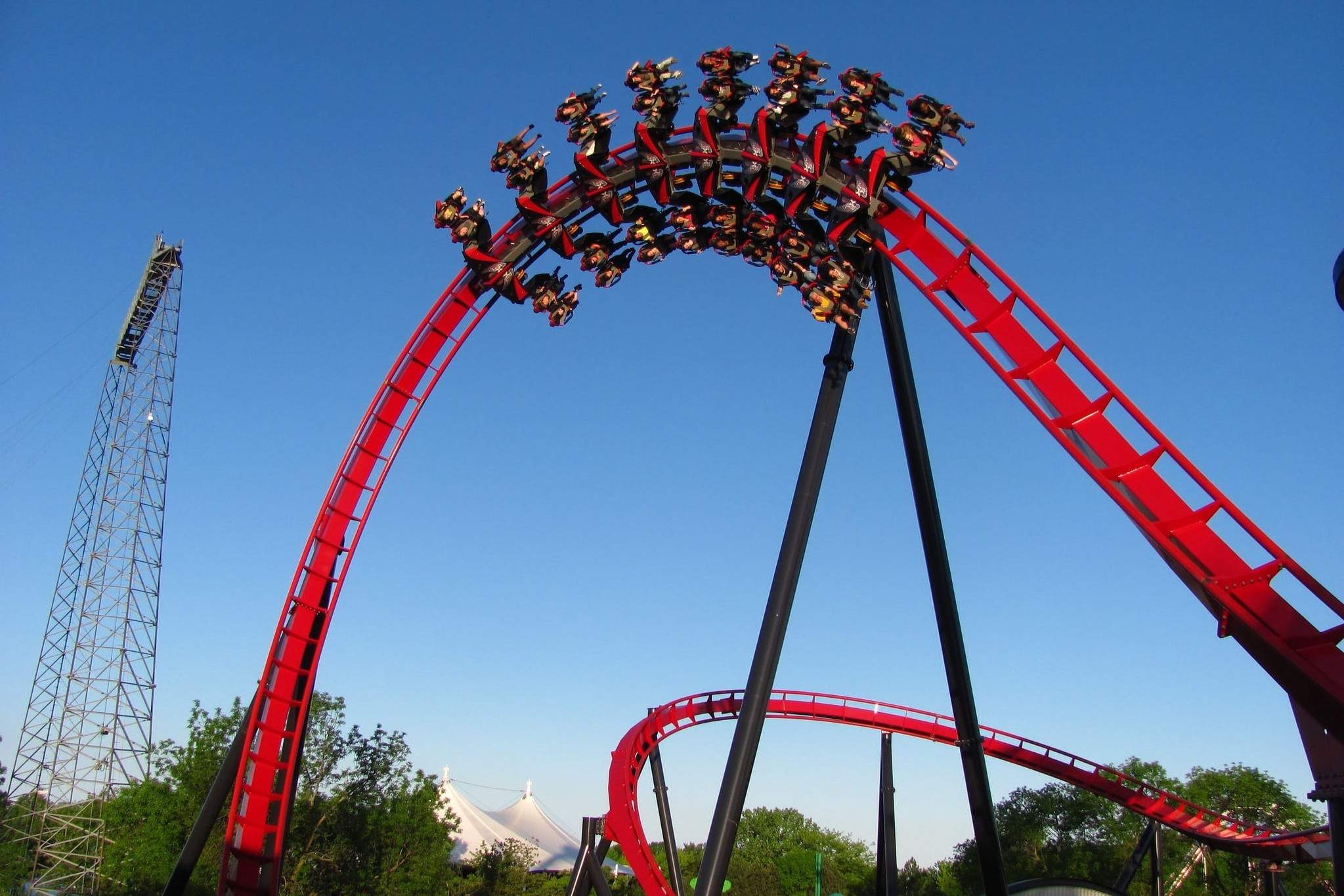
The second fatality occurred on May 11, 2003, involving Batman: The Ride, an inverted roller coaster where the train travels below the track. Unlike the Whizzer incident, this was not a mechanical failure or a guest-related accident.
A 55-year-old groundskeeper, who was an employee of the park, was struck by the legs of a passenger on the moving coaster while he was working in a restricted area beneath the ride. The employee was reportedly in a fenced-off zone intended to be clear of personnel while the ride was operational. The impact caused fatal head injuries.
This incident highlighted the dangers of "restricted zone" violations. Since 2003, Six Flags Great America and the theme park industry at large have intensified training for "Lock-Out, Tag-Out" (LOTO) procedures. These procedures ensure that rides are physically incapable of running while maintenance or landscaping staff are within the ride envelope. It also led to the installation of more visible warning signs and more robust physical barriers in low-clearance areas.
Significant Non-Fatal Accidents and Their Impact
To provide a comprehensive background of the park’s safety history, one must also consider high-profile non-fatal incidents. These events often lead to just as much regulatory change as fatalities do.
The Edge Freefall Malfunction (1984)
Only a few months after the Whizzer accident in 1984, another major incident occurred on The Edge, a first-generation Intamin Freefall ride. A cable snapped while a car was being moved into the drop position. The anti-rollback mechanism failed, and the car plummeted approximately 60 feet down the lift shaft, crashing into another car.
While three teenagers were hospitalized, there were no fatalities. However, the media coverage of two major accidents in a single year (the Whizzer and The Edge) led to a significant public relations crisis for the park and a massive push for new safety legislation in Illinois. The Edge was eventually removed from the park, but the lessons learned from the cable failure influenced the design of modern drop towers, which now use magnetic braking and multiple redundant cables.
Security and External Incidents
In recent years, the focus of safety at Great America has expanded from mechanical ride safety to general guest security. In August 2022, a shooting occurred in the park's parking lot, resulting in injuries to three people. While this was not a "ride death," it represents a shift in how the park manages risk. In response, the park invested heavily in sophisticated security screening technology at the front gate and increased the presence of Gurnee police officers on-site. As of 2026, these security measures are among the most advanced in the regional theme park industry.
Comparative Safety Data and Theme Park Statistics
To put the deaths at Six Flags Great America into perspective, it is helpful to compare the data with industry standards and the total volume of visitors.
| Feature/Metric | Details | Historical Impact |
|---|---|---|
| Total Ride-Related Deaths | 2 (1984, 2003) | Led to total redesign of braking systems and LOTO protocols. |
| Major Non-Fatal Malfunctions | The Edge (1984), Raging Bull (Minor/Medical) | Resulted in the 1985 Illinois Carnival & Amusement Ride Safety Act. |
| Primary Regulatory Body | Illinois Dept. of Labor (IDOL) | Conducts unannounced inspections and annual certification. |
| Annual Attendance | ~3 Million Visitors | Probability of a fatal incident is less than 1 in 50 million. |
| Safety Redundancy | Computerized Block Systems | Prevents multi-train collisions via magnetic and pneumatic brakes. |
Safety Protocols and Regulatory Oversight in Illinois
The safety of Six Flags Great America is not solely the responsibility of the park; it is governed by the Illinois Department of Labor (IDOL). Following the accidents of 1984, the state passed the Carnival and Amusement Ride Safety Act. This law mandates:
- Annual Inspections: Every ride must be inspected and permitted by state officials before the park opens for the season.
- Unannounced Spot Checks: State inspectors can enter the park at any time to verify that operators are following the specific manuals provided by ride manufacturers.
- Operator Training Documentation: The park must maintain rigorous logs showing that every ride operator has been trained specifically on the ride they are running, including emergency stop procedures.
Modern roller coasters at Great America, such as Maxx Force or Goliath, utilize "Block Logic." This is a computerized safety system where the track is divided into sections (blocks). A train is not permitted to enter a block unless the preceding train has cleared it. If a sensor fails or a train stops unexpectedly, the computer automatically engages the brakes in the preceding block to prevent a collision.
How to Evaluate Theme Park Safety Today
For guests visiting the park in 2026, safety is a multi-layered system that begins before you even enter the gates. When evaluating the safety of a destination like Six Flags Great America, consider the following technical and operational indicators:
- Manufacturer Reputation: Great America utilizes rides from industry leaders like Bolliger & Mabillard (B&M) and Rocky Mountain Construction (RMC), known for their impeccable safety records.
- Daily Testing: Every morning, several hours before the park opens, "test seats" and "test dummies" are run through multiple cycles on every coaster to verify that the G-forces and braking distances are within the manufacturer’s specifications.
- Ride Constraints: Modern restraints (over-the-shoulder harnesses and hydraulic lap bars) use redundant locking cylinders. If one cylinder were to lose pressure, a mechanical ratchet prevents the bar from opening.
- Staffing Levels: Safety is often a product of attentiveness. Note the presence of "double-checking" procedures, where one attendant checks a restraint and a second supervisor verifies the row is clear before the ride is dispatched.
Common Myths vs. Reality
One common misconception is that "loops" or inversions are the most dangerous part of a ride. In reality, most historical accidents occur in the "low-speed" areas of a ride, such as the station or the brake run, due to human error or sensor malfunctions. The high-speed elements are generally the most heavily engineered and reinforced parts of the attraction.
Another myth is that rides "get more dangerous" as they age. In the case of the Whizzer, the age of the ride has actually led to more frequent inspections and more modern safety upgrades than many brand-new attractions receive. Older rides are often "over-engineered" compared to modern lightweight designs.
Safety Guidance for Guests
The vast majority of injuries at theme parks are preventable and guest-induced. To ensure a safe experience at Six Flags Great America, guests should adhere to the following:
- Respect Height and Weight Requirements: These are not suggestions; they are based on the physics of the restraint system.
- Secure All Loose Articles: Items falling from rides pose a significant risk to people on the ground.
- Follow Employee Instructions: Never enter fenced-off or restricted areas, even to retrieve a dropped cell phone.
- Know Your Health Limits: Individuals with heart conditions or neck issues must heed the warning signs posted at every entrance.
FAQs About Incidents at Six Flags Great America
How many people have died on rides at Six Flags Great America?
There have been two fatalities directly linked to ride operations or ride areas: one in 1984 on the Willard's Whizzer due to a collision, and one in 2003 on Batman: The Ride involving an employee in a restricted zone. Other deaths reported in news archives are typically attributed to natural causes or medical emergencies unrelated to ride performance.
Is the Whizzer still safe to ride?
Yes, the Whizzer is considered safe. After the 1984 accident, the ride underwent a complete overhaul of its braking and control systems. It is now equipped with modern sensors that prevent trains from entering the same section of track, and it is inspected daily by park technicians and annually by the Illinois Department of Labor.
What happened during the 2022 shooting at the park?
On August 14, 2022, a shooting occurred in the parking lot of Six Flags Great America. Three people were injured, but there were no fatalities. The incident was not ride-related but led to a massive increase in security protocols, including enhanced gate screening and a permanent increase in law enforcement presence.
Has anyone died on the Raging Bull or Goliath?
No. As of 2026, there have been no ride-related fatalities on Raging Bull, Goliath, or any of the park's major modern coasters. While these rides are high-intensity, they use advanced computerized block systems and redundant restraints that significantly reduce the risk of mechanical accidents.
What is the most common cause of injury at the park?
Statistically, the most common injuries at Six Flags Great America are "slips, trips, and falls" on walkways or heat-related illnesses. In terms of ride-related injuries, most are minor, such as muscle strain or headaches, often resulting from guests not following the "keep your head back" instructions on high-G-force attractions.
Who regulates the safety of Six Flags Great America?
The Illinois Department of Labor’s Carnival & Amusement Ride Safety Division is the primary regulatory authority. They oversee the permitting and inspection process, ensuring the park complies with both state law and the standards set by the American Society for Testing and Materials (ASTM).
Next Actions for Park Visitors
When planning a visit to Six Flags Great America, the most important next step is to familiarize yourself with the park’s current safety and security policies via their official website. Before arriving, ensure that all members of your party understand the importance of following ride operator instructions and respecting all physical barriers. If you witness a safety violation or a mechanical concern, report it immediately to the nearest ride lead or Guest Relations office. By staying informed and following established guidelines, guests can continue to enjoy the park’s world-class attractions with confidence in their personal safety.